The automotive world is abuzz with whispers of a silent revolution—one that could redefine the very essence of performance driving. Hyundai, the brand that has long danced on the edge of innovation, might just be preparing to unleash a beast that could turn the Elantra N into an electrifying enigma. Could the next iteration of this hot hatch be a fully electric powerhouse, blending razor-sharp handling with the instant torque of an EV? The question isn’t just intriguing; it’s a dare to the status quo, a challenge to the notion that performance and zero emissions are mutually exclusive.
Imagine, if you will, a car that doesn’t just whisper promises of speed but roars them into the electrified void. The Hyundai Elantra N has already carved its name into the hearts of enthusiasts with its turbocharged fury and track-ready tenacity. But what if Hyundai decided to strip away the internal combustion engine’s last vestiges and replace them with the hum of electric motors? The result wouldn’t just be a car—it would be a statement, a middle finger to tradition, and a love letter to the future. Let’s dive into the tantalizing possibilities, the potential pitfalls, and the seismic shifts this could trigger in the performance car landscape.
The Elantra N Legacy: A Foundation of Fire and Finesse
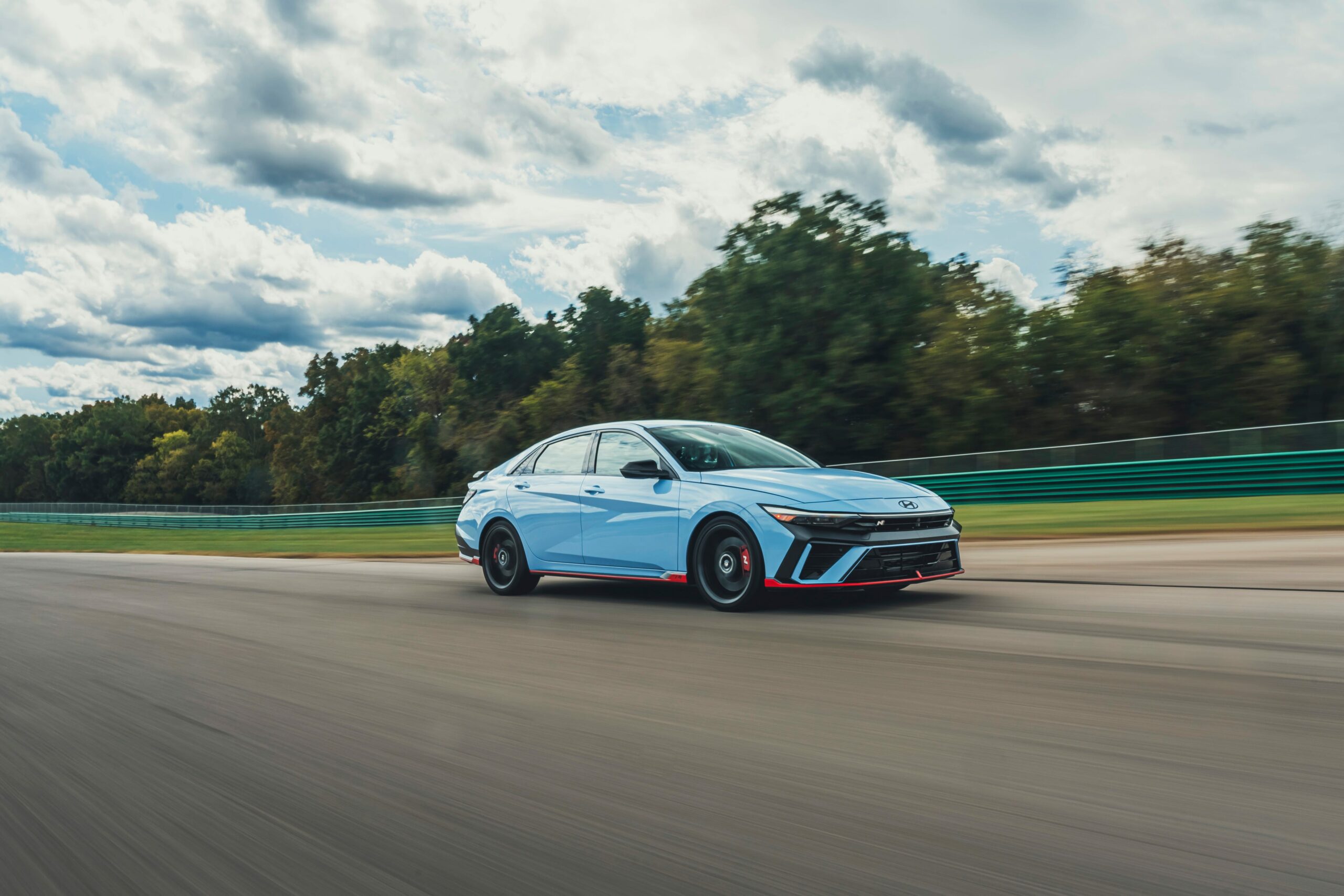
The Hyundai Elantra N isn’t just another hot hatch—it’s a testament to Hyundai’s audacious leap into the performance arena. Born from the N Division’s relentless pursuit of driving purity, the Elantra N packs a 2.0-liter turbocharged inline-four engine, churning out 276 horsepower and 289 lb-ft of torque. It’s a machine that doesn’t just accelerate; it *teleports*, its dual-clutch transmission snapping through gears with the precision of a Swiss watch. The chassis is a symphony of stiffness and balance, with a limited-slip differential ensuring that every ounce of power is harnessed with surgical intent.
Yet, for all its internal combustion brilliance, the Elantra N is still tethered to the past. It drinks from the same well as its gasoline-guzzling brethren, a fact that might soon feel as outdated as a flip phone in a 5G world. The shift to electric propulsion isn’t just about chasing emissions regulations—it’s about redefining what performance means. No turbo lag. No gear hunting. Just relentless, linear acceleration that pins you to your seat like a gravitational force. Could Hyundai dare to strip away the engine’s roar and replace it with the whir of electric motors? The answer might be a resounding yes.
Electric Dreams: The Case for an Elantra N EV
The idea of an electric Elantra N isn’t just fanciful speculation—it’s a logical evolution, a natural progression for a brand that has already dipped its toes into the EV waters with models like the Ioniq 5 N. The N Division’s ethos—performance, precision, and passion—translates seamlessly into the electric realm. Picture this: a dual-motor setup, with one motor driving the front wheels and another the rear, creating an all-wheel-drive system that’s as agile as it is exhilarating. The instant torque delivery would obliterate the 0-60 mph sprint, leaving even the most hardcore petrolheads in the dust.
But performance isn’t just about straight-line speed. It’s about cornering, about the way a car dances on the edge of adhesion. The Elantra N EV could leverage its low center of gravity—thanks to the battery pack’s placement—to deliver handling that’s nothing short of telepathic. No body roll. No understeer. Just a car that feels like an extension of the driver, responding to every input with the fidelity of a digital metronome. And let’s not forget the soundtrack—or lack thereof. The absence of an engine’s mechanical symphony could be replaced by the artful hum of electric motors, a futuristic lullaby that’s as intoxicating as it is innovative.
There’s another, more subtle advantage to going electric: the potential for over-the-air updates. Imagine tweaking the car’s throttle response, suspension settings, or even the sound profile of the motors with a few taps on your phone. The Elantra N EV wouldn’t just be a static machine—it would be a living, breathing entity that evolves with you, adapting to your whims and the ever-changing tides of automotive technology.
The Looming Challenge: Can an EV Truly Capture the Spirit of the N?
Of course, the road to an electric Elantra N isn’t paved with rainbows and zero emissions. There are challenges—formidable ones—that could make or break this audacious vision. The first and most glaring is the specter of range anxiety. Performance cars aren’t exactly known for their frugality, and an electric hot hatch that guzzles electrons like a thirsty marathon runner could leave drivers stranded on the side of the road, clutching a depleted battery like a lifeline. Hyundai would need to engineer a battery pack that’s not just large enough to satiate power demands but also efficient enough to keep the car competitive in the real world.
Then there’s the issue of weight. Batteries are heavy, and adding hundreds of pounds to a car that’s already designed for agility could turn it into a lumbering beast. The Elantra N’s chassis is a marvel of balance, but an EV conversion risks upsetting that delicate equilibrium. Hyundai would need to employ lightweight materials, advanced aerodynamics, and perhaps even active suspension systems to keep the car nimble and responsive.
The final hurdle is the intangible one: the soul of the N. The Elantra N’s character is defined by its raw, unfiltered power, the visceral thrill of a naturally aspirated engine screaming at redline. Can an electric motor replicate that emotional connection? The answer might lie in software. Hyundai could program the motors to mimic the sound and feel of a high-revving engine, complete with simulated turbo lag and gear shifts. It’s a gimmick, sure—but one that could preserve the essence of the N while embracing the future.
What Could It Look Like? A Glimpse into the Future
If Hyundai were to greenlight an electric Elantra N, what might it look like? The design would need to strike a balance between the familiar and the futuristic. The iconic N badging would remain, but the grille might evolve into a sleek, aerodynamic panel, perhaps with active shutters to manage airflow. The headlights could adopt a pixelated LED design, hinting at the car’s digital soul, while the taillights might stretch into a continuous light bar, a signature of Hyundai’s EV lineage.
Inside, the cabin would be a blend of analog and digital. The traditional gauges could be replaced by a customizable digital display, while physical buttons for climate control and driving modes would pay homage to the N’s tactile heritage. The seats would be bolstered, wrapped in Alcantara or suede, with the iconic N logo embroidered into the headrests. And of course, there would be a drive mode selector—because even an EV needs to feel like it’s alive.

The Elantra N EV wouldn’t just be a car—it would be a rolling manifesto, a declaration that performance and sustainability aren’t mutually exclusive. It would be a challenge to the purists, a provocation to the petrolheads, and a promise to the future. And if Hyundai pulls it off, it could redefine what it means to drive fast.
The Road Ahead: A Bet on the Future
The automotive industry is at a crossroads, with electric vehicles poised to dominate the landscape. But performance cars? They’ve always been the last bastion of internal combustion, the final frontier where petrol reigns supreme. An electric Elantra N would shatter that illusion, proving that the future of speed isn’t just electric—it’s inevitable.
Hyundai has the opportunity to lead this charge. With its experience in EV technology, its N Division’s pedigree, and its willingness to take risks, the brand is uniquely positioned to deliver a car that’s as thrilling as it is groundbreaking. The question isn’t whether it *can* build an electric Elantra N—it’s whether it *will*. And if it does, the Elantra N EV won’t just be a car. It will be a revolution on wheels.
The road ahead is electrified. The question is, are you ready to take the wheel?