The Tesla lineup has redefined the automotive landscape, blending cutting-edge technology with sustainability. For prospective buyers, understanding the pricing structure is crucial—not just to gauge affordability, but to appreciate the value proposition behind each model. Whether you’re a tech enthusiast, an eco-conscious driver, or an investor eyeing the future of mobility, Tesla’s pricing tiers cater to diverse needs. Below, we dissect the cost of each Tesla model, from entry-level sedans to high-performance variants, while exploring the factors that influence these figures.
The Gateway to Tesla: Model 3 and Model Y Pricing
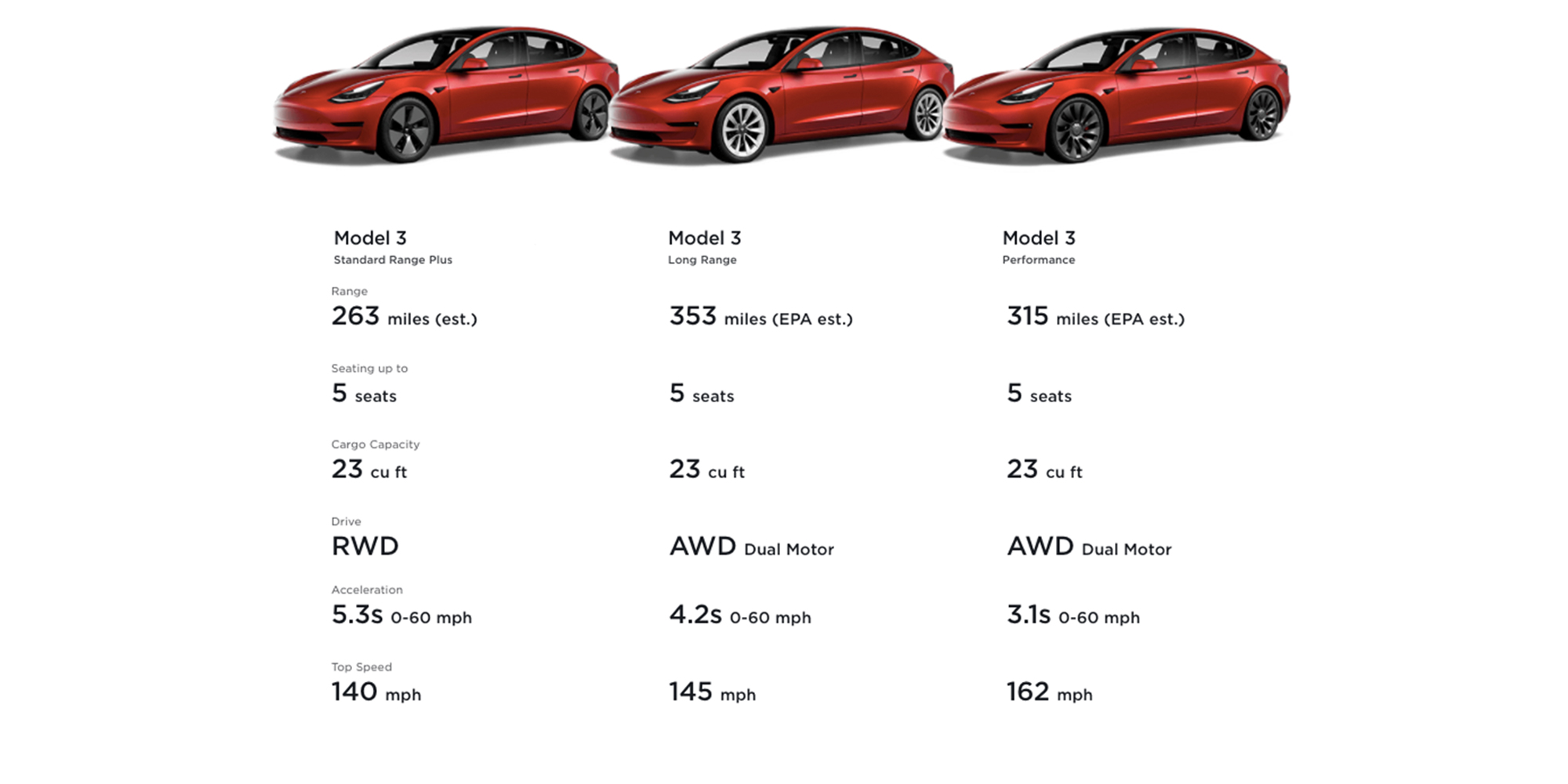
Tesla’s most accessible models, the Model 3 and Model Y, serve as the brand’s foot soldiers in the electric revolution. The Model 3, a sleek sedan, starts at $38,990 for the Standard Range Plus variant, offering a balance of efficiency and practicality. Mid-tier options like the Long Range and Performance models escalate to $47,740 and $53,990, respectively, unlocking extended range and exhilarating acceleration. The Model Y, a compact SUV, mirrors this structure with a base price of $44,990 for the Rear-Wheel Drive version, while the Long Range and Performance trims command $48,990 and $52,490. These prices reflect Tesla’s commitment to democratizing electric vehicles, though incentives and regional adjustments can further sweeten the deal.
For urban commuters and small families, the Model 3 and Model Y deliver unparalleled value. Their lower price points, combined with Tesla’s over-the-air updates, ensure that owners benefit from continuous improvements without hefty dealership markups. The Long Range variants, in particular, offer a compelling range of up to 333 miles, making them ideal for road trips without the anxiety of frequent charging stops.

Mid-Tier Marvels: Model S and Model X Unveiled
Stepping into the premium segment, the Model S and Model X embody Tesla’s prowess in luxury and performance. The Model S, a four-door sedan, begins at $79,990 for the Long Range variant, boasting a staggering 405 miles of range and a 0-60 mph time of 3.1 seconds. The Plaid version, Tesla’s flagship sedan, commands $94,990, delivering a mind-bending 2.1-second acceleration and a tri-motor all-wheel-drive system. Similarly, the Model X, an SUV with falcon-wing doors, starts at $89,990 for the Long Range, while the Plaid model reaches $104,990. These prices reflect not just raw performance but a suite of premium features, including a minimalist 17-inch touchscreen, premium audio, and advanced autopilot capabilities.
The Model S and Model X cater to those who demand both opulence and innovation. Their spacious cabins, adorned with vegan leather and open-pore wood trim, rival traditional luxury vehicles, while their software-defined architecture ensures that they remain at the forefront of automotive technology. The Plaid variants, in particular, push the boundaries of what’s possible, with track-ready performance that leaves supercars in their wake.

Cybertruck and Semi: The Frontier of Tesla’s Ambition
Tesla’s foray into uncharted territory includes the Cybertruck and Semi, two vehicles that challenge conventional automotive norms. The Cybertruck, with its angular, stainless-steel exoskeleton, starts at $60,990 for the single-motor Rear-Wheel Drive, while the dual-motor and tri-motor variants escalate to $79,990 and $99,990, respectively. Its polarizing design aside, the Cybertruck promises unmatched durability, a 0-60 mph time of under 2.6 seconds in its top trim, and a range of up to 500 miles. The Semi, Tesla’s electric freight hauler, begins at $150,000 for a 300-mile range configuration, with the 500-mile version priced at $180,000. These figures underscore Tesla’s ambition to disrupt not just passenger vehicles, but entire industries.
The Cybertruck and Semi represent Tesla’s disruptive ethos, where form follows function—and function is redefined by electrification. The Cybertruck’s adaptive air suspension and bulletproof exoskeleton make it a compelling choice for off-road enthusiasts and urban adventurers alike. Meanwhile, the Semi’s promise of lower operating costs and zero emissions positions it as a game-changer for logistics companies, with Tesla’s proprietary Megacharger network poised to revolutionize long-haul trucking.
Factors That Shape Tesla’s Pricing
Tesla’s pricing isn’t static; it’s a dynamic equation influenced by several key factors. Battery technology plays a pivotal role, with newer chemistries like 4680 cells promising higher energy density and lower costs. Supply chain constraints, particularly for critical components like semiconductors and lithium, can lead to temporary price adjustments or extended wait times. Regional incentives, such as tax credits and rebates, can slash effective prices by thousands, making Tesla’s offerings even more attractive in markets like the U.S. and Europe. Additionally, customization options, including paint colors, wheel designs, and premium interior packages, can inflate the final sticker price, allowing buyers to tailor their vehicle to their tastes.
Understanding these variables is essential for prospective buyers. For instance, the Inflation Reduction Act in the U.S. offers up to $7,500 in tax credits for qualifying Tesla models, provided they meet domestic content requirements. Similarly, leasing options and trade-in programs can further reduce the financial barrier to entry, making Tesla’s lineup accessible to a broader audience.
Beyond the Sticker: Total Cost of Ownership
While the upfront cost of a Tesla is a critical consideration, the total cost of ownership (TCO) often tells a more compelling story. Electric vehicles, by nature, incur lower maintenance expenses compared to internal combustion engine (ICE) counterparts. With fewer moving parts—no oil changes, spark plugs, or exhaust systems—Tesla owners can expect to save thousands over the vehicle’s lifespan. Charging costs, too, are a fraction of gasoline expenses, especially when leveraging home solar setups or Tesla’s Supercharger network, which offers some of the most competitive rates in the industry.
Depreciation is another factor where Tesla models tend to outperform traditional luxury vehicles. Data suggests that Tesla’s resale values remain robust, with models like the Model 3 and Model Y retaining over 60% of their value after three years. This resilience is a testament to Tesla’s brand strength and the growing demand for electric vehicles. Insurance premiums, while initially higher for performance-oriented models like the Plaid variants, often stabilize over time as repair costs for EVs decrease and insurer familiarity with the technology improves.
Financing and Ownership Options
Tesla offers a range of financing solutions to accommodate diverse budgets. Direct financing through Tesla Financial Services provides competitive interest rates, often lower than traditional lenders. For those hesitant about long-term commitments, leasing programs allow access to Tesla’s latest models with lower monthly payments and the flexibility to upgrade every few years. Tesla’s trade-in program simplifies the transition from an ICE vehicle, offering instant quotes and seamless transactions. Additionally, the company’s referral program has, in the past, provided buyers with credits toward accessories or future purchases, adding an extra layer of value.
For businesses, Tesla’s commercial leasing options and fleet management services present an opportunity to integrate electric vehicles into corporate fleets, aligning with sustainability goals while benefiting from tax incentives. The ability to customize vehicle specifications, such as adding third-party telematics or cargo solutions, further enhances the appeal for commercial operators.
The Tesla ecosystem extends far beyond the vehicles themselves. Owners gain access to a suite of services designed to enhance convenience and connectivity. Tesla’s over-the-air (OTA) updates ensure that vehicles improve over time, with new features and performance enhancements delivered directly to the car. The Tesla app provides remote control over charging, climate settings, and vehicle location, while the Supercharger network offers a reliable and fast charging infrastructure, with plans to expand coverage globally. For those seeking additional revenue streams, Tesla’s Full Self-Driving (FSD) beta program and referral credits present opportunities to monetize ownership.
Moreover, Tesla’s energy products, such as the Powerwall and Powerpack, allow owners to harness solar energy, further reducing reliance on the grid and lowering long-term costs. The integration of these products with Tesla vehicles creates a seamless ecosystem where energy and mobility converge, reinforcing the brand’s vision of a sustainable future.
Tesla’s pricing structure reflects a blend of innovation, ambition, and strategic foresight. From the accessible Model 3 to the boundary-pushing Cybertruck, each vehicle is a testament to Tesla’s mission to accelerate the world’s transition to sustainable energy. While the upfront costs may seem daunting, the long-term savings, cutting-edge technology, and unparalleled driving experience often justify the investment. As the automotive industry continues to evolve, Tesla remains at the vanguard, redefining what’s possible and setting new benchmarks for performance, luxury, and sustainability. For those ready to embrace the future, Tesla offers not just a vehicle, but a gateway to a new era of mobility.