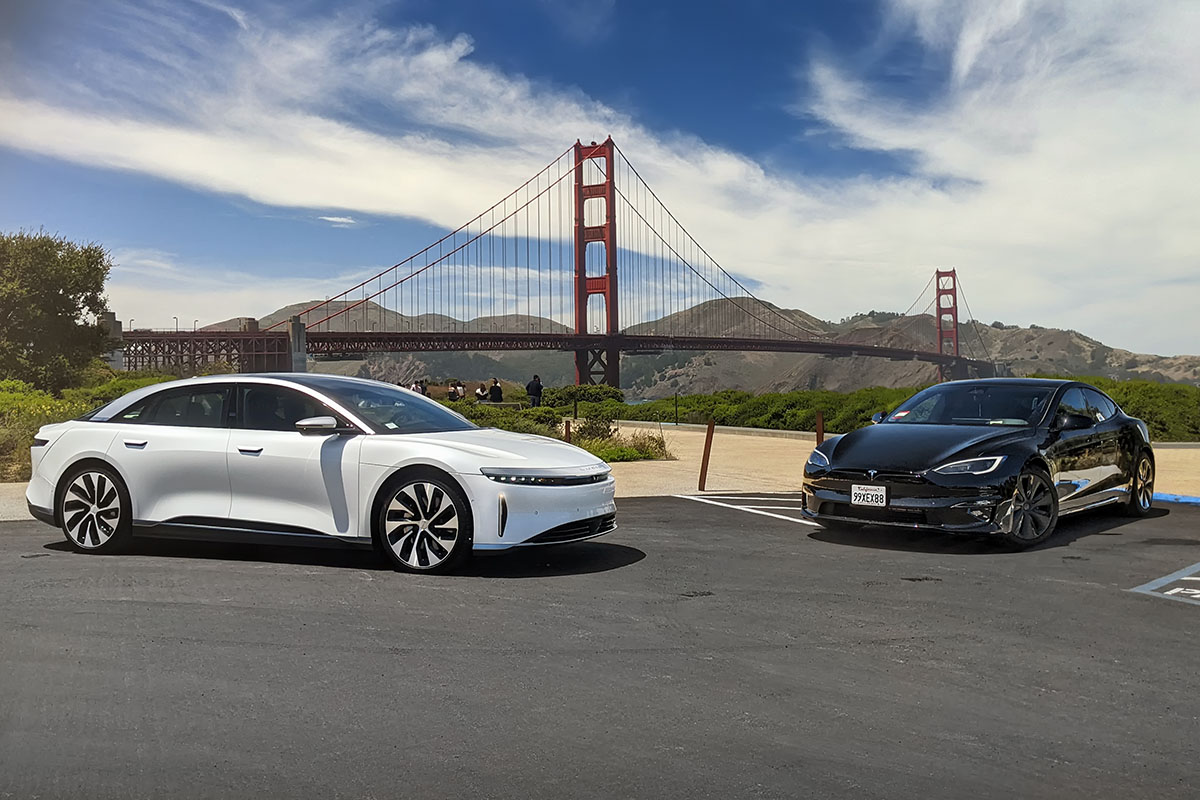
In the high-stakes arena of luxury electric vehicles, two titans stand toe-to-toe, each wielding a weapon forged from innovation and ambition. Tesla’s Model S, the seasoned champion with a decade of dominance, faces off against Lucid Motors’ Air, the brash newcomer that shattered records with a whisper rather than a roar. But here’s the twist: while the Model S has long been the benchmark for range, the Air’s EPA-certified 520-mile claim has sent shockwaves through the industry. So, the question lingers like a charged capacitor—when the rubber meets the road, which of these electrified gladiators truly delivers more real-world range? Buckle up. The answer isn’t as straightforward as a single spec sheet.
The Battle of the Spec Sheets: Where Numbers Meet Reality
At first glance, the Lucid Air’s EPA range rating of 520 miles seems untouchable, a figure that dwarfs the Tesla Model S’s 405-mile maximum. But numbers on paper rarely tell the full story. Range is a fickle beast, influenced by everything from ambient temperature to driving habits, and even the weight of your golf clubs in the trunk. The Model S, with its tried-and-true battery architecture and refined thermal management, has spent years proving its mettle in real-world conditions. Its 405-mile rating isn’t just a marketing ploy; it’s a testament to Tesla’s relentless optimization.
Meanwhile, Lucid’s Air wields a cutting-edge battery pack with a higher energy density, a design that promises efficiency without sacrificing power. Yet, the Air’s real-world range can dip below its EPA figure faster than a stock price in a recession, especially when pushed to its limits. The question isn’t just about who can claim the crown on paper—it’s about who can wear it when the road gets twisty, the weather turns foul, and the coffee in your cup holder starts to cool.
The Weight of Luxury: How Comfort Affects Efficiency
Luxury electric vehicles aren’t just cars; they’re rolling sanctuaries of plush leather, ambient lighting, and enough tech to make a Silicon Valley CEO jealous. But all that opulence comes with a hidden cost: weight. The Lucid Air, with its cavernous cabin and premium materials, tips the scales at over 5,000 pounds in its heaviest configuration. The Model S, while no lightweight at nearly 4,800 pounds, benefits from Tesla’s obsession with lightweighting—aluminum body panels, a minimalist interior, and a focus on stripping away the unnecessary.
Here’s the paradox: the Air’s extra weight doesn’t just sap range; it also dulls its responsiveness. A heavier car demands more energy to accelerate, and its regenerative braking system has to work overtime to recapture that lost momentum. The Model S, meanwhile, glides with a balletic grace, its battery pack tucked low for optimal weight distribution. In stop-and-go traffic or spirited highway overtakes, the difference becomes palpable. The Air may boast a longer EPA range, but the Model S often feels like it’s sipping electrons rather than guzzling them.
The Climate Conundrum: Cold Weather and Range Anxiety
Range isn’t just about how far you can go—it’s about how far you can go when the world conspires against you. Cold weather is the silent assassin of electric vehicle range, and both the Model S and Air are vulnerable. Tesla’s thermal management system, however, has a trick up its sleeve: its battery preconditioning feature. Before you even turn the key, the Model S warms its battery to an optimal temperature, minimizing the energy drain when you hit the road. The Air, while no slouch in this department, lacks Tesla’s years of refinement in this area.
In subzero temperatures, the Model S can retain up to 80% of its rated range, while the Air might struggle to hit 70%. The difference isn’t just academic; it’s the gap between arriving at your destination with a grin or a grimace. If you live in a climate where winter lasts longer than a TikTok trend, the Model S’s resilience could be the deciding factor in this duel.
The Hidden Variables: Speed, Terrain, and Driver Whims
Range isn’t a static number—it’s a living, breathing entity shaped by the road beneath you. Drive the Model S at a steady 65 mph, and it will hum along, sipping electrons like a fine wine. Push it to 80 mph, and its range plummets faster than a stock market in March. The Air, with its aerodynamic prowess and low drag coefficient, fares better at higher speeds, but even its efficiency has limits. The real-world range of both cars is a dance between speed, terrain, and the driver’s foot on the pedal.
Consider, too, the roads less traveled. The Model S, with its adaptive air suspension, can soak up potholes and rough patches with ease, preserving battery life by minimizing energy lost to jostling. The Air, while no slouch in the comfort department, prioritizes aerodynamics over ride quality, meaning its suspension is tuned more for smooth highways than crumbling backroads. If your daily commute involves a detour through a construction zone, the Model S might just edge out the Air in the range department.
The Tech Factor: Software and Driver Assistance
In the digital age, a car’s intelligence is just as important as its horsepower. Tesla’s over-the-air updates have long been a game-changer, tweaking everything from range estimates to acceleration curves without a single wrench being turned. The Model S’s software is a symphony of data, learning your habits and optimizing efficiency in real time. The Air, while no slouch in the tech department, lacks Tesla’s ecosystem of refinements. Its range predictions can be less accurate, its energy management less adaptive.
Then there’s the matter of driver assistance. Tesla’s Autopilot and Full Self-Driving features aren’t just about convenience; they’re tools that can help smooth out your driving, reducing unnecessary acceleration and braking. The Air’s DreamDrive Pro system is impressive, but it doesn’t yet have the same level of integration or real-world refinement. In the quest for maximum range, every watt saved counts—and sometimes, the best way to save watts is to let the car do the driving.
The Verdict: Which EV Truly Wins the Range War?
So, which electric titan emerges victorious in the battle for real-world range? The answer, as with most things in life, is a resounding “it depends.” If your idea of a perfect drive is a cross-country odyssey at a leisurely pace, the Lucid Air’s EPA rating might be the one to beat. But if your reality involves stop-and-go traffic, cold mornings, and the occasional lead foot, the Tesla Model S’s balance of efficiency, adaptability, and proven track record could be the smarter choice.
Ultimately, range is just one piece of the puzzle. The Model S offers a blend of performance, tech, and reliability that’s hard to match. The Air, meanwhile, represents the future—lighter, more efficient, and brimming with potential. But potential doesn’t always translate to real-world dominance. In the end, the best EV for you is the one that aligns with your lifestyle, your driving habits, and your tolerance for the occasional range anxiety.
So, which side will you take in this electrified showdown? The seasoned champion or the record-breaking upstart? The choice, like the open road, is yours to make.