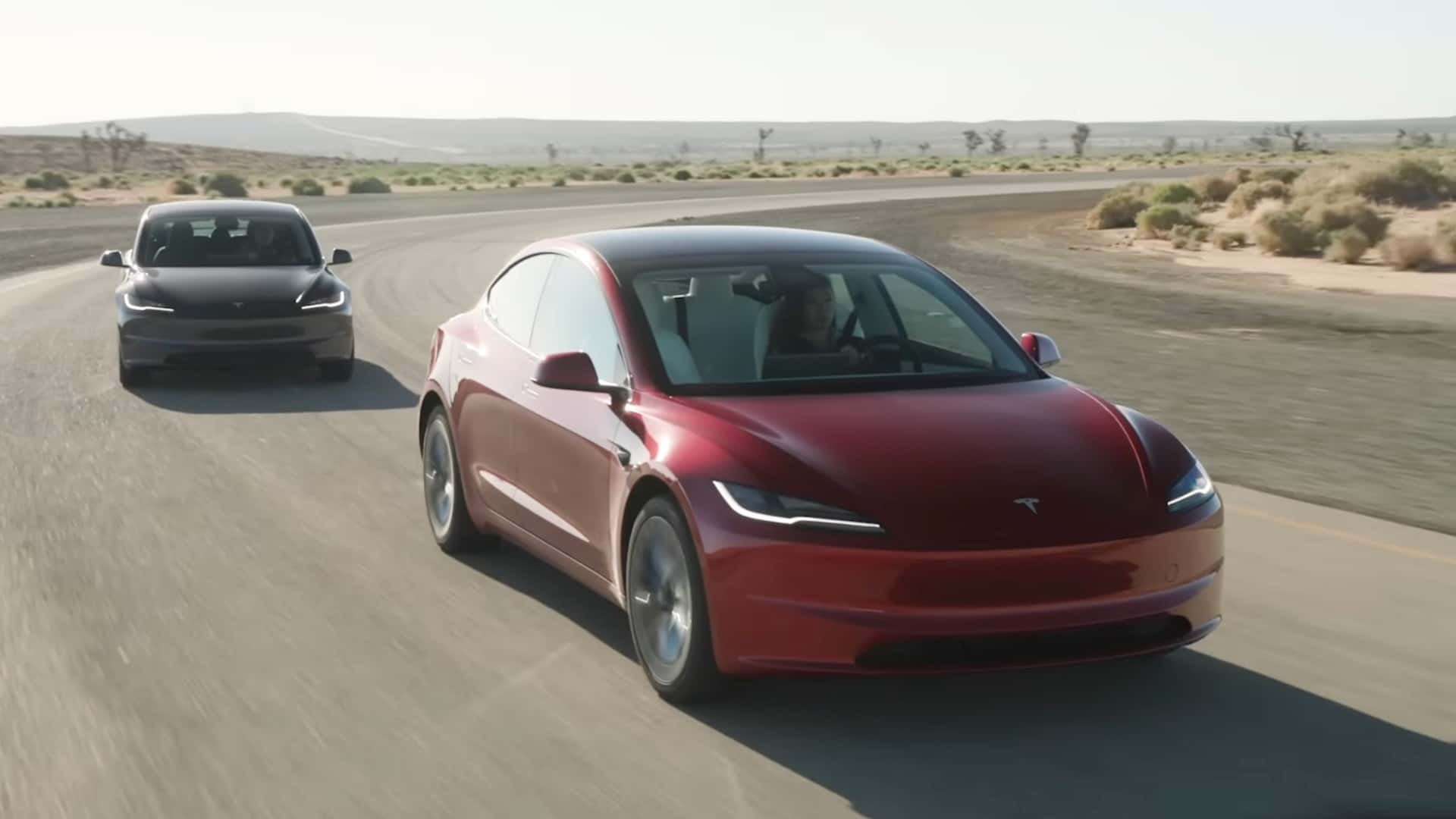
In the ever-evolving landscape of electric vehicles, the Tesla Model 3 Long Range has emerged as a benchmark for efficiency, performance, and technological sophistication. For those who traverse vast distances on highways, understanding the real-world range at a steady 70 mph becomes paramount. This test not only measures raw numbers but also reveals the vehicle’s ability to sustain energy under sustained aerodynamic and mechanical stress. Here, we dissect the nuances of the Model 3 Long Range’s 70 mph highway range test, offering insights for prospective buyers, enthusiasts, and skeptics alike.
Highway driving at 70 mph is a crucible for any electric vehicle. Unlike city commutes, where regenerative braking and stop-and-go traffic can mask inefficiencies, sustained highway speeds demand relentless energy expenditure. The Model 3 Long Range, with its aerodynamic silhouette and advanced battery management, faces this challenge head-on. The test results illuminate not just how far the car can go, but how it adapts to the relentless demands of the open road.
The Anatomy of a 70 MPH Range Test
The methodology behind a 70 mph range test is meticulous. Starting with a fully charged battery, the vehicle is driven on a controlled highway route at a constant 70 mph, with minimal deviations in speed. Climate control settings, tire pressure, and auxiliary loads are standardized to ensure consistency. Modern EVs like the Model 3 Long Range employ sophisticated thermal management systems to maintain battery efficiency, even under prolonged high-speed conditions. This test, therefore, becomes a litmus test for the vehicle’s thermal resilience and energy optimization.

What makes this test particularly revealing is the interplay between aerodynamics and energy consumption. At 70 mph, air resistance becomes a dominant factor, with the Model 3’s sleek design working in tandem with its low drag coefficient to mitigate energy loss. The vehicle’s regenerative braking system also plays a nuanced role, though its impact is less pronounced at steady speeds compared to urban driving. The test underscores how Tesla’s engineering prioritizes efficiency without compromising performance.
Real-World Variables: Weather, Traffic, and Terrain
While controlled tests provide a baseline, real-world conditions introduce variables that can skew results. Cold weather, for instance, can sap battery efficiency by up to 20%, as thermal management systems work overtime to maintain optimal operating temperatures. Conversely, mild conditions allow the battery to operate closer to its peak efficiency, yielding more optimistic range figures. The Model 3 Long Range’s heat pump system, a feature absent in many competitors, offers a distinct advantage by reducing energy loss during temperature regulation.
Traffic patterns also influence range outcomes. Frequent acceleration and deceleration, common in stop-and-go scenarios, can either enhance or diminish range depending on the vehicle’s regenerative capabilities. On highways, however, the Model 3’s adaptive cruise control and regenerative braking system work in harmony to maximize energy recovery during light braking events. Terrain, too, plays a role—hilly routes demand more energy during ascents, while descents can partially offset this through regenerative braking.
Comparative Insights: How the Model 3 Stacks Up
When benchmarked against its peers, the Model 3 Long Range’s 70 mph range performance is nothing short of impressive. Competing EVs, particularly those with larger battery packs, often struggle to match its efficiency due to higher weight and less aerodynamic profiles. The Model 3’s 19-inch wheels, for example, are optimized for low rolling resistance, a critical factor in highway range. In contrast, vehicles with larger, more aggressive wheel designs often see diminished range at sustained speeds.

The vehicle’s dual-motor all-wheel-drive system further enhances its adaptability. While AWD systems typically increase energy consumption, Tesla’s implementation is finely tuned to balance power delivery with efficiency. This is evident in the Model 3 Long Range’s ability to maintain a steady pace without excessive energy draw, a testament to its sophisticated power management algorithms.
Battery Degradation and Long-Term Viability
Beyond immediate performance, the 70 mph range test offers a glimpse into the Model 3 Long Range’s long-term viability. Battery degradation is an inevitable aspect of EV ownership, but Tesla’s advanced battery chemistry and thermal management systems mitigate this risk. Over time, the vehicle’s range may diminish, but the rate of degradation is typically slower than that of competitors. This is particularly relevant for highway commuters who rely on consistent range for daily travel.
The Model 3’s battery preconditioning feature also plays a pivotal role in maintaining efficiency. By preheating the battery before a long drive, the vehicle ensures optimal performance from the outset, reducing energy loss associated with cold starts. This feature, combined with Tesla’s over-the-air updates, allows the Model 3 Long Range to adapt and improve over time, further enhancing its real-world range capabilities.
Practical Implications for Owners
For prospective owners, the 70 mph range test serves as a practical guide to real-world usability. A range of 300+ miles at 70 mph translates to approximately 250-270 miles of usable range, accounting for buffer zones and unexpected detours. This figure is particularly reassuring for road trips, where charging infrastructure may be sparse. The Model 3 Long Range’s compatibility with Tesla’s Supercharger network ensures minimal downtime, making it a compelling choice for long-distance travelers.
Owners should also consider the vehicle’s efficiency in mixed driving conditions. While the 70 mph test provides a snapshot of highway performance, daily commutes often involve a blend of city and highway driving. The Model 3’s regenerative braking system excels in urban environments, offsetting some of the energy loss incurred on highways. This versatility ensures that the vehicle remains efficient regardless of the driving scenario.
The Future of Highway Range Testing
As electric vehicles continue to evolve, so too will the methodologies used to evaluate their performance. Future range tests may incorporate dynamic conditions, such as varying speeds and traffic simulations, to provide a more holistic view of real-world efficiency. The Model 3 Long Range, with its cutting-edge software and hardware, is well-positioned to adapt to these advancements. Its ability to integrate over-the-air updates ensures that it remains at the forefront of EV innovation.
The 70 mph range test is more than a mere exercise in data collection—it is a testament to the Model 3 Long Range’s engineering prowess and adaptability. By pushing the vehicle to its limits, we gain a deeper understanding of its capabilities and limitations, empowering consumers to make informed decisions. In a market where range anxiety remains a persistent concern, the Model 3 Long Range stands as a paragon of efficiency and reliability.
For those who demand both performance and practicality, the Tesla Model 3 Long Range delivers in spades. Its ability to excel in highway conditions, while remaining versatile enough for urban driving, makes it a standout choice in the competitive EV landscape. As the automotive industry marches toward an electric future, the Model 3 Long Range serves as a benchmark, illustrating what is possible when innovation meets real-world demands.