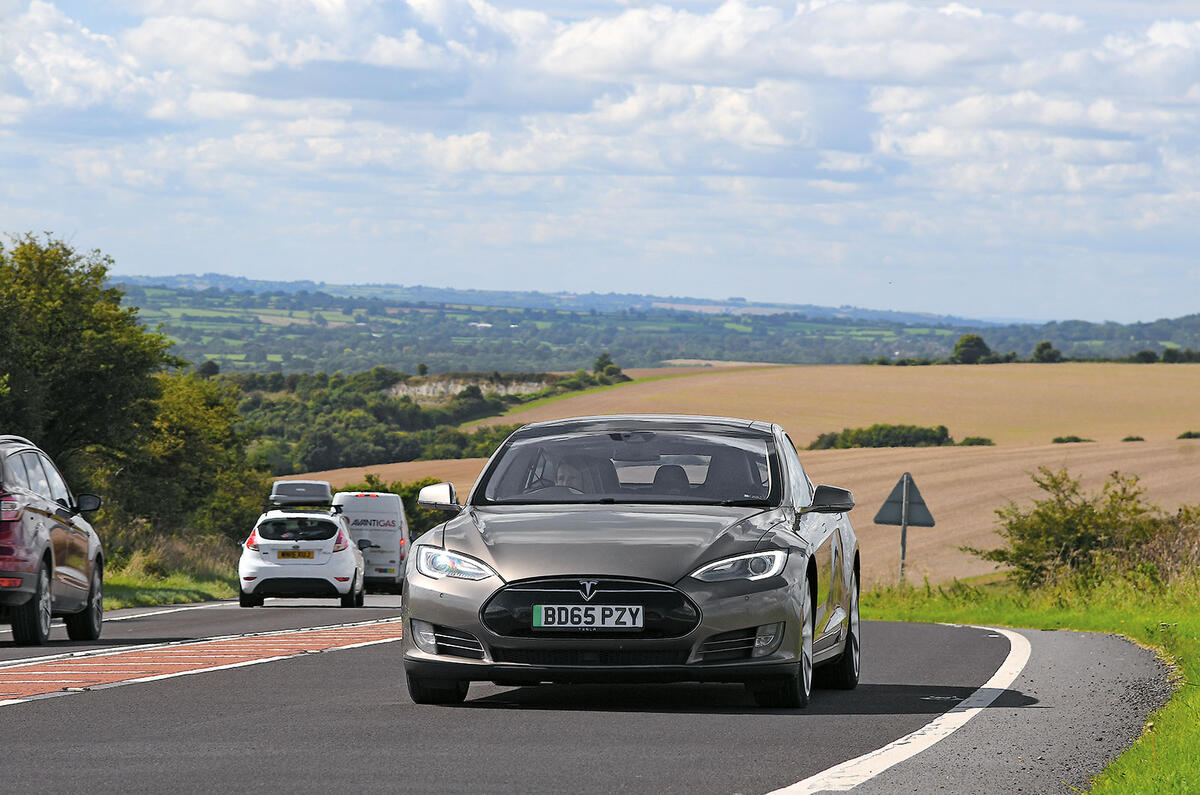
The Tesla Model S glides down the highway like a silent comet, its electric hum barely disturbing the air as the world blurs past. This is no ordinary sedan—it is a rolling manifesto of the future, a machine that turns the mundane act of cruising into an act of quiet revolution. Behind its sleek, minimalist façade lies a symphony of innovation: a battery that outlasts generations of gas engines, an autopilot that reads the road like a seasoned navigator, and a performance envelope that defies the laws of traditional automotive physics. To drive the Model S is to experience the paradox of stillness and velocity, of effortless grace meeting relentless capability. It is not merely a car; it is a statement whispered at 75 miles per hour, a challenge to the conventions of what a road trip can be.
The allure of the Tesla Model S on the open road is not just about speed—it is about the absence of friction. There are no gears to grind, no pistons to labor, no exhaust to choke the horizon. Instead, there is a seamless transfer of energy, a direct dialogue between driver and machine, where every input yields an immediate, predictable response. This is the essence of the “Highway Cruiser”—a vehicle that doesn’t just traverse distance but redefines the very act of travel. It is the automotive equivalent of a Zen master: calm on the surface, infinitely powerful beneath.
The Silent Symphony of Electric Propulsion
At the heart of the Model S’s highway prowess lies its electric powertrain, a marvel of engineering that transforms the act of acceleration into a near-instantaneous surge of torque. Unlike internal combustion engines, which labor through gears and revs, the Model S delivers its full might from the very first touch of the pedal. This is not mere speed; it is a liberation from the tyranny of lag. The sensation is akin to being launched by an invisible hand, a feeling that grows more exhilarating with each passing mile.
Yet, the true genius of the Model S’s propulsion system is its subtlety. There is no growl, no vibration, no mechanical cacophony to disrupt the serenity of the drive. Instead, the cabin hums with a low, almost imperceptible whir, a sound so faint it borders on the meditative. This is the antithesis of the gasoline engine’s roar—a whisper that speaks volumes about the future of transportation. On the highway, the Model S does not announce its presence; it commands attention through its absence of noise, a silent sentinel slicing through the landscape.
Consider the experience of overtaking on a multi-lane highway. In a traditional car, the process is a symphony of gear shifts, engine strain, and sensory overload. In the Model S, it is a flick of the wrist, a gentle press of the accelerator, and suddenly you are gliding past slower traffic with the grace of a bird in flight. The lack of engine noise means the only sounds are the rush of wind and the faint hum of tires on asphalt, a soundtrack that heightens the driver’s connection to the road.
The Autopilot: A Co-Pilot of Unprecedented Precision
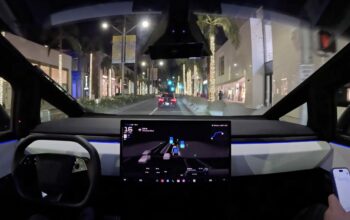
The Tesla Model S is not just a driver’s car; it is a navigator’s dream. The Autopilot system, with its suite of cameras, sensors, and neural networks, transforms the highway into a domain of effortless control. It is not, as some skeptics claim, a crutch for the lazy driver—it is a force multiplier, a second set of eyes that never tires, never blinks, and never loses focus. On long stretches of open road, Autopilot becomes an extension of the driver, anticipating lane changes, adjusting speed to traffic, and even navigating complex interchanges with the precision of a seasoned race car driver.
Yet, the real magic of Autopilot lies in its ability to instill confidence. There is no hesitation, no second-guessing. The system reads the road like a conductor reads a score, adjusting in real time to the ebb and flow of traffic. It is not infallible, but its reliability borders on the uncanny. On a recent cross-country journey, the Model S effortlessly maintained a steady 70 mph on a winding interstate, its adaptive cruise control adjusting to the contours of the road while the driver relaxed, hands off the wheel, marveling at the seamless integration of man and machine.
This is not to say that Autopilot removes the driver from the equation. Far from it. It is a tool that enhances the driving experience, freeing the driver to focus on the journey rather than the mechanics of it. It is the difference between piloting a ship through treacherous waters and sailing on a calm sea—both require skill, but one demands far less effort.
The Battery: The Invisible Lifeline of Long-Distance Travel
A road trip in a gasoline-powered car is a negotiation with physics. Fuel stops are inevitable, and each detour to a gas station is a reminder of the limitations of internal combustion. The Tesla Model S, however, turns this paradigm on its head. With a range that stretches well beyond 300 miles on a single charge, the Model S redefines the concept of long-distance travel. It is not a vehicle that forces you to plan your life around its limitations; it is one that adapts to your ambitions.
The Supercharger network, Tesla’s sprawling web of high-speed charging stations, is the backbone of this freedom. Strategically placed along major highways and in remote outposts, these stations can replenish up to 80% of a Model S’s battery in as little as 30 minutes. The process is seamless—park, plug in, and within moments, you are back on the road, your vehicle sipping electricity like a traveler at an oasis. There is no waiting for the pump to finish, no fumbling with credit cards, no lingering at a gas station like a prisoner serving a sentence. Instead, there is a quiet efficiency, a sense of purpose that aligns with the modern ethos of travel.
Consider the experience of crossing a continent in the Model S. The journey is not a series of stops and starts, but a continuous flow of motion. You leave one city, charge while you stretch your legs or grab a coffee, and arrive at your destination with the same energy you left with. The battery is not a constraint; it is a facilitator, a silent partner in the adventure. This is the essence of the “Highway Cruiser”—a vehicle that does not just take you from point A to point B, but transforms the journey itself into an experience worth savoring.
The Cabin: A Sanctuary of Silence and Innovation
Step inside the Tesla Model S, and you are greeted by a space that feels more like the bridge of a starship than the interior of a car. The dashboard is a single, unbroken pane of glass, a digital canvas that displays everything from navigation to entertainment to vehicle diagnostics. There are no physical buttons, no cluttered center consoles—just a clean, minimalist expanse that puts the focus squarely on the road ahead.
The seats, upholstered in premium materials, cradle the driver and passengers in a cocoon of comfort. The lack of engine noise means conversations flow effortlessly, and the absence of vibrations ensures that even the longest drives feel restorative rather than taxing. The climate control system is a marvel of precision, maintaining a constant temperature with the gentleness of a summer breeze. It is a cabin designed for the modern traveler—a place where technology serves humanity, not the other way around.
But the true innovation of the Model S’s interior lies in its adaptability. The center console slides forward, revealing a hidden storage compartment that can accommodate everything from a laptop to a small suitcase. The rear seats fold flat, transforming the cabin into a mobile lounge or a makeshift bed for impromptu naps. The panoramic glass roof bathes the interior in natural light, creating an open, airy atmosphere that belies the car’s sleek, aerodynamic profile. This is not just a car; it is a rolling sanctuary, a place where the stresses of the road melt away with each passing mile.
The Road Ahead: A Glimpse into the Future of Travel
The Tesla Model S is more than a car—it is a harbinger of what automotive travel can be in the 21st century. It is a vehicle that challenges our notions of speed, efficiency, and comfort, all while doing so with an elegance that borders on the poetic. On the highway, it is a silent comet, a machine that turns the act of driving into an experience of pure, unadulterated freedom.
Yet, its appeal extends beyond the practical. The Model S is a statement—a declaration that the future of transportation is not just electric, but intelligent, not just fast, but seamless. It is a vehicle that invites you to rethink what a road trip can be: not a series of stops and starts, but a continuous flow of motion, a journey that is as enjoyable as the destination. In a world where time is the most precious commodity, the Model S offers something even more valuable: the gift of undistracted travel, of a drive that feels less like a chore and more like an escape.
As the sun sets on the horizon and the Model S continues its silent glide down the highway, it is impossible not to feel a sense of awe. This is not just a car. It is a revolution on wheels—a machine that has redefined the art of the road trip, and in doing so, has set a new standard for what the future of driving can be.