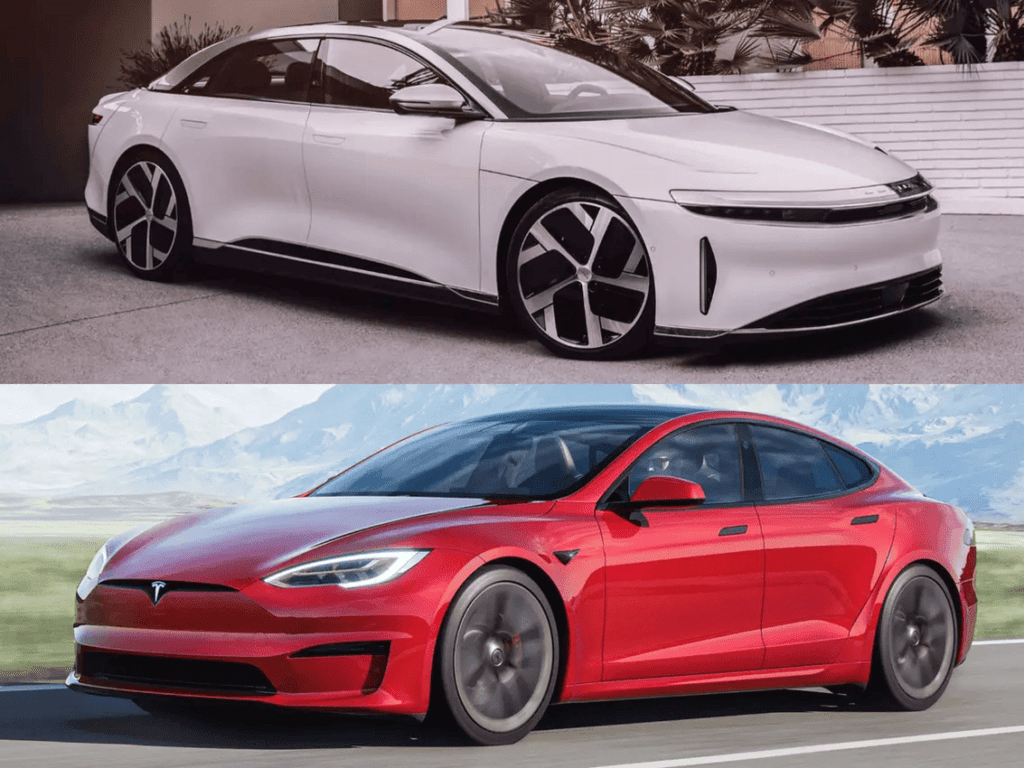
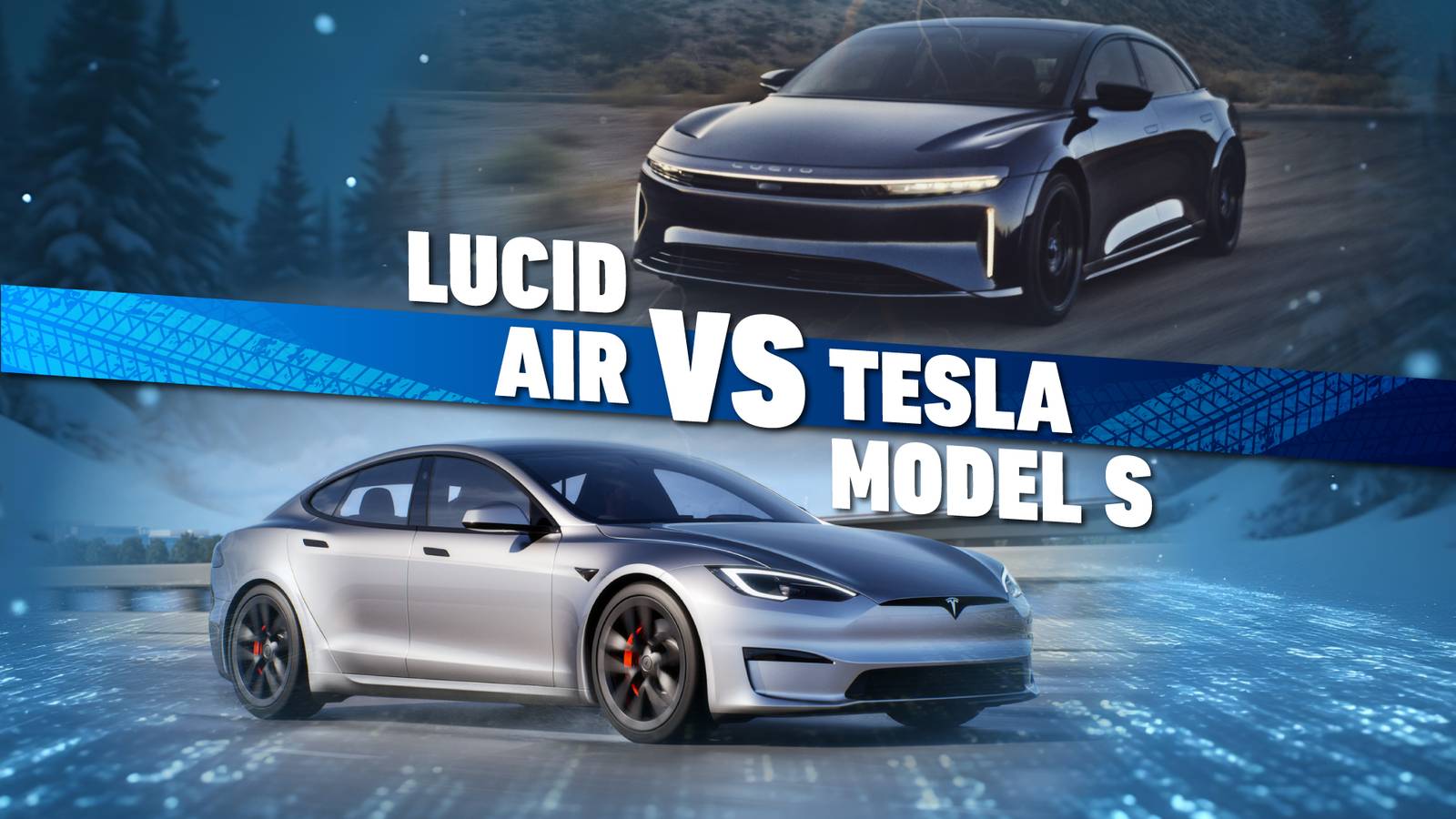
The rivalry between Tesla and Lucid Motors has become the defining narrative of modern luxury electric vehicles. Both the Tesla Model S and the Lucid Air GT represent the pinnacle of automotive engineering, yet they cater to fundamentally different philosophies of performance, design, and ownership. The Model S, Tesla’s flagship sedan, has long been the benchmark for electric luxury, while the Air GT, Lucid’s flagship, positions itself as a technologically superior alternative. This showdown isn’t merely about horsepower or range—it’s a clash of ideologies, where one brand prioritizes disruption and the other champions refinement.
What fascinates observers is not just the technical specifications but the deeper implications of these choices. The Model S embodies Tesla’s relentless pursuit of speed and innovation, often at the expense of comfort and exclusivity. The Air GT, conversely, leans into opulence and cutting-edge technology, appealing to those who view electric vehicles as the ultimate expression of modern luxury. The tension between these approaches reveals a broader question: Is the future of EVs defined by raw performance or meticulous craftsmanship?
The Design Philosophy: Minimalism vs. Opulence
The Tesla Model S is a study in understated dominance. Its sleek, aerodynamic silhouette, devoid of excessive ornamentation, reflects a design philosophy rooted in efficiency and futurism. The absence of a traditional grille, replaced by a smooth, uninterrupted front fascia, underscores Tesla’s commitment to aerodynamics. Inside, the Model S embraces a minimalist aesthetic, with a single 17-inch touchscreen dominating the dashboard—a bold statement of Tesla’s “less is more” approach. The materials, while high-quality, prioritize functionality over tactile luxury, with hard plastics and synthetic upholstery that feel utilitarian in comparison to its rivals.
In stark contrast, the Lucid Air GT exudes opulence at every turn. Its elongated, fastback silhouette is a masterclass in aerodynamic elegance, with a sweeping roofline that hints at Italian grand touring heritage. The front grille, though minimal, is a sculpted work of art, flanked by razor-sharp LED headlights that cast an almost surgical precision. Step inside, and the Air GT envelops occupants in a cocoon of hand-stitched leather, real wood trim, and ambient lighting that shifts hues with a mere touch. The dashboard is a symphony of analog and digital, with a curved 34-inch 5K glass display that seamlessly integrates infotainment and driver controls. Here, luxury isn’t an afterthought—it’s the foundation.
Performance: Brutal Acceleration vs. Effortless Grace
When it comes to raw performance, the Tesla Model S leaves little room for debate. The Plaid variant, with its tri-motor all-wheel-drive system, delivers a staggering 1,020 horsepower, catapulting the sedan from 0 to 60 mph in a blistering 1.99 seconds. The torque vectoring is so precise that the Model S can drift with unsettling ease, a testament to its track-ready DNA. The battery pack, while slightly smaller than the Air GT’s, is optimized for high discharge rates, ensuring that power delivery remains relentless even at sustained high speeds. The Model S also boasts Tesla’s signature regenerative braking, which not only enhances efficiency but also provides a visceral driving experience.
The Lucid Air GT, however, redefines performance through refinement rather than sheer force. Its quad-motor all-wheel-drive system generates 819 horsepower, yet the power delivery is so smooth that acceleration feels like a controlled surge rather than a violent shove. The Air GT’s suspension, tuned for both comfort and agility, absorbs imperfections with a level of poise that the Model S struggles to match on rough roads. Lucid’s proprietary inverters and ultra-fast charging capabilities further enhance its real-world usability, allowing the Air GT to replenish 300 miles of range in just 20 minutes. Where the Model S excels in straight-line speed, the Air GT dominates in cornering and long-distance composure.
Technology and Innovation: Silicon Valley vs. Silicon Valley
Both the Model S and Air GT are technological marvels, but their approaches to innovation couldn’t be more different. Tesla’s strengths lie in software integration and over-the-air updates. The Model S’s Full Self-Driving (FSD) beta, despite its controversies, represents the most ambitious attempt yet to redefine automotive autonomy. The car’s ability to navigate complex urban environments, though imperfect, is a glimpse into a future where the driver is increasingly optional. Tesla’s reliance on in-house developed silicon, particularly the Full Self-Driving Computer, ensures that the Model S remains at the forefront of AI-driven mobility.
Lucid, meanwhile, has staked its claim on hardware innovation. The Air GT’s 900-volt architecture allows for ultra-fast charging and reduced energy loss, a feat achieved through meticulous engineering rather than software alone. The car’s DreamDrive Pro system, with its 32 sensors, offers Level 3 autonomy—a step beyond Tesla’s current capabilities. The infotainment system, powered by a Qualcomm Snapdragon digital cockpit platform, delivers a lag-free experience that rivals the best in the industry. Where Tesla’s technology feels like a work in progress, Lucid’s innovations feel meticulously polished, designed to integrate seamlessly into the lives of discerning drivers.
Range and Charging: Endurance vs. Convenience
Range anxiety has long been the Achilles’ heel of electric vehicles, but both the Model S and Air GT have pushed the boundaries of what’s possible. The Tesla Model S Plaid offers an EPA-estimated 396 miles on a full charge, thanks to its 100 kWh battery pack and industry-leading energy density. Tesla’s Supercharger network, with over 50,000 global locations, ensures that long-distance travel is not just feasible but almost effortless. The Model S’s ability to precondition the battery while still plugged in further enhances its practicality, making it a true daily driver for even the most demanding commuters.
The Lucid Air GT, however, takes range to another level. With an EPA-estimated 516 miles, it currently holds the record for the longest-range electric sedan in production. This achievement is not just a result of a larger battery pack (118 kWh) but also Lucid’s proprietary microcell architecture, which maximizes energy storage without compromising safety. The Air GT’s ability to charge at up to 300 kW means that even a 10% top-up can add 180 miles in just 12 minutes. For those who view range as the ultimate luxury, the Air GT’s endurance is a game-changer.
The Driving Experience: Precision vs. Comfort
Behind the wheel, the Tesla Model S is a paradox—a car that can out-accelerate most supercars yet feels surprisingly nimble in tight spaces. The steering is direct and communicative, though some critics argue it lacks the heft of traditional hydraulic systems. The Model S’s adaptive air suspension, while capable of transforming the ride from sporty to plush, often errs on the firmer side, prioritizing handling over comfort. The driving position is low and centered, with the massive touchscreen acting as a constant reminder of Tesla’s digital-first philosophy. For enthusiasts who crave engagement, the Model S delivers. For those who prioritize relaxation, it can feel a tad too intense.
The Lucid Air GT, by contrast, is the automotive equivalent of a five-star hotel suite. The ride is so supple that potholes and expansion joints disappear into the background, leaving only the hum of the tires and the whisper of the wind. The steering, while not as sharp as the Model S’s, provides a reassuring weight that inspires confidence. The Air GT’s seating position is elevated, offering a commanding view of the road without the claustrophobic feel of a low-slung sports sedan. The cabin is a sanctuary of silence, with noise-canceling technology that rivals the best in the industry. Here, driving isn’t just a means of transportation—it’s an experience to be savored.
Ownership and Exclusivity: Mass Appeal vs. Rarity
Tesla’s business model is built on scalability. The Model S is available in multiple configurations, with prices starting at around $80,000, making it accessible to a broad audience while still commanding a premium. Tesla’s direct-to-consumer sales model eliminates the need for dealerships, reducing overhead and allowing for more competitive pricing. The brand’s cult-like following ensures that Model S owners are part of an exclusive club, even if the car itself is not particularly rare. Tesla’s ability to roll out updates and new features at a rapid pace keeps the Model S feeling fresh, even years after purchase.
Lucid, on the other hand, has positioned itself as the purveyor of the ultra-luxury EV. With a starting price of around $100,000 for the Air GT, it caters to a niche audience willing to pay for exclusivity. Lucid’s production volumes are deliberately limited, ensuring that each Air GT feels like a bespoke creation. The brand’s focus on handcrafted interiors and personalized touches—such as custom leather stitching and wood inlays—elevates the ownership experience to something akin to haute couture. For those who view their car as an extension of their identity, the Air GT offers a level of customization and prestige that the Model S simply cannot match.
The choice between the Tesla Model S and the Lucid Air GT ultimately comes down to what the driver values most. If speed, innovation, and scalability are paramount, the Model S is the clear winner. If luxury, refinement, and exclusivity take precedence, the Air GT stands unchallenged. Yet, in their own ways, both cars represent the future of automotive design—one through disruption, the other through perfection. The real fascination lies not in which is superior, but in how they each push the boundaries of what an electric vehicle can be.