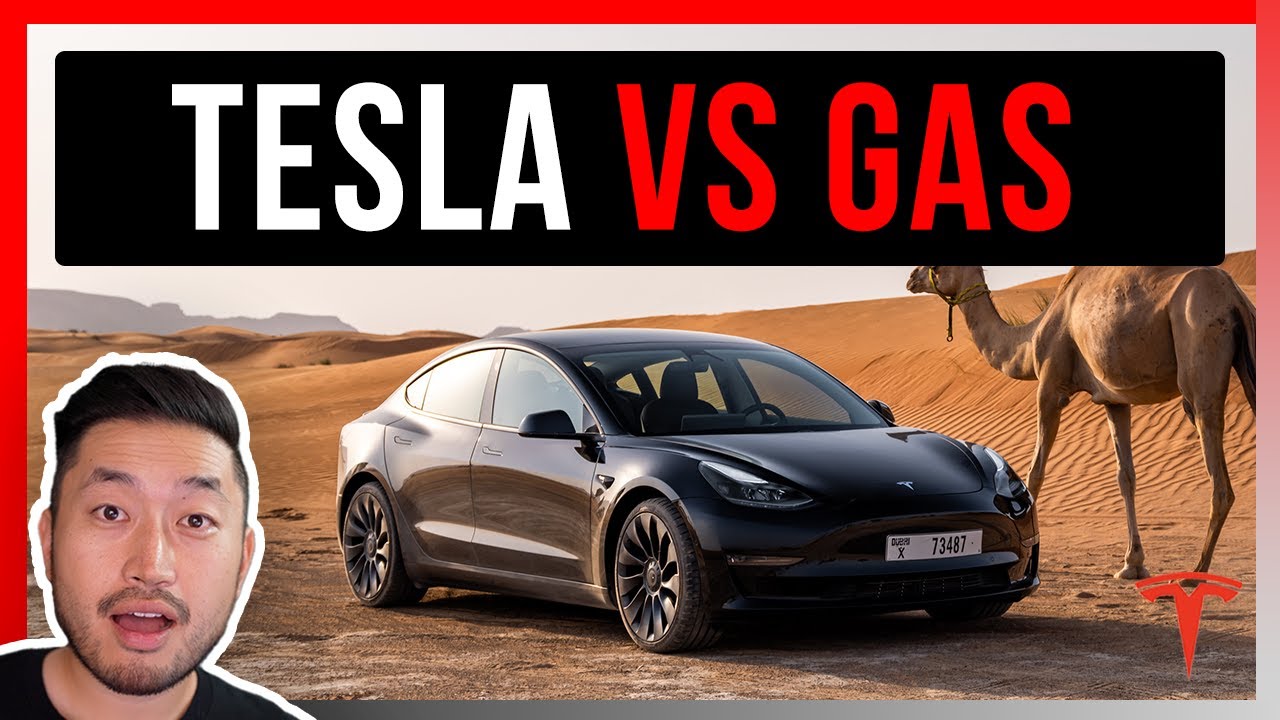
In an era where the specter of rising gas prices looms larger than ever, the allure of electric vehicles—particularly Teslas—has surged beyond mere trendiness. The promise of substantial savings over time is a siren call for many, but the reality is often obscured by a fog of half-truths and oversimplified calculations. By 2026, the financial calculus between owning a Tesla and a gas-powered car will have evolved, shaped by fluctuating energy costs, technological advancements, and shifting consumer behaviors. To truly grasp the magnitude of these savings, we must peel back the layers of conventional wisdom and examine the intricate interplay of factors that define the true cost of ownership.
The fascination with Tesla’s gas savings isn’t just about the dollars and cents—it’s about the intangible shift in how we perceive mobility. There’s a quiet revolution underway, one where the hum of an internal combustion engine is replaced by the whisper of electrons coursing through a battery. This transition isn’t merely economic; it’s cultural, environmental, and deeply personal. Yet, for all its promise, the path to savings is fraught with variables that demand closer scrutiny. What does it truly cost to charge a Tesla in 2026 compared to fueling a gas-guzzler? And how do these costs stack up against the initial sticker shock of a premium electric vehicle?
The Hidden Economics of Charging: Beyond the Pump
The most glaring misconception about Tesla ownership is the assumption that charging is always cheaper than filling up at the pump. While this holds true in many scenarios, the reality is nuanced. In 2026, the cost of electricity will vary dramatically depending on location, time of use, and charging infrastructure. Homeowners with solar panels may enjoy near-zero charging costs, while apartment dwellers relying on public chargers could face steep premiums. The average cost per kilowatt-hour (kWh) for residential charging is projected to hover around $0.12 to $0.18, but this figure masks the volatility of energy markets and regional disparities.

Consider the Tesla Model 3 Long Range, which boasts an efficiency of approximately 250 watt-hours per mile. At an average electricity rate of $0.15 per kWh, the cost to drive 12,000 miles annually would amount to roughly $450. Compare this to a gas-powered sedan achieving 30 miles per gallon, where 12,000 miles would require 400 gallons of gasoline. At an average price of $3.50 per gallon, the annual fuel cost would be $1,400—a difference of $950 in favor of the Tesla. Yet, this comparison assumes ideal conditions. In states with high electricity rates or during peak demand periods, the savings could dwindle to a mere $200 annually.
The disparity becomes even more pronounced when factoring in maintenance. Teslas, with their fewer moving parts, typically incur lower service costs over time. No oil changes, no transmission fluid replacements, and regenerative braking systems that extend the life of brake pads. Over five years, these savings could easily surpass $1,500, further tilting the scales in favor of electric vehicles.
The Illusion of Upfront Costs: Depreciation and Incentives
Critics of Tesla ownership often point to the higher initial purchase price as a dealbreaker. A 2026 Tesla Model Y, for instance, may carry a sticker price of $50,000, while a comparable gas-powered SUV could be listed at $35,000. The difference is undeniable, but it’s only half the story. Depreciation—the silent wealth eroder—plays a pivotal role in the long-term financial equation. Teslas, particularly those with advanced autonomous driving features, tend to retain their value better than many gas-powered counterparts. Industry data suggests that a Tesla may depreciate by 30% over five years, compared to 50% for a traditional SUV. This means that after half a decade, the Tesla’s resale value could be $35,000, while the gas SUV might fetch only $17,500.
Then there are the incentives—both federal and state—that can shave thousands off the purchase price. The federal tax credit for electric vehicles, though reduced from its peak, still offers up to $7,500 in 2026. Combined with state-level rebates, the effective cost of a Tesla could drop below $40,000, narrowing the gap with gas-powered alternatives. Some states also offer perks like HOV lane access, free charging at public stations, and reduced registration fees, adding another layer of financial appeal.
Yet, incentives are not a universal panacea. In states with minimal EV support, the upfront cost remains a barrier. The calculus, then, isn’t just about comparing numbers—it’s about aligning those numbers with personal circumstances, priorities, and the willingness to navigate a patchwork of policies.
The Environmental Dividend: Savings Beyond the Wallet
While the financial savings are compelling, the environmental benefits of Tesla ownership represent a different kind of value—one that’s harder to quantify but no less significant. The average gas-powered car emits approximately 4.6 metric tons of CO2 annually, while a Tesla charged with renewable energy emits virtually none. Even when accounting for the carbon footprint of electricity generation, a Tesla produces roughly 50% less CO2 than its gas-guzzling counterpart over its lifetime. In 2026, as grid decarbonization accelerates, this gap will widen further.
There’s also the matter of energy independence. Gas prices are subject to geopolitical whims, supply chain disruptions, and speculative trading. Electricity, by contrast, is increasingly sourced from domestic renewables, offering a hedge against global volatility. For those who view energy security as a form of savings, the Tesla’s reliance on electrons rather than imported oil is an intangible asset that grows more valuable with each passing year.

The Psychological Equation: Convenience and Lifestyle
Beyond the ledger of dollars and emissions, there’s the matter of convenience—a factor that often escapes traditional cost-benefit analyses. Teslas eliminate the ritual of gas station pit stops, replacing them with the simplicity of plugging in at home or work. The Model S’s ludicrous acceleration, the Model Y’s spacious cargo capacity, and the over-the-air updates that continuously refine performance—these are not line items on a spreadsheet, but enhancements to daily life that defy easy monetization.
Yet, convenience comes at a price. The scarcity of high-speed chargers in rural areas, the anxiety of long road trips, and the learning curve of adapting to a new refueling paradigm can erode some of the savings. For urbanites with dedicated parking and access to fast chargers, the Tesla lifestyle is seamless. For others, the transition may require a period of adjustment, during which the perceived savings could feel more theoretical than tangible.
The Long Game: Resale Value and Technological Obsolescence
One of the most overlooked aspects of Tesla ownership is the role of software and technology in preserving value. Unlike gas-powered cars, which depreciate as mechanical components wear out, Teslas benefit from software updates that enhance performance, range, and features. A five-year-old Model 3 may not have the same battery capacity as a new one, but it could still receive improvements to its infotainment system, autopilot capabilities, and energy efficiency—factors that can keep it competitive in the used market.
This technological longevity introduces a new variable into the savings equation: the risk of obsolescence. While Teslas are designed to remain relevant for years, the rapid pace of EV innovation means that a 2026 model could face competition from newer, more advanced vehicles within a few years. The used market for Teslas may become saturated, potentially softening resale values. Conversely, as the broader automotive industry shifts toward electrification, gas-powered cars could face steeper depreciation curves, making Teslas comparatively more attractive.
Conclusion: The Savings Spectrum
The question of how much you save by choosing a Tesla over a gas-powered car in 2026 doesn’t have a single answer. It’s a spectrum, shaped by geography, driving habits, and personal values. For some, the savings will be substantial—thousands of dollars annually in fuel and maintenance costs, compounded by lower depreciation and environmental benefits. For others, the equation may not balance as neatly, particularly in regions where electricity is expensive or charging infrastructure is lacking.
What’s undeniable, however, is that the Tesla vs. gas savings debate has evolved from a simple cost comparison into a reflection of broader societal shifts. It’s about the future of energy, the ethics of transportation, and the way we measure value in an increasingly complex world. The real savings may not be found in the numbers alone, but in the choices we make—and the roads we choose to travel.