The allure of Tesla’s electric vehicles extends far beyond their cutting-edge performance and futuristic design. For many, the deciding factor in purchasing one of these machines isn’t just the thrill of acceleration or the whisper-quiet cabin—it’s the financial incentive that makes the transition to electric not just aspirational, but attainable. The $7,500 federal tax credit, a cornerstone of the U.S. government’s push toward sustainable transportation, has long been a beacon for eco-conscious drivers and budget-savvy consumers alike. Yet, as the automotive landscape evolves, so too do the rules governing who qualifies for this coveted credit. Navigating the labyrinthine eligibility criteria can feel like decoding a cryptic algorithm, leaving even the most diligent buyers in a state of bewilderment. Why do some models retain their tax credit status while others slip away? The answer lies not just in policy shifts, but in the intricate dance between manufacturing origins, battery composition, and the ever-shifting tides of federal regulation.
To demystify this complex topic, we must first understand the foundational pillars of the federal tax credit. Enacted under the Inflation Reduction Act of 2022, the credit was designed to accelerate the adoption of electric vehicles by making them more affordable. However, the legislation introduced stringent new requirements that prioritize domestically sourced materials and components. For a vehicle to qualify, it must meet three critical benchmarks: final assembly in North America, a battery with a certain percentage of critical minerals extracted or processed in the U.S. or a country with which it has a free trade agreement, and a battery component manufactured or assembled in North America. These conditions, while noble in their intent to bolster domestic industries, have created a patchwork of eligibility that changes with each model year.
The Tesla Models That Still Qualify for the Full $7,500 Credit
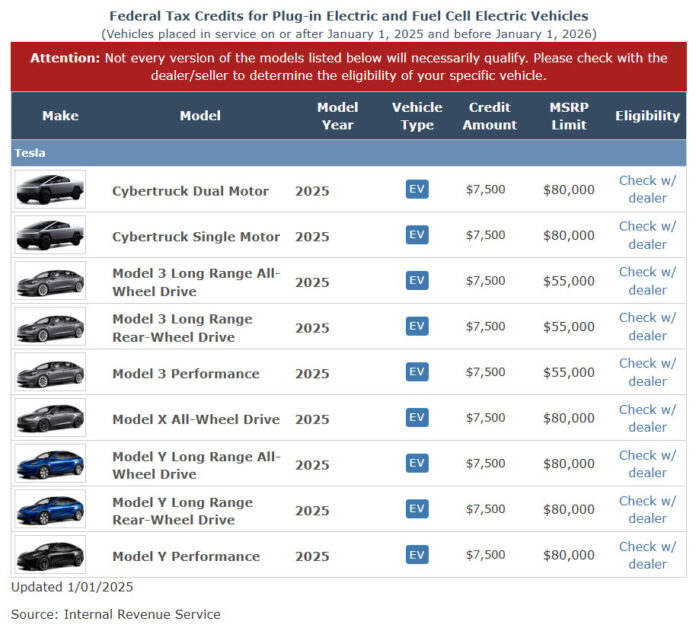
As of the 2025 model year, a select few Tesla offerings continue to meet the federal tax credit’s stringent criteria. The Model 3 Long Range and Model Y Long Range stand as the marquee examples, their qualification hinging on meticulous compliance with the new battery and assembly regulations. The Model 3 Long Range, in particular, has undergone subtle yet significant refinements to its battery chemistry and manufacturing processes, ensuring that it adheres to the 50% critical minerals requirement. This model’s qualification is a testament to Tesla’s relentless pursuit of efficiency, not just in performance, but in navigating the bureaucratic hurdles that govern modern vehicle incentives.
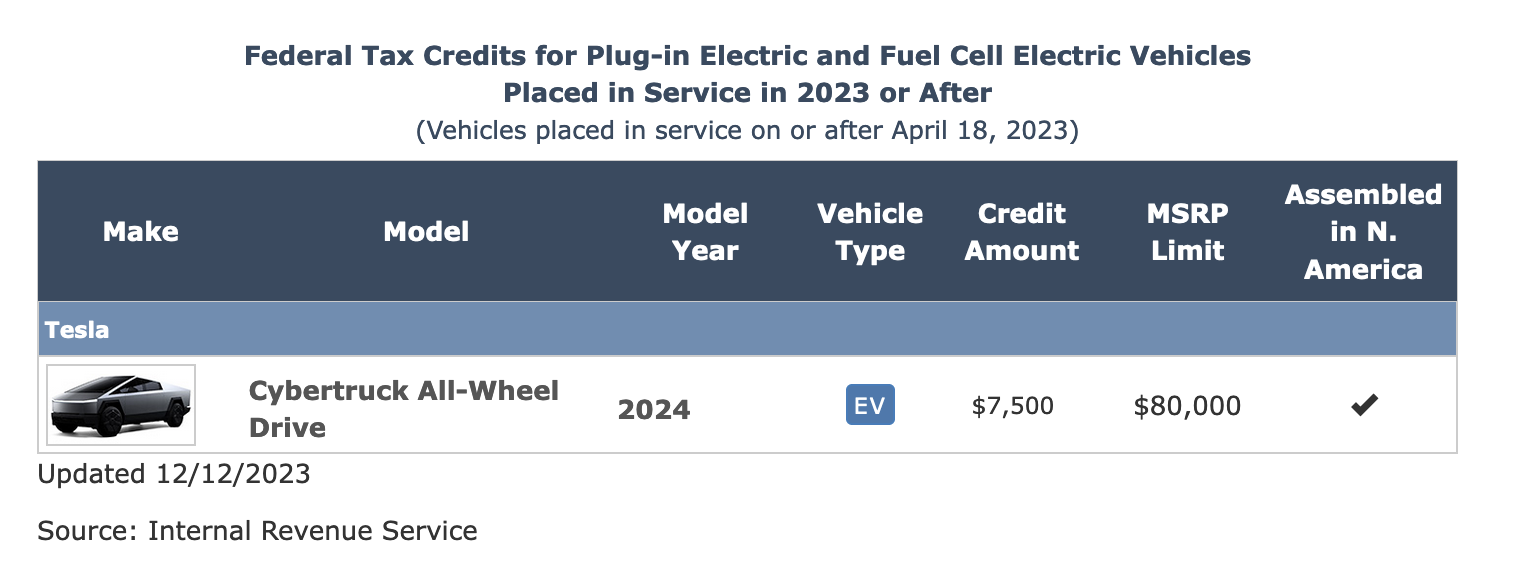
The Cybertruck, Tesla’s polarizing foray into the full-size pickup segment, has also secured its place in the tax credit roster. Its qualification is a triumph of engineering and policy alignment, as the vehicle’s battery pack, sourced from Gigafactories in Texas and Nevada, meets the North American manufacturing threshold. The Cybertruck’s eligibility underscores a broader trend: vehicles designed with modularity and scalability in mind are better positioned to adapt to regulatory shifts. Tesla’s vertical integration—controlling everything from raw material refining to final assembly—has proven to be a strategic advantage in this regard.
The Models That Have Slipped from the Tax Credit Fold
Not all Tesla models have been as fortunate. The Model S and Model X, once darlings of the tax credit era, now find themselves on the outside looking in. Their disqualification stems from a combination of factors: primarily, the stringent battery mineral requirements and the absence of certain components being sourced from qualifying countries. The Model S Plaid, despite its blistering performance, no longer meets the 50% critical minerals threshold, a casualty of the global supply chain’s complexity. Similarly, the Model 3 Rear-Wheel Drive and Model Y Rear-Wheel Drive have been edged out, their battery configurations failing to align with the updated regulations.
This divergence in eligibility highlights a broader narrative within the automotive industry: the tax credit is no longer a blanket incentive but a targeted tool designed to favor vehicles that align with specific economic and environmental goals. For Tesla, this has meant a strategic pivot toward models that can be produced with a higher degree of domestic content, even if it means phasing out older variants. The company’s decision to prioritize the Long Range variants of the Model 3 and Model Y is not merely a product of market demand—it’s a calculated response to the regulatory environment.

The Underlying Forces Shaping Tesla’s Tax Credit Strategy
To understand why certain models qualify while others do not, one must look beyond the surface-level policy changes and examine the deeper currents at play. The federal tax credit is not merely a financial incentive—it’s a geopolitical tool, a lever to reduce reliance on foreign battery materials and stimulate domestic manufacturing. Countries like China, which dominate the supply chain for critical minerals like lithium and cobalt, have become focal points of U.S. policy. The Inflation Reduction Act’s requirements are, in part, a response to this dependency, aiming to redirect investment toward allies and partners.
For Tesla, this has necessitated a recalibration of its supply chain. The company has invested heavily in securing North American sources for battery minerals, including partnerships with mines in Canada and the U.S. These efforts are not just about compliance—they’re about future-proofing the company’s offerings in an era where sustainability and sovereignty are increasingly intertwined. The qualification of the Cybertruck, for instance, is as much a story of battery innovation as it is of strategic foresight, with Tesla’s Gigafactories serving as hubs of domestic production.
Yet, the tax credit’s evolving nature also reflects a tension between ambition and pragmatism. While the goal of reducing carbon emissions is clear, the path to achieving it is fraught with complexity. Consumers who once saw the tax credit as a straightforward discount now face a labyrinth of rules, exceptions, and loopholes. This opacity can deter potential buyers, particularly those who lack the time or resources to navigate the fine print. Tesla’s challenge, then, is not just to build compelling vehicles, but to demystify the incentives that make them accessible.
What Buyers Should Consider When Evaluating Tesla Tax Credits
For those in the market for a Tesla, the tax credit should be just one piece of a larger decision-making puzzle. Prospective buyers must weigh the financial benefits against other factors, such as range, charging infrastructure, and long-term maintenance costs. The Model 3 Long Range, for example, offers an impressive 341 miles of range on a full charge, making it a practical choice for daily commuters. Meanwhile, the Cybertruck’s eligibility for the credit could tip the scales for buyers considering a transition from gas-powered trucks, despite its polarizing design.
It’s also worth noting that the tax credit is not a one-size-fits-all solution. The $7,500 benefit is applied as a credit against federal income tax liability, meaning it’s most valuable to buyers who owe taxes. Those with lower tax burdens may find the credit less impactful, though some states offer additional incentives that can further sweeten the deal. Additionally, the credit’s availability is subject to phase-out thresholds based on the buyer’s income and the vehicle’s MSRP, adding another layer of complexity to the equation.
Ultimately, the decision to purchase a Tesla—qualified for the tax credit or not—should align with both financial goals and personal values. The tax credit may provide a compelling nudge, but it’s the vehicle’s performance, reliability, and alignment with one’s lifestyle that will determine its true worth. For Tesla, the challenge is to continue innovating while ensuring that its products remain within reach of a broad audience, even as the rules of the game continue to shift.
The federal tax credit is more than a financial incentive—it’s a reflection of the evolving relationship between technology, policy, and consumer choice. As Tesla navigates this landscape, its ability to adapt will determine not just which models qualify for the credit, but which vehicles shape the future of transportation. For buyers, the journey is as much about understanding the fine print as it is about embracing the electric revolution. In this dance between regulation and innovation, one thing is clear: the road ahead is as dynamic as the vehicles that traverse it.