The automotive world stands at the precipice of a silent revolution—one that doesn’t roar with engine power but whispers with algorithmic precision. Tesla’s Vision-only Park Assist system has arrived, not as a mere upgrade, but as a tectonic shift in how we perceive vehicular autonomy. Gone are the days when ultrasonic sensors were the unsung heroes of parking assistance. Today, a camera-centric ecosystem takes center stage, promising not just functionality, but a redefinition of trust in autonomous systems. This isn’t just about parallel parking with fewer beeps; it’s about reimagining the very fabric of vehicular perception. What happens when the eyes of a car are no longer mechanical feelers but digital sentinels, trained on the world through the unblinking gaze of high-definition lenses? The answer lies not in the absence of sensors, but in the presence of a new kind of intelligence—one that sees, interprets, and acts with a clarity that was once the stuff of science fiction.
The Death of the Ultrasonic Echo: A Paradigm Shift in Parking Assistance
For decades, ultrasonic sensors have been the workhorses of parking assistance. They emit high-frequency sound waves, listen for echoes, and triangulate distances with the reliability of a metronome. Yet, despite their ubiquity, they suffer from a fundamental flaw: they are blind to the world beyond their immediate acoustic bubble. Rain, snow, or even a layer of grime can muffle their signals, rendering them as effective as a lighthouse in a fogbank. Tesla’s Vision-only system dismantles this dependency, replacing it with a neural network that doesn’t just measure distance—it comprehends space. The cameras don’t just see obstacles; they interpret context. A parked car isn’t just a blob of pixels; it’s a 3D entity with depth, trajectory, and intent. This transition from echo to insight marks the death of the ultrasonic era, not with a bang, but with the quiet hum of a neural processor crunching data in real time.
Consider the implications. No longer constrained by the limitations of sound, the Vision system thrives in environments where traditional sensors falter. A snowstorm that would blind ultrasonic sensors becomes a playground for cameras trained to see through the whiteout. A dimly lit parking garage, where echoes dissipate into nothingness, becomes a stage for Tesla’s visionary algorithms. The shift isn’t merely technical—it’s philosophical. We are no longer asking a car to *feel* its way through the world; we are asking it to *see* it, with all the nuance and adaptability that human vision entails.
From Pixels to Perception: How Tesla’s Cameras Decode the World
The magic of Tesla’s Vision system lies not in the hardware, but in the software that breathes life into those eight cameras. Each lens is a portal to a different dimension of perception. The forward-facing cameras scan the road ahead like a hawk’s gaze, while the side and rear cameras stitch together a panoramic view of the vehicle’s surroundings. But raw images are just the beginning. The real alchemy occurs in the neural networks—layers of artificial neurons that have been fed millions of miles of real-world driving data. These networks don’t just recognize objects; they predict their behavior. A pedestrian stepping off the curb isn’t just a static obstacle; it’s a dynamic entity with a trajectory that the system must anticipate.
This level of perception demands more than just pattern recognition. It requires a deep understanding of physics, geometry, and human behavior. When a car is reversing into a tight spot, the Vision system doesn’t just measure the gap between the bumper and the adjacent vehicle—it calculates the angle of approach, the speed of the turn, and the likelihood of a collision based on the behavior of nearby pedestrians or cyclists. It’s not just parking assistance; it’s a symphony of spatial reasoning, where every pixel contributes to a harmonious whole. The result? A system that doesn’t just avoid obstacles—it navigates them with the grace of a dancer, anticipating every step before it’s taken.
The Illusion of Simplicity: Why Fewer Sensors Don’t Mean Fewer Capabilities
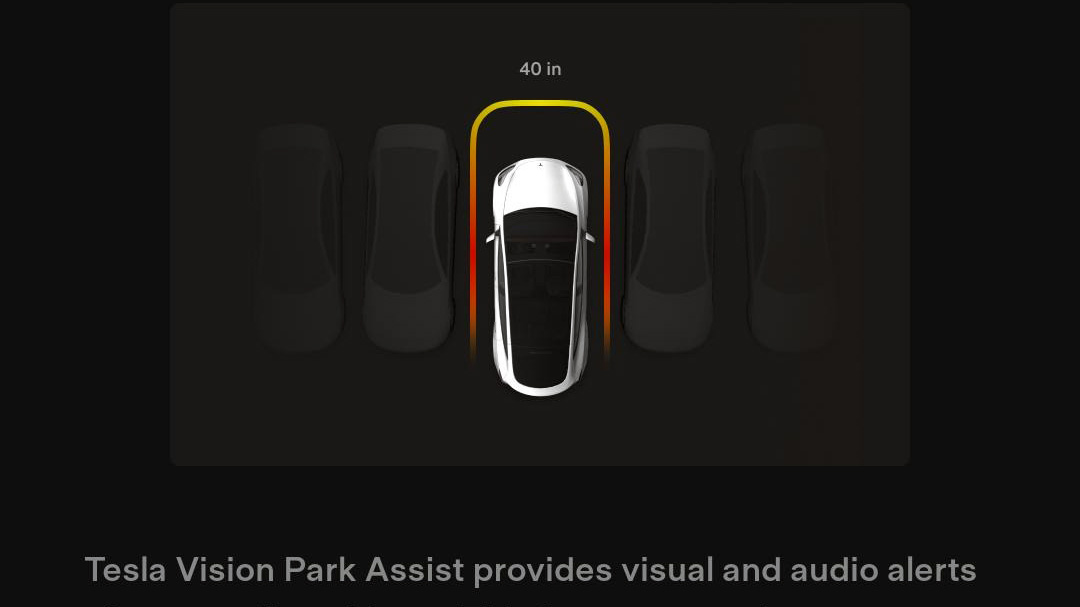
At first glance, the Vision-only approach seems counterintuitive. Fewer sensors should mean fewer capabilities, right? Yet, Tesla’s system defies this logic, proving that sometimes, less is not less—it’s more. The absence of ultrasonic sensors doesn’t create a void; it creates an opportunity for a more holistic approach to parking. Traditional systems rely on a patchwork of sensors, each with its own blind spots and limitations. The Vision system, by contrast, offers a seamless, 360-degree view of the vehicle’s environment. There are no gaps in coverage, no areas where the car’s perception falters. Every angle is accounted for, every potential obstacle visualized in real time.
This isn’t to say the transition has been seamless. Early adopters reported occasional hiccups—moments where the system misjudged distances or failed to recognize certain obstacles. But these were not failures of the Vision system itself; they were the teething pains of a technology still in its adolescence. With each over-the-air update, the neural networks grow smarter, the algorithms more refined. What was once a curiosity is now a cornerstone of Tesla’s autonomous driving strategy. The lesson is clear: simplicity, when paired with intelligence, can outperform complexity. The Vision system doesn’t just match the capabilities of traditional parking assistance—it surpasses them, offering a level of situational awareness that was once the stuff of dreams.
The Human Factor: Trusting a System That Sees Differently
Yet, no technological leap is complete without addressing the human element. Parking assistance isn’t just about the car—it’s about the driver. And trust, as any psychologist will tell you, is a fragile thing. For decades, drivers have relied on the tactile feedback of ultrasonic sensors—the reassuring *beep-beep-beep* that signals proximity to an obstacle. The Vision system, with its silent, visual cues, demands a different kind of trust. It asks drivers to place their faith in a system that doesn’t speak in beeps, but in images and lines. It’s a shift from the familiar to the unfamiliar, from the tangible to the intangible.
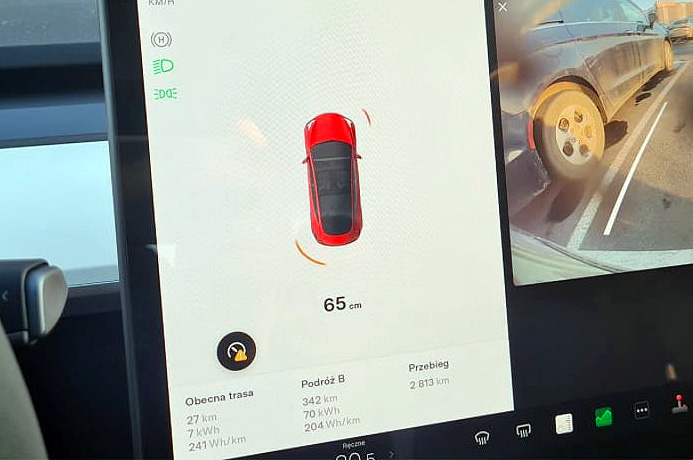
This transition isn’t just psychological; it’s cultural. We’ve been conditioned to trust the mechanical, the physical, the things we can touch and feel. But the Vision system asks us to trust the digital—the ephemeral, the algorithmic. It’s a leap of faith, but one that’s increasingly necessary in a world where cars are becoming more autonomous by the day. The key to acceptance lies in transparency. Tesla’s interface doesn’t just show a parking line; it shows the car’s reasoning. A highlighted obstacle isn’t just a red blob on a screen—it’s an explanation of why the car is stopping. This level of clarity bridges the gap between human intuition and machine logic, fostering a sense of partnership rather than subservience.
The Road Ahead: Where Vision Meets the Future of Autonomous Driving
The implications of Tesla’s Vision-only Park Assist extend far beyond the parking lot. This is a technology that could redefine the very essence of autonomous driving. If a car can navigate the complexities of parking with nothing but its cameras, what’s to stop it from doing the same on the open road? The Vision system is a proof of concept—a demonstration that the future of autonomy doesn’t lie in a forest of sensors, but in the eyes of a neural network. It’s a future where cars don’t just react to the world; they understand it.
Yet, challenges remain. Regulatory hurdles, ethical dilemmas, and the ever-present specter of cybersecurity threats loom large. But these are not roadblocks; they are waypoints on the journey to a new era of mobility. The Vision system is more than a feature—it’s a manifesto. It declares that the future of driving isn’t about adding more hardware; it’s about refining the software that powers it. It’s a testament to the power of artificial intelligence, not just as a tool, but as a partner in the act of driving.
As we stand on the cusp of this new age, one thing is clear: the death of the ultrasonic sensor is not an end, but a beginning. It’s the first step toward a world where cars don’t just assist us—they collaborate with us. Where parking isn’t a chore, but a conversation between human and machine. And where the road ahead is not a path to be feared, but a landscape to be explored, one pixel at a time.
The revolution has begun. The question is no longer whether we’re ready for it—but whether we’re ready to see the world differently.