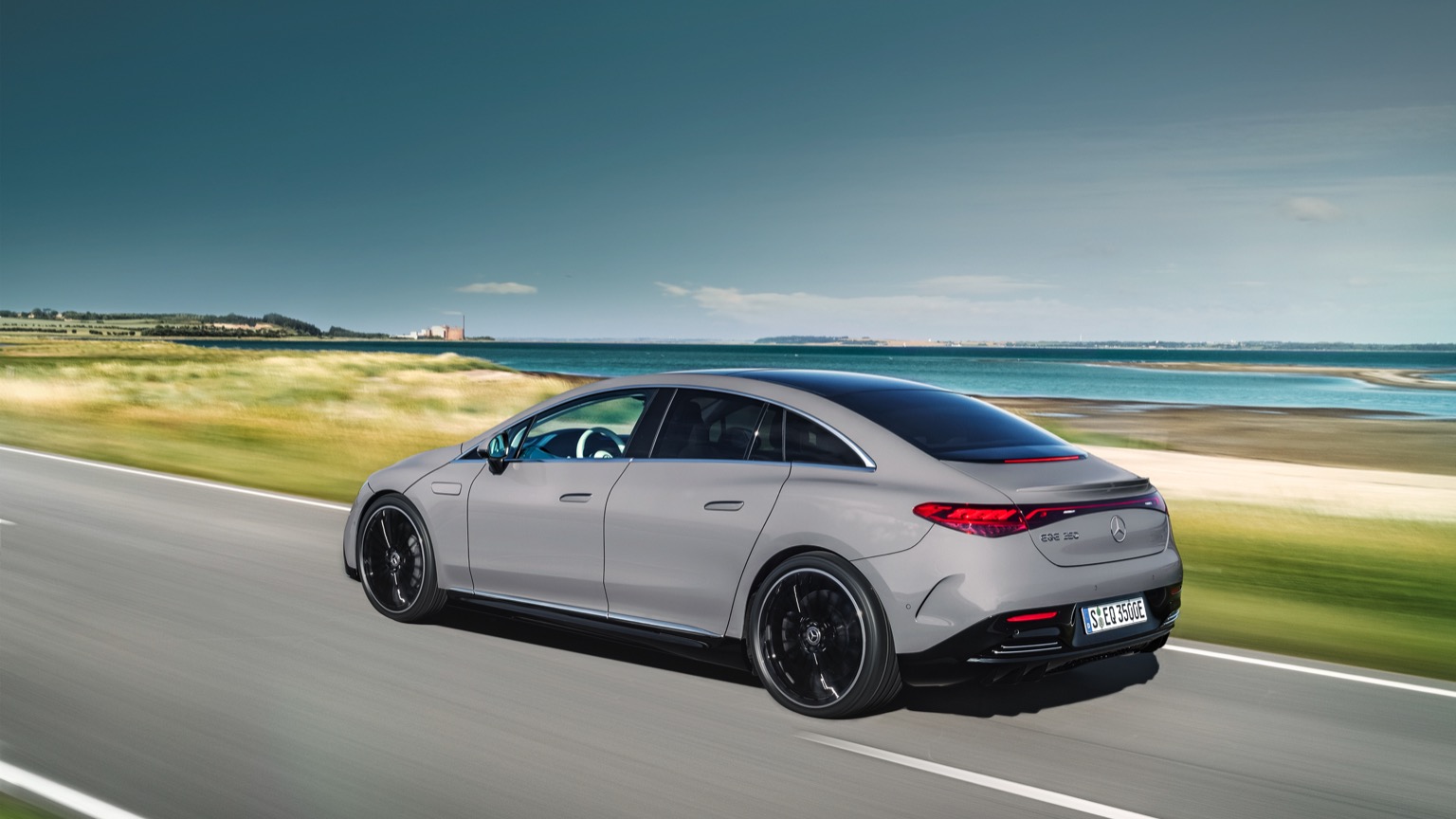
Two keys. Two trims. One question that practically tap-dances on your dashboard: how far will it go, and how fast will it feel? The 2026 Mercedes-Benz EQE Sedan lineup turns that question into a friendly dare. Choose the EQE 350+, and you’re likely aiming for effortless efficiency. Choose the EQE 500, and you’re opting for a more kinetic, more urgent kind of pleasure. But range and performance aren’t separate stories—they’re braided together. The fun begins when you realize your route, your driving mood, and even your tire choice can tip the scales.
So, are you ready for the challenge? Try to answer this: Which one would you rather live with on your longest weeknight commute—and on your most ambitious weekend sprint? Let’s unpack the EQE Sedan 350+ versus 500, with a spotlight on range and performance, and with enough nuance to keep even the most seasoned EV enthusiast pleasantly uneasy.
Meet the premise: 350+ as the efficiency companion, 500 as the momentum machine
The EQE 350+ is engineered for a smooth, low-drama kind of driving. Think quiet authority, fluid acceleration, and the sort of energy management that makes every mile feel premeditated. It’s the sedan you can drive for hours without feeling like you’ve been wrestling the car.
The EQE 500, by contrast, leans into exuberance. The steering feels more alert, the power delivery carries more gravitas, and the whole cabin tends to feel like it’s moving with you—rather than merely carrying you. It’s not just “faster.” It’s more theatrically responsive.
Now, here’s the catch: power and efficiency interact. A more potent setup may still be smart and composed, but your right foot becomes a co-author. The challenge is deciding whether you want the car that rewards restraint—or the one that invites immediacy.
Range reality check: how 350+ and 500 behave on real-world schedules
Range is never merely a number on a spec sheet. It’s an ecosystem made of aerodynamics, battery size and chemistry behavior under load, drivetrain efficiency, speed profile, and weather. The EQE’s modern electric architecture is designed to be frugal, yet the EQE 500’s higher output can nudge consumption upward, especially when acceleration becomes a habit rather than an occasional treat.
In practical terms, the EQE 350+ typically shines in longer, steady-state drives. It tends to be less demanding on the energy budget when you keep your tempo consistent—think highway cruising where you’re using power sparingly but not avoiding it entirely. Its driving character often encourages a “flow” style, and that style is naturally energy-friendly.
The EQE 500 can absolutely deliver respectable range, but it behaves differently. It’s more likely to turn energy usage into an emotional outcome. A few spirited overtakes, frequent speed adjustments, or traction events can measurably change the remaining range display. On paper it still functions as a legitimate long-distance sedan. In your hands, it becomes a slightly more high-maintenance partner.
Speed and acceleration: where the 500 earns its keep
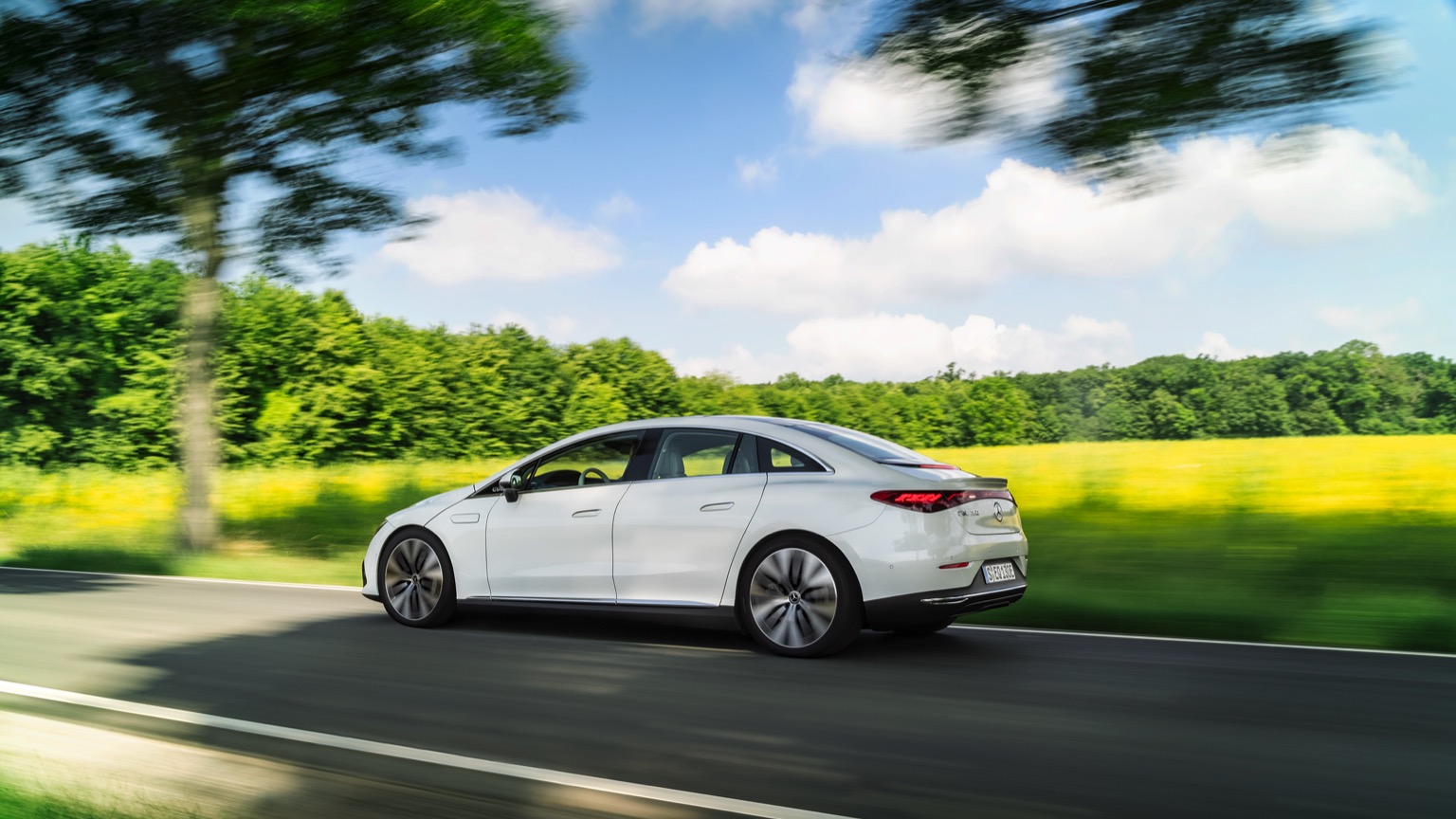
Performance isn’t just a sprint; it’s the sensation of how quickly the car turns your intention into motion. The EQE 500, tuned for greater output, usually delivers quicker, more confident acceleration. That translates into stronger passing power and a more decisive feel when merging.
Short bursts matter. In stop-and-go city driving, the EQE 500 can feel especially satisfying because it has more headroom for sudden departures from slow-moving traffic. Even if you don’t “race” the car, it tends to respond with a sense of readiness, like it’s waiting for you to choose the next move.
The EQE 350+, on the other hand, often gives acceleration that feels seamless and civilized. It may not be the one that punches you back into the seat during every on-ramp, but it can still feel quick enough to erase the “range anxiety” that many drivers associate with electric vehicles. Its strength is not only speed—it’s composure.
Here’s the playful tension: if you choose the 350+ and then discover you love instant responsiveness, you might start craving the 500. But if you choose the 500 and later prefer relaxed commuting, you may find yourself negotiating your own driving impulses. That’s the challenge: aligning performance with your real habits.
Highway consumption: steady cruising vs. frequent changes
Highway range is where the EQE lineup typically behaves best, but the contrast between 350+ and 500 becomes clearer when your driving involves repeated speed changes. At stable speeds, efficiency can be highly predictable. With a heavier urge for acceleration and deceleration, energy draw rises—sometimes dramatically.
The EQE 350+ tends to maintain a more predictable energy cadence. Long drives feel like a planned itinerary, not an ongoing calculation. That makes it ideal for commuters who value “arrive with charge to spare,” even if the arrival isn’t the destination of the day.
The EQE 500 can still be excellent for road trips, but it rewards intention. If you treat the car like a calm executive sedan, it will comply. If you treat it like a weekend performer, it will absolutely deliver—at the cost of higher consumption. In both cases, it’s a capable traveler. The difference is how much you enjoy steering the energy equation.
Regenerative braking: turning energy into momentum—sometimes more than you expect
Both EQE variants use regenerative braking to recapture energy during deceleration. In day-to-day driving, this matters more than people assume. City driving and rolling terrain can dramatically influence how much energy you reclaim. If you drive with anticipation—lifting early rather than late—you’ll typically see stronger regenerative recovery, extending usable range.
The 500’s more assertive performance character can encourage brisker tempo, which may increase the frequency of deceleration events—meaning regen has more opportunities. Yet if your acceleration patterns become aggressively frequent, overall consumption can still net higher. This is where “playfulness” turns into a tactical choice.
Try this mini-challenge: drive the first half of your route smoothly, then drive the second half with a slightly sportier rhythm. Compare how the range estimate reacts. You’ll learn faster than any brochure can teach.
Comfort, tires, and the hidden variables that sway range
Range isn’t only about horsepower. Tires can be the quiet saboteurs or the invisible heroes. Low-rolling-resistance tires help efficiency; grippier sport tires can improve traction but may increase consumption. Wheel size, suspension tuning, and aerodynamic details also play supporting roles—subtle, but consequential.
Both EQE trims are built with premium comfort in mind. Wind noise, cabin temperature management, and driving ergonomics influence how you drive. A car that encourages relaxed posture makes smoother throttle inputs more likely. And smoother throttle inputs are basically range medicine.
In short: your environment and setup can make the 350+ feel surprisingly long-legged—or make the 500 feel unexpectedly efficient, depending on conditions. That’s the beauty and the trouble with real-world EV driving: it’s never a single-variable equation.
Charging strategy: planning your stops like a pro
When range differences matter, charging decisions matter more. If you select the EQE 350+, you may rely more on fewer charging sessions, especially for routine trips. With the EQE 500, you can still go far, but you’ll likely benefit from a more proactive charging rhythm—particularly if you anticipate spirited driving segments.
Think in segments. If your route includes a high-speed portion followed by a slower stretch, charging at the right time can preserve both range and sanity. The best strategy often involves arriving with a comfortable buffer rather than hunting for the last few percent.
And here’s a fun thought: the 500 can be a “charging-friendly” car if you enjoy the journey enough to make charging stops feel like part of the experience rather than interruptions. That’s not optimization—it’s ownership.
So which one wins for range & performance?
The EQE 350+ typically wins the argument for efficiency-minded drivers. It’s the smoother protagonist in the range story—less temptation, more predictability. The EQE 500 wins for drivers who want power to feel immediate and rewarding. Its performance is the kind that turns ordinary roads into scenes.
But the real winner depends on how you drive when nobody’s watching. If you love relaxed cruising and want the longest, least stressful mileage, the 350+ aligns naturally. If you want energetic responses and don’t mind that range becomes more sensitive to driving style, the 500 is the more thrilling companion.
And now the challenge lands again, softly but firmly: Which version matches your temperament—your commute-self or your weekend-self? Pick the one that you’ll enjoy on your most frequent drive, not just the one that looks best when you’re pretending to test like a reviewer.
Outro: your daily miles are the final spec
The 2026 Mercedes-Benz EQE Sedan 350+ and 500 aren’t simply two versions of the same car. They’re two different philosophies of electric living. One prioritizes calm efficiency; the other amplifies momentum. Both can take you far. The question is whether you want your EV to be an efficient background actor—or a charismatic lead who keeps daring you to press “one more mile.”
Choose with honesty. Then go drive. The best range meter is the one you carry in your habits.