The first thing people notice about the 2026 Mercedes-Benz GLB’s third-row seat is also the first thing they doubt. Yes, it’s there. Yes, it’s usable. But can it truly pass a real-world test, or is it merely a clever marketing footnote—an extra set of silhouettes in a lineup photo?
On paper, the third row can look like a compromise. In person, the story changes slightly, not because the laws of physics dissolve, but because Mercedes designs around expectation. The GLB doesn’t pretend the third row is a business-class sanctuary. Instead, it approaches the space like an elegantly managed trade: you gain flexibility for real trips, not just for theoretical parking-lot victories.
To understand what “real-world” means here, imagine the typical day that doesn’t behave like a press drive. You’re heading out with family, bags, and an itinerary that keeps shifting. Someone needs to sit back there. Maybe it’s a younger passenger who can adapt quickly. Maybe it’s an adult who doesn’t want to fold their legs like origami. This is where the GLB earns its fascination—because the third row is both more practical and more nuanced than most drivers expect.
First Contact: The “Small Space” Anxiety Test
Most objections to a compact SUV’s third row begin with the same sentence: “It’ll be cramped.” That concern isn’t irrational. The GLB is not a stretched limousine. It’s an agile, upright SUV with a packaging strategy that prioritizes first- and second-row comfort while providing an emergency-to-occasional third-row solution.
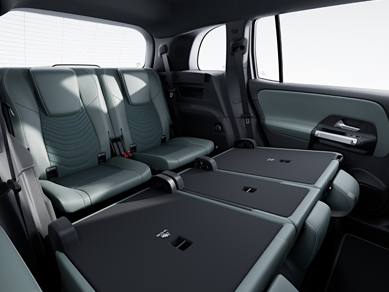
Then you actually sit down in the third row. The sensation is immediately telling. The seating position feels tucked, but not tormenting. The cushioning supports you in a way that discourages slumping, and that matters more than people think. A seat can be narrow yet still feel civilized if it offers pressure distribution and correct posture cues.
But there’s another factor: mental expectation. If you step into the third row expecting a full-size bench, you will inevitably feel shortchanged. If you treat it as a short-to-medium-trip platform—like a timed relay seat—your evaluation becomes more honest, and therefore more favorable.
Getting There: The Access Reality
Third-row usability depends on more than space. It depends on the choreography of entry and exit. The GLB’s rear access feels designed for motion rather than for ceremony. The door openings are generous enough to prevent the “sideswipe struggle” that plagues some compact seven-seat layouts.
Still, the deeper truth is that third-row access is inherently more effortful than second-row access. That’s not a Mercedes shortcoming; it’s geometry. The GLB mitigates friction through sensible proportions and intuitive fold points, so the action feels less like a wrestling match and more like a practiced routine.
In a real-world scenario—like loading the car at a tight curb—this becomes the difference between “we’ll never use it” and “we’ll use it sometimes.” Sometimes matters. Sometimes is how family life actually works.
Legroom and Knees: Where the Details Hide
Legroom is the battleground, and the GLB doesn’t try to win it with magical numbers. The third row is compact. Knees will sit closer than you’d prefer on a long drive. Yet the seat’s arrangement can make that closeness tolerable.
What’s fascinating is how the GLB manages the “knee-to-seat-back” tension that many drivers dread. The seating angle and how the seatback receives your calves reduce the feeling of being pinned. Not everyone will praise it. Some adults will find it less flattering. But for children and shorter passengers, it becomes unexpectedly workable.
This is where the deeper fascination shows up. People aren’t simply buying a third row; they’re buying optionality. They want the power to say, “We can bring everyone,” and then to discover whether the experience is genuinely livable. The GLB often lands in the “yes, with reasonable expectations” category.
Headroom and Comfort: The Art of Not Overpromising
Headroom on the third row can be the silent dealbreaker. A low roofline compresses you visually and physically, especially when you sit upright. The GLB’s design keeps the sensation controlled. You don’t feel like you’re sitting beneath a ceiling tile. You feel seated within a compact cabin pocket.
Longer journeys still demand strategy. Passengers will want small adjustments—shifting posture, changing how their shoulders sit, briefly stretching when traffic slows. But unlike some third-row setups that feel instantly punitive, the GLB allows comfort to accumulate rather than collapse.
In other words: it doesn’t start luxurious. It grows tolerable.
Seatbelt Positioning and Everyday Use
A less glamorous aspect of comfort is seatbelt routing. In the third row, belt geometry can make the difference between “I can buckle myself” and “I need assistance.” The GLB’s belt placement supports independent use more than you might expect for a compact third-row design.
This matters because real-world trips aren’t coordinated like a showroom. Kids squirm. Adults reach quickly. Everyone moves at slightly different rhythms. When the belt is easy to manage, the third row feels less like an inconvenience and more like a legitimate seat.
Climate and Visibility: The Hidden Determinants
Comfort isn’t only about cushioning. It’s also about whether the atmosphere feels fair. In the third row, airflow and cabin temperature distribution are what make passengers feel respected—or forgotten.
Visibility plays its own role. When you can see clearly through the rear side windows and mirrors, you feel less confined. That psychological relief is powerful. A passenger who feels less trapped tends to complain less.
This is why the GLB’s cabin layout is quietly impressive. It’s not about spectacle. It’s about managing the human factors that decide whether a third row becomes a burden or a backup plan you actually use.
Noise, Ride Quality, and the “Can We Get There?” Question
Third-row evaluation often ignores acoustics until the moment it matters. On highways, wind noise and road texture can make a compact cabin feel harsher than it looks. The GLB’s ride calibration keeps the third-row experience from sounding like a tin can. It won’t feel identical to the front, but it avoids the sharp, intrusive frequencies that make passengers tense.
Road imperfections tell the next part of the story. A seat can be cushioned yet still transmit impacts brutally. Here, the GLB’s suspension tuning and seat mounting help smooth out the worst transitions. It’s not magic. It’s engineering aimed at keeping discomfort from snowballing.
The result? The third row can handle real commutes and moderate trips without turning the ride into a test of endurance.
Trunk Strategy: Where Cargo Meets Human Factors
Seven-seat SUVs live or die by how cargo space behaves when the third row is used. When the third row is folded, the GLB offers a practical cargo footprint for day-to-day life—grocery runs, weekend gear, and shopping sprees that expand before you can stop them.
When you deploy the third row, cargo shrinks, as it must. The key is how smoothly that transition happens and how naturally you can plan around it. Real-world owners don’t measure success in perfect configurations; they measure it in workable compromises. The GLB’s packaging supports that logic.
Who It’s For: The Most Honest Answer
The 2026 Mercedes-Benz GLB’s third row is best described as a “smart enough to be used” solution. It suits families with children who can enjoy the novelty of a rear bench. It also fits small adults on short journeys, particularly when the front and second rows have been adjusted with care.
If you’re planning frequent long-distance travel with adults back there, expectations should shift. Choose a model with a more expansive cabin if third-row comfort is a primary requirement. But if your priority is flexibility—bringing more people without surrendering everyday usability—the GLB earns its place.
Why the GLB’s Third Row Fascinates in the First Place
There’s an almost paradoxical charm to the GLB’s third row. It’s compact, yet it represents a promise: you can carry more, even when life becomes complicated. The fascination isn’t born from luxury alone. It’s born from possibility.
Drivers and passengers are drawn to the idea that the car can adapt. The third row becomes a quiet instrument of convenience. It turns spontaneous invites into realistic plans. It also reduces the anxiety of carpool logistics—the dread of leaving someone behind.
That emotional practicality is the deeper reason people keep coming back. The GLB doesn’t merely transport bodies. It helps coordinate moments.
Final Verdict: A Real-World Seat, Not a Fantasy
The 2026 Mercedes-Benz GLB’s third-row seat passes a real-world test when the test is realistic. It won’t replace the front seats, and it shouldn’t be judged as if it must. Instead, it offers a credible seating option that performs under everyday constraints.
For the right passengers and the right trip length, it feels more functional than questionable. It’s compact, yes—but thoughtfully arranged. It’s not indulgent, but it’s usable. And in a world where flexibility is often the deciding factor, that usability is precisely what makes the GLB’s third row so compelling.
In the end, the question isn’t whether the third row is perfect. The question is whether it’s there when you need it—and whether you’ll feel confident using it when the day stops behaving like a brochure. The GLB answers that with a quiet, confident practicality.