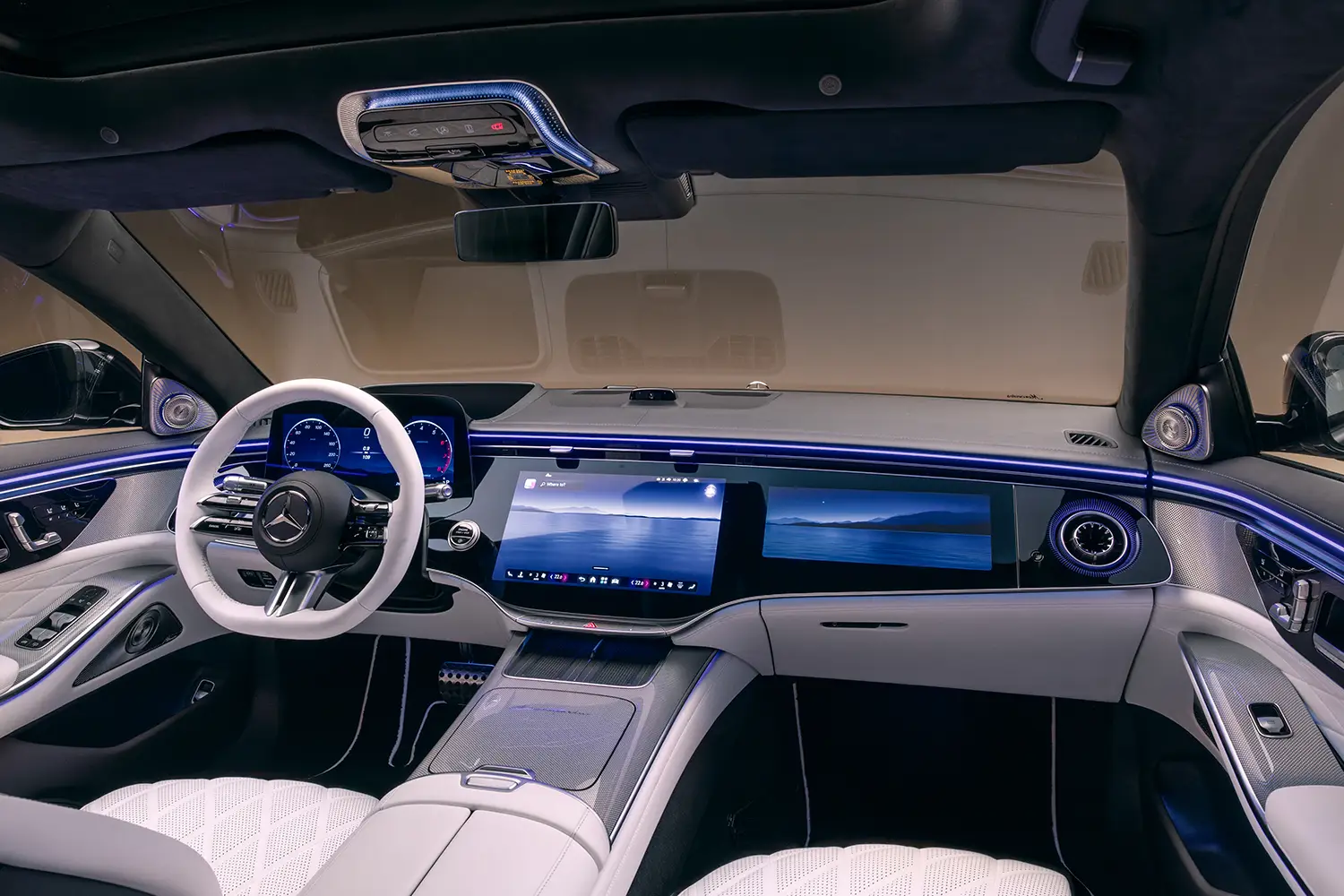
There’s a particular kind of luxury that doesn’t announce itself with chrome, conquest, or console glare. It’s the hush. The kind of quiet that makes city noise feel like weather—distant, diffuse, and politely denied entry. In the quest for the quietest 2026 Mercedes-Benz sedans, cabin noise isn’t a single number on a brochure page. It’s an atmosphere created by engineering choices that compound over every mile: aerodynamic restraint, acoustic glazing, suspension compliance, seal design, and the way sound is managed before it can become fatigue.
This is a cabin noise test story—part method, part interpretation, and part buyer’s guide. Readers can expect an organized walkthrough of what “quiet” means in real conditions, how the test can be structured, which factors typically influence measurements, and what differences to look for when comparing sedans that share a premium badge but not necessarily the same acoustic personality.
What “Quiet” Actually Means Inside a Sedan
Quiet is not just low decibels. It’s low annoyance. A cabin can measure “acceptable” sound levels while still feeling intrusive because of sound character—harshness, booming, rattling, or tonal peaks that the ear locks onto. Human perception is less forgiving than instruments. That’s why modern cabin-noise evaluations often consider not only overall levels (like an average dB(A) reading), but also spectral distribution: whether the noise is broadband like wind, or concentrated like tire slap.
In practice, the quietest sedans tend to show a “soft landing” for vibrations. The engine might be present, but it doesn’t become a narrative. Road texture stays muted. Wind doesn’t sharpen into a whistle. Even when the car is doing the right things mechanically, good acoustics prevent them from becoming audible drama.
The Cabin Noise Test: A Realistic Framework
A credible cabin noise test aims for repeatability while still reflecting real ownership. The most useful results come from multiple operating points—because a car that’s serene at 40 mph can become boisterous at 70, and a sedan that sounds calm under gentle throttle may change character during acceleration.
In a typical test structure, the evaluation spans:
1) Idle-to-cruise checks: how the cabin handles engine and accessories.
2) Steady-speed runs: especially at common highway rhythms (around 50–70 mph).
3) Acceleration and deceleration: to observe drivetrain and induction behavior.
4) Surface variation: smooth asphalt vs. coarse pavement to measure tire intrusion.
5) Wind and crosswind sensitivity: to catch aerodynamic resonance and mirror/roof turbulence.
Placement of the microphones (typically near the driver’s ear height), careful climate control, and consistent tire pressures all matter. The quietest sedans show less variation across these scenarios, not merely a low reading in one narrow window.
Acoustic Glazing and the “First Line of Defense”
One of the most important quiet-makers is the glass itself. Acoustic glazing is designed to damp high-frequency transfer and reduce the transmission of vibration from the body into the cabin. In a 2026 Mercedes-Benz sedan, you’re not just looking at thickness—you’re looking at layered construction and tuned damping that helps the window area behave like a pressure buffer rather than a drumhead.
When you hear faint wind noise at speed, it often traces back to aerodynamics and glazing together. Even a slight change in window resonance can shift the cabin from peaceful to prickly. The quietest cars treat glass as an engineering system, not a component.

Seals, Door Architecture, and the Art of “Draft Deterrence”
Cabin quietness is often decided by something unglamorous: seals and door architecture. A tight perimeter prevents leakage that would otherwise become a whisper of turbulence. Air leaks don’t just add noise; they can create pressure fluctuations that excite vibrations across door panels, B-pillars, and dashboard mounts.
The quietest 2026 Mercedes-Benz sedans typically feel “sealed” even before you notice. Doors close with a confident, low reverberation. Windows and trims don’t flex. The cabin appears less willing to exchange air and sound with the outside world. These traits reduce both wind noise and the subtle rattle that can develop when a structure is slightly loose.
Suspension Compliance: Why Road Texture Matters
Road noise has a dual nature: it’s impact-driven (tire impacts against microtexture) and resonance-driven (structure responding at certain frequencies). A refined suspension doesn’t necessarily eliminate movement—it controls it. When damping is well-calibrated, the cabin receives less of the “raw” tire interaction and more of the noise’s softer components.
Pay attention to the difference between:
• Tire hiss: often broadband and dependent on speed and tread compound.
• Tire slap: more impulsive, often tied to pavement patterns and tread blocks.
• Knocky harmonics: structural resonance from subframe or mount behavior.
In a proper cabin noise test, the quietest sedans show consistent behavior across pavement conditions. They don’t just mute one type of sound; they manage the spectrum.
Engine and Drivetrain Sound: Controlled Presence, Not Erasure
A silent cabin doesn’t mean an absent powertrain. It means the sound is filtered, shaped, and kept from becoming intrusive. In 2026 Mercedes-Benz sedans, how power delivery is tuned—throttle mapping, intake behavior, exhaust pathway routing, and engine mounts—can dramatically change perceived quietness.
During steady cruise, the quietest cars often show a low, uniform sound floor. During acceleration, they avoid sudden tonal spikes. And during deceleration, they prevent “flutter” or resonance build-up. The goal is a calm auditory profile—one that feels measured instead of mechanical.
Some drivers value an almost “hermetic” sensation. Others prefer faintly audible authenticity—like distant rain. The best acoustic setups can accommodate both by controlling harshness while preserving a natural, non-fatiguing character.
Wind Management at Speed: The Quiet-But-Tangible Variable
At highway speeds, wind noise becomes the dominant antagonist. Aerodynamic design can create turbulence around mirrors, A-pillars, rooflines, and trunk interfaces. Even excellent tires can’t outvote poor airflow. The quietest 2026 Mercedes-Benz sedans tend to minimize pressure fluctuations that create tone and whistle-like artifacts.
In test conditions, wind is not just a weather factor; it’s a diagnostic variable. A sedan that stays composed in crosswinds demonstrates how well it disrupts flow and prevents resonance within cabin cavities.

Comparing Sedans: Where Differences Show Up in the Test
When comparing multiple 2026 Mercedes-Benz sedans, the quietest winner is usually not the one with the lowest number in a single pass. It’s the one that maintains composure across conditions. Here’s what often differentiates contenders:
• Noise floor consistency: Does the sound level stay stable during speed changes?
• Tonal peaks: Are there frequency ranges that suddenly become noticeable?
• Structural noise behavior: Do vibrations creep into door panels, seats, or trim?
• Throttle sensitivity: Does the engine note swell in an unrefined way?
• Aerodynamic manners: Do mirrors and roof edges generate a persistent hiss?
As a rule, flagship sedans often bring more layers of acoustic treatment, while mainstream models can still be exceptionally refined—especially when the platform is tuned for everyday composure. The key is to compare like with like: similar routes, similar temperatures, and similar tire conditions.
What Readers Should Listen For During a Test Drive
Numbers matter, but the ear finishes the job. On a test drive that targets cabin quiet, the most revealing moments are not always the loud ones. Try listening during:
• Light-throttle cruise: to detect subtle tire and wind blend.
• Gentle acceleration: to check whether induction or drivetrain tones become intrusive.
• Steady highway speed: to feel whether the cabin becomes tiring over time.
• Passing trucks or gaps in traffic: to hear how quickly the cabin returns to calm.
A quiet cabin often creates a strange sensation of space. Conversations stay effortless. Music doesn’t need to fight the environment. Even silence becomes legible—less like absence, more like control.
Quietness Beyond Measurements: Comfort, Fatigue, and Long-Haul Readiness
The quietest 2026 Mercedes-Benz sedans excel in the long game. On a short commute, many cars feel “fine.” On a multi-hour drive, fatigue is the real verdict. If noise is harsh or tonal, the body notices even when the mind tries not to. The most comfortable quietness has a thermal-like effect: it smooths the day.
Look for a cabin that feels calm even when the outside world isn’t. That includes seat comfort, suspension isolation, steering-related vibration handling, and the stability of the sound scene as road texture changes. Quiet luxury is a system, not a single feature.
How to Choose the Quietest Option for Your Life
Your quiet requirements may differ from another driver’s. If your commute is city-heavy, curb impact noise and low-speed vibration management will matter most. If your routine is highway and long-distance travel, wind and tire dominance take over. If you often accelerate or merge, drivetrain behavior during transient throttle events becomes crucial.
Before deciding, align the test conditions to your route. Ask for a drive that matches your typical speed bands. Pay attention to tire feel too—tire choice can influence perceived quietness dramatically. The quietest sedan is the one that remains quiet where you actually drive.
Conclusion: The Most Luxurious Quiet Is the One That Lasts
Quiet is not the absence of sound; it’s the presence of refinement. In the cabin of the quietest 2026 Mercedes-Benz sedans, noise is managed into something less intrusive—wind becomes a soft blur, road texture stays discreet, and the drivetrain occupies its role without demanding attention. A good cabin noise test reveals not only what the numbers say, but how the sound behaves: whether it irritates, fluctuates, or settles into a serene equilibrium.
When you find that balance, the sedan stops being merely transportation. It becomes a cocoon of controlled reality—where the outside world is still present, but never allowed to take the driver’s focus. That is the true measure of quiet.