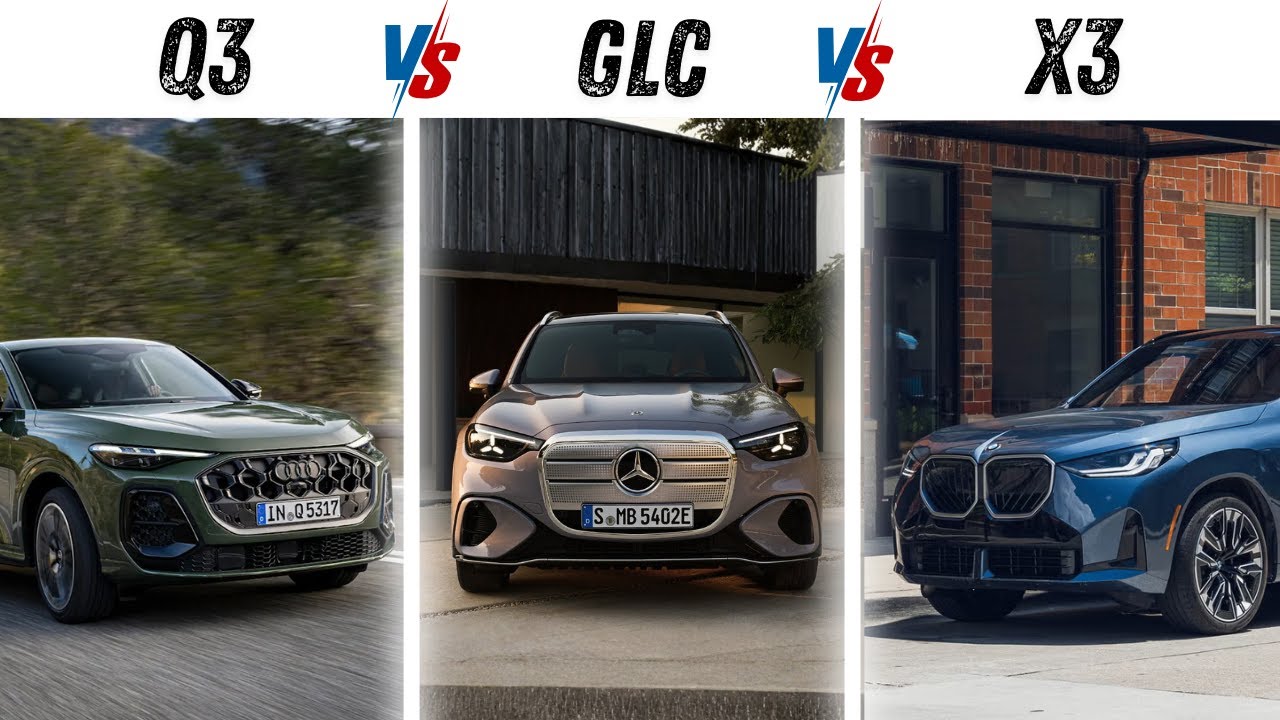
Picture this: it’s a crisp 2026 morning, the sun is still yawning over the city skyline, and you’re standing between three legends of the driveway—Mercedes, Audi, and BMW. They’re not just cars. They’re personalities with horsepower. But here’s the playful question that instantly turns the parking lot into a stage: if luxury were a three-part symphony, which brand would play the loudest crescendo for you—the baritone confidence of Mercedes, the precision-engineered clarity of Audi, or the driver-focused drama of BMW?
Now for the potential challenge—one that’s harder than it sounds. Don’t choose based on badges, ads, or a single test drive. Choose based on how each brand behaves day after day: from technology that quietly anticipates your needs to comfort that doesn’t evaporate after the first highway merge. Consider this your 2026 US luxury showdown, where every detail matters and every feature has a personality.
Let’s step into the comparison, with a methodical rhythm—yet still with enough intrigue to keep the throttle hand twitching.
1) First Impressions: Design Language and Presence
Luxury begins before the engine does. Mercedes arrives with an unmistakable gravitas—an almost statesmanlike poise. Its silhouettes often feel tailored, like a well-cut suit that never wrinkles. The grille, the lighting signatures, the stance—all of it suggests “calm authority,” even when the car is ready to sprint.
Audi, by contrast, tends to project sleek rationalism. Its design often reads as technical chic: sharp surfaces, disciplined proportions, and a visual confidence that doesn’t need to shout. The result is a look that feels “composed,” as if every angle had been measured in advance.
BMW is the sparkier sibling in this trio. Its shapes frequently carry a sense of motion even when standing still. There’s a kinetic edge to the body lines, and the overall vibe can feel more emotionally expressive—like the car is always hinting at the next turn.

In the US, presence matters—parking lots are stages, and curbs are audition chairs. If you value a dignified look, Mercedes often wins the first glance. If you want avant-garde symmetry and understated futuristic restraint, Audi is compelling. If you prefer an athletic aura and flair, BMW usually hits the sweet spot.
2) Driving Philosophy: Comfort vs Precision vs Engagement
Let’s talk about what happens when the road stops being a suggestion and starts being a conversation. Mercedes typically prioritizes smoothness and composure. Ride quality is often engineered to feel effortless, like the car is translating road noise into a manageable whisper rather than a disruptive monologue.
Audi’s ethos leans toward balanced precision. It can feel composed without feeling overly soft. Audi often aims for an elegant equilibrium—grip when it counts, refinement when you’re cruising, and an overall sense that the vehicle is speaking in clean, measurable signals.
BMW is the brand that tends to keep one eye on the driver. Even in luxury-oriented trims, you’ll often feel a more direct relationship between steering, throttle response, and chassis behavior. It can be less about floating on comfort and more about sculpting the drive.
Here’s the 2026 challenge: pick a weekend route that includes traffic, a few twisty stretches, and at least one long highway run. Then note which brand makes you feel less tense, more confident, or simply more alive. Luxury is ultimately the emotional aftertaste.
3) Performance and Powertrains: What “Luxury” Means at Speed
Performance isn’t only about peak numbers—it’s about how power arrives. Mercedes often excels at making acceleration feel seamless. Its engines and drivetrains commonly emphasize effortless thrust, with fewer jerks in the delivery and more smoothness through transitions.
Audi frequently treats performance like an engineering puzzle. Response can feel immediate, and drivability tends to feel coherent across speeds. Its combination of traction-minded systems and refined transmission tuning can make power feel “useful” rather than merely dramatic.
BMW often brings a more spirited sensation: that sense that the car is eager, not just capable. Powertrain tuning can feel more eager to rev and more communicative through the steering and pedals. For some drivers, that feedback loop is part of the luxury experience.
Also consider the direction of the market in 2026: electrification, hybridization, and increasingly efficient power delivery. The question isn’t just “is it fast,” but “how consistently does it deliver calm confidence when the road gets unpredictable.”
4) Technology and Infotainment: The Invisible Dashboard
Technology can either distract you or disappear into the background like a well-trained butler. Mercedes typically leans toward intuitive luxury interfaces, with a strong focus on convenience features and a “guided” feel. The user experience often aims to reduce friction—less hunting for controls, more direct access to what matters.
Audi often emphasizes a clean, logically structured cockpit. Many drivers appreciate how Audi’s systems tend to blend information clarity with a premium, tech-forward ambiance. It’s less “overly theatrical,” more “precise and organized.”
BMW’s approach often highlights driver-centric ergonomics and configurable layers. The system can feel tailored to the driver’s preferences, which matters when you’re switching between commute, road trip, and spirited weekend drives.

Before committing, test this: use the infotainment system while the car is moving—safely, at low speed if needed. Which interface makes you feel confident without having to “learn a ritual”? That’s the real benchmark.
5) Comfort Systems: Seats, Sound, and the Art of Quiet
Luxury should feel like it lowers your stress level. Mercedes commonly shines in cabin quietness and overall comfort tuning. The seats often emphasize supportive softness with an elegant balance—good for long drives and relaxed city cruising.
Audi’s comfort typically blends supportive ergonomics with refinement. You may notice a more “structured” feel in seating positions, which can be ideal if you like comfort that still keeps you alert and aligned.
BMW comfort can vary by configuration, but it frequently delivers a premium ride with enough stability to keep you feeling connected. The best trims often strike a satisfying compromise between plushness and control.
Pay special attention to noise filtering: highway droning, road texture, and wind noise. The car that makes you forget you’re driving is often the one that feels most luxurious.
6) Safety and Driver Assistance: Confidence Built in
In the US, driver assistance isn’t a novelty—it’s a daily utility. Mercedes often focuses on an integrated sense of protection, with systems designed to anticipate and assist in a calm, unobtrusive way. Audi usually emphasizes coherent sensing and driver awareness, with a “clarity-first” design approach. BMW often aims to keep assistance intuitive and driver-focused, pairing alerts with manageable interventions.
One practical test: evaluate how each vehicle handles lane centering, adaptive cruise behavior, and braking support. Don’t just look at whether the system works. Look at how it behaves—smoothness, timing, and how quickly it corrects without drama.
7) Ownership Reality in 2026 US: Value, Maintenance, and Resale Mood
Luxury isn’t only what happens on day one. It’s what happens when the honeymoon ends and the calendar keeps moving. Consider warranty terms, service scheduling, available maintenance plans, and parts availability. Different brands can have different cost rhythms depending on model, drivetrain, and electrification complexity.
Resale value is also part emotion, part mathematics. Brand perception affects demand, and demand affects long-term value. BMW often benefits from a passionate enthusiast base. Mercedes can have a strong luxury household appeal. Audi sometimes thrives with buyers who want “premium engineering” more than “premium spectacle.”
This is where your challenge becomes real: create a simple ownership spreadsheet. Add your expected annual miles, estimate fuel or charging costs, and compare insurance expectations. The “best” luxury car is the one that stays compelling when you’re not surrounded by showroom lighting.
8) So… Which One Wins? A Playful but Honest Decision Framework
Let’s distill the essence. If you crave dignified comfort, smooth power delivery, and a cabin that feels like a sanctuary, Mercedes may be your soulmate. If you want precise balance, tech clarity, and a composed driving feel that rewards attention without demanding it, Audi might feel perfectly aligned. If you want a luxury experience that still thrills your senses, BMW is likely to keep your hands reaching for the next exit ramp.
But don’t stop at your first reaction. Try this three-question filter: Which brand makes commuting feel less exhausting? Which brand turns road imperfections into manageable sensations? Which brand gives you confidence without constant tinkering? Answer those honestly, and the choice becomes less about preference and more about fit.
Outro: Your 2026 Luxury Story Starts Now
Mercedes, Audi, and BMW each carry a distinct signature—like different musical artists with shared sophistication. Mercedes tends to cultivate calm authority. Audi often delivers engineered elegance. BMW frequently offers an engaging kind of luxury that feels alive.
So here’s the final playful prompt: if your next car could speak in one sentence, what would it say? “Settle in,” “Stay sharp,” or “Let’s drive”? Choose the voice that matches your life, not just your weekend mood—and you’ll land on the right luxury brand for 2026 in the United States.