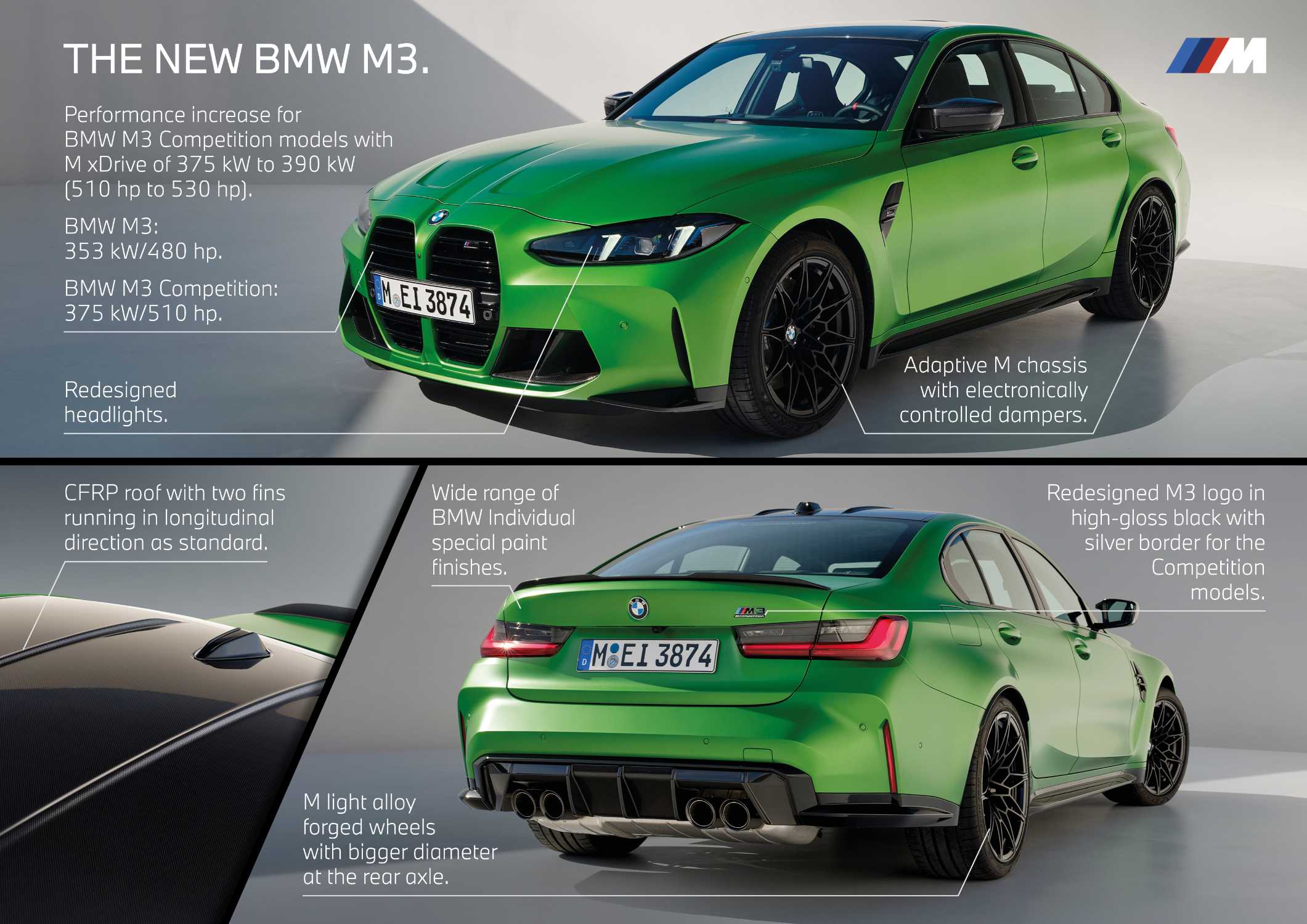
Picture this: a misty morning, a clean line of asphalt stretching forward, and the kind of silence that only exists right before you commit to a corner. Now ask yourself a playful question—if the BMW M3 were a story, would you rather be the author with a six-speed manual, or the navigator with xDrive mapping traction into a calm, calculated certainty?
The challenge is simple to phrase and maddening to solve: pick the version that will satisfy your heart and your instincts when the road stops behaving. The BMW M3 has long been an icon of driver connection, but the debate between the traditional manual and the technologically assisted xDrive isn’t just about preference. It’s about philosophy—about how you want power to feel when it hits.
Let’s walk through the sedan’s character, from pedal-by-pedal intimacy to the composure of all-wheel traction, and determine what kind of “control” you’re truly hunting.
Two M3 Sedans, One Identity: How the Manual and xDrive Change the Personality
The BMW M3 Sedan wears its intentions on its sleeve: purposeful stance, purposeful sound, and purposeful acceleration. Yet the drivetrain choice reshapes the experience like a stage lighting upgrade. The manual version tends to feel more theatrical—like the car is waiting for your cue. Every downshift can become a mini-performance, every gear change a brushstroke of intention.
Meanwhile, xDrive introduces a different kind of drama: confidence under pressure. Instead of relying solely on the driver’s timing and traction management, the system constantly moderates torque distribution. This doesn’t erase the thrill—it recodes it into a more secure, more repeatable form of momentum.
But here’s the real question hidden in plain sight: do you want your thrills to come from negotiating grip, or from extracting it? Both are valid. One feels like a dialogue. The other feels like a strategy.
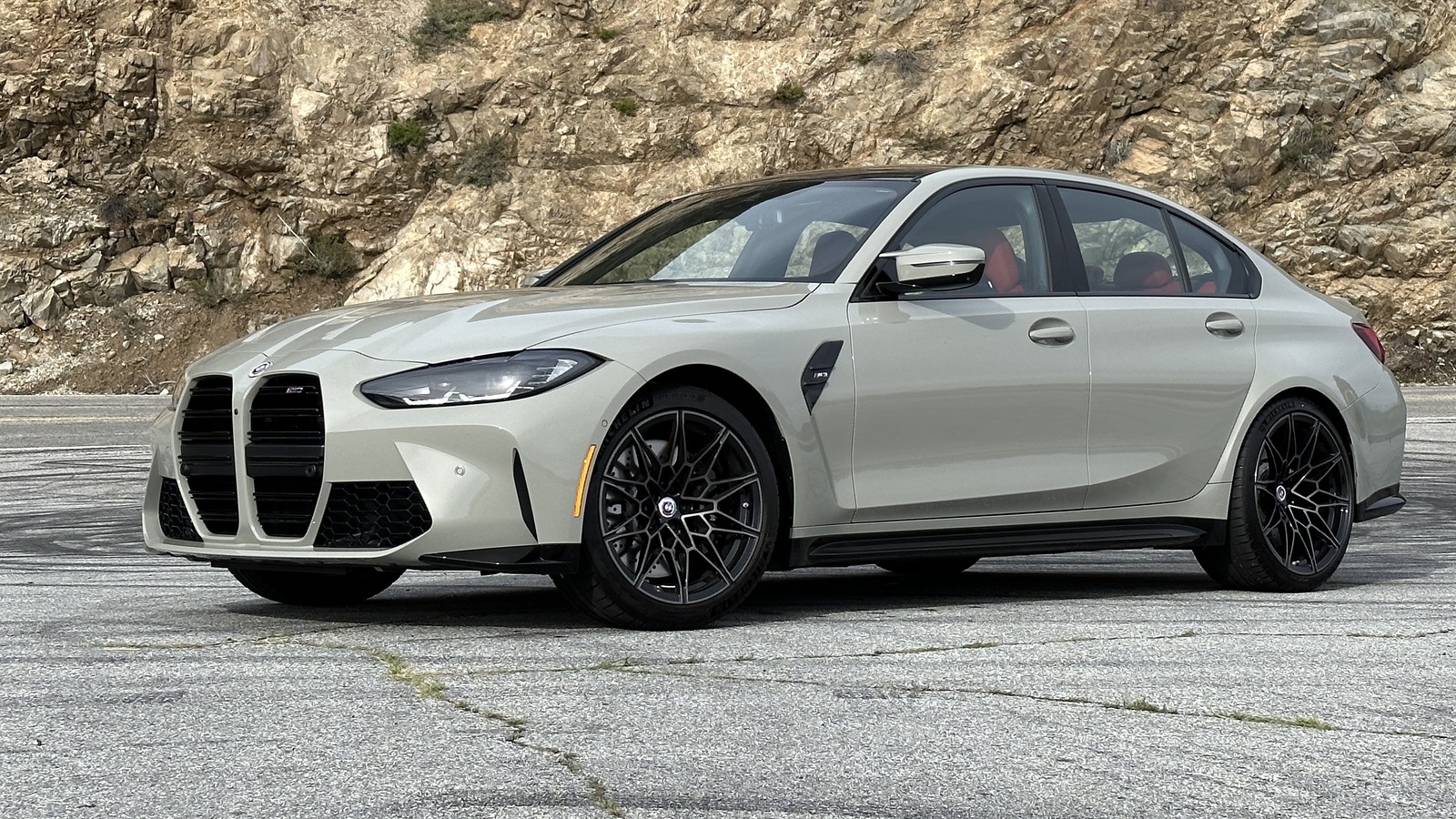
Manual Transmission: The Art of Timing and the Pleasure of Consequence
Driving a manual M3 isn’t merely operating machinery; it’s conducting choreography. The clutch becomes a metronome, and the shift itself is a moment of agency. The sedan’s responsiveness invites participation. When you get the revs right and the spacing between inputs feels clean, the car feels less like a vehicle and more like an extension of your intention.
There’s also an immediacy that automatic systems can sometimes blur. The manual encourages you to read the car’s posture—engine note, vibration character, throttle response—then act accordingly. In spirited driving, this becomes oddly addictive. Short shifts can feel sharp and satisfying. Smooth shifts can feel almost effortless. Either way, you’re never drifting into autopilot mode.
However, the manual’s greatest strength can also become its playful obstacle. In damp conditions, or when you’re pushing the envelope, the task of managing traction is entirely yours. That’s part of the charm for purists. Yet if your driving life includes rain-soaked commutes, icy mornings, or unpredictable traffic, the manual asks more of you than you may want to give every day.
In that sense, the manual M3 isn’t just a car. It’s a commitment contract.
xDrive: Traction Authority and the Calm Satisfaction of Stability
xDrive changes the M3 Sedan’s relationship with the ground. Instead of letting rear-wheel character lead the story entirely, xDrive stands behind the scenes, filtering torque to whichever end can use it most effectively. The effect is immediate: fewer moments where the car “asks” for corrections, and more moments where it simply continues accelerating with a composed inevitability.
This doesn’t mean the M3 becomes dull. It means it becomes harder to overwhelm. In fast corner exits, on imperfect pavement, or under throttle in less-than-ideal conditions, xDrive often turns potential drama into controlled momentum.
Where the manual can feel like a conversation with physics, xDrive can feel like a firm handshake with momentum. You still steer. You still shape the line. But the system helps prevent traction from becoming a chaotic variable.
The result is a sedan that’s particularly persuasive for drivers who want the M3’s performance without constantly recalibrating their confidence. And that raises another challenge: if the car makes it easier to be fast, do you still feel deeply connected—or does speed begin to feel too effortless?
Some drivers love that certainty. Others chase the rawness of having traction be entirely personal.
Acceleration Feel: Who Really Controls the Forward Surge?
Acceleration is where the debate becomes visceral. The manual M3 often feels more “performed”—each gear selection can sharpen the sensation of thrust. When the revs are right, the surge feels like a purposeful escalation. The driver’s actions become part of the kinetic script.
xDrive tends to deliver a more seamless punch. The car can keep delivering drive with fewer interruptions caused by traction limits. That translates into confidence during rapid throttle applications—especially when the road offers patchy grip. It’s the difference between lighting a match and tapping a switch.
Yet the interesting part is how each configuration encourages a different driving cadence. The manual encourages deliberate rhythm: gather, shift, release. xDrive encourages continuity: press, progress, persist. Neither is better. They simply satisfy different urges.
Try the challenge: drive both back-to-back and notice whether you feel “busy” or “effective.” If you want your skills to be the limiting factor, the manual may feel like home. If you want the car to be your enabler, xDrive likely wins the contest.
Cornering and Steering Response: Precision Versus Assurance
Cornering is where the M3’s chassis character reveals itself. The sedan’s balance can invite rotation, and the steering can feel direct enough to encourage bold placement. With the manual, you can tailor the car’s attitude through downshifts and throttle adjustments. The car responds to your timing, and you can feel the relationship between drivetrain output and chassis behavior evolve with each input.
With xDrive, the car’s rotation can feel more stabilized. The system can reduce the odds of abrupt traction loss, which often makes the car feel more “available” at the limit. In other words, you don’t have to be quite as exacting to keep accelerating out of the turn.
That assurance can be liberating. It also changes the kind of feedback you receive. The manual tends to communicate more through the rear tires and the cadence of shifts. xDrive may communicate through the absence of drama—through how consistently the car tracks your commands.
So the question becomes playful again: do you prefer feedback that arrives as information, or feedback that arrives as reliability?
Daily Usability: The Real-World Test Beyond Spec Sheets
Life doesn’t always present clean pavement and empty roads. Stop-and-go traffic, long drives, temperature swings, and weather variations can turn a theoretical preference into a daily verdict.
The manual is undeniably involving, but it can also be more tiring. Clutch work in congestion adds a layer of continuous effort. Some drivers thrive on that involvement. Others start craving silence and ease after the novelty wears off.
xDrive is frequently the more forgiving commuter companion. It can help maintain traction in wet conditions, offer smoother participation during slick moments, and reduce the need for constant micro-corrections. The tradeoff is that your sense of control becomes slightly more “supervised.” It’s not a loss of joy; it’s a redistribution of responsibility.
In daily driving, xDrive can feel like wearing a seatbelt in a high-speed world—it doesn’t remove the excitement, but it keeps the consequences from becoming too sharp.
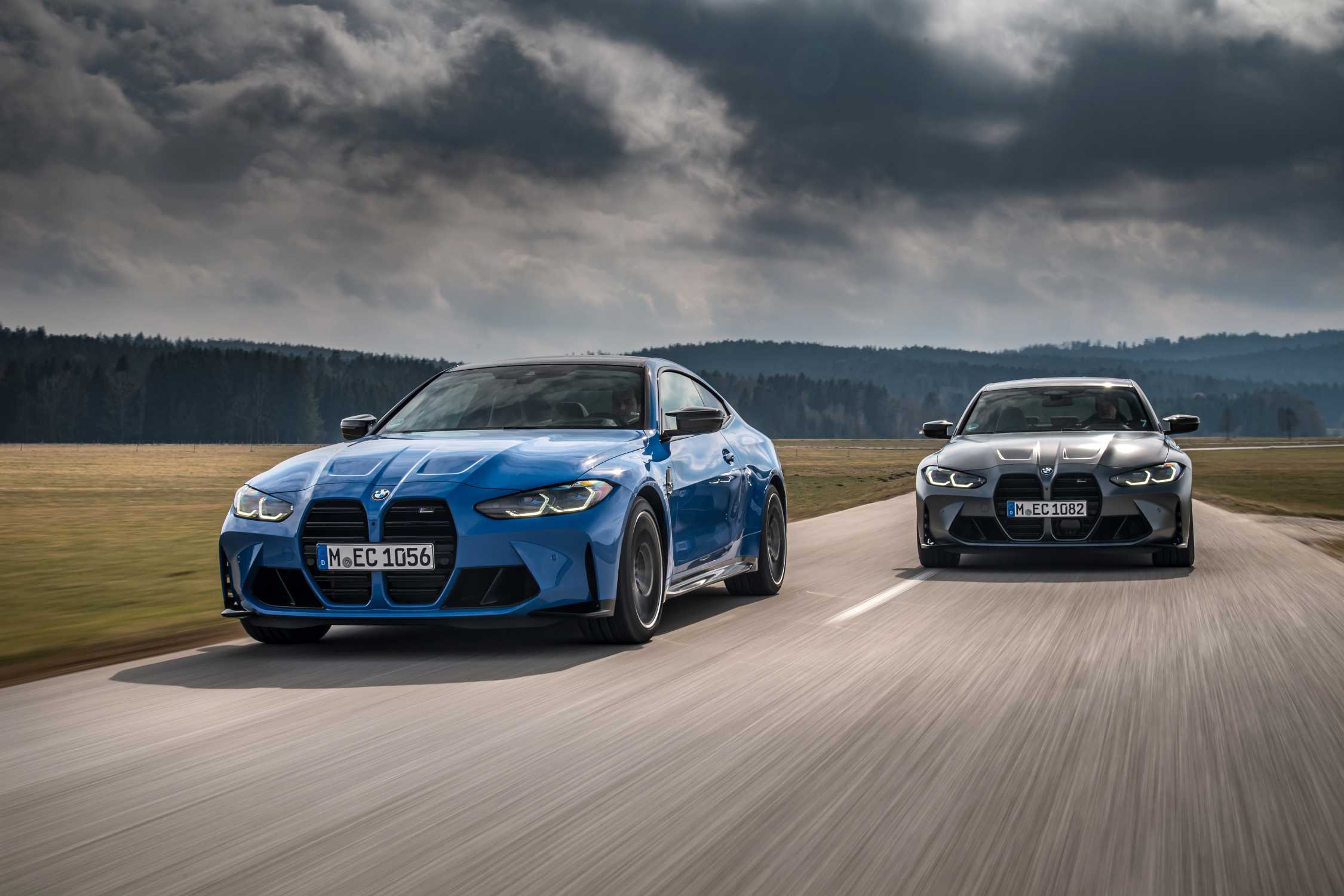
Sound, Feel, and the Emotional Signature of the M3
There’s a reason people chase manuals even after automatics improved dramatically. A manual has an emotional signature. Shifts can feel visceral, the engine note can feel more intimately choreographed by your hands, and the act of driving becomes a tactile ritual rather than a set-and-go expectation.
xDrive can still deliver emotion—often in a different register. The car may sound and surge with less hesitation. But the emotional center of gravity shifts from “what I’m doing” to “what the car can reliably deliver.” It can feel like power with training wheels removed, yet it still arrives with fewer moments of uncertainty.
Ask yourself what you want to remember after a drive. Do you want to recall your perfect downshift and the way the chassis responded? Or do you want to recall the relentless traction and the sense that the M3 never really lost its composure?
Which One Should You Choose? A Balanced Challenge, Not a Verdict
If the goal is raw driver involvement—control with a side of risk, and satisfaction earned through precision—the manual M3 Sedan is an invitation to mastery. It rewards timing, patience, and awareness of grip. It can also punish carelessness in weather and traffic, which may be the point, depending on your temperament.
If the goal is a performance tool that remains confident when conditions get messy, xDrive is compelling. It offers a more consistent pathway to speed and reduces the likelihood that traction becomes the story rather than the scenery. It can help you enjoy the car more often, not just on perfect roads.
Here’s the challenge to settle it: choose based on what you want to spend your attention on. With the manual, your attention goes to the transmission’s demands. With xDrive, your attention goes to the road’s flow. Neither approach is wrong. Both are seductive.
Outro: The M3 Sedan as a Mirror
The BMW M3 Sedan isn’t just a machine that accelerates. It’s a mirror that reflects how you like to drive. The manual version asks you to be the final interpreter of traction, timing, and consequence. xDrive offers a more guarded translation of power into forward motion—still thrilling, but steadier.
So, which one are you? The driver who wants the steering wheel to feel like a conversation, or the driver who wants it to feel like a promise? Either way, the M3 remains an icon—one that turns every drive into a question you’ll keep answering, one gear—or one traction strategy—at a time.