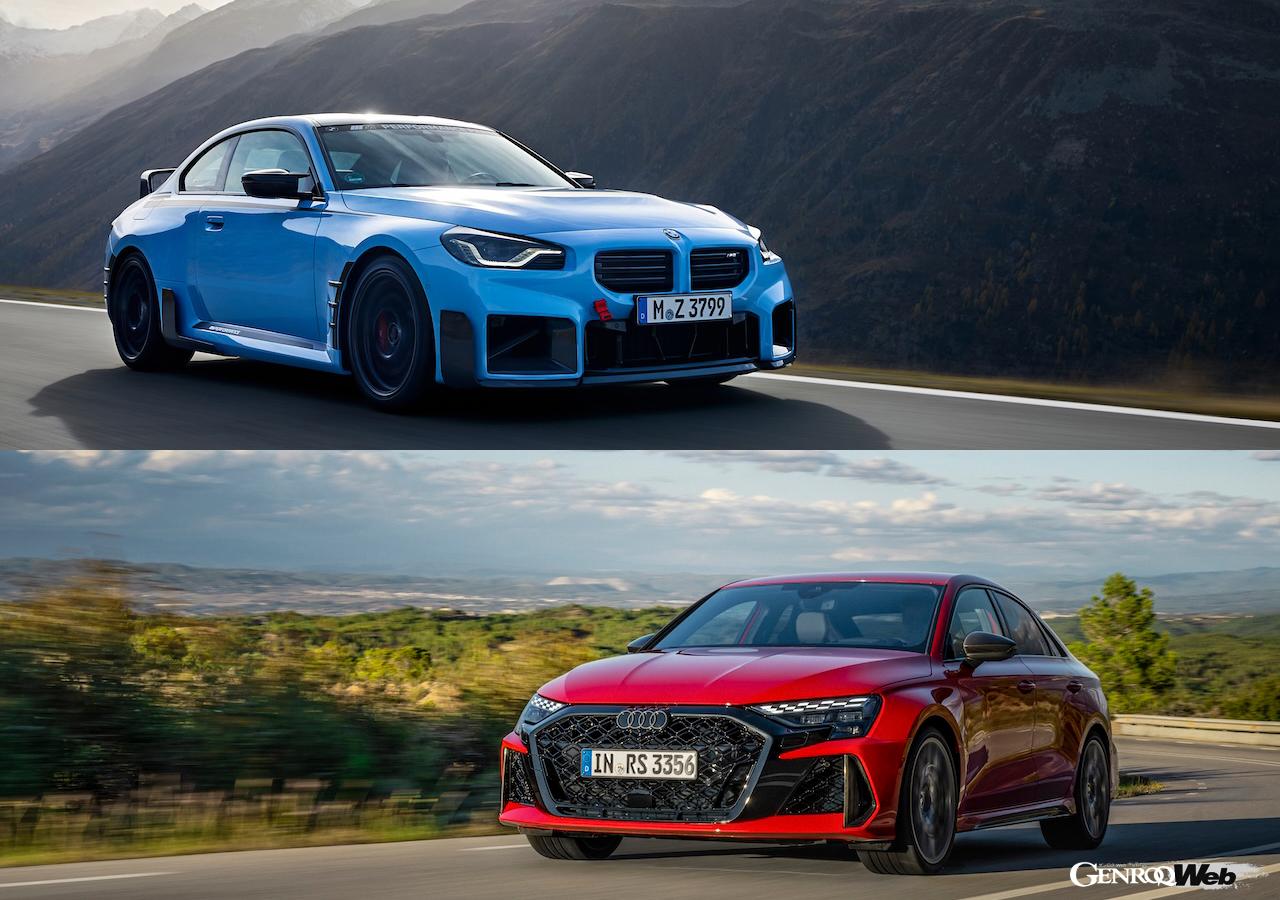
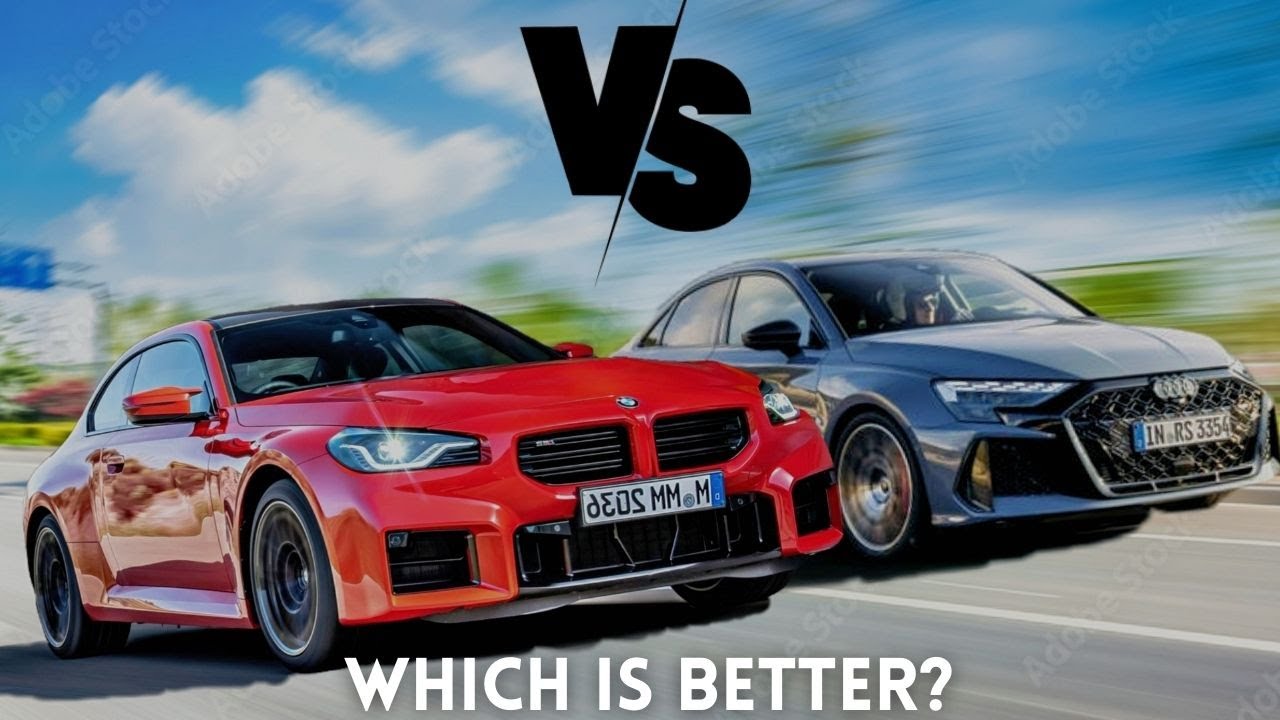
There’s a certain kind of performance drama that doesn’t announce itself with cathedral-sized grilles or stadium-scale bodywork. It whispers. It waits. Then, one confident downshift later, it reveals its true agenda. That’s the promise at the heart of the BMW 2 Series and the Audi RS3—two compact machines that don’t just chase speed. They curate it. They choreograph it. And in the end, the real question isn’t simply which one is faster on paper. The question is which one changes your posture while you’re driving.
This compact face-off is less about choosing a winner and more about discovering a philosophy. One side tends to value poised balance, steering immediacy, and a mechanical feel that seems to speak directly to the driver. The other side tends to favor traction-minded engineering, rocket-like punch, and an athletic composure that can feel almost telepathic. Somewhere between them is a shift in perspective—a moment where your definition of “small” becomes irrelevant.
Two philosophies, one shared appetite
Start with intention. The BMW 2 Series draws its identity from the idea that a compact performance car should feel like a precision tool. The chassis is often interpreted as a conversation—tight, responsive, and willing to follow subtle commands. Even before the engine wakes up, the whole car seems tuned to reward attention.
The Audi RS3, meanwhile, carries a reputation for aggressive cohesion. It’s the sort of car that accelerates with a sense of inevitability, as if physics were merely a suggestion. It doesn’t only want to be quick; it wants to be unstoppably planted. That stability turns high performance into something repeatable—an ability to summon speed again and again without theatrics.
And that’s where curiosity begins. What if “compact performance” isn’t a category, but a mood? What if the best choice is the one that aligns with how you perceive the road?
Engine character: torque you can feel, drama you can hear
In this showdown, the heart of each car tells a different story. The BMW 2 Series typically leans into a driver-centric rhythm—power delivery that can feel layered, with a sensation of progression that builds confidence. It’s not only about peak output; it’s about the way the car responds at the edges of your inputs. Many drivers describe this as a kind of throttle literacy—the car seems to understand your intentions before you fully finish typing them.
The RS3 tends to deliver a more forceful sense of immediacy. Audi’s performance approach often translates into a punchy, confident shove that arrives with impressive consistency. When the boost arrives, it’s less like a wave and more like a door being opened. The soundscape can feel punchier and more emphatic, and the surge often encourages you to stay on the pedal longer than you expected.
Here’s the key curiosity: do you prefer power that unfolds or power that strikes? Neither is objectively correct—both are emotional design decisions.
Transmission and shift feel: precision vs inevitability
Even if both cars deliver rapid acceleration, their transmissions can produce different kinds of satisfaction. The BMW 2 Series often feels like it’s built for fine adjustment—especially when you’re driving with restraint. Downshifts can feel crisp, and the gear selection can appear almost surgical. That quality matters because it turns performance into craft.
The RS3 often offers a more relentless cadence. Its shifting behavior frequently feels engineered to keep momentum intact, so the car doesn’t just accelerate—it continues accelerating. That’s a subtle distinction, but it changes how passes feel. One car can make you feel like you’re conducting an instrument. The other can make you feel like the car is conducting you.
If you’ve ever wondered why two fast cars can feel strangely different in the same situation—this is often the answer.
Handling personality: steering as a promise
Handling is where the BMW 2 Series tends to glow. The steering often communicates texture—surface changes, grip levels, and the car’s own boundaries. You get feedback that can feel rich, even when you’re not pushing at maximum speed. The result is a driving experience that feels composed, with a sense of balance that encourages confident corner exits.
For the Audi RS3, the appeal often lies in stability under acceleration and the way it maintains traction when conditions turn unruly. It’s the sort of car that can stay composed when the road gets busy. Instead of fighting for grip, it can appear to manage it. When you exit a corner, the RS3’s character can feel like a promise kept: the car stays planted and encourages more throttle than you expected to be wise.
So, again, the shift in perspective: do you want your performance to feel like a conversation with the chassis, or like a confident agreement with the laws of motion?
All-wheel drive vs rear-led zest: traction philosophy
The RS3’s all-wheel-drive setup is often central to its reputation. It doesn’t merely add grip; it changes the entire tempo of driving. Launches feel more controlled. Mid-corner throttle feels more permissible. The car can create traction where you might otherwise anticipate compromise.
The BMW 2 Series—particularly in performance variants—can offer a more rear-oriented feel, sharpening the connection between steering and acceleration. That can be thrilling, because it makes weight transfer and traction behavior more legible to the driver. It can also encourage a more engaged driving style: deliberate, responsive, and tuned to the driver’s sense of balance.
Both approaches are legitimate. The difference is experiential. All-wheel drive can feel like certainty. Rear-led zest can feel like invitation—an invitation to drive with your instincts.
Brakes, grip, and endurance: the difference between fast and furious
Speed is easy to celebrate. Consistency is harder. Braking and tire behavior define whether performance is a short-lived event or a repeatable skill. The BMW 2 Series often aims for predictable deceleration and a pedal that feels communicative. When the brakes are confident, you can brake later without needing to second-guess yourself.
The RS3 tends to approach endurance with traction-minded engineering. Even when you’re pushing, the car can feel stable under braking and cornering loads. Tires and brake management become an extension of the drivetrain’s overall confidence.
Curiosity worth keeping: when performance is repeated—back-to-back spirited drives—what still feels sharp? That’s where the “character” of each machine reveals itself.
Interior vibe and ergonomics: the cabin as a command center
In compact performance cars, the cabin becomes a cockpit, even when the body remains modest. The BMW 2 Series often emphasizes driver orientation—controls that feel reachable and a layout that supports focus. The atmosphere can feel more traditional in its practicality, yet still premium in its execution. There’s often a sense of clarity: the cockpit doesn’t distract; it steadies you.
The Audi RS3 interior usually leans into high-tech presence and an organized, performance-aware design language. Digital interfaces can make the car feel like a data-driven ally, especially when you’re tracking performance metrics or simply enjoying the responsiveness of the system. The vibe can feel more futuristic, more visually energetic.
Comfort is not just about softness; it’s about mental ease. The right cabin can keep you calm while you’re driving quickly. And calm, in performance terms, is power.
Daily drivability: how “sport” survives daylight
Here’s where perspective shifts again. A performance car isn’t only judged on its best moments. It’s judged on the commute home, the rainy-day trip, the grocery run that turns into an accidental test session.
The BMW 2 Series often feels intentful in a refined way—capable of sporty engagement without becoming unbearable in ordinary use. Engine responsiveness and driving modes frequently make it easy to dial the experience up or down.
The Audi RS3 tends to offer a similar flexibility, often delivering a confident ride character that doesn’t collapse into harshness on routine roads. The all-wheel-drive advantage can make daily traction feel secure, which matters when the weather plays games.
So the question becomes personal: do you want sport to feel like an on-demand switch, or like a background certainty?
Style and presence: aggression with restraint or aggression with edge
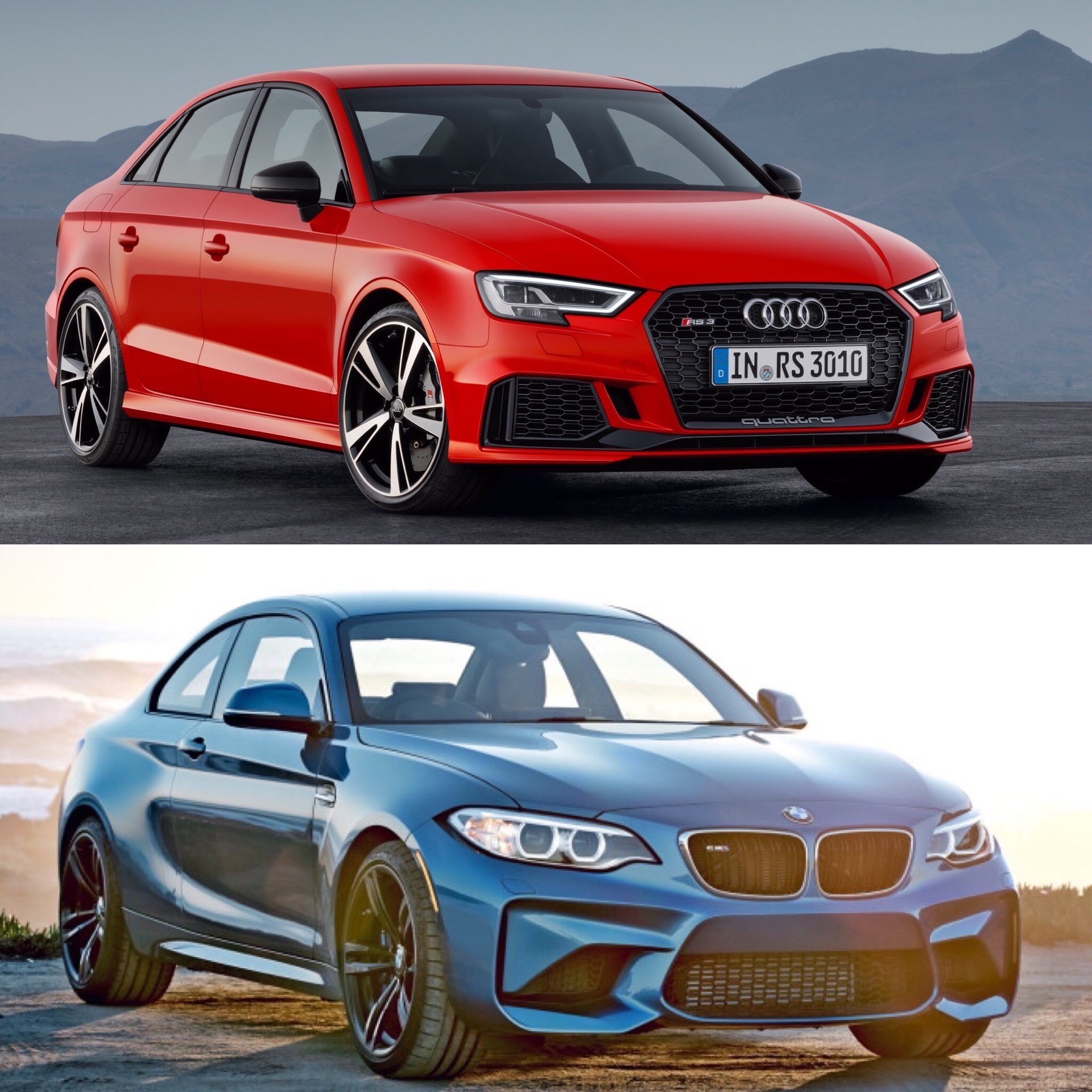
Design is the emotional handshake. The BMW 2 Series often projects a sense of athletic elegance—compact, deliberate, and sharp without trying too hard to announce itself. The profile can feel balanced, and the overall styling can look like it’s built for motion even when parked.
The RS3 usually communicates performance through bolder cues—an exterior presence that feels unmistakably athletic. It can look like speed already lives in the body panels. Whether that’s your taste depends on how you like your cars: subtle and razor-clean, or assertive and unapologetic.
Either way, style isn’t decoration here. It’s a forecast of how the car behaves once you start driving.
Ownership thinking: maintenance reality and long-term confidence
Performance also lives in long-term ownership. How a car ages—mechanically and in terms of parts availability—shapes the practicality of the choice. While no vehicle is effortless forever, competitive performance models typically come with structured service networks and known maintenance rhythms.
It’s worth considering tire costs, brake wear patterns, and drivetrain-related service schedules. A car that encourages you to drive it harder can also accelerate consumables faster. The trick is to align the machine with your intentions: if your life rewards spirited driving, plan for it. If you want performance as a rare treat, choose accordingly.
Curiosity pays off here. What’s the cost of joy in your real world? The best answer isn’t theoretical—it’s personal.
So which one wins the face-off?
Winning in a BMW 2 Series vs Audi RS3 comparison rarely means declaring a single champion for every driver. The BMW 2 Series tends to win hearts that value communicative steering, precision-driven confidence, and a sense of mechanical engagement. It’s a car that can make you feel like you’re reading the road through the chassis.
The Audi RS3 tends to win on the basis of traction-minded power, repeatable acceleration, and a planted, inevitable momentum. It’s a machine for drivers who want performance to feel dependable—especially when conditions are less flattering than your favorite road.
And perhaps the real conclusion is this: the best compact performance car is the one that reshapes your expectations. It should shift your perspective about what “small” can do. It should pique curiosity even after the drive ends—because you’ll find yourself wondering, not just how fast it went, but how it made you feel while it went there.
Choose the car that matches your instinct. Then let the road answer back.