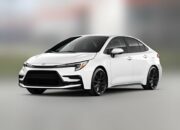
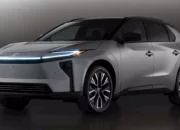
The decision between a 2026 BMW 3 Series and a Tesla Model 3 can feel like choosing between two different philosophies of motion. One is a classic maestro—precise, tactile, and steeped in tradition. The other is a sleek futurist—silent in the moment, quick in the blink of an eye, and relentlessly software-driven. Both are compact sedans with an appetite for daily life, yet they approach that appetite from opposite ends of the universe. So the real question isn’t simply “Which is better?” It’s “Which sensation do you want to live with every day?”
Imagine your commute as a dim corridor lined with doors. One door opens into a workshop where every lever, hinge, and control has a purpose. The other door opens into a cockpit where the interface behaves like a smartphone—responsive, updateable, and constantly recalibrating your relationship with the vehicle. When you stand at that threshold, the choice becomes less about specifications and more about identity.
At a Glance: Two Sedans, Two Souls
The 2026 BMW 3 Series carries the weight of a long-running legacy. It’s engineered to feel coherent—steering that communicates, suspension that balances, and a drive experience that still believes in mechanical honesty. Even when you’re moving slowly, it tends to make the car feel awake, as though it’s listening for your next intention.
The 2026 Tesla Model 3, by contrast, often feels like an evolving platform. It doesn’t simply transport you; it orchestrates you. The power delivery can feel instantaneous, and the cabin experience is designed around minimalism and digital control. The silence under acceleration can be startling—like driving through the surface of a lake where ripples are the only evidence of motion.
In short: the BMW aims for an analog kind of pleasure. The Tesla aims for an always-improving kind of convenience.
Driving Feel: The BMW’s Thread vs. the Tesla’s Spark
To drive a 3 Series is to feel the car’s structure as a set of deliberate choices. The steering often has a satisfying resistance, the chassis tends to inspire confidence, and the car’s rhythm can be remarkably composed over mixed pavement. It’s not merely fast. It’s controlled, as though the car is translating your inputs into an elegant sentence.
The Model 3’s sensation is different. The torque curve can deliver a punch that arrives without negotiation. The instant response can make even ordinary roads feel game-worthy. Yet the driving feel is less about texture through the seat and more about acceleration as a controlled eruption—smooth, immediate, and often thrilling.
Ask yourself this: do you want a car that flatters your hand on the wheel, or one that flatters your reflexes?
Interior Space and Practicality: Comfortable Realism vs. Digital Minimalism
Interior comfort isn’t only about dimensions; it’s about how the space behaves around you. The BMW 3 Series typically emphasizes ergonomic layout and conventional storage logic. Switchgear, seating positions, and sightlines are curated to reduce fatigue. There’s a reassuring sense that everything you need is where you expect it to be.
The Tesla Model 3 also makes room feel intentional, but its philosophy leans into simplification. Fewer physical buttons can create a cleaner visual field, and the overall cabin can feel like a calm lounge. The tradeoff is that you adapt to a more screen-centric environment. Still, for many drivers, the result is liberating—less clutter in the mind, more focus on the drive.

In real-world use, both cars can satisfy daily errands, but the BMW often appeals to those who crave tactile familiarity. The Tesla tends to appeal to those who want a cabin that feels like it belongs to the future, not merely inside it.
Technology Experience: Buttons and Balance vs. Updates and Ecosystem
The BMW’s tech approach tends to feel like a well-designed instrument panel. Menus can be intuitive, and the layout often prioritizes quick comprehension. It doesn’t pretend to be a tablet first and a car second. It’s more like a dashboard that’s willing to evolve while still respecting driver habits.
The Tesla’s approach is more radical: the car behaves like a connected device. Navigation, infotainment, and driver-assistance features can receive improvements over time. That matters because technology doesn’t stand still, and a vehicle that can adapt can feel less dated as years pass.
Yet there’s a nuance. Screen-heavy control can be a delight or a distraction depending on your tolerance for interaction. The BMW offers a steadier “reach and go” rhythm. The Tesla invites you to learn a more digital choreography.
Performance and Power: Precision Modulated vs. Instantaneous Thrust
Performance in the 3 Series tends to express itself through balance: acceleration that feels linear, braking that can inspire confidence, and handling that’s eager to stay composed. The car’s behavior can feel like a handshake—firm, predictable, and responsive to nuance.
In the Model 3, power delivery can be described as immediate momentum. Launches can feel like being propelled forward by a well-tuned spring, even when you’re simply merging at ordinary speeds. The EV architecture also tends to smooth out power delivery into a calm, effortless forward motion.
Both cars can be quick in their own language. The BMW speaks in confidence and control. The Tesla speaks in immediacy and acceleration.
Driving Assistance and Safety: Confidence Through Different Lenses
Safety is more than crash structure; it’s also the feeling of being guided rather than surprised. The BMW 3 Series usually emphasizes driver assist systems that integrate with a conventional driving experience. The goal is to support attention without hijacking it.
The Tesla Model 3 can feel more like an advanced assistant perched nearby. Its approach often relies on sensors and software behavior that can change with updates. For some drivers, that’s reassuring—like having an always-ready co-pilot. For others, it can feel like a tool that evolves at the edges, demanding periodic re-familiarization.
The best choice is the car whose guidance style aligns with how you like to drive: conservatively guided, or actively augmented.
Charging, Fueling, and Ownership Reality
Ownership is where theory meets life. With the BMW, the ownership experience generally follows familiar patterns—refueling, routine maintenance, and a predictable cadence. It’s less about planning around energy logistics and more about enjoying a conventional automotive routine.
The Tesla introduces the question of charging access. If you can charge at home, the Model 3 can become almost frictionless. The idea of “starting each day with a full battery” can feel like taking control back from the calendar. If charging is less convenient, the experience can still work, but it requires more deliberate planning.
Think of it as this: the BMW offers spontaneity of fuel availability. The Tesla offers efficiency and convenience—if your environment supports it.
Cost of Ownership and Long-Term Value
Cost isn’t only about the sticker price. It’s about how a car behaves over time: energy expenses, maintenance needs, and depreciation expectations. The BMW can be appealing if you prefer conventional systems and predictable servicing cycles. Its value often benefits from strong brand recognition and broad market familiarity.
The Tesla’s long-term calculus can be influenced by charging costs, software evolution, and changing market dynamics around electric vehicles. Some buyers see the Model 3 as a platform that keeps getting smarter rather than merely older.
Choose based on your financial rhythm. If you want predictable budgeting, BMW may fit more naturally. If you want a technology-forward approach with energy efficiency potential, Tesla can be compelling.
Who Should Buy Which?
If you’re the kind of driver who believes a car should respond like a finely tuned instrument—steering that feels alive, controls that you can operate without looking, and a cabin that feels traditionally ergonomic—the 2026 BMW 3 Series is likely to feel like home.
If you’re the kind of driver who wants a car that evolves, accelerates with effortless immediacy, and offers a connected lifestyle experience—where daily driving feels like part of a larger digital ecosystem—the 2026 Tesla Model 3 is likely to feel like a doorway into the future.
And for the undecided: test both. On the same day, if possible. Feel how your body interprets each vehicle. Your hands will learn the car faster than your mind can explain it.
Final Verdict: The Right Sedan Is the One That Matches Your Motion Philosophy
Choosing between the 2026 BMW 3 Series and the Tesla Model 3 isn’t just comparing vehicles—it’s comparing sensibilities. The BMW offers a kind of elegance that emerges through mechanical coherence. The Tesla offers a kind of empowerment that emerges through software-forward design and electric immediacy.
Ultimately, the best choice is the one that makes your everyday drives feel more meaningful. Some cars make you feel in control through texture and tradition. Others make you feel in control through responsiveness and evolution. Pick the philosophy that fits your life, and both sedans can become more than transportation—they can become a companion to your routines.