There’s a particular kind of fascination that attaches itself to the thought of a three-row SUV. It begins innocently—an image of a family road trip, a school pickup made easier, or the quiet relief of enough seats to avoid the dreaded “who’s sitting where” negotiation. Then the fascination deepens. You start noticing how the dashboard layout feels in the palm, how visibility changes at the shoulders, how noise behaves when the highway stretches long and flat. And suddenly you’re no longer just shopping. You’re evaluating a rolling micro-environment.
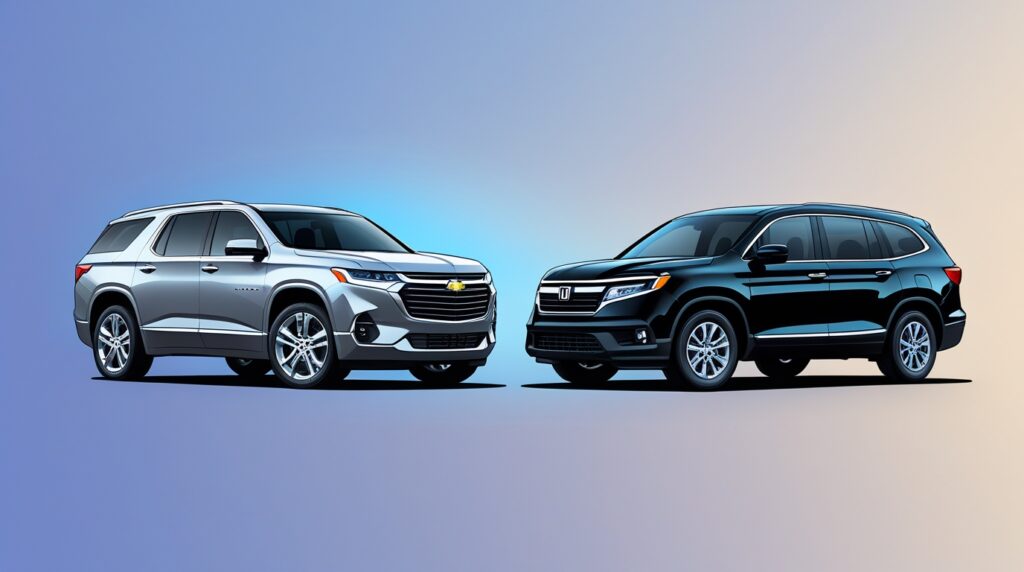
That’s the atmosphere behind the 2026 Chevrolet Traverse vs. Honda Pilot face-off. On the surface, these are both mainstream family haulers with three rows and everyday competence. But beneath the paint, the engineering philosophy and design priorities reveal two distinct interpretations of what “family-ready” should mean. A common observation often surfaces during the comparison: both SUVs look capable, yet each one seems to “fit” certain drivers more naturally. The deeper reason is usually more intricate than styling or brand loyalty—it’s the way each vehicle choreographs space, comfort, and confidence.
First Impressions: Presence, Proportions, and the Psychology of Standing Back
When you first encounter the Traverse and the Pilot side by side, the differences register before you can fully name them. The Traverse tends to communicate a confident, road-oriented demeanor—an SUV that feels as though it expects long journeys. Its stance and surface detailing often suggest breadth, like an environment designed for movement.
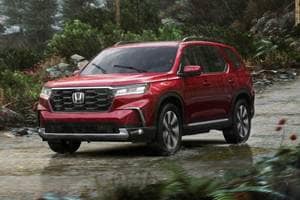
The Pilot, meanwhile, can feel more grounded and purposeful. It has a familiar, Honda-like sincerity—less theatrical, more “ready.” That matters because families don’t just ride in these vehicles; they inhabit them. The initial impression becomes part of how you anticipate daily use: entering tight parking spaces, loading groceries, and settling kids into car seats without drama.
Cabin Layout: Where Comfort Is Engineered, Not Just Promised
Most shoppers focus on legroom numbers. That’s understandable. But comfort in a three-row SUV is not merely a matter of inches; it’s a choreography of sightlines, seat geometry, and how heat and air distribute through the cabin.
The Traverse typically leans into a spacious, easy-to-navigate layout. Doors open with an encouraging sense of width, and the driver’s area tends to feel like a command center built for frequent transitions—morning drives, school drop-offs, errands, and the last-minute detour that always seems to happen.
The Pilot often strikes a slightly different rhythm. It can feel more ergonomically intuitive, especially around the seating positions and daily controls. That “intuitive” sensation is not magic; it comes from a design choice that reduces mental friction. When you don’t have to constantly recalibrate where things are, the whole vehicle starts to feel calmer.
Here’s the deeper fascination: family vehicles aren’t judged only by how they look while parked. They’re judged by how they reduce friction when you’re tired. A cabin that organizes tasks—loading, reaching, adjusting—becomes a quiet advantage you notice only after you’ve stopped thinking about it.
Second-Row and Third-Row: The Real Test Begins After the First Exit
It’s easy to be impressed by the first row. The second and third rows are where compromises either hide or reveal themselves.
In the Traverse, the second row is often perceived as genuinely supportive for everyday life—comfortable seating with practical access routes to the third row. That access is crucial. When you have passengers with different routines—kids, teenagers, grandparents—movement through the cabin becomes a daily habit. A smoothly designed walkway can turn a chore into a non-event.
The Pilot’s third-row experience tends to feel more integrated into the overall cabin mood. Even when third-row seats are used, the Pilot often gives the impression that the vehicle was designed with second and third-row occupants in mind, not merely “added” afterward. That coherence affects everything: how the cabin feels when full, how relaxed passengers remain, and how quickly you forget you’re in a third row at all.
Common observation: one SUV may seem to “work better” for a certain family composition. The deeper reason is that three-row usability depends on more than seating capacity. It depends on entry angles, seat folding effort, cushion thickness behavior over time, and how easily climate and visibility support long stretches of travel.
Technology and Infotainment: The Interface Between Driver and Journey
In 2026-era SUVs, technology is never just entertainment. It’s navigation clarity, phone pairing sanity, and the ability to keep kids occupied without turning the drive into a negotiation.
The Traverse commonly emphasizes a modern, user-friendly infotainment experience—easy switching between functions, an interface designed to keep attention on the road. That matters when you’re juggling driver tasks and passenger requests. A responsive system reduces the “tap fatigue” that builds during long drives.
The Pilot, known for a thoughtful approach, often aims for intuitive usability. Its software experience tends to feel consistent, with a strong focus on keeping controls within easy reach. Consistency is underrated. When buttons behave like you expect and screens don’t distract, the whole cabin feels more dependable—like the vehicle is quietly cooperating.
Deeper still: fascination often grows when technology fades into the background. When the interface stops demanding attention, you start noticing other things—wind noise, suspension calmness, and the comfort of steady acceleration.
Ride Quality and Handling: Comfort That Holds Up When the Road Gets Nosier
Family road trips are rarely smooth in the real world. There are construction zones, imperfect pavement, and the occasional detour that sends you onto rougher surfaces. That’s where ride quality becomes more than a marketing phrase.
The Traverse often delivers a composed ride with a reassuring sense of control. It tends to feel stable at highway speeds, and its suspension tuning frequently gives occupants confidence during lane changes and merges.
The Pilot typically offers a well-balanced ride character—comfortable without feeling disconnected. It can feel particularly steady during stop-and-go traffic, where frequent braking and acceleration demand a suspension that doesn’t feel busy.
What’s fascinating here is how different tuning philosophies can produce similar outcomes—ease and confidence—while still feeling distinct. One SUV may feel more “gliding,” another more “calibrated.” Either way, the vehicle’s ability to keep the cabin calm becomes a kind of emotional insulation.
Powertrain and Performance: What “Enough” Feels Like
Many shoppers don’t need sports-car acceleration. They need “enough” power to merge safely, climb grades confidently, and pass without the sense of waiting.
The Traverse generally delivers a strong, usable driving experience that supports family-friendly momentum. It’s the kind of performance that feels ready for traffic patterns rather than only idealized scenarios.
The Pilot tends to prioritize smooth everyday drivability. Its acceleration behavior can feel straightforward and predictable, which matters when you’re coordinating passengers, luggage, and changing road surfaces.
Beyond horsepower, the deeper reason for fascination is responsiveness. A throttle that feels anticipatory can reduce driver fatigue. A transmission that makes appropriate decisions can make the SUV feel “smarter” even when it’s simply well-tuned.
Safety and Driver Assistance: Confidence as a Daily Habit
In a three-row SUV, safety isn’t a checklist item. It’s a lifestyle preference. You want collision avoidance to feel seamless, not intrusive. You want cameras and sensors that help without creating noise in your attention.
The Traverse typically offers a robust suite of driver assistance features designed to support situational awareness—helping with lane guidance, monitoring surroundings, and reducing stress in busy environments.
The Pilot also emphasizes driver confidence. Its safety technology approach often feels integrated into normal driving rhythms—helpful when needed, unobtrusive when not.
Common observation: one SUV’s safety features might feel “more natural.” The deeper reason is calibration and feedback style. Even when systems are technically similar, how they warn, how they intervene, and how quickly they adapt to changing conditions shapes the overall emotional experience of driving.
Practicality and Cargo: The Art of Living With Real Stuff
Behind the third row lies the story of real life. Backpacks, strollers, sports gear, groceries, and the inevitable “we’ll just bring it” items that multiply during the season.
The Traverse often stands out for cargo versatility—an approach that aims to make everyday storage feel flexible. Its layout encourages efficient packing and easier access to what you need most.
The Pilot tends to feel organized as well, with a cabin design that supports practical loading and reasonable day-to-day usability. The way the rear area integrates with passenger space can influence how often you use the third row, and that can affect your real ownership experience.
Here the fascination is rational and human. A family vehicle that makes storage intuitive feels less like a compromise and more like a tailored solution.
Ownership Considerations: The Long Game After the Newness Wears Off
Buying a three-row SUV isn’t just about the first month. It’s about how the vehicle continues to perform through maintenance cycles, evolving family needs, and shifting travel patterns.
Between the Traverse and Pilot, ownership decision-making often comes down to how each brand’s service experience, resale perception, and practicality align with your expectations. It’s less glamorous than features, but it’s more consequential.
Ultimately, the “best” choice often becomes the one that reduces friction year after year—starting with a drive that feels calm and ending with a vehicle that stays dependable and easy to live with.
Which One Fits Better? The Answer Is Usually About You
So, which SUV wins the face-off? The Traverse and Pilot both bring compelling strengths to the three-row arena. The Traverse can feel like a spacious traveler—confident, modern, and designed to keep long days manageable. The Pilot often feels like an integrated family partner—grounded, intuitive, and tuned for comfort that doesn’t unravel when the cabin fills up.
The common observation—“they’re both great, but one just feels right”—isn’t coincidence. It reflects deeper differences in how space is choreographed, how technology supports routine, and how driving confidence is delivered through tuning and feedback. Pick the vehicle whose personality matches your family’s rhythms, and the comparison becomes less of a contest and more of a match.
Final Thoughts: A Three-Row SUV Should Feel Like Relief
When you step back, the fascination makes sense. The three-row SUV isn’t only a vehicle—it’s a daily environment that influences mood, stress levels, and the smoothness of ordinary moments. The 2026 Chevrolet Traverse and the Honda Pilot offer different paths to that same goal, and the right choice is often the one that turns logistics into ease.
Whether you’re chasing weekend adventures or simply navigating a busy weekday schedule, the winner is the SUV that makes you feel composed behind the wheel and genuinely comfortable when everyone is on board.