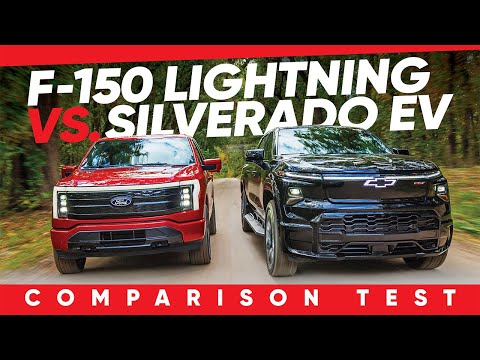
The electric truck era is no longer a distant prospect—it’s already in the driveway, vibrating with quiet authority and a new kind of confidence. In 2026, that reality sharpens with two formidable competitors: the Chevrolet Silverado EV and the Ford F-150 Lightning. On paper, they share the same mission—bring battery power to the full-size pickup crowd. In practice, they feel like products shaped by different philosophies. One leans into utilitarian boldness and an unmistakably rugged stance. The other carries the legacy of the F-150 lineage with an engineering approach that treats electrification like an evolution rather than a reinvention. If you’re trying to decide which electric workhorse fits your daily grind, this electric truck face-off turns into far more than a comparison—it becomes a study in intention.
In the paragraphs ahead, you’ll find what readers typically look for in a serious head-to-head: design details, real-world range considerations, charging logistics, performance behavior, payload and towing practicality, interior usability, and the subtle ecosystem features that influence ownership. Expect both short verdict-like statements and longer, narrative-style explanations that connect the specs to lived experience.
First Impressions: Exterior Presence and Street Psychology
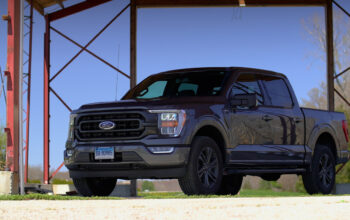
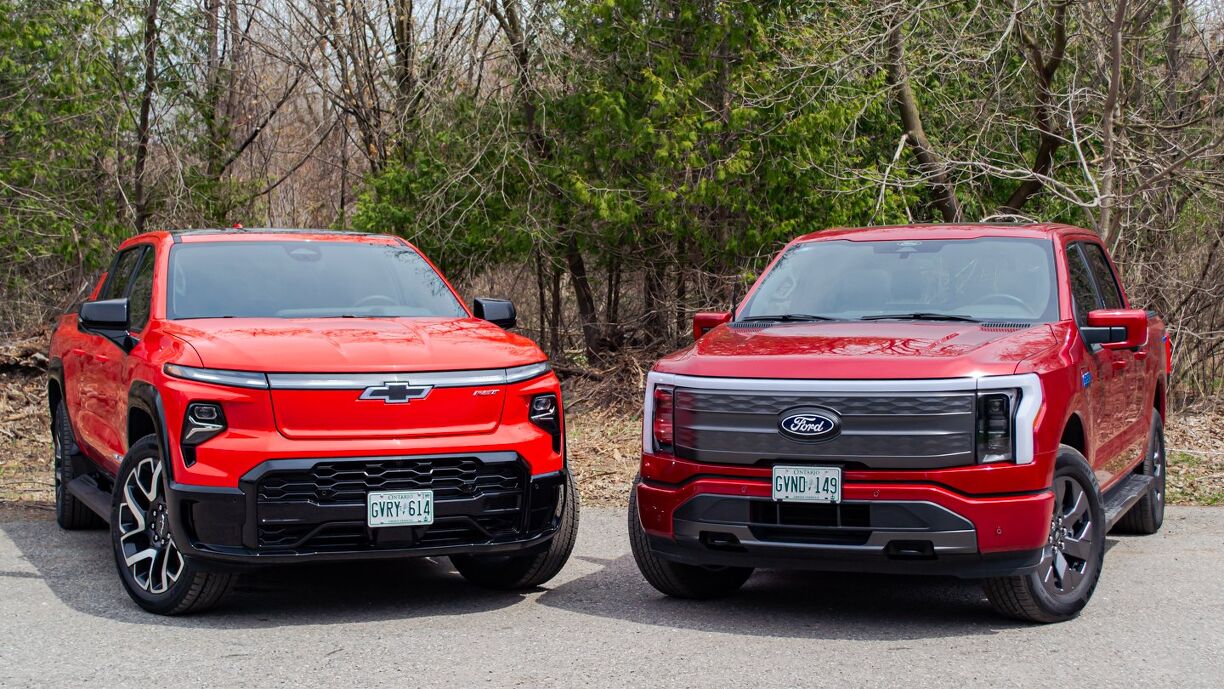
Stand back and the contrast is immediate. The Silverado EV projects a muscular, high-surface-area silhouette that reads like it’s built for weather, road grime, and the relentless geometry of job sites. Even at a standstill, the truck’s stance suggests readiness—like a tool that’s been sharpened. The Lightning, by contrast, retains a more familiar visual rhythm. Its profile is undeniably F-150, and that familiarity can be comforting, particularly for buyers who want electric capability without sacrificing recognizable proportions.
Both vehicles aim to avoid the “too delicate for real work” stereotype. But the Silverado EV’s styling can feel more idiosyncratic, more unapologetically futuristic. The Lightning’s design often feels like a careful translation—electric hardware wrapped in a truck body that has proven itself for decades.
Powertrain Character: Acceleration, Traction Logic, and Drivetrain Feel
Electric torque arrives with the kind of immediacy that changes driving habits. No waiting. No lag. Just a clean shove. Yet “quick” doesn’t mean identical. The Silverado EV and Lightning deliver power through different software personalities—how the throttle request is interpreted, how traction control modulates grip, and how the vehicle behaves under load.
On a quiet morning leaving a driveway, both can feel impressively smooth. But the real difference tends to appear when conditions become unruly. Wet pavement, uneven gravel, or a sudden hill with a trailer in tow turns acceleration into a negotiation between motors, tires, and thermal limits. Expect the Lightning to emphasize predictable control shaped by its long familiarity with pickup dynamics. The Silverado EV often feels more aggressively reactive—especially when drivers press for decisive movement.
In day-to-day use, you’ll notice how regenerative braking blends with pedal modulation. Some drivers prefer a more assertive “lift-to-slow” feel. Others want a gentler deceleration that behaves closer to conventional braking habits. Both trucks can be tuned by the driver, but the default character often nudges preferences in one direction or the other.
Range in the Real World: The Myth of the Perfect Number
Range is a moving target. Temperature swings, driving speed, payload weight, and even tire choice can shift results significantly. On paper, both trucks are advertised with impressive figures, but electric ownership is defined by the situational math behind those numbers.
For commuting and local work—stop-and-go errands, short hauling runs, errands with intermittent idling—electric efficiency can be excellent. In those scenarios, the EV advantage becomes almost intoxicating: fewer fuel stops, less engine noise, and an ease that turns mundane commutes into nearly effortless journeys.
On long highway stretches, the story changes. Aerodynamics matter, and so does sustained speed. A tailwind can act like a generous co-pilot; headwinds can feel like a tax on momentum. If you frequently tow, expect the range to shrink more noticeably than you might see in unloaded driving. The good news is that modern electric powertrains tend to recover some energy through regenerative braking, but physics still collects its dues.
Charging: Home Convenience vs Road-Trip Reality
Charging is where ownership either feels seamless or becomes a planning exercise. For many buyers, the home setup is the anchor. If you can charge at residence—ideally with a properly installed Level 2 system—your daily driving often becomes a battery management routine rather than a fuel logistics problem.
On the road, the charging experience depends on station availability, connector standards, and how efficiently the truck manages battery temperature under fast-charging loads. The most satisfying moments happen when the truck arrives at a sensible state of charge and can accept power consistently. The least satisfying moments happen when the battery is too cold or too hot, forcing the vehicle to throttle charge rates to protect longevity.
Think of fast charging as a sprint rather than a marathon. Both trucks can recharge quickly, but the best results come from charging strategy: knowing when to start, how long to remain, and how to avoid unnecessary prolonged sessions.
Towing and Payload: Work-Mode Credibility
Electric trucks aren’t only about commuting. They’re about responsibility—hauling equipment, moving materials, and pulling trailers that don’t care what power source sits under the hood. Towing capability is therefore a deciding factor, especially for those who use their pickup the way trucks are meant to be used.
When towing, payload and torque management become critical. Electric torque is plentiful, but controlling stability and traction at speed matters just as much. Trailer sway mitigation, brake integration, and stability algorithms all influence the experience.
Here, the Lightning’s roots in the F-150 platform bring a sense of confidence. It’s engineered to handle the expectations of traditional truck owners: towing stability, predictable behavior, and a control scheme that feels intuitive even when you’re focused on the road rather than the vehicle’s electronics.
The Silverado EV approaches towing with a slightly different feel—more of a heavy-duty, upfront muscularity. Under load, it often emphasizes composure, holding lines and maintaining confident momentum. The choice may come down to which driving personality matches your preferred workflow.
Interior and Usability: Control Layout, Comfort, and Everyday Ergonomics
Inside, both trucks aim to make electric ownership feel modern but not alien. The question is how they treat daily ergonomics: seat comfort on long drives, visibility over the hoodline, and the practicality of storage compartments for work tools, groceries, and gear.
The Silverado EV interior can feel like a tech-forward workplace. Buttons, haptics, and driver-focused interfaces are designed to keep attention on driving. The Lightning’s cabin, while also modern, often leans into a more familiar pickup-style usability that long-time F-150 owners recognize instantly.
Connectivity features matter too. Live navigation that accounts for charging stops, power usage dashboards, and route planning that incorporates battery constraints can reduce anxiety dramatically. Some drivers want an interface that stays out of the way. Others want constant telemetry. Both trucks offer a spectrum of information, but their visual rhythm differs—one emphasizing quick glance comprehension, the other offering deeper system transparency.
Technology Ecosystem: Powering Tools and Lifestyle Integration
One of the most compelling arguments for electric trucks is the idea of the truck as a mobile power station. Whether it’s powering job-site tools, running appliances during outages, or enabling outdoor adventures, the capability to deliver electricity transforms the vehicle from transport into infrastructure.
In this category, both trucks are designed to impress. You’ll want to consider output capacity, how easily you can access power ports, and whether the truck supports practical safety features for real-world use. The best systems feel immediate: plug in, power up, and get back to work without complicated rituals.
Beyond power output, driver-assistance features can shape ownership satisfaction. Lane centering behavior, adaptive cruise smoothness, and parking assistance quality all influence stress levels during commuting and long trips.
Cost of Ownership: Maintenance, Energy Economics, and Longevity
Electric vehicles typically reduce some routine maintenance—fewer moving engine components, no oil changes, and less frequent drivetrain wear in certain areas. That doesn’t mean zero maintenance; tires, brakes (though used differently), cooling systems, and battery health monitoring still matter.
Energy costs can be favorable, especially if you can charge during off-peak hours or use workplace charging. Yet electricity pricing varies by region and by plan. To evaluate economics, consider not only the per-kilowatt-hour cost but also charging efficiency and how often you rely on fast charging.
Longevity is where smart owners pay attention. Battery management systems are engineered to protect the pack, but charging habits—avoiding extreme states of charge when possible—still influence long-term health. A truck that you understand tends to cost less to live with.
Which One Should You Choose? A Practical Decision Framework
If your life revolves around frequent towing, long highway runs, and a pickup familiarity that feels instantly comfortable, the Ford F-150 Lightning may align with your expectations. It often emphasizes predictable control, established pickup usability, and an electrified evolution of a proven platform.
If you prioritize a more rugged, forward-leaning visual identity, a tech-forward interior vibe, and a heavy-duty electric presence that feels distinctive, the Chevrolet Silverado EV could become the more compelling choice. It tends to deliver a sense of muscular readiness, paired with modern interface and utilitarian confidence.
In both cases, the “right” answer depends on your charging access, typical driving patterns, and how often towing or payload demands dominate your schedule. Think of it like tool selection: the best tool is the one that fits the job your day actually includes.
Final Verdict: The Electric Truck Face-Off Continues
In 2026, the Chevrolet Silverado EV and Ford F-150 Lightning aren’t just competing—they’re redefining what buyers expect from a full-size electric pickup. Both offer the instant torque thrill, modern connectivity, and the potential to reduce maintenance burdens. Yet they express that promise through different attitudes: one foregrounds a familiar powerhouse evolution, the other leans into a bold, distinctive electric identity.
Choose based on your real routine, not the highlight reel. Consider where you charge, how you drive, what you tow, and which cabin experience feels most natural. Once that alignment clicks, electric ownership stops feeling like a novelty and starts feeling like an upgrade—quiet, efficient, and ready for the next task long before the gas station comes to mind.