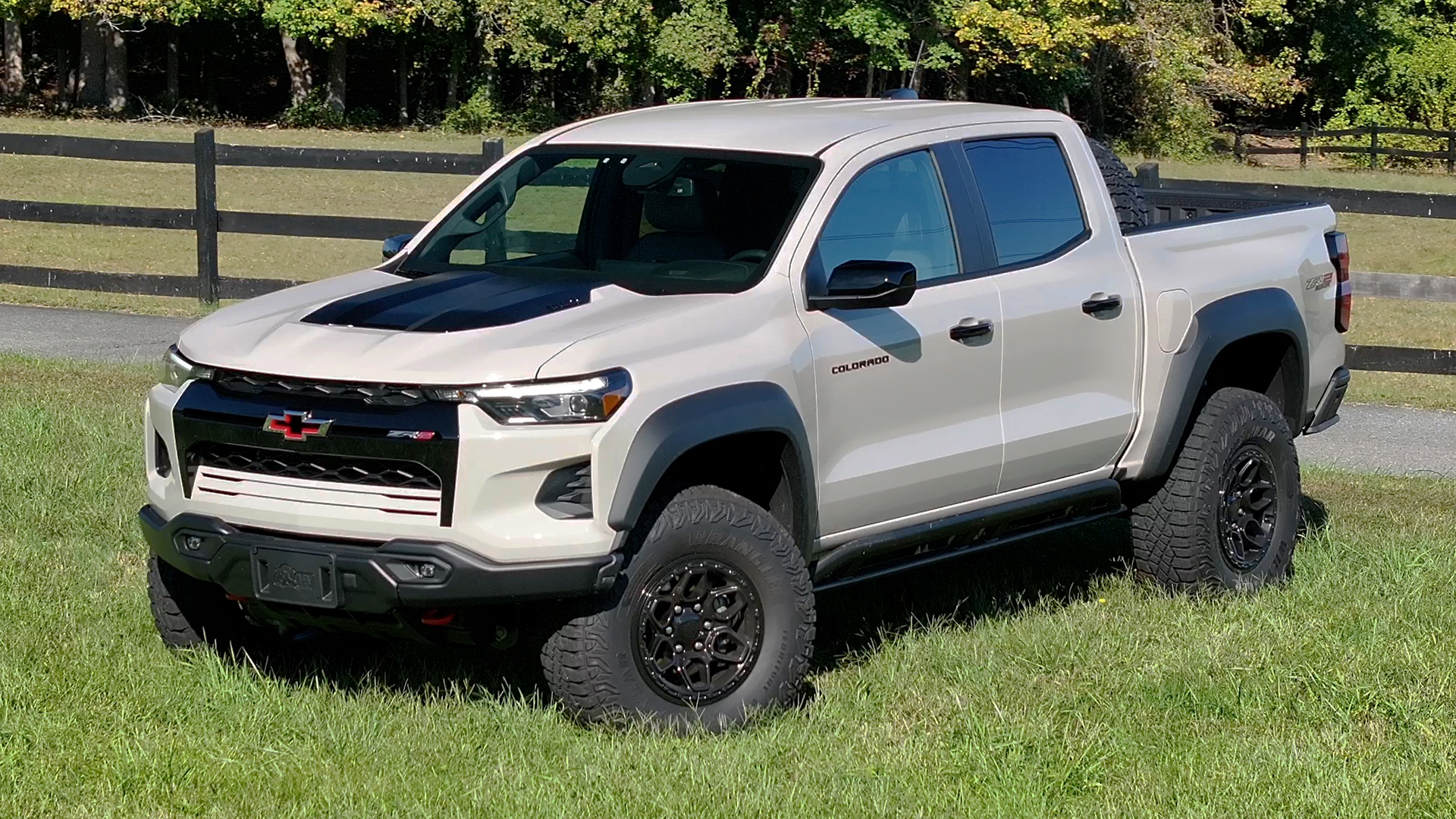
What if your truck didn’t just tackle rough terrain, but charmed it—grinning through ruts, shouldering boulders, and swaggering into mud like it owned the place? That playful question hovers in the background as the 2026 Chevrolet Colorado ZR2 – Bison steps onto the scene. This isn’t merely a capable off-road variant; it’s a bison-footed kind of machine—sturdy, stubborn, and oddly charismatic. Still, there’s a challenge hiding in the fun: can it stay composed when the trail gets mean, when traction vanishes, and when your confidence is the only safety feature left?
Consider this article an expedition narrative—equal parts description and provocation—aimed at the driver who wants more than specs. You want a sense of how it feels when the road dissolves into something unpolished, something unpredictable.
The Bison Identity: Built to Look Ready, Built to Perform Ready
The Colorado ZR2 Bison wears its purpose with confidence. Its stance looks intentionally squared-off, like it’s prepared to argue with gravity. Beyond the visuals, this package is about more than cosmetics. It’s engineered for the realities of off-road travel—heat management, durability under shock loads, and traction systems that don’t flinch when the surface turns chaotic.
And yes, it’s playful. But playfulness is just another word for fearless calibration. The truck is designed to invite adventurous decisions without turning them into expensive lessons.

Power and Control: Where Torque Meets Confidence
Off-road driving isn’t only about horsepower; it’s about how the truck meters power when traction is unreliable. The ZR2 Bison concept emphasizes controllable delivery—steady rather than frantic. That matters when you’re climbing loose grades where wheelspin can turn into a stall, and where momentum is both ally and adversary.
Picture a trail that shifts under tires: packed dirt becomes gravel, gravel becomes slick clay. The truck’s driveline behavior is key here. It should feel like it’s listening—responding with calm authority instead of dramatic surges. That’s the difference between “it moved forward” and “it conquered forward.”
Here’s the potential challenge to keep in mind: try a low-speed crawl that requires patience. If the truck can keep its rhythm without hunting for grip, you’ll start trusting it in places you’d normally hesitate.
Suspension and Articulation: The Freedom to Cross Unevenness
A bison doesn’t step over trouble—it navigates it with stubborn grace. The ZR2 Bison’s suspension and geometry are built to handle the kind of terrain that would make lesser trucks feel seasick. Articulation helps wheels maintain contact, and contact helps traction—especially when the ground surface becomes a patchwork of rock and ruts.
You’ll likely notice how it behaves over broken pavement, washboard sections, and those annoying obstacles that appear suddenly after a curve. The best off-road setups don’t just absorb impacts. They also preserve tire alignment and steering feel, so the truck remains predictable as the trail undulates.
Try this test on your next outing: find a gentle washout with uneven depth. Drive slowly. If the truck stays composed and the steering remains intelligible, you’re experiencing articulation working as intended—not just suspension travel for show.
Tires, Traction, and the Art of Staying Upright
Traction is the off-road language spoken by tires. The ZR2 Bison’s tire-and-wheel approach aims at confidence across loose surfaces—sand, dirt, mud, and gravel that likes to betray you at the moment you gain speed.
But tires alone don’t do the job. Traction systems and driving modes matter just as much. When the truck transitions between different grip levels, the goal is minimal drama. No harsh corrections. No chaotic wheel behavior. Just controlled movement that lets you steer by intention, not by luck.
Here’s a playful challenge: deliberately aim for a section where the surface alternates between firm and soft. If the truck can keep rolling without you constantly feathering the throttle like a cautious pianist, the traction package is doing its job.
Cooling, Durability, and Long-Haul Temperament
Off-road gear has a way of turning routine into endurance. The ZR2 Bison’s engineering philosophy is tied to durability—how it holds up after repeated climbs, how it manages heat while crawling, and how it resists the subtle mechanical fatigue that accumulates on trails.
Cooling performance is often overlooked until you’re deep into a trip and the engine is working harder than you expected. A system that stays efficient helps prevent power fade and keeps drivetrain components happier. That means fewer interruptions and a more relaxed pace.
Think of it as temperature resilience: the ability to maintain composure when the trail insists on stretching the limits.
Braking Off the Beaten Path
When traction is reduced, braking becomes a negotiation. You don’t simply stop—you modulate, you anticipate, you stay aware of how the tires and surfaces cooperate. The ZR2 Bison’s braking setup is intended to provide consistent stopping power without feeling like it’s hesitating or grabbing unexpectedly.
On steep descents, controlled braking helps you maintain stability and reduces the tendency to lock up wheels. The truck’s overall confidence increases when braking feels linear rather than abrupt.
Potential challenge: try a controlled downhill with mixed surface—gravel on one side, packed dirt on the other. The best off-road brakes keep the truck steady and allow you to steer while slowing, not just stop in a straight line like a train emergency.
Cabin Vibe: Adventure Without the Compromise
Off-road shouldn’t mean suffering. The ZR2 Bison leans toward a practical comfort approach—enough refinement that you can arrive at the trailhead already relaxed, not already worn down. Visibility matters, too. A capable truck is only useful when you can read the terrain in real time.
Inside, controls should feel logical, menus should be navigable without distraction, and ergonomics should encourage focus. Short and long drives both demand a cabin that doesn’t become a cockpit of annoyance.
It’s a subtle advantage: when the interior remains calm, drivers make calmer choices. And calmer choices are how you avoid the expensive mistakes that live off the trail.
Technology and Off-Road Readiness: Less Guessing, More Doing
Modern off-road trucks are increasingly about decision support. Driver aids can help with traction management, camera assistance, and steering reference, particularly in tight spots where obstacles hide behind angles.
While no system replaces skill, the right tech reduces the mental load. It’s easier to concentrate on throttle discipline, line selection, and how the vehicle responds when the trail shifts.
So here’s the challenge: find a narrow path with a tricky entrance—something where you’d normally second-guess your clearance. If the truck’s information makes the environment feel readable, you’ll move with more confidence and less hesitation.
Style as Function: Practical Details That Encourage Dirt Time
The ZR2 Bison’s aesthetic isn’t just “look cool.” It’s the visual shorthand of readiness—signals that the truck is expected to get dirty. Those design cues often align with functional elements: protection for vulnerable areas, stance that hints at clearance, and overall packaging that feels adventure-oriented.
When a vehicle is designed with off-road behavior in mind, it tends to feel right from the first step. Even the way it sits can make you drive differently—less cautiously, more intentionally.

So, Can It Handle the Challenge?
Returning to the opening question: can a bison-beast truck remain composed while the trail tries to write its own story? The 2026 Chevrolet Colorado ZR2 Bison feels built for that kind of confrontation. Its confidence is layered—traction, suspension behavior, durability temperament, and driver support working in concert.
The real test isn’t a showroom run. It’s the moment you step onto unfamiliar terrain, decide to commit, and then discover that the truck’s personality is steady, not reckless. That’s the sweet spot. That’s the “bison” effect.
Final Thoughts: A Truck That Invites the Next Detour
The 2026 Chevrolet Colorado ZR2 – Bison isn’t just an off-road machine. It’s an invitation. It invites detours. It invites mistakes that stay affordable because the truck absorbs consequences with poise. Most importantly, it invites you to stop treating the trail as a risk and start treating it as a place—one that rewards attention, patience, and a little bravado.
Now the only question left is yours: when the path turns unruly, will you drive like you’re trying to survive… or like you’re here to explore?