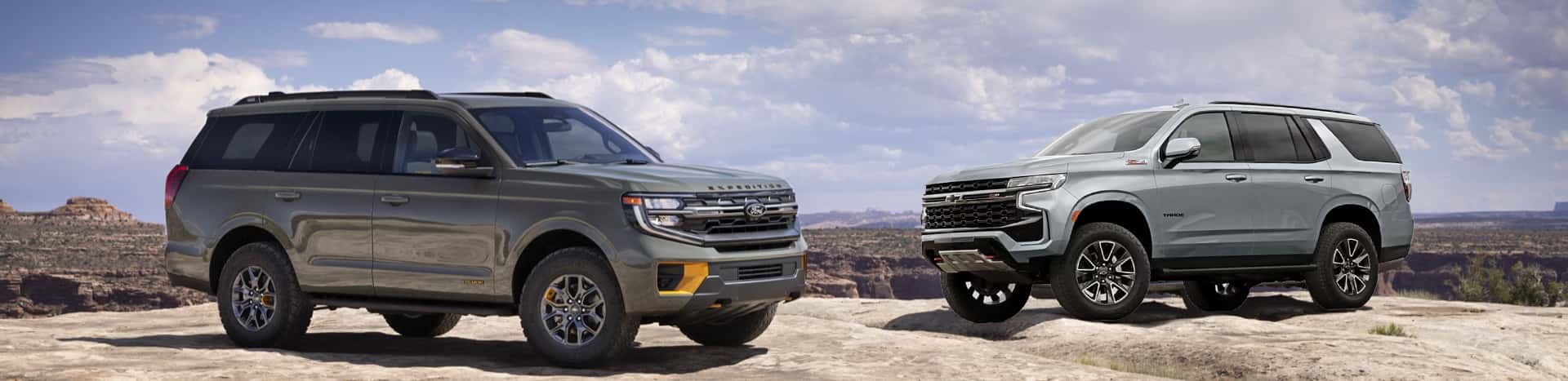
The 2026 Chevrolet Tahoe and the 2026 Ford Expedition both belong to the same rarefied tier of family transportation: full-size SUVs with the gravitas to move people, luggage, and plans—without muttering excuses. Yet they arrive at that goal through different philosophies. Tahoe leans into a polished, comfort-forward experience with a distinctly American sense of ease. Expedition, meanwhile, plays the role of the confident choreographer—agile with its own machinery, structured around practicality, and ready to adapt when the itinerary abruptly mutates.
This is a showdown worth savoring. Not because one SUV “wins” in a vacuum, but because each makes trade-offs that feel purposeful. And for drivers choosing a vehicle that will spend years in the foreground—school runs, weekend retreats, and the occasional road trip where the playlist grows louder—those trade-offs become the real story.
At a Glance: How Their Personalities Reveal Themselves
From the first glance, both vehicles telegraph full-size presence. The difference is how they translate that presence into daily life. Tahoe tends to feel like a lounge that happens to be road-capable. Expedition often feels more like a command center designed for constant motion—an environment built to organize rather than simply indulge.
When readers explore these SUVs, they usually start with the basics: size, seating capacity, and the general “fit and finish” vibe. But deeper questions follow quickly. How do they behave when traffic compresses? How do they handle long stretches of highway? What do they do when the road stops being polite—potholes, crosswinds, and construction zones included?
Expect two distinct journeys toward the same destination: a large family SUV that feels controlled, secure, and ready.

Design and Interior Ambience: Comfort Versus Control
The interior is where the Tahoe and Expedition divide into two separate emotional registers. Tahoe’s cabin is often described as luxurious in a relaxed, enveloping way—stitching that feels deliberate, materials that don’t look like they’re just there to fill space, and seating that invites longer drives without the usual fatigue.
Expedition’s cabin, in contrast, frequently emphasizes an orderly, practical layout. Controls are positioned to be used instinctively. The sense is less “sitting in a living room” and more “operating a well-appointed workspace that happens to be comfortable.”
Both offer three-row versatility, but the lived experience differs. Tahoe’s rear seating can feel particularly conducive to family conversation—easy access, supportive cushions, and a layout that tries to keep the whole cabin feeling cohesive. Expedition’s third row often aims for usability and easy re-entry, with a focus on how passengers actually move in and out during real-world routines.
Readers can expect content that examines everything from seat comfort to storage geometry, including where cupholders land relative to the armrests and how the cabin lighting influences mood during late arrivals.
Seating Capacity and Practical Space: More Than Just Rows
Full-size SUVs are defined by their third-row promise, but a promise is only as strong as its fulfillment. Tahoe and Expedition both target families that need flexible seating, yet the details can change the outcome.
Expect discussions about legroom and headroom in each row, but also the “in-between” factors: door opening width, the angle of entry, and whether seatbacks feel supportive over time. Long sentences matter here—because long rides matter. A third row that feels tolerable for 30 minutes may become a test after three hours.
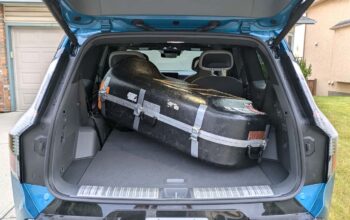
Also look for breakdowns of cargo capacity behind the third row and with it folded. These aren’t mere numbers. They determine whether a weekender bag stacks neatly or becomes a game of spatial Tetris.
Powertrains and Driving Feel: The Engines Tell Different Stories
Powertrain talk can become a blur of specs. The more useful approach is to explain how power arrives. Tahoe often leans into smooth acceleration and a confident highway demeanor—an experience that feels composed even when the driver is asking for responsiveness at speed.
Expedition’s driving character tends to be more structured around flexibility. It aims to maintain traction confidence, manage load hauling with steadiness, and keep motion feeling “prepared,” whether that means merging quickly or settling into a cruising rhythm.
Readers will benefit from content that compares throttle response, transmission behavior, and how each SUV handles passing maneuvers. Short surges can feel different from sustained effort. Both matter, but they matter in different scenarios—construction zone overtakes versus long uphill climbs.
Expect narrative-style evaluation: how the SUV behaves when you shift from calm to urgency, and how it regains composure afterward.
Ride Quality and Handling: When the Road Starts Arguing Back
Ride comfort isn’t just about softness. It’s about how an SUV filters the road’s personality—how it reacts to expansion joints, how it dampens chatter, and how it prevents the cabin from feeling like a drum.
Tahoe often cultivates a serene ride that reduces the sensation of rough pavement. Expedition, meanwhile, frequently emphasizes stability and composure, with steering feel tuned toward predictability. The goal is confidence, not drama.
For drivers who live where weather changes unpredictably, the comparison should include how each SUV deals with crosswinds and how braking feels during repeated stops. The best articles don’t treat these as checklist items. They describe the sensation, the confidence, the subtle reassurance when the vehicle is loaded with people and gear.
Technology and Infotainment: The Cabin as a Command Platform
Modern SUVs don’t just transport. They orchestrate. Readers can expect sections that explore infotainment interfaces—screen responsiveness, menu clarity, and how quickly the system becomes intuitive.
Tahoe content often highlights the experience of living inside the system—whether navigation feels effortless, whether smartphone integration stays stable, and how audio quality performs in a real cabin rather than a showroom echo.
Expedition coverage typically examines usability under motion: how easy it is to adjust settings without the driver’s attention becoming fragmented. Also expected are discussions around voice control, connectivity features, and how many knobs, buttons, and touch targets exist to reduce driver friction.
In a strong comparison, technology isn’t framed as a gadget parade. It’s measured by whether it helps. Can it keep passengers entertained? Can it reduce distraction? Can it simplify the everyday?
Safety and Driver Assistance: Certainty in Motion
When families evaluate full-size SUVs, safety features become less about curiosity and more about peace of mind. Expect content that reviews driver assistance systems in practical terms—lane centering, adaptive cruise behavior, collision mitigation, and blind-spot awareness.
High-quality coverage also explains how these systems behave at different speeds and in different lighting conditions. A feature can work flawlessly on a bright day and feel hesitant during rain. Readers want a grounded evaluation, not a marketing promise.
Look for sections that discuss reliability of alerts and the difference between gentle reminders and intrusive interventions. Because the best safety systems feel like silent partners rather than noisy supervisors.
Fuel Economy and Efficiency: The Daily Cost Equation
Even when power takes center stage, efficiency quietly rules the long-term decision. Fuel economy discussions should go beyond official figures. They should reflect driving style reality: highway cruising versus stop-and-go traffic, and the impact of towing or carrying heavy loads.
Tahoe and Expedition can vary meaningfully based on configuration and driving environment. Expect content that compares real-world tendencies—how the vehicle responds to frequent accelerations, how it behaves on extended freeway stretches, and how efficiently it maintains speed.
Long sentences can map cause and effect here: heavier loads and frequent braking typically reshape consumption. Yet the most helpful writing also gives readers scenarios, not abstracts.
Towing, Hauling, and Trailer-Ready Confidence
Full-size SUVs are often chosen for what they can tow, not just for what they can seat. Coverage should address towing capacity, hitch readiness, and how the vehicle manages stability when the trailer is present.
Readers can expect evaluations of tow/haul modes, brake controller integration, and whether the transmission logic feels deliberate under load. More than once, the deciding factor is the sensation of control: how the SUV holds its line, how it manages grades, and whether it stays composed when the road becomes uneven.
This is where narrative descriptions shine. A towing discussion should read like a preview of the journey, not a spreadsheet.
Trim Levels and Customization: Finding the Right Flavor of Full-Size
Both Tahoe and Expedition offer a wide range of trims, and the “right” one depends on what readers value most. Some want maximum luxury—upgraded materials, enhanced audio, and convenience features that feel like they were designed for comfort obsessives. Others want capability-forward options with stronger off-road credentials, better wheels, and practical utility.
Expect content that separates trims into categories: family-first comfort, adventure-leaning packages, and technology-heavy versions. It’s not just about what features exist—it’s about which features match the buyer’s lifestyle rhythm.
Because the best SUV choice is the one that doesn’t feel like compromise every time you get in.
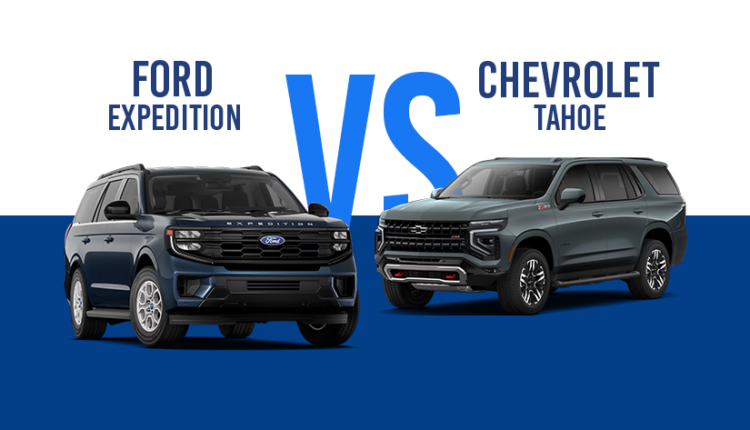
Who Should Choose Tahoe? Who Should Choose Expedition?
Tahoe is often a natural fit for drivers who prioritize cabin comfort, a calm highway demeanor, and a family-friendly atmosphere that feels welcoming rather than procedural. If the daily routine includes long commutes, frequent group trips, and the desire for a refined interior, Tahoe tends to align well.
Expedition, on the other hand, tends to appeal to those who value organized functionality, adaptable space use, and a confident sense of control when driving is unpredictable. If the vehicle must routinely handle varying passenger loads, uneven roads, and practical hauling needs, Expedition often feels like the more naturally equipped companion.
The best comparison articles don’t force a binary. They recommend by lifestyle. Because no one wants a “winner” that doesn’t fit their life.
Final Verdict: A Full-Size Showdown With Clear Rationale
The 2026 Chevrolet Tahoe and 2026 Ford Expedition are both compelling full-size SUVs, but they speak different dialects of comfort and capability. Tahoe often wins hearts through ease, interior ambiance, and a serene sense of drive. Expedition often earns respect through structured practicality, confident stability, and a cabin designed for constant use.
Choose based on how you actually move through your days. If you want a full-size SUV that feels like it’s designed to soften the world around you, Tahoe is an inviting bet. If you want an SUV that feels prepared for whatever the road throws into the plan, Expedition is ready to meet it.
Either way, the real victory is having a vehicle that can carry more than people—carrying schedules, surprises, and the momentum of everyday life.