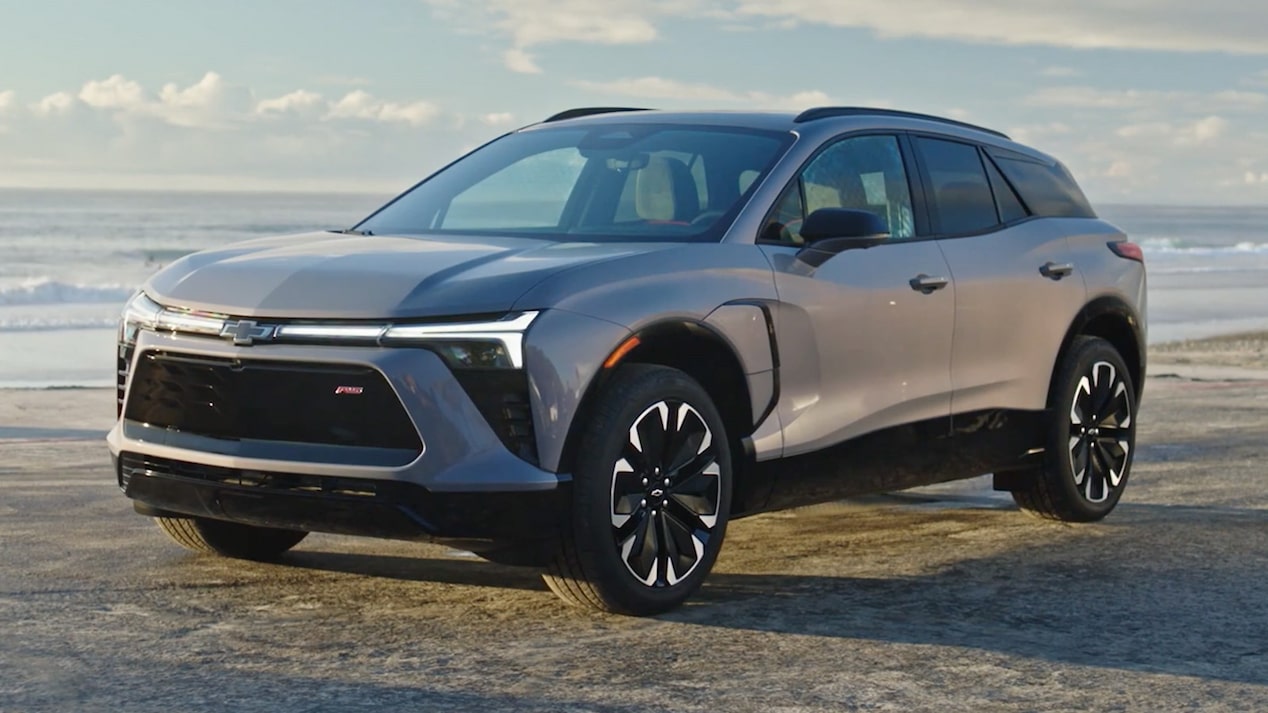
The first thing winter does in Colorado is rewrite expectations. The familiar calculus of “range” becomes less about spreadsheets and more about weather, elevation, and the small, stubborn frictions that gather on a cold morning. It’s one thing to watch an EV’s estimate glide across a warm screen. It’s another to point the nose toward a snow-dusted horizon and discover how the Chevrolet Blazer EV behaves when the air bites back.
People often assume the cold simply drains a battery the way fatigue drains a traveler. Yet the reality is more nuanced—and, frankly, more fascinating. The Blazer EV’s winter range is not just a number. It’s a conversation between chemistry, thermodynamics, and driving style. And once you listen closely, the “drop” in range starts to feel less like disappointment and more like proof that the vehicle is adapting in real time.
Colorado Winter: Why the Landscape Changes the Math
Colorado doesn’t do gentle winters. Roads arrive with a slick sheen, winds funnel through mountain corridors, and the altitude turns every stop-and-go moment into a throttle decision. Even before the first mile, the setting suggests that efficiency will be tested.
Cold affects more than the battery. It changes tire grip, which can nudge rolling resistance upward. It also encourages heavier use of defrost and cabin heating. Those systems are not optional comforts; they are active participants in energy consumption.
At higher elevations, the atmosphere is thinner. Aerodynamics remain constant in principle, but real-world driving includes more coasting disruptions and more adjustments for grade and visibility. The result is that winter range becomes a composite signal rather than a single-variable outcome.
Getting Ready for the Test: Consistency Over Curiosity
A winter range test has an unromantic requirement: consistency. Temperatures need to be tracked. Speed targets must be clear. If one driver takes a route with more stops, the data will blur. If the heating setting is random, the battery will bear the entire narrative.
That’s why the most meaningful runs start the same way: a similar state of charge, a similar precondition routine (or none, if the goal is authenticity), and a repeatable route profile—mixing city-like acceleration with highway stretches and at least one climb that reminds you gravity still collects rent.
The Chevrolet Blazer EV becomes most revealing under these controlled conditions. Not because it behaves like a lab specimen, but because it shows how intelligently it manages thermal needs without turning the drive into a compromise.
Cold Battery, Warm Expectations: The Initial Range Drop
Most drivers notice the same pattern: the range reading declines sooner in winter than in temperate seasons. This isn’t merely pessimism from the dash. Lithium-ion performance in colder conditions drops because the battery’s internal resistance rises. Translation: less usable power is available moment-to-moment, and the system prioritizes safe operation.
In the first portion of the drive, the Blazer EV works to stabilize conditions. The vehicle’s thermal management—its heating strategy for components and, when needed, battery warming—consumes energy. This is where the common observation appears: “It’s losing range fast.”
But the deeper reason is physiological. A battery that’s too cold cannot deliver current reliably. So the car spends a portion of energy to bring performance back into alignment. Once the pack approaches a functional temperature window, the rate of degradation in efficiency often eases.
Heating Strategy: Comfort With a Price Tag (and an Intelligence Layer)
Cabin heating is the second place winter range tends to feel personal. It’s easy to treat it as a background setting. Yet in subfreezing temperatures, it’s an energy draw that can be significant—especially when the windows demand constant clearing.
The fascinating part is how modern EVs attempt to reduce wasted heat. Rather than simply running maximum heat all the time, the Blazer EV can manage heating demand based on cabin temperature, defrost requirements, and real-time driving load. That means comfort doesn’t have to be a one-way drain.
Still, the test makes a point: if you blast the heat to fight frost, range will respond accordingly. If you dress for the weather and moderate the system, the battery can spend more energy on propulsion. Winter range is, in part, a negotiation between human comfort preferences and energy throughput.
Elevation and Aerodynamic Reality: Winds, Grades, and Drag
In Colorado, elevation changes the mood of the drive. When you climb, you ask for sustained power. When you descend, you regain energy—but not with the same efficiency you feel in fantasy terms. Regen depends on battery acceptance limits, which are affected by temperature.
Then there’s wind. Mountain wind can be a silent saboteur, adding drag and demanding extra torque to maintain speed. Even when the sky looks calm, gusts can shift the energy balance quickly.
On highway segments, the Blazer EV’s real-world efficiency reflects a combination of speed, tire characteristics, and aerodynamic drag. Winter often pushes drivers toward slower speeds for control, which can help range, but it also encourages longer heating periods during extended conditions.
The result: the Blazer EV doesn’t “fail” in cold. It simply operates within physical constraints that become more visible in winter.
Driving Style: Smoothness Becomes a Superpower
Winter has a way of turning minor habits into measurable outcomes. Abrupt acceleration increases current draw. Hard braking can reduce the effectiveness of regenerative capture, because the system may prioritize stability or the battery may not accept regen energy efficiently when cold.
Coasting—when safe—lets the vehicle recover momentum and reduces propulsion demand. Gentle throttle application encourages the powertrain to work within an efficient band. Steering inputs and speed consistency can also influence rolling resistance and stability control behavior.
Under winter conditions, the most impressive “range gains” usually come from smoothness rather than magic. The Blazer EV rewards that approach with calmer energy consumption patterns.
Regeneration in the Cold: How Recovery Really Works
Many drivers expect regeneration to behave like a refund. In reality, it’s more like partial reimbursement, governed by temperature and traction. When the battery is very cold, regen capability can be limited to protect the pack. That means your downhill optimism may not translate fully into reclaimed mileage.
As the battery warms, regen becomes more effective. This is why a winter test often produces a story arc: early inefficiency, mid-drive adaptation, and later recoveries when conditions allow.
This temporal rhythm is one reason the Blazer EV feels compelling in winter. It demonstrates that the vehicle’s energy strategy is dynamic rather than static.
Practical Findings: What Drivers Should Actually Expect
Expect winter range to be lower than summer expectations, especially early in the trip. But the direction isn’t always a straight line downward. The vehicle can improve efficiency after the battery and cabin reach functional operating temperatures.
Also expect range to vary with how winter you choose to be. High defrost usage, frequent short trips, and aggressive speeds tend to compress available mileage. Longer drives with fewer stop-start cycles can allow thermal management to reach steadier conditions.
Perhaps the most useful observation is psychological: winter range is not only about the battery. It’s about the entire energy ecosystem—the car’s thermal priorities, the route’s elevation profile, and your own pacing decisions.
Why the Blazer EV Remains Fascinating in Winter
People often interpret winter EV performance as a limitation. Yet the Blazer EV’s behavior in Colorado suggests something else: fascination emerges when technology becomes visibly responsive. The car senses, adapts, and balances. It’s not just delivering motion; it’s orchestrating a thermal symphony under pressure.
In a gasoline vehicle, the engine absorbs cold without the same attention. In an EV, cold makes the system’s logic obvious. That transparency can be oddly reassuring. You learn quickly why the range estimate changes. You feel the consequences of heating choices. You notice how smoother driving unlocks steadier consumption.
In that sense, the winter range test is less like checking a limit and more like building a relationship with the vehicle—one that deepens with every mile through the thin mountain air.

Driving Back Out: A Clearer Picture for the Next Cold Morning
When the test ends, the most valuable takeaway isn’t a single final number. It’s a mental model: cold reduces battery performance at first, heating demand climbs, and wind and grades make efficiency more variable. Then the vehicle adapts, and the energy picture becomes more coherent.
So for the next cold morning, plan with intent. Moderate cabin heat when conditions allow. Drive smoothly to reduce spikes. Recognize that early miles can be expensive. And when you descend, remember that regen depends on battery readiness.
Winter turns the Chevrolet Blazer EV into a teachable machine. It doesn’t merely show how far you can go. It shows why you can—and what you’re trading, mile by mile, to get there.
By the time Colorado’s roads feel familiar again, the experience has done what good engineering always tries to do: make complexity usable. And that’s the real winter range story—one you can carry into the next season, colder or not.