The moment you hitch up a load, the world changes shape. Mirrors stop being mere reflections and become instruments. Grade lines start to feel like a kind of conversation—quietly asking, “Can you keep control?” The Chevrolet Silverado’s Trailering Technology Package leans into that new perspective. It doesn’t promise magic; it promises momentum. And for drivers who want their towing experience to feel less like a cautious negotiation and more like a confident routine, that distinction matters.
What makes this package intriguing isn’t only the technology itself. It’s the way it reframes expectations. You begin to perceive towing not as an ordeal of vigilance, but as a system of coordinated signals—engineered to anticipate, stabilize, and respond. Below is a guided tour of what the package aims to deliver, how it works in real-world scenarios, and why the “shift in perspective” is more than marketing language.
Rewriting the Tow-Confidence Narrative
Most people think towing is about what happens at the moment something starts to sway, surge, or drift. Yet the best systems behave differently: they act earlier than you would naturally notice. The Silverado’s Trailering Technology Package is designed around that principle—turning attention into prediction.
Picture a long climb where the truck must balance torque, transmission behavior, and trailer load. Then imagine the same trip when traffic tightens and you need to maintain lane discipline while adjusting speed. The package aims to help the truck “listen” to what the trailer is doing, and to help the driver stay calm in the middle of motion.
Stability, Control, and the Art of Keeping Straight
A trailer can be a generous extension of capability—until it behaves unpredictably. The Trailering Technology Package is built to reduce that unpredictability. It’s meant to support stable towing by monitoring conditions and intervening when the trailer’s behavior suggests the situation could worsen.
This is where the shift in perspective becomes tangible. Instead of reacting to sway after it appears, the system seeks to dampen its growth. That means fewer “white-knuckle” moments and more smooth, repeatable handling.
Even if you’ve towed before, you’ll feel the difference in how composed the truck stays. The Silverado doesn’t ask you to be fearless. It offers assistance so that confidence can be earned, not forced.
Proactive Braking Logic for Loaded Precision
Towing-grade braking is less about brute stopping power and more about consistency under load. When a trailer is in the equation, braking becomes a choreography—front brakes, rear load dynamics, and trailer braking timing all need to align.
Within the Trailering Technology Package’s ecosystem, the vehicle is tuned to help maintain predictable deceleration. That predictability reduces stress when you approach downhill grades, busy intersections, or sudden speed changes from surrounding traffic.
Long descents are where drivers feel the cumulative effect of stability and brake coordination. You’re not just trying to slow down; you’re trying to slow down without cooking components or creating new instabilities. The package conceptually treats braking as an ongoing performance, not a single event.
Trailer Awareness: A Different Kind of Situational Intelligence
One of the most compelling elements of modern towing assistance is “trailer awareness.” It’s the subtle promise that the truck won’t ignore the trailer’s presence. Instead, it attempts to interpret trailer behavior and provide information that helps you steer, accelerate, and brake with less guesswork.
Think about lane changes and tight entries at rest stops. Your eyes naturally focus on the road ahead, yet your decision-making must include the space your trailer will occupy. The package encourages a mental shift: you begin to plan with the trailer as a living participant rather than a passive weight.
Backing Up Without the Usual Dramatic Pause
Back-in maneuvers can feel like a puzzle drawn on moving paper. The Trailering Technology Package is oriented toward making that puzzle easier to solve, especially when visibility is limited or hitch alignment becomes finicky.
As a driver, you learn quickly that backing isn’t only about steering. It’s about timing—how quickly the trailer responds, how quickly you must correct, and how much you can do without oversteering into trouble. The package’s approach is to reduce the friction between intention and outcome.
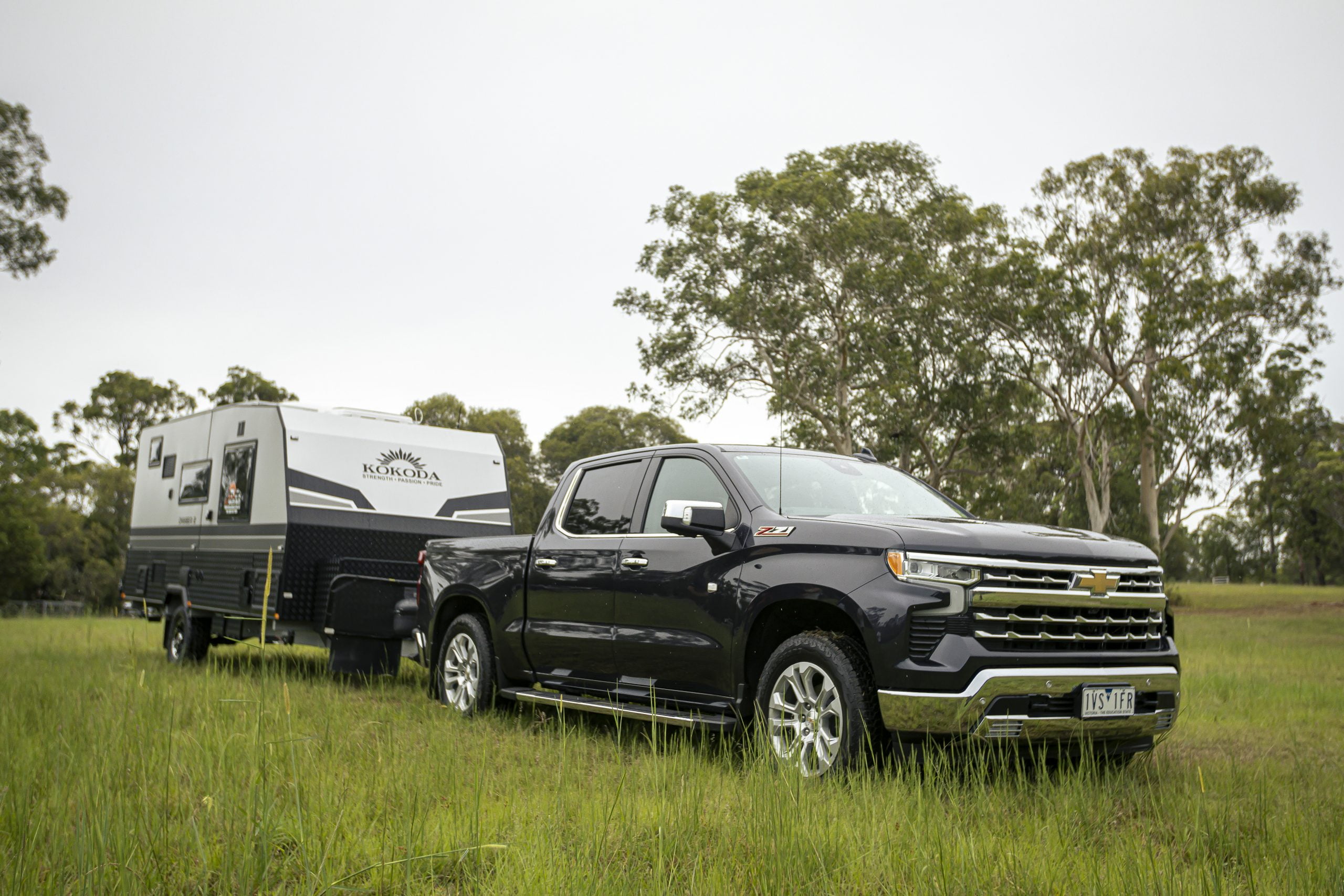
The emotional difference is real. A smoother backing experience makes the whole day’s travel feel more manageable. Where you used to slow down “just in case,” you can keep a steadier rhythm, knowing the truck is part of the solution.
Integration with Driver Settings and Real Use
Technology becomes valuable when it blends with habits. The Trailering Technology Package is intended to operate as part of a larger towing workflow—so adjustments don’t feel like separate chores you must perform mid-journey.
When systems are well-integrated, the driver spends less time wondering whether the truck is “ready.” Instead, the truck feels prepared. That changes pacing: you can focus on traffic, signage, and route choices—rather than constantly second-guessing towing parameters.
There’s also a psychological benefit. Knowing the truck can be tuned for trailering tasks gives you a sense of procedural control. It’s not just comfort; it’s empowerment.
Confidence on the Road and the Unwritten Rules of Stability
Road towing isn’t only about the trailer behind you. It’s also about wind gusts, uneven pavement, road crown shifts, and the aerodynamic tug-of-war that happens at speed. A well-designed package aims to reduce the disruptive effects of those variables.
As you accelerate onto highways, you learn quickly that stability isn’t a single characteristic—it’s a collection of behaviors. The Silverado’s Trailering Technology Package is designed to support those behaviors consistently so you don’t have to treat each mile as a new experiment.
Even experienced drivers benefit. It’s easy to underestimate how often “small corrections” stack up until they become a pattern. This package pushes the experience toward smoother, calmer control.
Off-Road Reality Meets Trailering Discipline
Not every towing job stays neatly within painted lines. Gravel pull-offs, uneven ramps, and dusty campground roads add complexity. The Silverado’s overall towing capability paired with trailering technologies can encourage a more nuanced approach—treating towing as an extension of off-road competence rather than a compromise.
In these environments, the truck’s stability philosophy matters. It’s less about speed, more about predictable response. When terrain changes quickly, consistent control reduces fatigue. Your hands stay relaxed. Your attention remains sharp.
Choosing the Trailering Technology Package: What to Expect
If you’re evaluating this package, ask yourself what you want to reduce: uncertainty, fatigue, or the awkward moments when you’re unsure whether the trailer is tracking correctly. The Trailering Technology Package aims to address all three by promoting steadier control and clearer guidance.
It’s designed for drivers who want their towing days to feel less like rehearsals and more like routines. Not perfect—because real-world towing always includes human variables—but supported in ways that make outcomes feel more repeatable.
The Quiet Payoff: Less Stress, More Miles
By the time you reach your destination, the best compliment you can offer a towing system is simple: you didn’t think about it as much. The Trailering Technology Package nudges the entire towing experience toward that result—steady handling, improved awareness, and guidance that helps you trust your setup.
There’s a deeper promise here, one that goes beyond towing specs. It invites a shift in perspective. The trailer becomes part of the journey, not an obstacle to overcome. The road becomes negotiable again—less intimidating, more familiar.
And when you finally unhook, you’re left with the feeling that towing was never just about carrying weight. It was about carrying confidence.