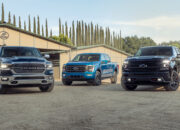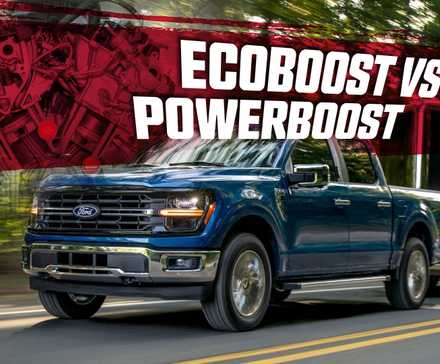
Picture this: You’re standing in a dealership lot, keys jingling in your pocket, the sun glinting off the hood of a truck or SUV that’s caught your eye. The salesperson leans in with a knowing smile. “You want power? You want efficiency? You’ve got options.” Two names dance in your mind like rival knights in a joust—EcoBoost and Hybrid. One whispers of raw torque and thunderous acceleration. The other hums with silent, electric promise. But here’s the twist: the real battle isn’t about horsepower. It’s about your wallet. And the winner might surprise you.
For years, we’ve been sold on the myth that bigger engines mean bigger bills. But what if I told you that the most fuel-efficient choice isn’t always the one with the smallest sticker price? What if the engine that roars the loudest today could be the one that drains your bank account the fastest tomorrow? Buckle up. We’re about to flip the script on the great engine debate.
The Great Engine Divide: Power vs. Paradox
At first glance, EcoBoost and Hybrid engines seem like they belong to different universes. EcoBoost, Ford’s turbocharged darling, is all about squeezing every last drop of performance from a smaller engine. It’s the magician’s trick of modern engineering—more power, less displacement. You get a 2.3L EcoBoost four-cylinder that punches like a 3.5L V6. It’s thrilling. It’s responsive. It’s the kind of engine that makes you want to floor it at every stoplight.
Hybrids, on the other hand, are the tortoises to EcoBoost’s hare. They blend a traditional internal combustion engine with an electric motor, sipping fuel like a fine wine. The result? Fewer trips to the pump. But here’s where the paradox begins. Hybrids often come with a premium price tag—sometimes thousands more than their EcoBoost counterparts. So, while you’re saving on gas, you’re hemorrhaging cash upfront. Is the trade-off worth it? Or is EcoBoost the stealth wealth-builder hiding in plain sight?
The answer isn’t black and white. It’s a spectrum of variables: your driving habits, your budget, your tolerance for compromise. Let’s break it down.
Fuel Economy: The Silent Siphon of Savings
Let’s start with the obvious—fuel economy. Hybrids are, by design, more efficient. A Ford Maverick Hybrid, for example, can return up to 42 mpg combined, while the EcoBoost version struggles to crack 30 mpg. Over 15,000 miles a year, that’s a difference of roughly 500 gallons of gas. At today’s prices, that’s about $1,500 in your pocket annually. The math is seductive.
But here’s the catch: Hybrids don’t just sip fuel—they sip your savings upfront. The Maverick Hybrid starts at $25,000, while the EcoBoost model begins at $22,000. That $3,000 difference could buy a lot of gas. And if you’re not driving enough to offset the premium? You’re effectively paying for the privilege of being efficient.
EcoBoost engines, meanwhile, are the marathon runners of the engine world. They’re not as frugal, but they’re also not as expensive. And in real-world driving—think stop-and-go traffic, highway cruising, or towing—EcoBoost’s torque often means you’re not mashing the pedal as often. Less aggressive driving equals less fuel burned. It’s a subtle advantage, but one that adds up.
So, which saves more? It depends on how you drive. If you’re a highway warrior logging 20,000 miles a year, the Hybrid might win. If you’re a city slicker with a heavy right foot, EcoBoost could be the stealth champion.
Maintenance: The Hidden Cost of Innovation
Now, let’s talk about the elephant in the room—maintenance. Hybrids are marvels of complexity. They’ve got two powertrains, a battery pack, and a regenerative braking system that’s essentially a second engine. All of that adds up to higher repair costs. A hybrid battery replacement can run $3,000 to $6,000. Even routine maintenance, like brake pad replacements, can be pricier due to the regenerative system reducing wear unevenly.
EcoBoost engines, by contrast, are simpler beasts. They’re turbocharged, yes, but they lack the hybrid’s dual powertrain. That means fewer parts to fail, lower labor costs, and a more predictable repair bill. Sure, turbos can be finicky, but they’re not the ticking time bombs some make them out to be. With proper care, an EcoBoost engine can outlast a hybrid’s battery by years.
And let’s not forget the long-term reliability data. While hybrids are improving, EcoBoost engines have a proven track record. Ford’s 2.3L and 2.7L EcoBoost units have been around for over a decade, with millions of miles logged. Hybrids, while reliable, are still the new kids on the block. Time will tell if their batteries hold up as well as a turbo’s lifespan.
Resale Value: The Ghost of Depreciation Past
Here’s a twist you might not see coming: resale value. Hybrids, despite their fuel savings, often depreciate faster than their gas-only counterparts. Why? Because the market for used hybrids is still maturing. Buyers are wary of aging battery packs, and the premium they paid upfront doesn’t always translate to a higher resale price. A 2023 Ford Maverick Hybrid might fetch $20,000 today, while a comparably equipped EcoBoost model could pull $22,000.
EcoBoost trucks and SUVs, on the other hand, hold their value remarkably well. Ford’s F-150 EcoBoost, for instance, is a perennial favorite among buyers who want power without the hybrid premium. Dealers know these engines. They trust them. And that trust translates to stronger resale numbers.
So, if you’re the type who likes to upgrade every few years, an EcoBoost might leave you with more cash in your pocket when it’s time to trade in. Hybrids, while efficient, could leave you holding the bag on depreciation.
The Wildcard: Incentives and Tax Credits
Let’s not ignore the elephant in the showroom—government incentives. Hybrids, especially plug-in hybrids, often qualify for federal tax credits, state rebates, or HOV lane perks. A Ford Maverick Hybrid, for example, could net you up to $7,500 in tax credits, slashing its effective price. EcoBoost models? They’re usually left out in the cold.
But here’s the fine print: those credits aren’t guaranteed. They’re subject to phase-outs, income limits, and dealership participation. And even if you qualify, the savings might not be enough to offset the hybrid’s upfront cost. It’s a gamble—a high-stakes bet that the government will keep the incentives flowing.
EcoBoost buyers, meanwhile, get no such perks. But they also don’t have to navigate the bureaucratic maze of tax credits. No forms. No waiting. Just pure, unadulterated driving.
The Final Verdict: Which Engine Wins the Money Race?
So, which engine saves you more money? The answer, as always, is it depends. But here’s the paradigm shift: EcoBoost isn’t the gas-guzzling villain it’s made out to be. In many cases, it’s the smarter financial choice.
If you’re a high-mileage driver, a hybrid might pencil out. But if you’re like most of us—driving a mix of city and highway, towing occasionally, and not logging enough miles to justify the premium—EcoBoost is the sleeper hit. It’s the engine that lets you keep more of your hard-earned cash without sacrificing the thrill of the drive.
And let’s be real: the best engine isn’t the one that saves you the most money. It’s the one that makes you smile every time you turn the key. EcoBoost does that. Hybrid does that. But only one does it without emptying your wallet before you’ve even left the driveway.
So, the next time you’re standing on that dealership lot, ask yourself: Do you want to pay now for efficiency? Or do you want to pay later for power? The choice isn’t just about the engine under the hood. It’s about the life you want to live—and the money you want to keep.
The road ahead is yours to choose. Drive wisely.