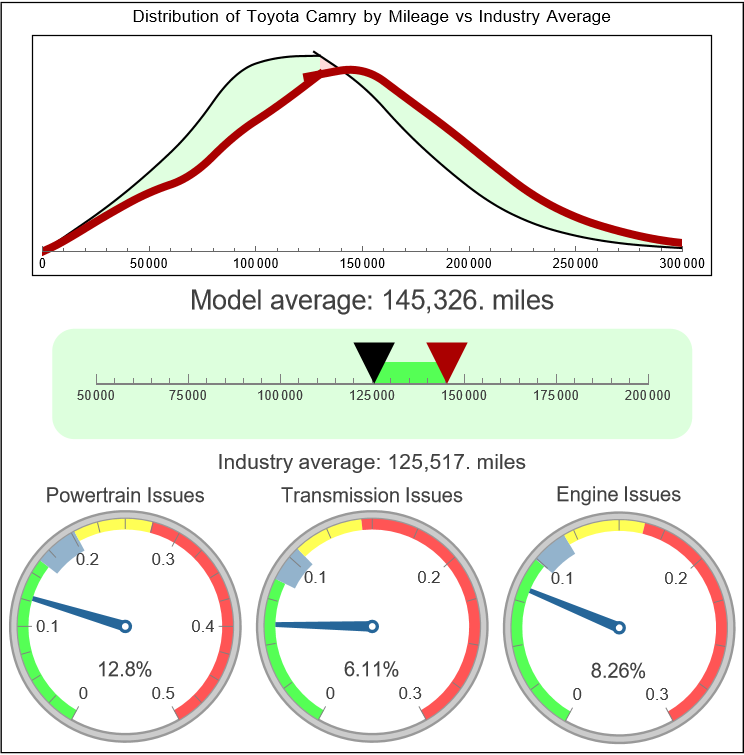
Have you ever wondered what happens when a Toyota Camry, that paragon of automotive dependability, clocks 50,000 miles? Does it snooze through the odometer like a well-oiled sloth, or does it suddenly decide to test your patience with a symphony of squeaks and rattles? Buckle up, because we’re about to embark on a journey through the highs, lows, and unexpected quirks of a Camry hitting that half-century milestone.
Picture this: a gleaming Camry, fresh from the dealership, its engine purring like a contented lion. Fast forward a few years, and now it’s cruising past 50,000 miles with the confidence of a seasoned traveler. But is this the point where reliability meets reality? Or does the Camry’s reputation for longevity start to wobble like a Jenga tower missing a few critical blocks? Let’s dive in and find out.
Why 50,000 Miles? The Sweet Spot of Automotive Adulthood
Fifty thousand miles isn’t just a number—it’s a rite of passage. For many cars, this is the threshold where minor niggles evolve into full-blown concerns, and warranties begin to whisper their expiration dates. The Camry, however, has always prided itself on defying the odds. But does it live up to the hype at this milestone?
At 50,000 miles, a Camry is no longer a fledgling; it’s a seasoned veteran. The initial break-in period is long forgotten, and the engine has likely shed its early-career quirks. Yet, this is also the stage where maintenance becomes less about “preventive” and more about “reactive.” Oil changes, tire rotations, and the occasional belt replacement start to feel less like routine upkeep and more like a game of automotive whack-a-mole.
So, does the Camry pass this test with flying colors, or does it reveal hidden vulnerabilities? The answer might surprise you.
The Engine: Still Purring Like a Kitten (Mostly)
The heart of any Camry is its engine, and the 2.5L 4-cylinder powerplant found in most models is a marvel of efficiency and durability. At 50,000 miles, you’d expect it to be running smoother than a jazz saxophonist’s solo—smooth, precise, and effortless. And for the most part, that’s exactly what happens.
Yet, even the Camry isn’t immune to the occasional hiccup. Some owners report a faint rattle at startup, a sound so subtle it’s easy to dismiss as the car’s way of saying “good morning.” Others notice a slight hesitation when accelerating, a momentary lag that feels like the engine is taking a deep breath before sprinting ahead. Is this cause for alarm? Not necessarily. These are often symptoms of worn-out engine mounts or a lazy throttle response, both of which are easily addressed with a trip to the mechanic.

But here’s the kicker: the Camry’s engine is so robust that even these minor annoyances feel like betrayals of trust. After all, we’ve been conditioned to expect perfection from Toyota. When a Camry coughs up a hairball at 50,000 miles, it’s not just an inconvenience—it’s a personal affront to the brand’s legendary reliability.
The Transmission: A Smooth Operator (For Now)
If the engine is the Camry’s heart, the transmission is its nervous system—delicate, complex, and prone to meltdowns if mistreated. At 50,000 miles, the automatic transmission in most Camrys is still humming along like a well-rehearsed orchestra. Shifts are crisp, acceleration is linear, and the car feels as responsive as a sprinter on a caffeine high.
But lurking beneath this veneer of perfection are the seeds of potential trouble. Some owners report a slight jerkiness during gear changes, a hiccup so brief it’s easy to blame on road imperfections. Others notice a faint whirring noise from the transmission tunnel, a sound that grows louder with each passing mile. Is this the beginning of the end? Not necessarily—but it’s a reminder that even the Camry’s transmission isn’t invincible.
To keep it running smoothly, regular fluid changes are non-negotiable. Toyota recommends changing the transmission fluid every 60,000 miles, but many mechanics suggest doing it sooner, especially if you drive in stop-and-go traffic or tow heavy loads. Skimp on this maintenance, and you might find yourself staring at a repair bill that could buy a small used car.
The Suspension: When Comfort Meets Reality
By 50,000 miles, the Camry’s suspension has likely lost some of its youthful bounce. Shock absorbers wear out, struts sag, and bushings develop a case of the squeaks. The result? A ride that feels less like floating on a cloud and more like being gently rocked by an impatient toddler.
This is where the Camry’s reputation for reliability starts to wobble. While the suspension components aren’t prone to catastrophic failure, they do wear out faster than you’d expect. A clunky noise over bumps, a slight drift when cornering, or a bouncy ride on rough roads are all signs that your Camry is crying out for some tender loving care.
Replacing worn-out shocks or struts isn’t cheap, but it’s a necessary evil if you want to keep your Camry feeling as fresh as the day you drove it off the lot. And let’s be honest—if you’re still driving a Camry at 50,000 miles, you’re not the type to settle for a mediocre ride. You want it to feel like new, dammit.
The Interior: Aging Gracefully (Or Not)
If the Camry’s mechanical components are the stars of the show, the interior is the supporting cast—often overlooked, but critical to the overall experience. At 50,000 miles, the Camry’s cabin is a testament to Toyota’s no-nonsense approach to design. There are no flashy materials, no cutting-edge tech, just solid, durable plastics and fabrics that have held up surprisingly well.
But here’s the thing: even the toughest materials show their age eventually. The dashboard might start to crack, the seats could lose their lumbar support, and the once-pristine upholstery might develop mysterious stains that defy explanation. It’s not a dealbreaker, but it’s a reminder that the Camry, like all cars, isn’t immune to the ravages of time.
That said, the Camry’s interior is still miles ahead of many competitors in its class. While a Honda Accord or a Mazda6 might offer more premium materials, the Camry’s cabin feels built to last. It’s not glamorous, but it’s practical—and at 50,000 miles, practicality wins every time.
Electronics: The Silent Saboteurs
Modern cars are a maze of wires, sensors, and computer modules, and the Camry is no exception. At 50,000 miles, you might start noticing the occasional glitch—a flickering dashboard display, a malfunctioning infotainment system, or a warning light that appears out of nowhere and then vanishes just as quickly.
These aren’t signs of impending doom, but they are reminders that the Camry’s electronics aren’t as bulletproof as its engine. A faulty sensor or a loose connection can trigger a check engine light, sending you on a wild goose chase to diagnose the problem. And let’s not forget the infotainment system, which might freeze up or reboot at the most inconvenient times.
Fortunately, most of these issues are minor and easily fixed with a software update or a quick trip to the dealership. But they’re still a nuisance—a reminder that even the Camry isn’t immune to the quirks of modern technology.
The Verdict: Does the Camry Still Deserve Its Crown?
So, after 50,000 miles of driving, does the Toyota Camry still live up to its reputation as a paragon of reliability? The answer is a resounding yes—but with a few caveats.
The Camry’s engine and transmission are still going strong, but they require regular maintenance to keep them that way. The suspension might start to feel a bit tired, and the interior could show its age. Electronics might throw a tantrum or two, and minor niggles could start to chip away at your patience.
But here’s the thing: none of these issues are dealbreakers. They’re the kind of problems you’d expect from any car at this mileage, and they’re easily addressed with a little TLC. The Camry might not be perfect, but it’s still one of the most reliable midsize sedans on the road.
So, if you’re driving a Camry at 50,000 miles, don’t panic. Embrace the journey, keep up with the maintenance, and enjoy the ride. Because at the end of the day, the Camry isn’t just a car—it’s a testament to Toyota’s commitment to building vehicles that last.
And if it starts to rattle, squeak, or hesitate? Well, that’s just part of the adventure. After all, no relationship is perfect—even the one between you and your Camry.