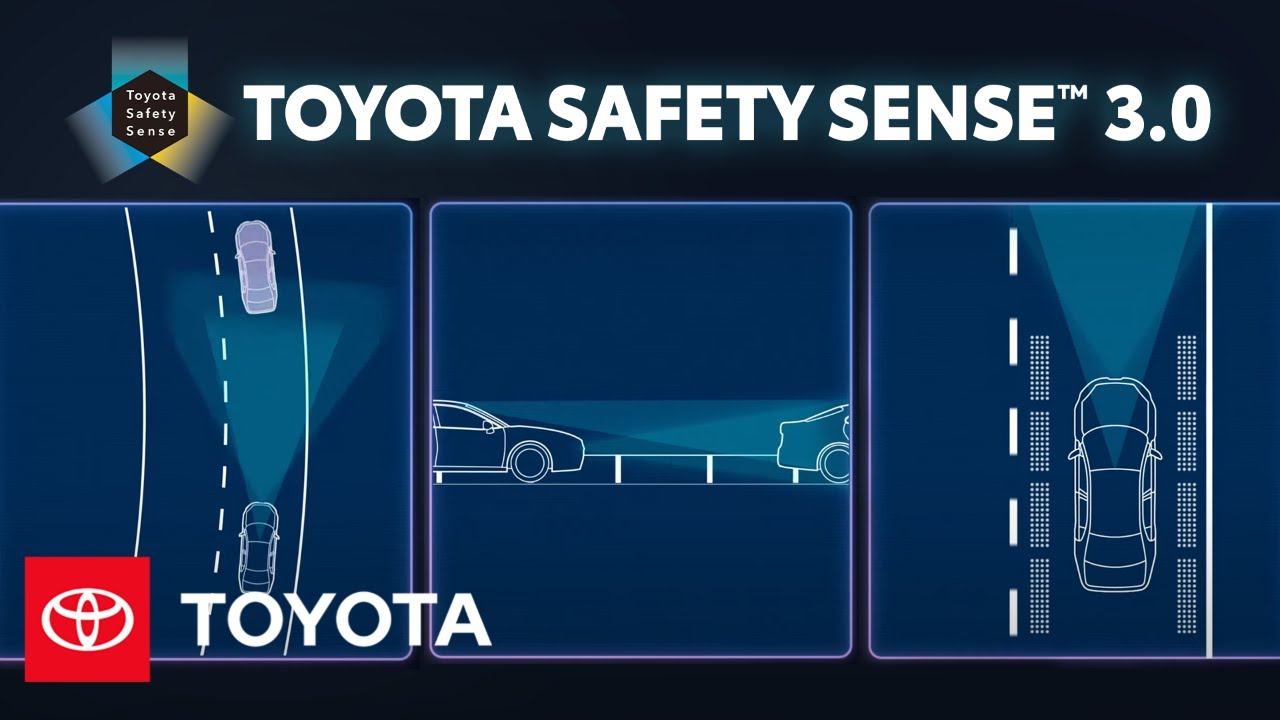
Toyota Safety Sense 3.0 isn’t just another feature-packed safety suite—it’s a paradigm shift in how vehicles anticipate and neutralize hazards before they materialize. Drivers often marvel at its seamless integration of radar, cameras, and AI, but beneath the surface lies a meticulously engineered ecosystem designed to outthink danger. What makes this system truly fascinating isn’t just its ability to react, but its capacity to *preempt*—turning every journey into a masterclass in proactive protection.
The evolution from earlier iterations to Safety Sense 3.0 is nothing short of revolutionary. Gone are the days when advanced driver-assistance systems (ADAS) were optional luxuries. Today, they’re the bedrock of modern automotive safety, and Toyota has refined this foundation into something extraordinary. Whether you’re navigating congested urban arteries or cruising down open highways, Safety Sense 3.0 transforms the driving experience from reactive to predictive, ensuring that hazards are not just avoided, but anticipated with surgical precision.

The Radar’s Watchful Eye: How Millimeter-Wave Precision Redefines Awareness
At the heart of Safety Sense 3.0 lies a state-of-the-art millimeter-wave radar, a technological marvel that operates with a clarity and range that defies conventional radar systems. Unlike traditional sensors that fumble in adverse weather or cluttered environments, this radar maintains a laser-like focus, detecting objects up to 200 meters away with unerring accuracy. It’s not merely about spotting a pedestrian crossing the road—it’s about discerning their trajectory before they even step off the curb.
This radar doesn’t just react; it *calculates*. When a vehicle ahead suddenly brakes, the system doesn’t wait for the car to decelerate—it predicts the deceleration based on subtle changes in speed and distance. The result? A braking intervention that feels almost telepathic, halting the vehicle before the driver’s foot even touches the pedal. In scenarios where a collision seems inevitable, the radar’s data feeds into the pre-collision system, which doesn’t just apply brakes—it orchestrates a symphony of safety measures, from tightening seatbelts to adjusting suspension damping to minimize impact.
But the radar’s prowess extends beyond collision avoidance. It’s the silent sentinel that enables adaptive cruise control to maintain a buffer zone even when the car ahead swerves unpredictably. It’s the reason why lane-keeping assist doesn’t just nudge the steering wheel—it anticipates lane departures before they happen, correcting course with a finesse that feels almost supernatural.
Cameras That See Beyond the Obvious: AI-Powered Visual Intelligence
If the radar is the system’s ears, then the cameras are its eyes—and they see more than meets the human gaze. Safety Sense 3.0 deploys a trifecta of high-definition cameras, each calibrated to capture different facets of the driving environment. The forward-facing camera, perched behind the windshield, doesn’t just record what’s ahead—it interprets it. Using deep learning algorithms, it distinguishes between a stationary object and a moving one, between a cyclist and a pedestrian, between a plastic bag fluttering in the wind and a child darting into the road.

This visual acuity is what makes the system’s pedestrian detection so eerily effective. In low-light conditions or heavy rain, when human vision falters, the cameras remain undeterred. They don’t just spot a figure on the side of the road—they assess their size, their movement, and their potential path. If the system detects a high probability of a collision, it doesn’t just sound an alarm—it prepares the vehicle to take evasive action, whether that means steering around the obstacle or deploying emergency braking.
The cameras also play a pivotal role in the system’s lane recognition capabilities. Unlike older systems that relied on basic lane markings, Safety Sense 3.0’s AI can identify faded or obscured lines, temporary road markings, and even the subtle cues of a driver’s intent to change lanes. This isn’t just about keeping the car centered—it’s about understanding the driver’s next move before they make it.
Dynamic Radar Cruise Control: The Art of Effortless Synchronization
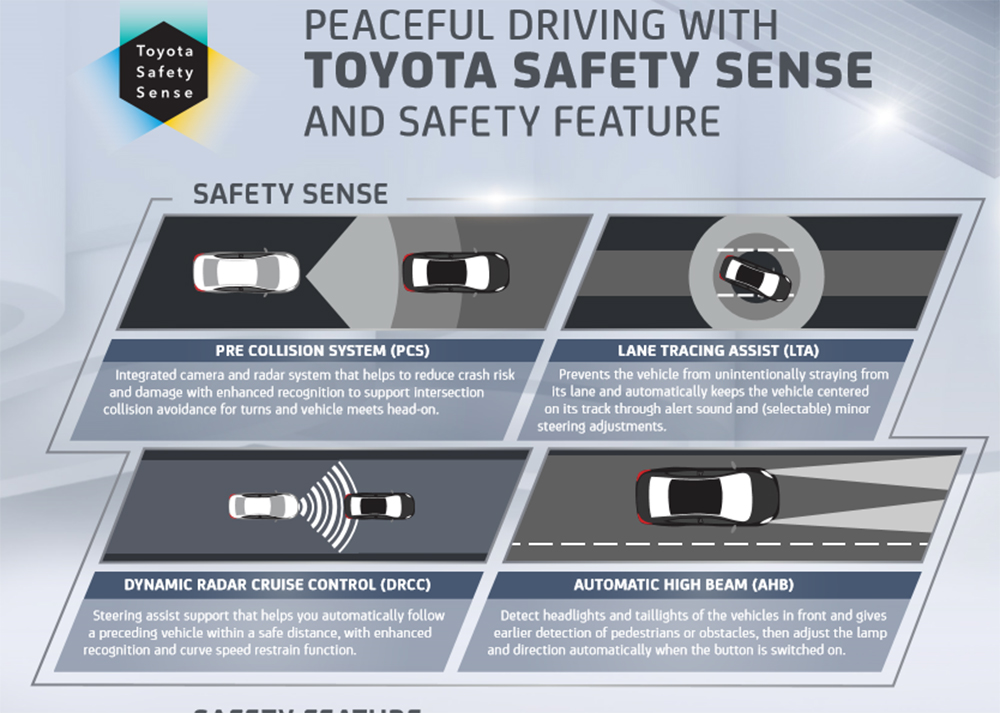
Adaptive cruise control has long been a staple of luxury vehicles, but Safety Sense 3.0 elevates it to an art form. Dubbed Dynamic Radar Cruise Control, this feature doesn’t just maintain a set distance from the car ahead—it *dances* with traffic. The radar and cameras work in tandem to adjust speed in real-time, seamlessly slowing down when a vehicle merges into your lane or accelerating when the road ahead clears. It’s a ballet of precision, where every movement is calculated to the millisecond.
What sets this system apart is its ability to handle stop-and-go traffic with aplomb. Unlike traditional cruise control, which often disengages in bumper-to-bumper conditions, Safety Sense 3.0 keeps the vehicle moving at a controlled pace, even in congested urban environments. It’s not just about comfort—it’s about reducing driver fatigue and minimizing the risk of rear-end collisions in unpredictable traffic.
The system’s intelligence extends to highway merging as well. When another vehicle cuts into your lane, the radar detects the intrusion and adjusts your speed to create a safe buffer. It’s a level of situational awareness that feels almost prescient, as if the car itself has developed a sixth sense for danger.
Lane Tracing Assist and Automatic High Beams: The Subtle Guardians of the Road
Lane Tracing Assist is the system’s way of keeping you centered without constant driver input. Using a combination of camera data and radar feedback, it gently guides the vehicle back into its lane if it starts to drift. But it’s not just about staying within the lines—it’s about understanding the road’s geometry. The system can detect curves before they become visible to the driver, adjusting steering inputs to ensure a smooth, controlled turn.
Automatic High Beams take this proactive approach a step further. Instead of relying on the driver to switch between high and low beams, the system uses camera input to detect oncoming traffic and adjusts illumination in real-time. It’s a small but significant feature that enhances nighttime visibility without blinding other drivers—a testament to Toyota’s commitment to thoughtful innovation.
Pre-Collision System with Pedestrian and Cyclist Detection: The Ultimate Safeguard
The pre-collision system is the cornerstone of Safety Sense 3.0, and its capabilities are nothing short of extraordinary. When the radar and cameras detect an imminent collision, the system doesn’t just apply the brakes—it initiates a multi-layered response. Seatbelts tighten, brake assist engages, and if necessary, the vehicle comes to a complete stop to minimize impact.
But what truly sets this system apart is its ability to detect pedestrians and cyclists. In urban environments, where collisions with vulnerable road users are a persistent threat, Safety Sense 3.0 acts as an invisible shield. It doesn’t just react to a pedestrian stepping into the road—it predicts their movement, calculating the likelihood of a collision and intervening before it occurs. The same goes for cyclists, whose unpredictable paths often catch drivers off guard. The system’s AI is trained to recognize the unique dynamics of bicycles, ensuring that evasive maneuvers are both timely and precise.
This isn’t just safety technology—it’s a guardian angel that watches over every journey, ready to intervene at a moment’s notice.
The Quiet Revolution: Why Safety Sense 3.0 Feels Like the Future
What makes Safety Sense 3.0 so compelling isn’t just its array of features—it’s the way they coalesce into a cohesive, almost intuitive driving experience. Drivers often remark that using the system feels like having a co-pilot who never sleeps, never gets distracted, and always has their best interests at heart. It’s not about replacing the driver, but about augmenting their abilities, turning every trip into a safer, smoother, and more enjoyable endeavor.
The system’s true genius lies in its subtlety. It doesn’t announce its presence with flashy alerts or intrusive warnings. Instead, it works silently in the background, ready to act when needed. This understated efficiency is what makes it so revolutionary—it doesn’t just protect you; it becomes an extension of your driving instincts.
In a world where distractions are everywhere and roads are increasingly complex, Safety Sense 3.0 offers something invaluable: peace of mind. It’s the reassurance that, no matter what happens, your vehicle is equipped to handle it. Whether you’re a cautious commuter or an adventurous road-tripper, this system ensures that every journey ends as safely as it begins.
Toyota Safety Sense 3.0 isn’t just a set of features—it’s a testament to the power of innovation when it’s driven by a deep understanding of human needs. It’s the future of driving, delivered today.