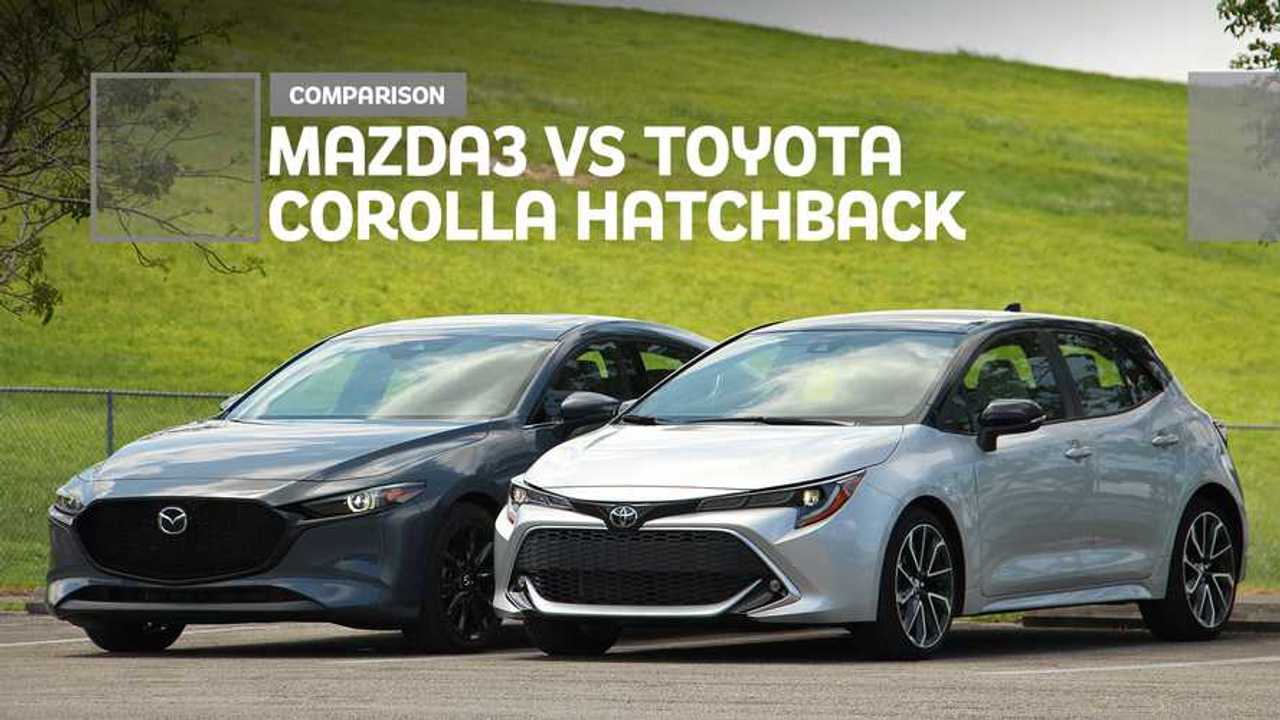
In the bustling world of compact sedans, two titans stand shoulder to shoulder, each wielding a legacy of reliability and innovation. The Toyota Corolla and Mazda3 aren’t just cars—they’re statements. One whispers trust through decades of unshakable reputation; the other roars with a design philosophy that dares to defy convention. This isn’t merely a comparison. It’s an exploration of two philosophies colliding on the asphalt, where every mile tells a story of compromise, character, and choice.
At first glance, they appear as siblings—similar in size, purpose, and price. But beneath the surface, their souls diverge. The Corolla hums with the quiet confidence of a workhorse, while the Mazda3 crackles with the electric thrill of a driver’s car. Which one should you invite into your life? The answer isn’t just about specs or fuel economy. It’s about how you want to feel when you turn the key.
The Legacy of Trust vs. The Spark of Innovation
The Toyota Corolla isn’t just a car—it’s a cultural phenomenon. Since its debut in 1966, it has sold over 50 million units worldwide, becoming the best-selling car of all time. Its reputation isn’t built on flash; it’s forged in the fires of dependability. Owners don’t just drive a Corolla—they trust it. It’s the car that starts on the coldest mornings, the one that ferries generations of families, the silent partner in countless life journeys. Toyota’s engineering philosophy here is simple: if it ain’t broke, don’t fix it. And for millions, it truly isn’t.
Enter the Mazda3. Where the Corolla nods to tradition, the Mazda3 leaps toward evolution. Mazda doesn’t just want to build cars; it wants to craft experiences. The brand’s “Kodo” design language—Japanese for “soul of motion”—transforms sheet metal into poetry. Inside, the cabin isn’t just functional; it’s immersive. Soft-touch materials, ambient lighting, and a cockpit designed around the driver make every journey feel intentional. This isn’t a car that blends into the background. It demands to be seen—and felt.
The Corolla’s interior, while practical and refined, plays it safe. It’s ergonomic, yes, but it lacks the emotional punch of the Mazda3. Here lies the first fork in the road: Do you crave the reassurance of the known, or the thrill of the new?
Driving Dynamics: The Soul of the Machine
Slide behind the wheel of a Corolla, and you’ll notice something immediately: it’s quiet. Too quiet. Not in a peaceful way, but in a way that makes you question whether the engine is even running. The 2.0-liter four-cylinder hums along at a polite 138 horsepower, sipping fuel with the discipline of a monk. It’s smooth. It’s predictable. It’s forgettable. For commuters and road-trippers who prioritize comfort over engagement, this is a virtue. But for those who believe driving should stir the blood, the Corolla can feel like a lullaby—soothing, but ultimately soporific.
Now, depress the clutch in a Mazda3 with the 2.5-liter Skyactiv-G engine, and the world changes. With 191 horsepower at your disposal, the Mazda3 doesn’t just move—it dances. The steering is sharp, the body rolls less, and the engine’s eager revs respond to your slightest touch. Mazda’s engineers didn’t just tune this car for efficiency; they tuned it for joy. The six-speed automatic (or optional six-speed manual) glides through gears with a sense of purpose, while the suspension soaks up bumps without numbing your senses. This is a car that makes you want to take the long way home.
But here’s the twist: the Mazda3 isn’t just about speed. It’s about connection. The way the shifter falls to hand. The way the pedals respond with precision. The way the car seems to lean into corners before you even turn the wheel. It’s not just transportation. It’s an extension of your will.
Technology and Connectivity: The Digital Divide
In the age of smartphones and smart homes, your car should feel like a natural extension of your digital life. The Corolla delivers this with Toyota Safety Sense 3.0—a suite of advanced driver-assistance systems that includes adaptive cruise control, lane-keeping assist, and automatic emergency braking. The infotainment system, while functional, feels dated, with a smaller touchscreen and less intuitive controls. Apple CarPlay and Android Auto are available, but the experience lacks the polish of newer competitors.
The Mazda3, by contrast, offers a tech-forward cockpit that feels like it belongs in a spaceship. The 12.3-inch infotainment display is crisp, responsive, and customizable. Wireless Apple CarPlay and Android Auto come standard, and the system’s voice recognition is surprisingly accurate. Mazda’s i-Activsense safety suite rivals Toyota’s, with features like blind-spot monitoring and rear cross-traffic alert. But where Mazda truly shines is in the details: the ambient lighting that shifts with your mood, the head-up display that projects vital stats onto the windshield, and the Bose premium audio system that turns every note into a symphony.
If technology is a priority, the Mazda3 doesn’t just keep up—it sets the pace.
Fuel Efficiency and Long-Term Value
Both cars are paragons of fuel efficiency, but they achieve it in different ways. The Corolla’s base 2.0-liter engine delivers an EPA-estimated 32 city / 41 highway MPG, making it a champion of thrift. Over five years, the average driver could save hundreds—if not thousands—on fuel costs. Toyota’s hybrid variant cranks this up to 50 city / 53 highway MPG, turning every commute into a statement of environmental responsibility. Resale value? Nearly untouchable. A well-maintained Corolla retains over 50% of its value after three years, a testament to its enduring appeal.
The Mazda3’s 2.5-liter engine isn’t as frugal, with ratings of 28 city / 36 highway MPG, but it’s no slouch either. The turbocharged 2.5T engine, while thirstier, offers a spirited 250 horsepower and 320 lb-ft of torque, making it the performance pick of the lineup. Long-term costs are slightly higher, but Mazda’s build quality ensures durability. Resale value isn’t quite as stellar as the Corolla’s, but it’s still strong—hovering around 45% after three years. For those who prioritize driving pleasure over penny-pinching, the Mazda3 offers a compelling trade-off.
Safety: The Silent Guardian
Both cars are safety all-stars, but they approach protection from different angles. The Corolla’s Safety Sense 3.0 is comprehensive, with features like dynamic radar cruise control, lane tracing assist, and road sign assist. It’s designed to prevent accidents before they happen, making it an ideal choice for families and cautious drivers. The Mazda3’s i-Activsense system is equally robust, with added features like traffic sign recognition and driver attention alert. But Mazda goes further with its 360-degree view monitor, which provides a bird’s-eye view of your surroundings—perfect for tight parking spots.
Where the Mazda3 gains an edge is in its structural integrity. Mazda’s Skyactiv-Body architecture is engineered to absorb and redirect impact energy more effectively, while Toyota’s safety focus leans toward prevention rather than absorption. Both are excellent, but the Mazda3 feels like it’s built with a fighter’s resilience.
The Final Verdict: Which Compact Car Steals Your Heart?
Choosing between the Toyota Corolla and Mazda3 isn’t about picking a winner. It’s about aligning your values with your ride. If your life demands a car that’s reliable, efficient, and hassle-free, the Corolla is your steadfast companion. It won’t dazzle you with performance or wow you with tech, but it will never let you down. It’s the car for the pragmatist, the parent, the road warrior who values peace of mind over passion.
The Mazda3, on the other hand, is for the enthusiast. It’s for the driver who believes a car should be an extension of their personality—a machine that responds to their touch, delights their senses, and makes every journey an event. It’s not just a compact sedan. It’s a compact masterpiece.
So, which will it be? The Corolla, with its quiet confidence and unshakable reputation? Or the Mazda3, with its bold design, engaging drive, and tech-forward cockpit? The choice isn’t just about what you drive. It’s about who you are.
One thing is certain: whichever you choose, you’ll be in good company. But only one will make you feel truly alive.