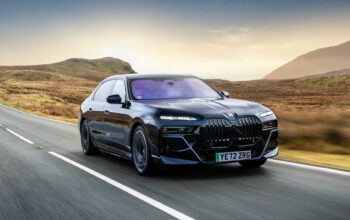
The first thing you notice about the 2026 Alfa Romeo Giulia Quadrifoglio is how effortlessly it refuses to blend into the background. Even when parked in a sea of competent sedans, it reads like punctuation—sharp, intentional, and slightly theatrical. The kind of car that makes people slow down without knowing why. And yet, there’s a common observation that follows it around like a tail: that the Giulia Quadrifoglio is “just” a dramatic halo model, a halo too bright to be truly practical, or perhaps too idiosyncratic to merit the attention it receives. That assumption is understandable. But it underestimates what Alfa Romeo is doing here. The fascination isn’t merely about speed or specs. It’s about tension—between tradition and modernity, between luxury and edge, between engineering logic and Italian sensibility.
On paper, the Quadrifoglio badge promises performance. In real life, it delivers something more elusive: a sense of direction. The car feels authored rather than assembled. And once you drive it, that “why” starts to surface—deeper than horsepower charts, deeper than trophy-lap mythology.
Design Language: Beauty With a Bit of Blade-Edge
From the front, the 2026 Giulia Quadrifoglio looks like it’s in on a secret. The grille doesn’t simply invite airflow; it declares a stance. The sculpted surfaces have that unmistakable Italian habit of combining elegance with aggression—like tailored clothing cut for a sprint.
It’s also the small details that complete the picture. The proportions feel deliberate, not accidental. The stance is low and purposeful, and the body lines don’t just run along the car—they choreograph it. A common critique is that such design can age poorly. Yet Alfa’s best looks tend to mature rather than fade. They don’t chase trends; they iterate on identity.

Interior Atmosphere: Sporty Without Becoming Crude
Step inside and the drama continues, but it’s refined. The cabin doesn’t aim for sterile efficiency. It aims for immersion. Buttons and controls feel arranged for the driver, not the showroom. Materials have a purposeful tactility—textures that discourage numbness, the kind of sensory feedback that makes a cockpit feel like a cockpit, not a passenger lounge.
There’s a reason enthusiasts gravitate toward this atmosphere: it trains attention. In many performance cars, you’re forced to “find” the driving experience by learning a manual. In the Giulia Quadrifoglio, the experience is already present. The steering wheel position, the sightlines, the driver-centric layout—these are not incidental. They make you feel the vehicle as a single instrument.
Shortly after setting off, you begin to understand the deeper fascination. The Quadrifoglio doesn’t just transport you. It disciplines you—into better cornering habits, calmer inputs, sharper anticipation. That discipline is part of its charisma.
Powertrain Character: When Performance Feels Like Personality
Performance is often measured in acceleration times and dyno numbers. Yet the Quadrifoglio’s power is experienced as character: the way it arrives, the way it breathes, the way it responds to intention. It doesn’t behave like a spreadsheet. It behaves like a living machine.
A common observation is that such cars are “too intense” for everyday roads. That criticism is partly correct—this is not a passive commuter. But it misses the nuance. The intensity isn’t constant. It’s conditional. In calmer moments, the engine and drivetrain can be surprisingly composed, offering a smoother cadence. Then, at the exact moment you ask for more, the car sharpens its senses. This alternation between velvet and steel is a hallmark of the best Italian performance engineering.
And there’s an underappreciated point: the fascination grows because the car teaches the driver how to collaborate. It rewards timing. It respects smoothness. It asks for finesse, not brute force.

Handling and Chassis: The Art of Staying Composed at the Edge
The Quadrifoglio’s handling is where myths either solidify or dissolve. Many people expect a track-ready feel that ignores comfort entirely. The Giulia answers differently. It feels planted, yet not stiff in a punishing way. It is firm in the right locations and forgiving where it matters.
Cornering isn’t just about grip—it’s about communication. When the front end loads, you feel it. When traction transfers, you sense the shift. The steering offers enough feedback to keep you confident, but not so much that it becomes coarse. This balance is what transforms performance from a stunt into a rhythm.
There’s also a subtle psychological factor. Confidence is built through consistency. A car that behaves predictably at the limit doesn’t merely reduce stress; it expands your willingness to explore. That willingness is a large part of why owners return to their Quadrifoglio stories, year after year.
Braking and Stability: Confidence You Can Feel, Not Just Measure
Power means little without control, and the Giulia Quadrifoglio treats braking as a form of dialogue. Deceleration feels immediate yet not abrupt. Pedal travel suggests modulation rather than panic. Stability systems are calibrated to assist without erasing driver influence. That’s important. A performance car should not feel like it’s overriding you; it should feel like it’s standing beside you.
Again, the common observation—“it’s only for enthusiasts”—arrives like a misunderstanding. The truth is that confidence technologies can be friendly. They can make spirited driving safer, even for those who don’t chase lap times. The deeper fascination is that the car seems to anticipate your needs: a mechanical sense of reassurance layered beneath the theatrical exterior.
Technology and Driver Experience: Modernity That Doesn’t Kill the Soul
In today’s market, screens and software often replace sensation. The Giulia Quadrifoglio resists that trend. It integrates technology, yes, but it doesn’t let software become the main character. The driver remains central.
There’s an ecosystem of aids—stability, traction management, performance modes—that can adapt to how you feel in the moment. Choose a calmer setting and the car becomes less combative. Choose a sharper mode and it becomes more responsive, as if the entire chassis has tightened its posture. This variability matters because it reflects real driving life. Most people don’t drive at 100% all the time. The best cars accommodate the spectrum.
In short: the technology supports the narrative, rather than hijacking it.
Ride Comfort and Everyday Practicality: The “Not for Me” Myth
A performance sedan can fail at daily life if it’s harsh, noisy, or difficult to live with. The Quadrifoglio does not pretend to be a luxury cruiser, but it isn’t merely an exercise in stiffness either. It tends to keep the cabin insulated from the chaos outside while preserving a sense of connection to the road. That compromise—between isolation and feedback—is a hallmark of engineering maturity.
Practicality is, inevitably, the question. Rear-seat space, trunk usability, and visibility matter. The Giulia isn’t a van. It’s a sports sedan with attitude. Yet practicality isn’t just dimensions. It’s also ergonomics: how quickly you settle in, how naturally controls fall to hand, how easily you can park and maneuver without fear. These are the unglamorous factors that make a car truly desirable.
Who This Car Is For: Enthusiast, Romantic, and the Slightly Curious
The 2026 Alfa Romeo Giulia Quadrifoglio isn’t built for people who want everything explained, standardized, and optimized into neutrality. It’s for those who notice details. Those who feel a road through the steering wheel. Those who believe cars can carry emotion—not as marketing, but as engineering outcomes.
It’s also for the slightly curious: the driver who thinks they want only practicality, then experiences the Quadrifoglio and finds themselves smiling at mundane errands. That’s where the deeper reason lies. Fascination rarely arrives from perfection. It arrives from personality—especially the kind that dares to be specific.
Verdict: Italian Flair That Earns Its Reputation
The Giulia Quadrifoglio’s allure can’t be reduced to numbers. It’s a synthesis of design audacity, driver-focused ergonomics, and a powertrain temperament that feels alive. The car makes a case for passion as a legitimate engineering philosophy. It meets the critique—“too dramatic,” “not practical enough”—and answers it with restraint, responsiveness, and composure where it counts.
Ultimately, the 2026 Alfa Romeo Giulia Quadrifoglio feels like more than a performance sedan. It feels like an argument in motion: that driving should involve more than transportation. That it should be sensory, deliberate, and a little bit dangerous in the best, most controlled sense. And once you understand that, the fascination stops being a question and becomes a conclusion you share with every mile behind the wheel.