The 2026 Subaru Outback isn’t just a wagon—it’s a rugged, adventure-ready steed disguised as a family hauler. With its symmetrical all-wheel-drive system, robust boxer engine, and a growing reputation as a capable overlander, this vehicle has enthusiasts wondering: can it really tow a small camper? The answer isn’t just a simple “yes” or “no.” It’s a nuanced tale of engineering prowess, real-world adaptability, and the unexpected versatility of a crossover that refuses to be boxed in. Whether you’re eyeing a teardrop trailer for weekend escapes or a compact pop-up for cross-country treks, the Outback’s towing chops might surprise you. Let’s dive into what this all-terrain titan can truly pull—and how it transforms from daily commuter to weekend warrior.

The 2026 Subaru Outback: Built for the Uncharted
The 2026 Subaru Outback arrives with a refreshed exterior that whispers rugged elegance—think sculpted fenders, a bold front grille, and LED signature lighting that cuts through the darkest backroads. But beneath its sleek skin lies a powertrain engineered for both efficiency and grit. The standard 2.4-liter turbocharged Boxer engine delivers 260 horsepower and 277 lb-ft of torque, paired with a continuously variable transmission (CVT) that optimizes power delivery for both city driving and off-grid adventures. This isn’t just a commuter engine; it’s a torque-rich powerhouse designed to handle elevation changes and uneven terrain with aplomb.
What truly sets the Outback apart is its symmetrical all-wheel-drive system. Unlike traditional AWD setups that react to slippage, Subaru’s system proactively distributes power to all four wheels, ensuring stability when towing small campers up winding mountain passes or across muddy forest trails. The X-MODE off-road system, now refined for 2026, adds an extra layer of control by adjusting throttle response, transmission mapping, and even braking force to maintain traction in low-grip conditions. For those who refuse to let a little rain or snow derail their camping plans, this is the kind of confidence that turns nervous glances into fearless grins.
Towing Capacity: How Much Can the Outback Really Pull?
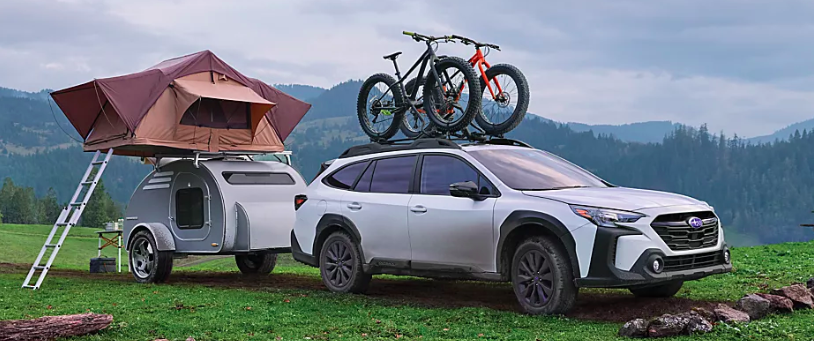
When it comes to towing, the 2026 Subaru Outback doesn’t play coy. With the optional towing package—which includes an upgraded radiator, larger sway bars, and a trailer stability control system—this wagon can tow up to 3,500 pounds when properly equipped. That’s right: 3,500 pounds. For context, that’s enough to haul a small travel trailer like the Scamp 13 (weighing around 2,000 lbs dry) or a lightweight teardrop like the NuCamp Tag (1,200 lbs). Even with a modest payload of gear, water, and provisions, you’re looking at a realistic towing range of 2,500 to 3,000 pounds for comfortable, safe travel.
But towing isn’t just about raw numbers—it’s about how the vehicle behaves under load. The Outback’s CVT is tuned to resist excessive heat buildup during sustained towing, a common Achilles’ heel in smaller vehicles. The integrated trailer brake controller (standard on higher trims) ensures smooth, controlled stops, while the revised suspension tuning absorbs the extra weight without turning your camping trip into a white-knuckle experience. The Outback’s low center of gravity, thanks to its horizontally opposed engine, also minimizes sway—a critical factor when navigating crosswinds or passing semis on two-lane highways.
Small Campers That Play Nice with the Outback
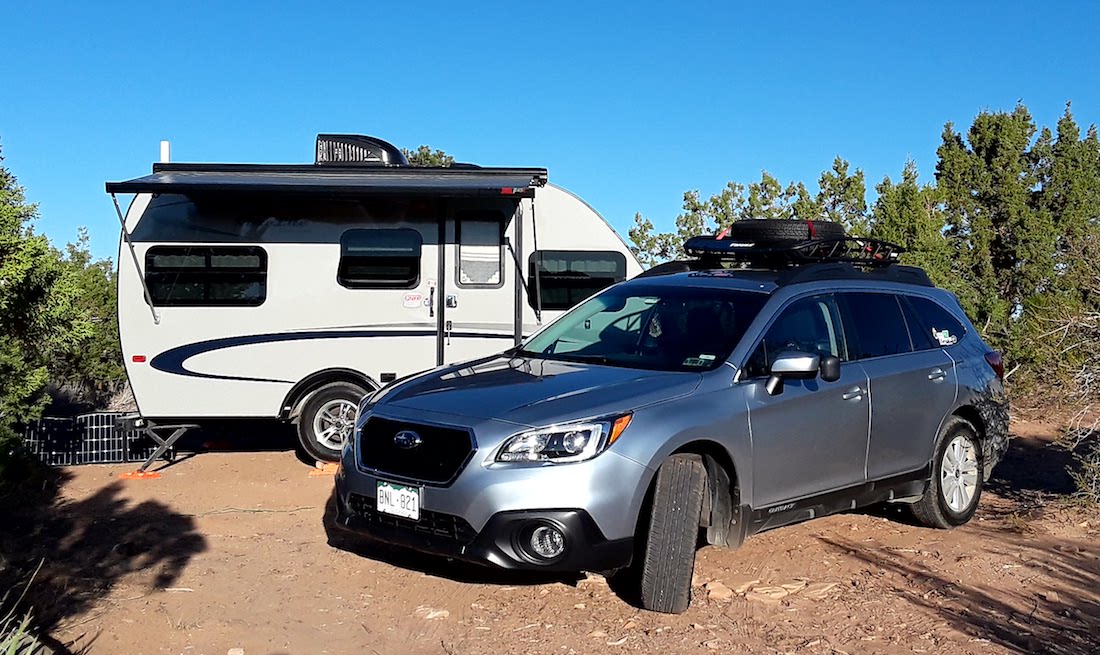
Not all campers are created equal, and the Outback’s towing prowess shines brightest when paired with the right trailer. For minimalists, the Tiny Camper Company’s Fiber Lite 16RB (2,200 lbs) offers a cozy interior with a wet bath and a dinette that converts to a bed. Its aerodynamic shape reduces wind resistance, easing the load on the Outback’s engine. For those who prioritize off-grid capability, the Winnebago Minnie Drop 1706FB (2,800 lbs) packs a full galley, a queen bed, and a slide-out awning—all within the Outback’s towing envelope.
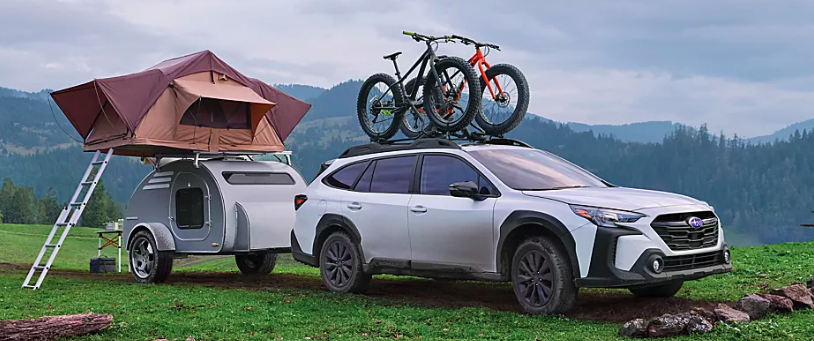
Teardrop trailers are another excellent match. Models like the Little Guy MyPod (1,500 lbs) or the Polydrop PD17 (1,300 lbs) are lightweight, fuel-efficient, and easy to maneuver, making them ideal for solo travelers or couples seeking a no-frills escape. Their compact size also means they’re less likely to overwhelm the Outback’s braking system or suspension, even on steep grades. And let’s not forget pop-ups: the Jayco Jay Sport 8SD (1,800 lbs) offers a surprising amount of space for its weight, with a dinette that folds into a bed and a canvas tent that unfurls in minutes.
When selecting a camper, always check the GVWR (Gross Vehicle Weight Rating)—this includes the trailer’s weight plus all cargo, water, and propane. The Outback’s 3,500-pound towing capacity is a ceiling, not a target. Staying 10-15% below that limit ensures a margin of safety for steep climbs, sudden stops, and unpredictable weather.
Real-World Towing: What to Expect on the Road
Towing with the 2026 Outback isn’t just about hitting the open road—it’s about embracing the journey. The engine’s torque curve delivers strong, linear acceleration, even when pulling a fully loaded trailer. On highways, expect to see fuel economy dip to the mid-20s (MPG), but that’s still respectable for a vehicle of this size and capability. The Outback’s adaptive cruise control, now optimized for towing, maintains a steady pace on long stretches, reducing driver fatigue.
Off the pavement, the Outback’s capabilities expand further. With X-MODE engaged, the vehicle’s throttle response softens, and the transmission holds lower gears longer, preventing lugging and overheating. The all-wheel-drive system’s locking center differential (on select trims) can be a game-changer when navigating loose gravel or sandy campsites. And thanks to Subaru’s EyeSight Driver Assist Technology, the Outback offers lane-keeping assist, adaptive cruise, and even trailer sway control—features that make towing feel less like a chore and more like an extension of the Outback’s natural habitat.
Of course, towing isn’t without its challenges. The Outback’s turning radius is slightly wider when a trailer is hitched, so urban parking or tight switchbacks require patience. Wind can also be a factor, especially with lightweight trailers that catch crosswinds like a sail. Always plan your route with towing in mind, avoiding steep grades or narrow roads where passing is difficult. And never underestimate the importance of a pre-trip inspection: check tire pressures, brake lights, and hitch connections before every journey.
Essential Gear and Modifications for Towing Success
While the 2026 Outback is ready to tow straight from the factory, a few upgrades can enhance safety, comfort, and peace of mind. A weight distribution hitch, like the Equal-i-zer or Andersen, helps distribute the trailer’s weight more evenly across the Outback’s axles, reducing sag and improving handling. A transmission cooler is another wise investment, especially if you plan to tow in hot climates or tackle long mountain passes. For those who camp in colder regions, a heated hitch prevents ice buildup on the coupler, ensuring smooth unhitching even after a frosty night.
Inside the cabin, consider a tow mirrors kit to eliminate blind spots caused by the trailer. The Outback’s standard mirrors are functional, but aftermarket towing mirrors provide a wider field of view, making lane changes and tight turns less stressful. A tire pressure monitoring system (TPMS) for the trailer is also invaluable, alerting you to underinflated tires before they become a hazard. And don’t forget the basics: a set of heavy-duty sway bars (included in the towing package) and a brake controller for smoother stops.
For off-grid adventures, a portable power station like the Jackery Explorer 1000 can keep your devices charged without draining the Outback’s battery. And if you’re towing a camper with limited storage, a roof cargo box or hitch-mounted cargo carrier can free up interior space for essentials like food, clothing, and camping gear.
Safety First: Towing Etiquette and Best Practices
Towing a camper transforms the 2026 Outback from a vehicle into a rolling home—and with that transformation comes responsibility. Always perform a pre-departure checklist: verify that the trailer is level, the safety chains are crossed and secured, and the breakaway cable is attached. Check that all lights—brake, turn signals, and running lights—are functioning correctly. And never tow without a properly rated hitch and safety chains; these are your lifelines in the event of a failure.
On the road, maintain a safe following distance—at least four seconds behind the vehicle in front. This gives you ample time to react to sudden stops or debris in the road. When descending steep grades, use engine braking (by downshifting manually if your Outback has paddle shifters) to reduce wear on the brakes. And always be mindful of no-zones when passing or being passed; large trucks and semis can create dangerous wind gusts that affect trailer stability.
Parking with a trailer requires finesse. The Outback’s rearview camera is a helpful tool, but it’s no substitute for a spotter. Use your mirrors to gauge the trailer’s position, and take corners slowly to avoid curbing the wheels. If you’re backing into a campsite, practice in an empty lot first—towable trailers have a mind of their own, and patience is your best ally.
The Outback as a Gateway to Adventure
The 2026 Subaru Outback isn’t just a vehicle—it’s an invitation. An invitation to explore the backroads, to wake up to the sound of birds instead of an alarm, to trade crowded campgrounds for secluded lakeside spots. Its towing capacity of 3,500 pounds might seem modest compared to full-size trucks, but it’s more than enough to unlock a world of small, nimble campers that prioritize freedom over square footage. Whether you’re chasing autumn foliage in Vermont, chasing waves in Oregon, or simply chasing a weekend away from the grind, the Outback delivers.
This is the beauty of the Outback: it doesn’t ask you to choose between practicality and passion. It lets you have both. You can haul groceries on Monday and a pop-up camper on Friday. You can navigate potholed city streets and fire-road switchbacks with equal confidence. And when you finally park at your destination, the Outback’s rugged elegance ensures you arrive looking sharp, even if you’re a little dusty.
So, can the 2026 Subaru Outback tow a small camper? Absolutely. But more importantly, it can tow your spirit of adventure—lightly, confidently, and without compromise.