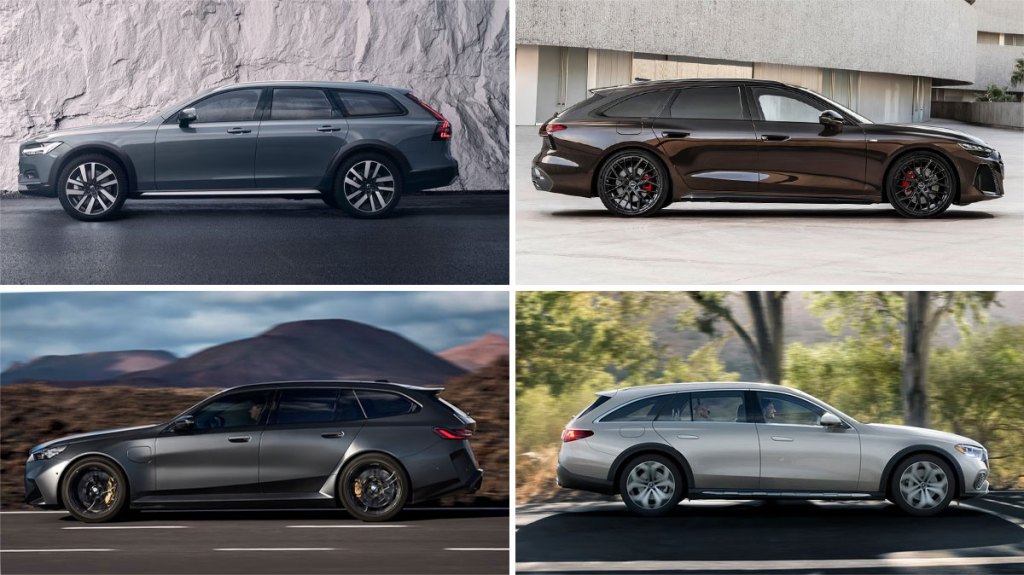
In an automotive landscape increasingly dominated by seamless, effortless automation, the manual transmission wagon stands as a relic of a bygone era—one that refuses to fade into obscurity. By 2026, enthusiasts still whisper about the tactile symphony of a clutch pedal, the precision of a gearshift, and the raw connection to the machine that defines driving. But are there any manual transmission wagons left in the market? The answer, surprisingly, is yes—but their presence is more than just a nod to tradition. It’s a testament to the enduring allure of engagement, control, and the unquantifiable thrill of orchestrating a machine with your own hands.
The manual transmission wagon isn’t just a car; it’s a statement. In an age where “set it and forget it” has become the mantra of modern motoring, these vehicles represent a rebellion against the sterile, algorithm-driven driving experience. They demand participation, rewarding drivers with a sensory feast of sound, touch, and rhythm. The whir of the engine, the slight resistance of the gear lever, the slight dip of the clutch as it bites—each element is a deliberate act of communion between human and machine. It’s no wonder that even as automatics dominate showroom floors, the manual wagon persists as a whispered fantasy among those who crave more than just a ride.
The Vanishing Breed: Why Manual Wagons Are Becoming Rare
The decline of the manual transmission in general is well-documented. Automakers, driven by efficiency mandates, fuel economy targets, and the convenience of modern dual-clutch and CVT systems, have largely phased out stick shifts in favor of seamless, computer-optimized shifts. Wagons, once the darlings of practicality and performance, have also seen their numbers dwindle in many markets. Combine these two trends, and the manual wagon becomes a unicorn—elusive, coveted, and increasingly hard to find.
Several factors contribute to this scarcity. First, there’s the issue of demand—or rather, the lack thereof. In regions like North America, where SUVs and crossovers have cannibalized the wagon’s market share, manufacturers see little incentive to offer manual transmissions. The economics simply don’t justify the added complexity of a clutch system, especially when most buyers prioritize comfort and low maintenance over engagement. Even in performance-oriented segments, where manuals once reigned supreme, automatics with paddle shifters or AI-driven shift logic now dominate, offering the illusion of control without the physical effort.
Then there’s the matter of engineering constraints. Modern safety systems, such as hill-hold assist and traction control, often require electronic integration that’s more easily achieved with an automatic transmission. A manual gearbox, while mechanically simpler in some ways, demands additional calibration to ensure these systems work harmoniously. The result? Fewer models, higher costs, and a shrinking pool of enthusiasts willing to navigate the challenges of daily driving with a stick shift.
The Survivors: Manual Wagons Still in the Wild
Despite the odds, a handful of manual transmission wagons still cling to existence in 2026, each a testament to the enduring passion of a niche audience. These aren’t your grandfather’s wood-paneled station wagons; they’re modern machines, blending practicality with performance in ways that automatics simply can’t replicate.
One such example is the  2026 Mazda6e Station Wagon. Mazda has long been a champion of the manual transmission, and the sixth-generation 6e carries that torch forward with a six-speed stick shift option. Under the hood, a turbocharged inline-four churns out 280 horsepower, sending power to the front wheels through a gearbox that rewards precise rev-matching and clutch finesse. The wagon’s sleek, coupe-like roofline belies its spacious interior, offering a surprising amount of cargo room without sacrificing style. For those who crave the engagement of a manual but still need the practicality of a wagon, the Mazda6e is a rare gem.
Another contender is the Volkswagen Jetta GLI, a hot hatch that, in some markets, is still available with a six-speed manual transmission. While not a traditional wagon, the Jetta GLI’s liftback design offers similar cargo versatility, and its sport-tuned suspension and punchy 2.0-liter turbo engine make it a thrilling drive. The manual version, in particular, is a favorite among purists who appreciate the directness of its shift linkage and the way the engine sings through the exhaust note when revved to the redline. It’s a reminder that engagement doesn’t always require a full wagon—sometimes, a little practicality goes a long way.
For those willing to look beyond conventional markets, European manufacturers like Subaru and Volvo have occasionally offered manual transmissions in their wagon models, particularly in performance variants like the Subaru WRX wagon or the Volvo V60 Polestar. These cars are rare, often requiring special orders or gray-market imports, but for enthusiasts, they represent the pinnacle of what a manual wagon can be: a fusion of rally-bred performance and everyday usability.
The Allure of the Manual: Why We Can’t Let Go
So why do manual transmission wagons still captivate us? The answer lies in something deeper than mere nostalgia. It’s about the feeling of driving—a sensation that’s increasingly rare in an era of autonomous driving and electrification. A manual wagon offers a kind of kinetic poetry, where every shift is a deliberate act, every downshift a moment of connection. There’s a mindfulness to it, a reminder that driving isn’t just about getting from point A to point B, but about the journey itself.
There’s also the element of skill. In a world where most interactions with technology are passive—swiping, tapping, voice commands—the manual transmission demands active participation. It’s a tactile experience, one that engages the driver’s body as much as their mind. The resistance of the clutch pedal, the precision of the gearshift, the slight lurch as the car moves forward—these are all part of a ritual that’s as much about mastery as it is about transportation. For many, the manual wagon isn’t just a car; it’s a rite of passage, a test of one’s ability to coax performance from a machine.
And let’s not forget the sound. The symphony of a high-revving engine, the growl of an exhaust note, the mechanical whir of a gearbox in motion—these are the auditory delights that automatics often can’t replicate. A well-tuned manual transmission wagon doesn’t just move; it sings. It’s a reminder that cars, at their core, are machines designed to be experienced, not just consumed.
The Future: Will the Manual Wagon Survive?
The future of the manual transmission wagon is uncertain, but not necessarily bleak. As electrification reshapes the automotive landscape, some manufacturers are beginning to experiment with manual-like experiences in electric vehicles. Imagine a virtual manual mode in an EV, where the driver can simulate the feel of a clutch and gearbox through haptic feedback and software. While this won’t replace the real thing, it could introduce a new generation to the joys of engagement.
For now, though, the manual wagon remains a niche within a niche—a relic of a time when driving was as much about artistry as it was about utility. It’s a reminder that not all progress is linear, and that sometimes, the things we love endure precisely because they refuse to conform. So if you ever find yourself behind the wheel of a manual transmission wagon in 2026, take a moment to appreciate what you’re experiencing. You’re not just driving a car; you’re participating in a tradition that stretches back over a century—a tradition of connection, control, and the unbridled joy of making a machine move with your own two hands.