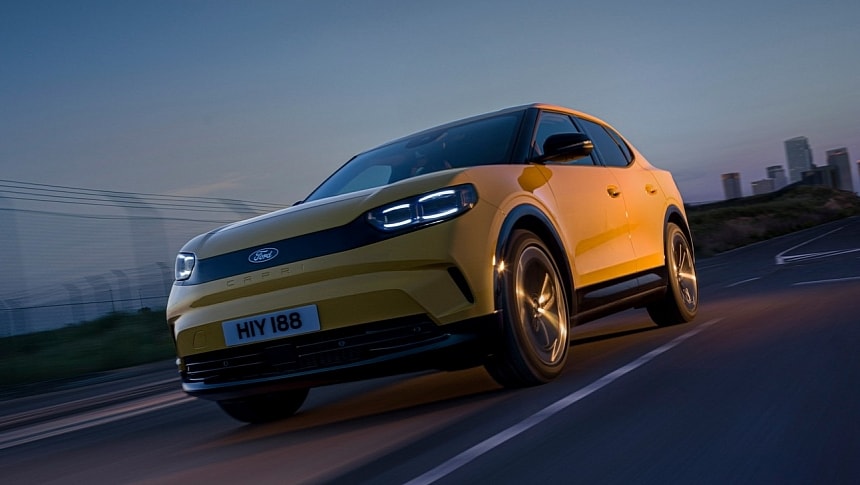
The Ford Capri is back—but not as you remember it. The legendary coupe of the 1970s has been reborn, not as a nostalgic throwback, but as a sleek, electric-powered coupe SUV that blends heritage with cutting-edge innovation. This isn’t just another electric vehicle (EV) rebranding exercise; it’s a bold statement about the future of driving, where performance meets sustainability without sacrificing style. The question on everyone’s lips isn’t just *can* an electric Capri work—it’s *why* it had to happen now.
The fascination with the Ford Capri has always been about more than just its design. It’s about the emotion it evokes—the thrill of the open road, the hum of an engine straining at the leash, the way a car can become an extension of the driver’s identity. Yet, as the world shifts toward electrification, many wondered if the Capri’s spirit could survive the transition. The answer, it turns out, is a resounding yes. The new electric Ford Capri isn’t just a nod to the past; it’s a reimagining of what a modern performance car can be.
The Capri’s Legacy: A Name That Demands Respect
The original Ford Capri, introduced in 1969, was more than a car—it was a cultural phenomenon. Born from the same ethos as the Mustang and the Barracuda, it was a European muscle car that promised speed, style, and affordability. With its long hood, short deck, and aggressive stance, it was a head-turner, a car that whispered of weekend getaways and open highways. The Capri wasn’t just a machine; it was a lifestyle.
Over the decades, the Capri name became synonymous with freedom. It was the car that young drivers dreamed of, the one that middle-aged enthusiasts restored, and the icon that defined an era. But as emissions regulations tightened and the world turned toward electric mobility, the Capri’s future seemed uncertain. Could a car so deeply rooted in internal combustion really make the leap to electric without losing its soul?
The answer lies in how Ford approached the challenge. Instead of clinging to the past, they embraced the future while paying homage to the original. The new Capri retains the coupe-like silhouette that made the original so iconic, but it’s now wrapped in modern, aerodynamic lines that reduce drag and maximize efficiency. The result is a car that looks like it belongs in the 21st century, yet still feels unmistakably Capri.

Electric Power Meets Performance: The Capri’s New Heart
At the core of the new Capri is an electric powertrain that delivers exhilarating performance without the guilt of emissions. With instant torque and a low center of gravity, the Capri accelerates with a ferocity that would make the original proud. The electric motor doesn’t just replace the internal combustion engine—it enhances it. There’s no lag, no gear hunting, just pure, linear power that pins you to your seat.
But performance isn’t just about speed. It’s about how a car feels, how it responds to the driver’s touch. The Capri’s regenerative braking system is tuned to provide one-pedal driving, allowing the driver to slow the car simply by lifting off the accelerator. It’s a feature that modern EV drivers have come to expect, but in the Capri, it feels intuitive, almost like an extension of the car’s personality. The result is a driving experience that’s both engaging and effortless.
Ford hasn’t just focused on straight-line speed, either. The Capri’s suspension is tuned for agility, with adaptive dampers that adjust on the fly to provide a ride that’s firm yet compliant. Whether you’re carving through twisty backroads or cruising down the highway, the Capri delivers a sense of connection to the road that’s rare in modern cars. It’s a reminder that driving should be an experience, not just a means of getting from A to B.
The Design: A Love Letter to the Past, a Blueprint for the Future
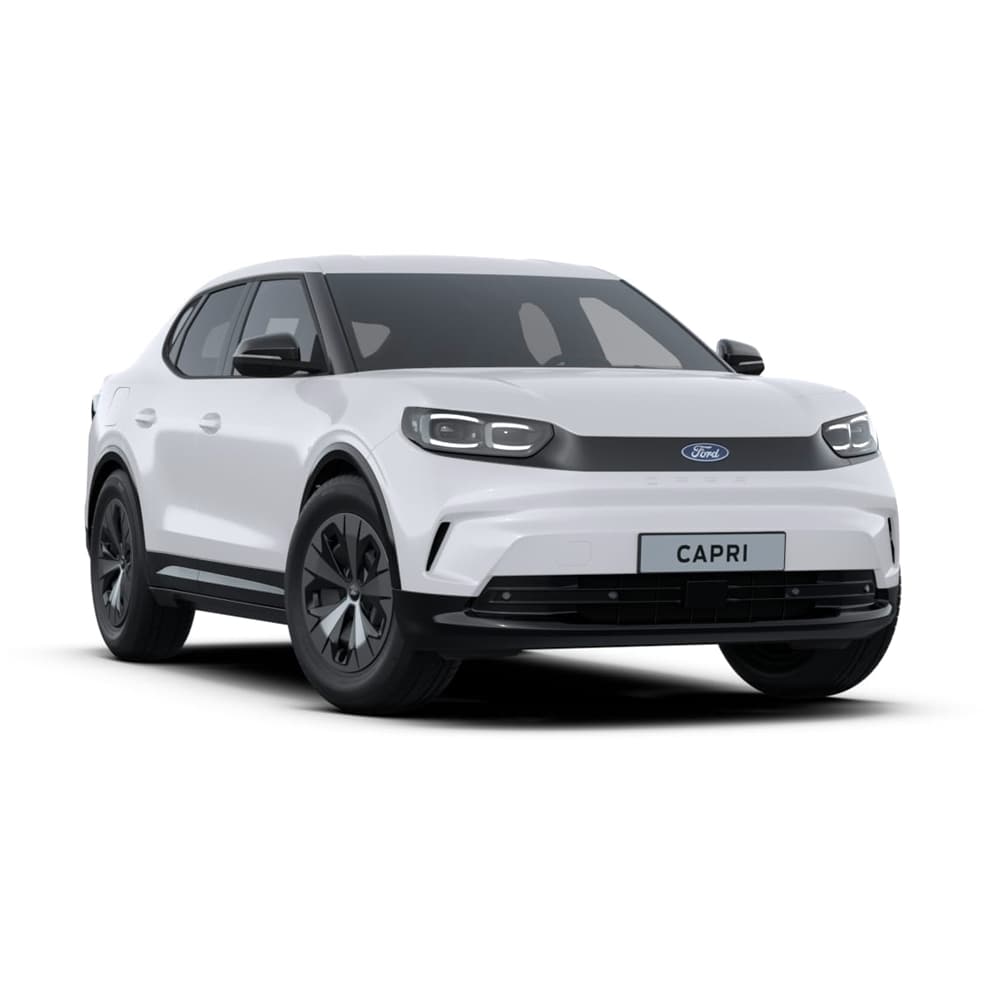
The Capri’s design is where the past and future collide in the most beautiful way. The long hood, short deck proportions are unmistakably Capri, but the details are all modern. The grille, a signature element of the original, has been reimagined as a subtle, illuminated panel that adds a futuristic touch without overpowering the car’s classic lines. The LED headlights are sharp and angular, giving the Capri a piercing gaze that commands attention.
The side profile is where the Capri truly shines. The fastback roofline flows seamlessly into the rear, creating a silhouette that’s both timeless and contemporary. The wheel arches are flared, hinting at the car’s performance capabilities, while the sculpted body panels add depth and texture. The Capri isn’t trying to be something it’s not—it’s a car that respects its heritage while boldly stepping into the future.
Inside, the Capri continues the theme of blending old and new. The dashboard is dominated by a large, curved digital display that wraps around the driver, providing all the information they need at a glance. The materials are premium—soft-touch plastics, leather upholstery, and brushed metal accents—all chosen to evoke a sense of luxury. Yet, there’s a simplicity to the design that keeps it from feeling cluttered. The Capri’s interior is a place of calm, a sanctuary where the driver can focus on the road ahead.
Why the Capri’s Electric Future Matters
The electric Ford Capri isn’t just another EV—it’s a statement. It’s a declaration that performance and sustainability aren’t mutually exclusive. In a world where electric cars are often criticized for being soulless or lacking character, the Capri proves that the opposite can be true. It’s a car that understands its history, respects its legacy, and yet isn’t afraid to innovate.
But the Capri’s significance goes beyond its specifications. It’s a car that taps into something deeper—the human desire for connection, for emotion, for a machine that feels alive. The original Capri was about freedom, about the open road, about the thrill of driving. The electric Capri carries that torch forward, proving that those emotions aren’t tied to a combustion engine or a specific era. They’re universal, timeless, and they belong in the future just as much as they did in the past.
There’s also a practical side to the Capri’s electric powertrain. With instant torque and a low center of gravity, the Capri is more agile and responsive than its internal combustion predecessors. The lack of a heavy engine up front improves weight distribution, making the car feel more balanced and planted. And with no gears to shift, the driving experience is smoother, more refined, and ultimately more enjoyable.
The Road Ahead: What’s Next for the Capri?
The electric Ford Capri is just the beginning. As the automotive industry continues to evolve, the Capri’s success could pave the way for more electric performance cars that don’t compromise on style or excitement. It’s a sign that the future of driving isn’t just about efficiency—it’s about passion, about connection, about the cars we drive and the lives we live through them.
For enthusiasts, the Capri represents a new chapter in a storied legacy. For skeptics, it’s proof that electric cars can be thrilling, engaging, and full of character. And for everyone else, it’s a reminder that the best cars aren’t just machines—they’re experiences waiting to happen.
The road ahead is electric, but the spirit of the Capri remains unchanged. It’s a car that demands to be driven, to be felt, to be lived. And in a world that’s racing toward the future, the Capri is leading the charge—one electrifying mile at a time.