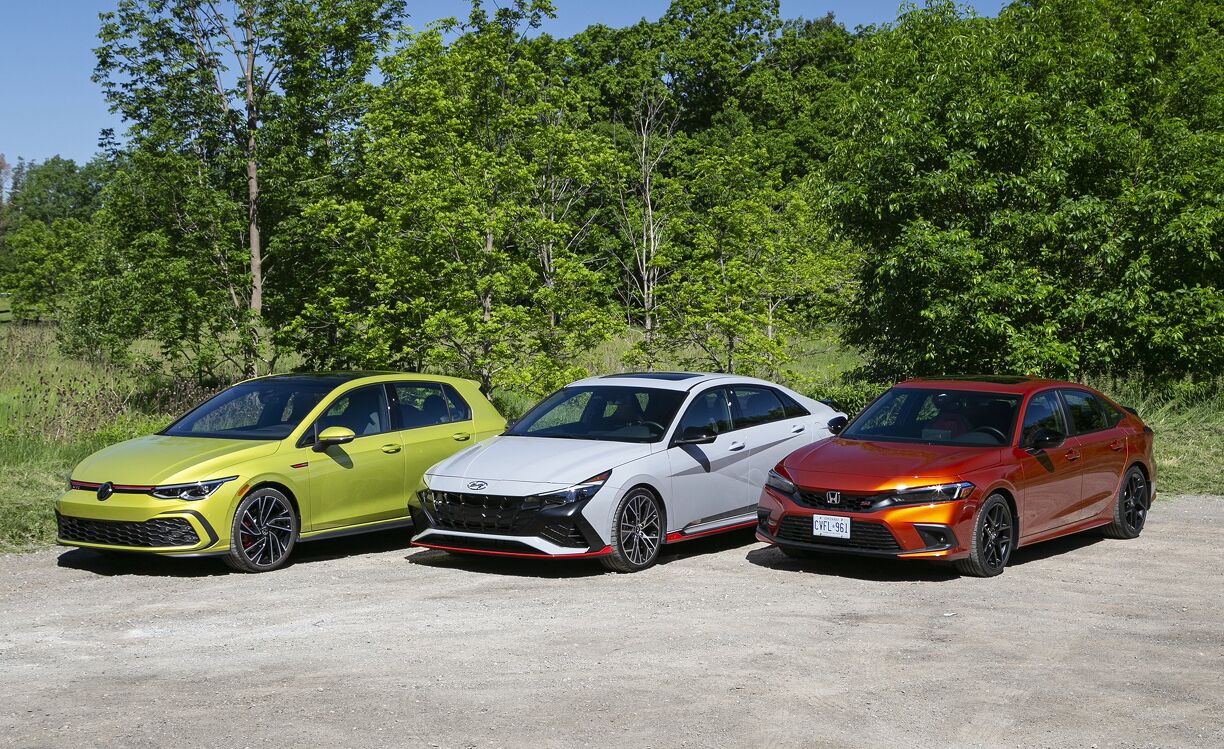
The hot hatch versus sport sedan debate has never been about mere transportation. It’s a dare to your reflexes, a question posed to your senses every time the road tilts upward. Now picture this: you’re at the threshold of two familiar shapes—one a compact sprinter with a legendary hatch reputation, the other a four-door that wears its performance like a tailored suit. In the ring stands the 2026 Volkswagen Golf GTI, the familiar spark plug of the enthusiast world, and the 2026 Hyundai Elantra N, the audacious precision instrument that refuses to play second fiddle.
This isn’t just a comparison. It’s a shift in perspective. Because once you let the mindset change—from “which one is faster?” to “which one makes you feel more alive?”—the answer starts to rearrange itself. The story begins with expectations, then it quietly rewrites them.
Two temperaments, one shared itch
Let’s start with posture. The Golf GTI is typically perceived as the heir to sensible chaos: compact, buttoned-up on the surface, mischievous underneath. It’s the kind of car that smiles at traffic lights, then sprints when nobody’s looking. The Elantra N, meanwhile, carries a bolder vibe—less apologetic, more performance-first. It doesn’t merely invite you to drive; it insists you participate.
Both chase the same emotion—enthusiasm you can’t manufacture. Yet their temperaments differ like jazz improvisation versus perfectly planned theater. The GTI tends to communicate through balance and refinement. The Elantra N often communicates through drama and immediacy. That contrast becomes the backbone of the entire ownership experience.
Engine character: the difference you can feel before you measure
Performance specs are a useful map, but they’re not the territory. In the seat of the 2026 Golf GTI, acceleration often arrives with a polished confidence. It’s eager, but not theatrical for the sake of it. The response feels calibrated—like the throttle has a good memory for your intentions.
In the 2026 Elantra N, acceleration tends to feel more visceral. It’s not simply quick; it’s forceful. The car can feel like it’s taking liberties with physics—in a good way. Power delivery can feel more overt, with a kind of mechanical swagger that makes you want to keep your foot planted.
The interesting twist? Some drivers discover they don’t want the “best numbers.” They want the better sensation. That’s where these cars separate themselves in a way spreadsheets never capture.
Transmissions and traction: where confidence is forged
A hot hatch rivalry usually becomes a transmission storyline. How a car shifts—or how it maintains momentum—changes everything. The Golf GTI often aims for a cohesive rhythm: press, respond, continue. Traction is engineered to feel predictable, which is comforting when the road turns sly and the grip count gets smaller.
The Elantra N leans into a different kind of confidence. It tends to feel eager to translate effort into motion, especially under spirited driving. When the tires find traction, the car’s momentum can feel almost contagious. It’s the sort of setup that encourages you to try “one more corner” even after you promised yourself you were done.
Traction isn’t just about grip—it’s about trust. And these cars build trust using different languages.
Steering and chassis: precision versus provocation
Here’s where the perspective shift becomes undeniable. The Golf GTI is often celebrated for its composure. Its steering feel can feel like a conversation conducted in short, crisp sentences. You turn in, the car listens, and it follows with a disciplined demeanor. There’s a sense that the chassis is always ready, but never begging for attention.
The Elantra N, however, can feel more provocative. Its stance suggests intent even when you’re cruising. Under spirited inputs, it may communicate with more theatrical texture—more feedback, more personality. The result can be delightfully chaotic in the best way: you feel connected, like the car is reacting to your mood rather than merely obeying your commands.
Neither is “wrong.” They’re different styles of engagement. One smooths the path. The other turns the path into a ride.
Braking feel: the quiet hero of spirited driving
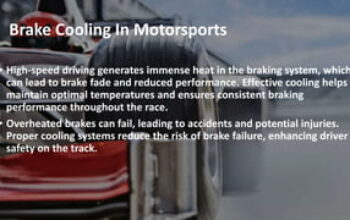
Big speed gets attention. Strong braking earns respect. In day-to-day driving, both cars can feel competent. But when you escalate the pace—when you approach corners with renewed optimism—the difference becomes more apparent.
The Golf GTI’s braking feel often delivers a reassuring linearity, which helps you modulate. You can feather the pedal and create a kind of controlled deceleration ballet. The Elantra N can feel more assertive, with bite that sharpens your confidence. It’s not necessarily harsher; it can feel more direct, like the car is telling you exactly what it can do.
When you stop consistently at the right place, everything downstream improves. Exits get cleaner. Speeds get more meaningful. And suddenly your lap time feels less like a calculation and more like a story you’re writing in real time.
Ride and everyday usability: can performance live alongside errands?
Hot hatches and sport sedans often face the same dilemma: how to stay tolerable when your life is not a race track. The Golf GTI tends to strike a careful compromise. It can be firm without feeling punishing, and it has a habit of smoothing the rougher edges of daily routes.
The Elantra N also targets usability, but its character may feel more performance-shaped by design. It may celebrate the road more loudly, which can be exhilarating when you want it—and occasionally distracting when you don’t.
Here’s the key question: do you want your car to behave like a tool, or like a hobby? Both can handle groceries and commutes, but their emotional returns differ. One feels like a refined instrument. The other feels like a lively co-pilot.
Interior vibe and driver focus: the cabin as a mood ring
Step inside and notice how each cabin encourages—or discourages—your enthusiasm. The Golf GTI interior often projects an atmosphere of familiarity, with a layout designed around driver ergonomics. It’s the kind of place where controls feel within reach and you settle quickly, like your hands already know the map.
The Elantra N interior tends to lean into sporty drama. It can feel more aggressively oriented toward the driver’s senses. You may notice more performance cues, and those cues can influence how you drive. Suddenly, the car isn’t just fast—it feels like it’s ready.
When a cabin nudges your behavior, you start driving differently. That’s not marketing. That’s psychology, disguised as design.
Technology and connectivity: fun without the gadget overload
Modern performance cars are expected to be digitally competent. The 2026 GTI generally keeps technology streamlined, focusing on usability. You want navigation, media, and driver information when you need it—not a carnival of menus.
The Elantra N often aims to keep connectivity integrated with its performance identity. The trick is whether the tech supports your focus or competes with it. A great system should feel like a silent partner—there when necessary, never demanding the spotlight.
In a world of distractions, the best tech is the kind you forget about until you need it.
Image, identity, and resale psychology
Choices aren’t made only on capability. They’re made on the story the car tells about the driver. The Golf GTI carries a legacy of enthusiast credibility. It feels like a membership card to a long-running community.
The Elantra N carries something more modern: a willingness to challenge assumptions. It can attract drivers who want performance without the familiar script. That identity can be powerful, because enthusiasm isn’t always about tradition—it’s about authenticity.
Resale and long-term value depend on market dynamics, but emotion also matters. When you love what you bought, you buy it once and keep it longer than you planned.
Price-to-smile quotient: where the numbers meet the heart
Every buyer eventually asks the same question in different clothing: what do I get for my money, really? The Golf GTI tends to emphasize balanced engineering—refinement, familiarity, and a well-honed driving personality. That balance can translate into a higher “effortless enjoyment” factor.
The Elantra N tends to emphasize performance immediacy—more character per dollar, more dramatic interaction. It can feel like a car that wants you to explore the limits, and it rewards curiosity generously.
Some people want the smoothest path to speed. Others want the most unforgettable route to it. These cars can deliver either—depending on what your definition of fun actually is.
The final verdict: which one changes your perspective?
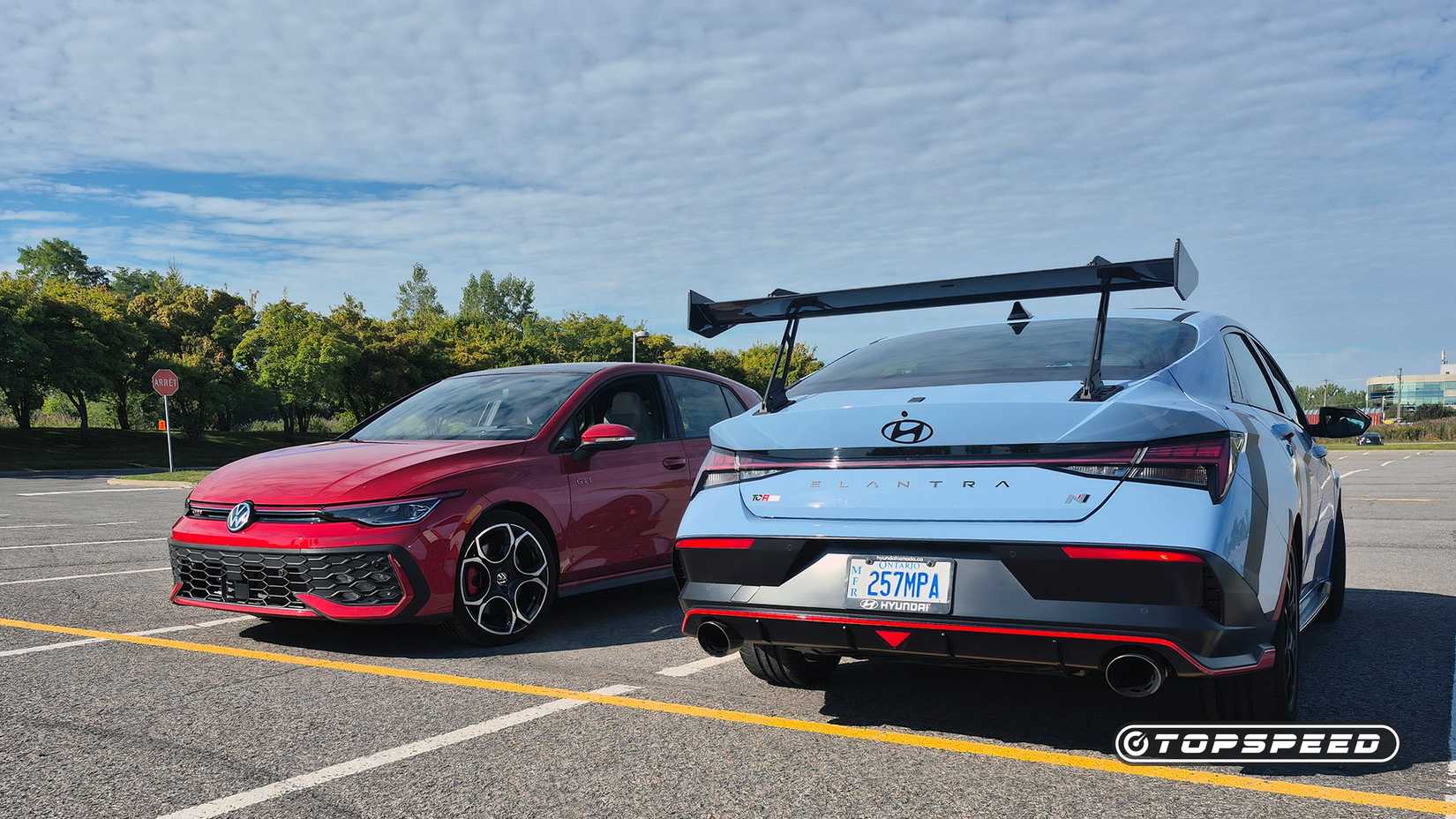
So who wins the 2026 Volkswagen Golf GTI versus 2026 Hyundai Elantra N hot hatch vs sport sedan showdown? The truth is more interesting than a single trophy.
If you chase poise—if you want a car that feels composed, communicative, and delightfully predictable when the road gets complicated—the Golf GTI may be the ignition source you’ve been looking for. It can make speed feel effortless, like a well-rehearsed performance.
If you chase provocation—if you want your car to feel alive, forceful, and unapologetically playful—the Elantra N may be the one that redefines your expectations. It can make you feel like every drive is an event, even when it’s just a short route home.
Ultimately, this rivalry is less about which car is “better” and more about which car invites you to become a different driver. One offers polished persuasion. The other offers vivid provocation. Either way, your perspective shifts—and the road becomes more than a route.
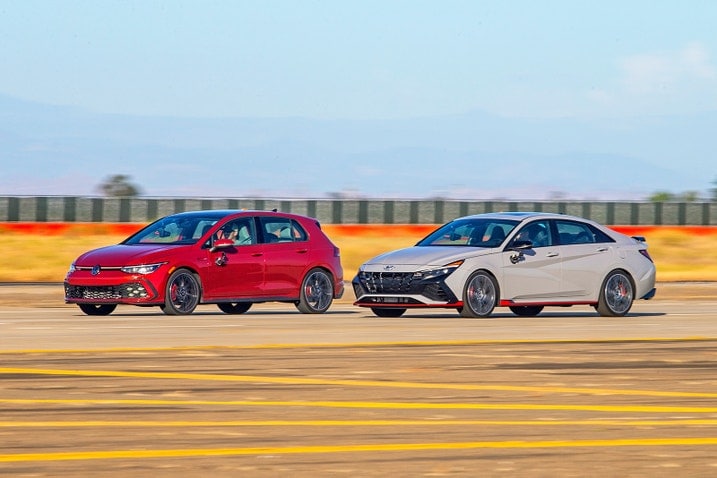
Choose the car that mirrors your mood. Choose the one that turns your commute into a miniature adventure. And when the lights change and the engine comes alive—listen closely. You’ll hear the difference, and you’ll feel the answer before you ever look back.