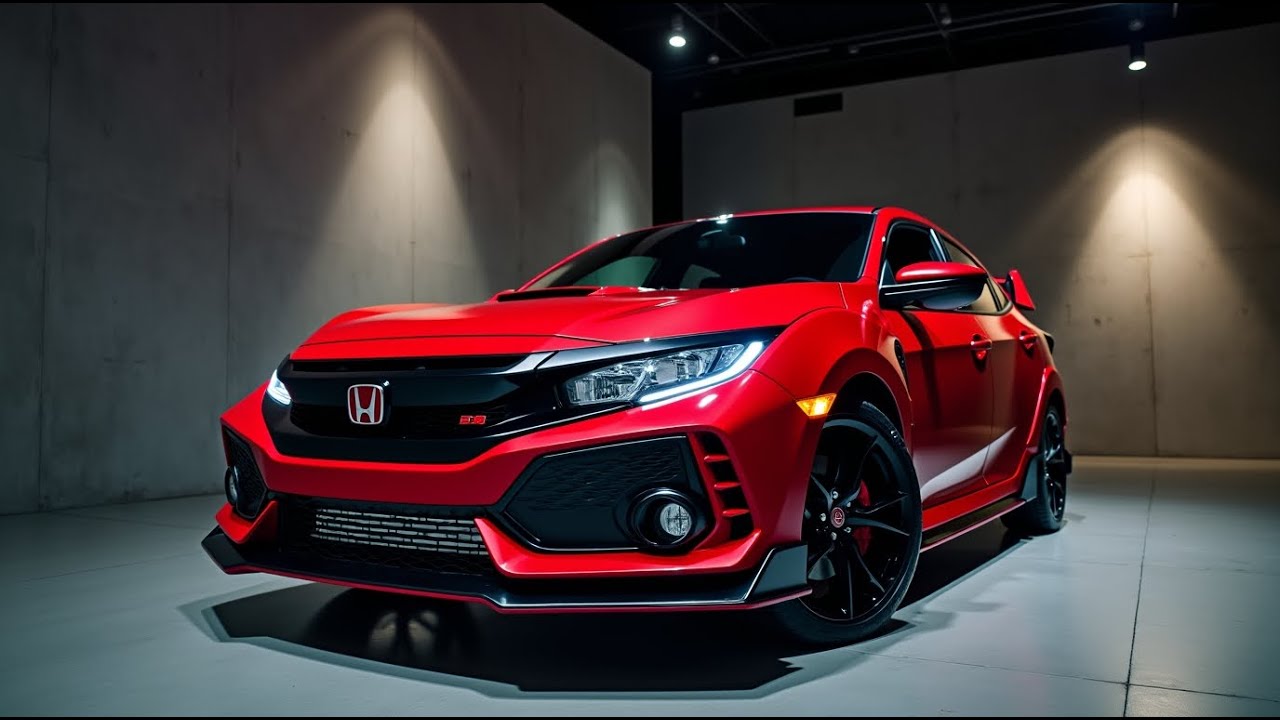
The first thing people notice about the 2026 Honda Civic Type R is also the first thing they doubt: it’s front-wheel drive. That single detail can sound like a limitation—like a footnote to the real story. Yet the moment you drive it with intent, that assumption dissolves. The 2026 Civic Type R doesn’t just chase lap times; it courts them. And the fascination isn’t only about speed. It’s about how confidently the car turns potential into propulsion, how it makes “traction” feel less like physics and more like intuition.
On a track, the Type R behaves like a disciplined athlete with a mischievous streak. You can feel the engineering trying to coax the front end to do more than “front-wheel drive” usually promises. The deeper reason enthusiasts keep returning—again and again—is that this car teaches a lesson about restraint. It insists that grip is not a single ingredient. It’s an orchestra: tires, cooling, geometry, torque delivery, and driver feedback all playing in sync.
Let’s take a comprehensive lap through what makes the 2026 Civic Type R such a compelling track machine, why its FWD layout is less of a compromise than a character, and how the whole experience snaps into focus when the track turns from map to mission.
First Impressions on the Track: The Car That Refuses to Wait
Rolling onto circuit entry, the Civic Type R feels immediate—almost eager. The steering has a weighty, precise texture, not numbness. There’s a subtle sense of compliance before the car tightens up, like it’s warming to your rhythm. The chassis doesn’t act like it needs permission. It simply takes your line and follows through.
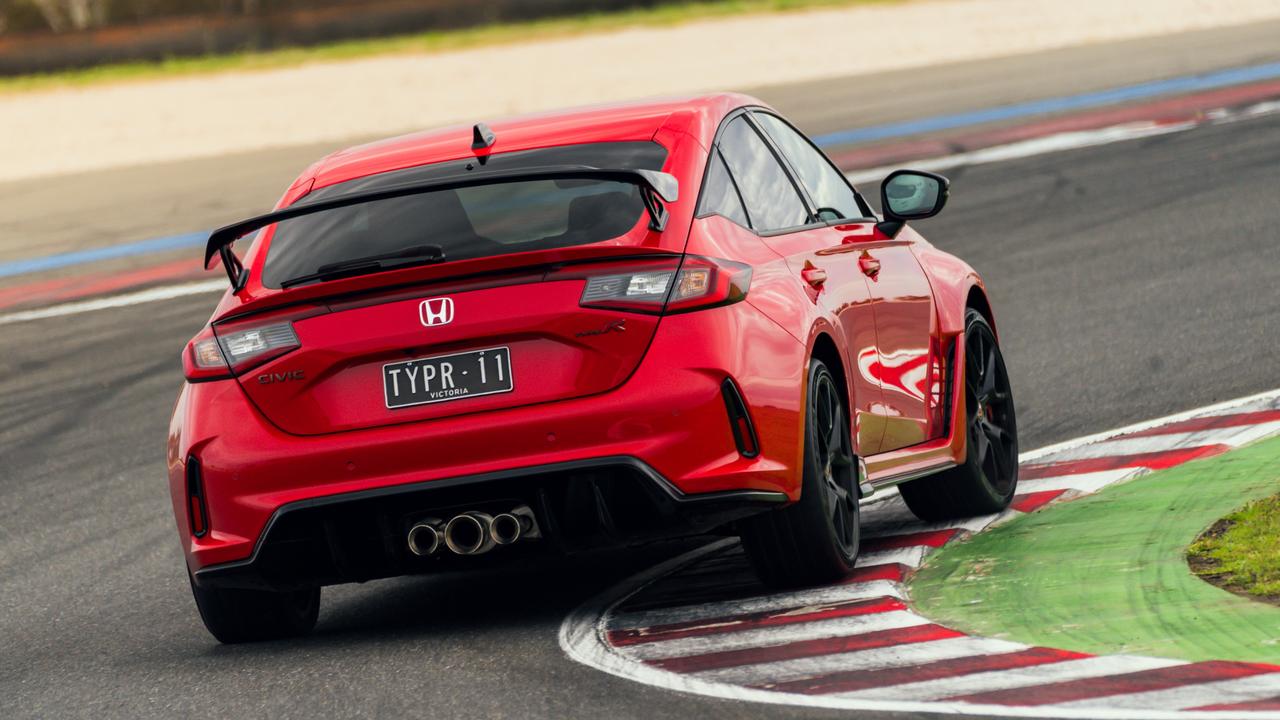
Here’s the common observation: “FWD will understeer.” That’s what people expect, particularly when braking deep into a corner or when acceleration arrives early. But the track reality is more nuanced. The Type R doesn’t deny physics; it renegotiates them. It manages load transfer, keeps the front axle supplied with grip, and avoids the kind of lazy, plowing behavior that gives FWD performance a bad reputation.
And then—without ceremony—the car invites you to rotate. Not wildly, not theatrically. Instead, it offers you a controlled arc where throttle application becomes a steering input. That sensation is addictive. You stop thinking about whether the front tires can handle it. You start thinking about how to make them handle it even better.

Front-Wheel Drive, Reframed: Why the Layout Feels Smarter Than You Expect
The deeper fascination is that front-wheel drive can be brutally effective when the entire system is tuned for it. The Type R’s personality isn’t “keep the front tires alive.” It’s “use the front tires precisely.” That distinction matters.
During cornering, the front axle is tasked with steering, braking recovery, and torque delivery—all at once. Many cars struggle when those jobs overlap. The 2026 Civic Type R, however, feels like it’s designed for the overlap rather than the avoidance. Grip is treated as a spectrum, not an on/off switch. The car’s throttle mapping, traction strategy, and chassis response collectively encourage a progressive approach to power.
There’s also the matter of driver confidence. With FWD, you often feel connected to the direction the car is heading. The steering remains a reliable language, not a suggestion. That means you can refine your inputs earlier. You brake a touch later. You turn in with more conviction. And you exit with a sense of continuity instead of “managing a losing argument.”
In other words, the Type R doesn’t feel like a compromise. It feels like a thesis: that effective engineering can make a layout seem inevitable in hindsight.
Chassis Behavior: Rotation, Stability, and the Art of Staying on the Rails
Track laps are built from transitions. Turn-in to mid-corner becomes a choreography. Mid-corner to exit becomes a negotiation. The Civic Type R handles those transitions with surprising composure.
When you enter a bend, the car responds with a crisp initial bite. As the suspension loads, it doesn’t fall into indecision. Instead, it holds a planted posture that lets you trust the front end. You can feel the chassis working to preserve alignment—preventing that vague, nervous “wandering” some hot hatches exhibit under sustained load.
Mid-corner, the car encourages a smooth arc rather than a frantic scramble. Steering corrections feel earned. The rear end remains calm enough to keep your line intact, even when the road surface becomes patchy or the tire temperatures start to drift toward their ideal window.
On corner exit, the stability is what stands out. You’re not fighting traction systems every second. You’re using them as a safety net while you concentrate on timing—when to unwind steering, when to let the chassis settle, when to demand power without provoking a slide.
Braking and Turn-In: Where Confidence Becomes Speed
Braking is the track’s main punctuation. The Type R writes it cleanly. Pedal feel is firm and predictable, with minimal drama. After repeated stops, the system continues to communicate. That matters because “consistent braking” isn’t only about stopping power—it’s about braking confidence lap after lap.
The most telling moment arrives right before turn-in. You trail off brake pressure, release weight in a deliberate manner, then ask for rotation. In the Civic Type R, that sequence feels coherent. You don’t have to guess whether the car will drift wide or snap back. It’s more like the chassis knows what you’re trying to do and accelerates your intention, rather than resisting it.
And because braking stability underpins everything, this is where the deeper fascination reveals itself: the car makes learning feel efficient. Each lap becomes a refinement rather than a reset.
Power Delivery: Throttle as a Steering Tool
One of the most gratifying traits in the Civic Type R is how the engine responds to throttle changes. It doesn’t just provide acceleration. It provides gradation. That gradation is what allows you to modulate the front axle’s slip behavior without losing direction.
Under hard acceleration, torque arrives with authority. Yet it doesn’t always feel like a blunt instrument. It often feels like a calibrated surge that helps the car move forward rather than simply overwhelm traction. For drivers, this turns throttle application into something closer to instrument control.
You’ll notice it especially through slow-to-medium corners where small inputs have outsized consequences. A fraction more throttle can tighten your exit line. A fraction less can widen it. The car doesn’t punish you for learning—it rewards attention.
Tires, Heat, and the Long-Lap Reality
Many hot hatches are fast for a lap and vague for a session. The Civic Type R aims for session-long credibility. Tire behavior feels readable. Grip appears when you’re in the right operating temperature window, and the transitions aren’t abrupt.
Heat management becomes relevant quickly. Brakes, cooling, and overall thermal steadiness influence consistency. The Type R feels designed to remain focused when the lap time ambition becomes repetitive—when the track begins to feel like a test of endurance rather than novelty.
That endurance is part of why enthusiasts keep gravitating back to this model line. It’s not only about peak numbers. It’s about how reliably those numbers can be approached again and again.
Driver Interface and Feedback: The Car Talks Back
The cockpit experience supports the driving experience rather than distracting from it. Steering feedback is direct. The chassis communicates through the seat and wheel, providing enough information to interpret tire load and traction behavior without turning the drive into guesswork.
Electronic aids also play a role, but they don’t dominate. Instead, they behave like a backstage crew—helpful, present, and mostly invisible unless you exceed the car’s comfort zone. This is important. A track car should allow you to improve, not merely survive.
When the car is in its element, you’ll feel a tight linkage between input and outcome. That linkage becomes part of the pleasure. It’s why the drive feels almost mechanical in its clarity, even though modern systems are everywhere.
Common Criticisms and How the Type R Answers Them
Criticism often starts with the obvious: it’s front-wheel drive, therefore it must be traction-limited. But on track, the limitation isn’t “FWD can’t do it.” The limitation is “FWD needs tuning, tires, and discipline.” The Civic Type R offers all three in a compelling package.
Another concern is whether the car will feel twitchy or demanding. It’s not demanding in an aggressive way. It’s demanding in an educational way. The steering asks for precision. The throttle asks for finesse. And once you comply, the car rewards you with predictability.
Finally, some wonder if a hot hatch can feel truly “serious.” The Type R answers that by behaving like a cohesive system. It’s not chaos wrapped in attitude. It’s purpose expressed through balance.
Why It’s So Easy to Fall for: More Than Lap Times
The fascination of the 2026 Civic Type R isn’t limited to the stopwatch. It’s the emotional rhythm of track driving: braking, turning, and accelerating as a single conversation between car and driver.
There’s also a philosophical appeal. This is a performance car that refuses to hide behind stereotypes. It turns the front-wheel-drive stigma into a talking point. It makes engineering feel tangible—visible in how the car rotates, stabilizes, and propels.
And then there’s the social effect: you can feel the curiosity from other drivers at the pit wall. People glance, compare expectations, and then watch you place the car exactly where you meant to. That moment—when the “impossible” becomes routine—is part of the Type R’s quiet magnetism.
Outro: The FWD Track King That Makes Sense Later
The 2026 Honda Civic Type R earns its reputation not by pretending physics don’t exist, but by mastering how physics can be guided. The steering communicates. The chassis transitions smoothly. The brakes encourage bravery. The throttle invites finesse. Together, these qualities create a track car experience that feels surprisingly coherent.
So yes, it’s front-wheel drive. That’s the surface observation. The deeper truth is that the Type R is engineered to make FWD feel like a strategy, not a compromise. The more time you spend behind the wheel, the less the layout matters—and the more the performance becomes a matter of craft.
In the end, the Civic Type R doesn’t merely chase a faster lap. It builds fascination. And for track drivers, that kind of loyalty isn’t given lightly.