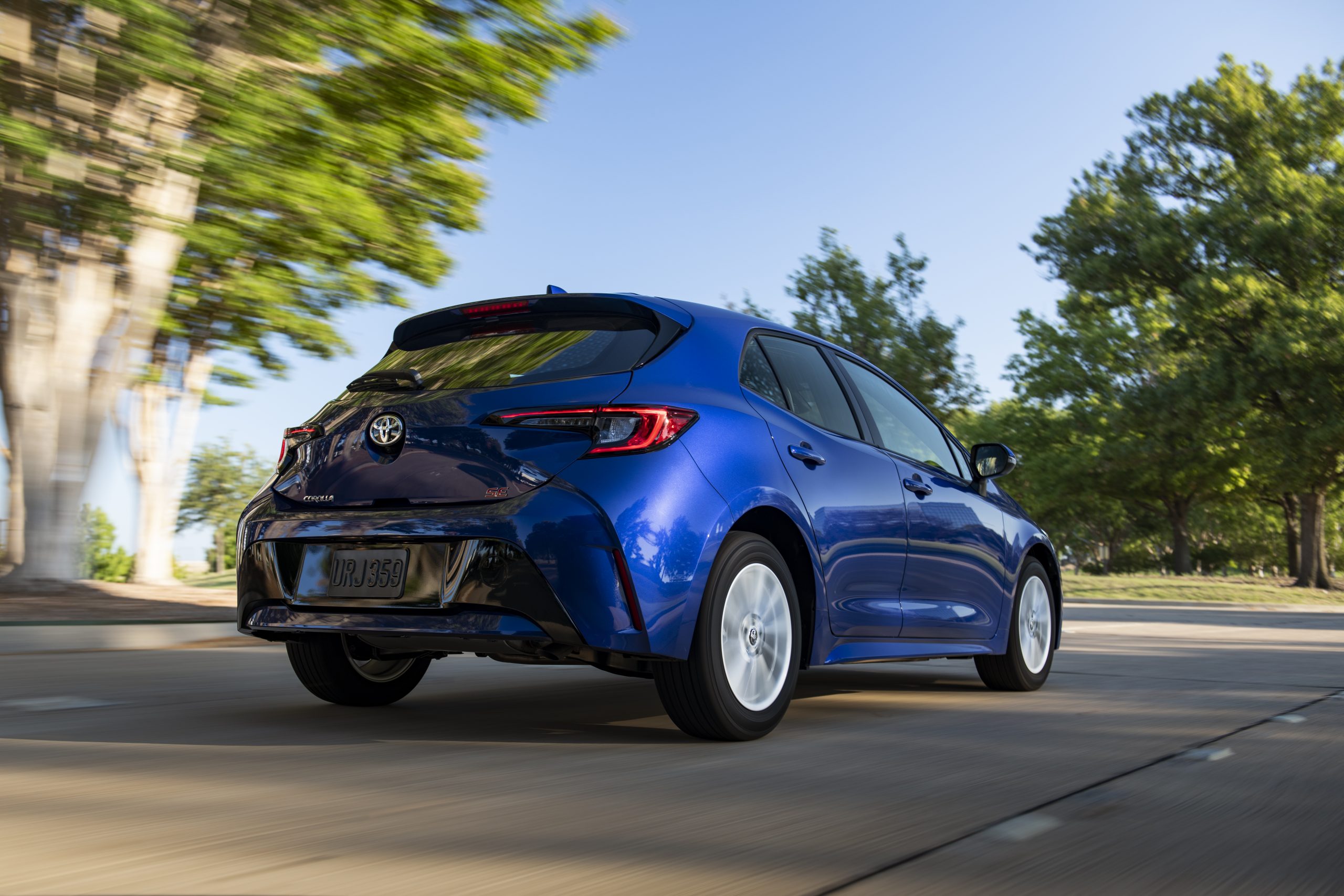
There’s a particular kind of thrill that arrives when safety stops feeling like a checkbox and starts feeling like a companion. Not a nagging, beeping guardian. Something quieter. Something more perceptive. That’s the mood Toyota engineers aim for with Toyota Safety Sense 3.0, and it’s exactly the lens through which the Toyota Corolla Hatch becomes more than an affordable hatchback—it becomes a rolling argument for a calmer drive.
Before you even press the accelerator, the Corolla Hatch invites you to reconsider what “confidence” can mean. It’s not only about avoiding trouble. It’s about anticipating it—then guiding you with a system that feels less like technology and more like an informed second set of eyes. And once you notice that shift, curiosity takes over: What exactly does Safety Sense 3.0 do differently? How does it behave in real traffic, in real weather, and in those everyday moments when attention is stretched thin?
A New Baseline: What Safety Sense 3.0 Promises
Safety Sense 3.0’s promise is deceptively simple: help you perceive danger earlier, interpret it more accurately, and respond more decisively. But the deeper truth is more interesting. This generation doesn’t just react—it anticipates. That changes the emotional temperature of the drive. Instead of waiting for the moment a driver must “catch up,” the vehicle nudges the timeline forward.
In practice, this means an ecosystem built around sensing, decision-making, and assistance. Short sentences matter here because they reflect how the system works: detect, classify, assist. Then it repeats—again and again—like an ever-vigilant metronome tuned to the road.
Pre-Collision System: The Moment Confidence Becomes Concrete
At the heart of Toyota’s approach is the Pre-Collision System. It aims to recognize potential collisions and provide warnings, then support braking if needed. The most striking part isn’t just the existence of the feature—it’s the sense that the Corolla Hatch is actively monitoring your surroundings in a more nuanced way.
Think of it as risk translation. Fast-moving traffic? A sudden vehicle ahead? Brake lights flashing a little too late? The system tries to make those cues legible before your instincts fully catch up. The payoff is subtle: fewer split-second surprises, more time to choose.
Of course, it isn’t magic. Physics still rules the universe. But the value lies in the margin it tries to create. That margin is where confidence lives.

Lane Tracing Assist: When the Road Feels Less Chaotic
Driving is often less about speed and more about alignment—both physical and mental. Lane Tracing Assist contributes to both. It helps the Corolla Hatch stay in its lane by steering assistance that responds to lane markings.
Here’s where perspective shifts. The assistance doesn’t feel like a takeover. It feels like a steadying hand hovering near the steering wheel. The vehicle becomes a kind of procedural partner: not dictating, but correcting drift.
In longer stretches, especially when fatigue sneaks in like a slow tide, that steadiness becomes oddly reassuring. Short corrections that prevent small wanderings can add up to a calmer driving rhythm. And once the cabin feels less tense, you start noticing more—traffic patterns, gaps forming, the choreography of vehicles around you.
Lane Departure Alert: A Gentle Alarm, Not a Panic Siren
Lane Departure Alert is designed to warn you if the Corolla Hatch detects a lane departure. What matters is the tone of the warning. Effective driver assistance isn’t about startling; it’s about communicating. The goal is to help you regain intention quickly—especially during momentary inattention.
That’s where its usefulness becomes most personal. There are days when your focus is laser-sharp. Then there are days when you’re thinking about three things at once: the navigation route, the next errand, the conversation you’re half-having with the driver behind you. The Lane Departure Alert is the feature that taps your shoulder instead of shoving you.
It doesn’t demand perfection. It supports correction.
Dynamic Radar Cruise Control: The Art of Smoother Following
When roads stretch into monotony, driving can feel like a repetitive negotiation—pedal rhythm, spacing, brake light anticipation. Dynamic Radar Cruise Control helps streamline that negotiation by adjusting speed to maintain a following distance.
Here’s the interesting part: smoother following can change how you experience traffic. Instead of constantly calibrating distance, you’re allowed to observe. You’re less focused on micro-adjustments and more focused on the flow of movement.
Long sentences often describe traffic, because traffic itself is continuous. But the underlying system works in quick phases: measure distance, predict closure rate, regulate speed. That’s why it can feel composed even when traffic isn’t.
Automatic High Beams: Visibility Without the Judgment
Night driving can be equal parts exciting and exhausting. Automatic High Beams aim to help with that by switching between high and low beams depending on surrounding traffic conditions. The benefit isn’t only illumination—it’s also social etiquette.
Few things feel as awkward as realizing you’ve been dazzling someone without meaning to. This feature reduces that possibility, allowing the road ahead to remain readable while respecting other drivers. It’s an almost invisible courtesy, and those are the best kind.
When light management improves, your confidence improves too. Vision isn’t just sensory; it’s strategic. You see farther. You react sooner. Your decisions feel less like guesses.
Road Sign Assist and Proactive Awareness
Road Sign Assist supports driver awareness by helping interpret certain road signs. It’s the kind of feature you might not notice at first, because it doesn’t demand attention like a flashy gadget. It just quietly reinforces what your eyes and memory are already trying to do.
This is where curiosity grows. When a system helps you stay informed, your brain relaxes around the edges. You’re not as burdened by constant scanning for details. That relaxation doesn’t make you careless—it makes you more efficient.
How It Feels in the Real World: Ordinary Days, Elevated Safety
The most convincing safety technology isn’t proven in dramatic stunts. It’s proven in errands, commutes, and the everyday in-between moments: pulling out at a busy intersection, merging during a lull that might end, navigating glare and drizzle, riding the line between “too fast” and “just right.”
The Corolla Hatch’s Safety Sense 3.0 approach encourages a different driving mindset. It nudges you toward early detection, smoother reactions, and better lane discipline. That changes the narrative of your drive. Instead of “I hope I make it,” you get “I’m supported.”
And that subtle language shift matters.

Limitations and Responsible Expectations
To keep expectations crisp, it’s worth remembering that driver assistance systems are not substitutes for driver judgment. Weather, road conditions, lane visibility, sensor limitations, and unusual driving scenarios can affect performance.
But that isn’t a reason to dismiss Safety Sense 3.0. It’s a reason to appreciate it appropriately. The best systems don’t eliminate responsibility; they upgrade it—turning attention into something more effective.
Think of it as a safety net woven from perception and response. You still jump, you still choose the direction, but the net tightens the moment gravity threatens.
Final Thoughts: A Corolla Hatch That Rewrites the Meaning of Confidence
The Toyota Corolla Hatch with Toyota Safety Sense 3.0 doesn’t ask drivers to change who they are. It invites them to change how they perceive the drive. The road feels less like an unpredictable argument and more like a conversation—one where the vehicle listens, understands, and assists.
Once you experience that shift, it’s hard to go back to the old baseline. Safety stops being a distant promise and starts behaving like a near-term partner. Not perfect. Not theatrical. Just intelligently present.
And that’s the most enticing outcome of all: curiosity becomes commitment, because confidence—real confidence—turns every commute into something you can look forward to.