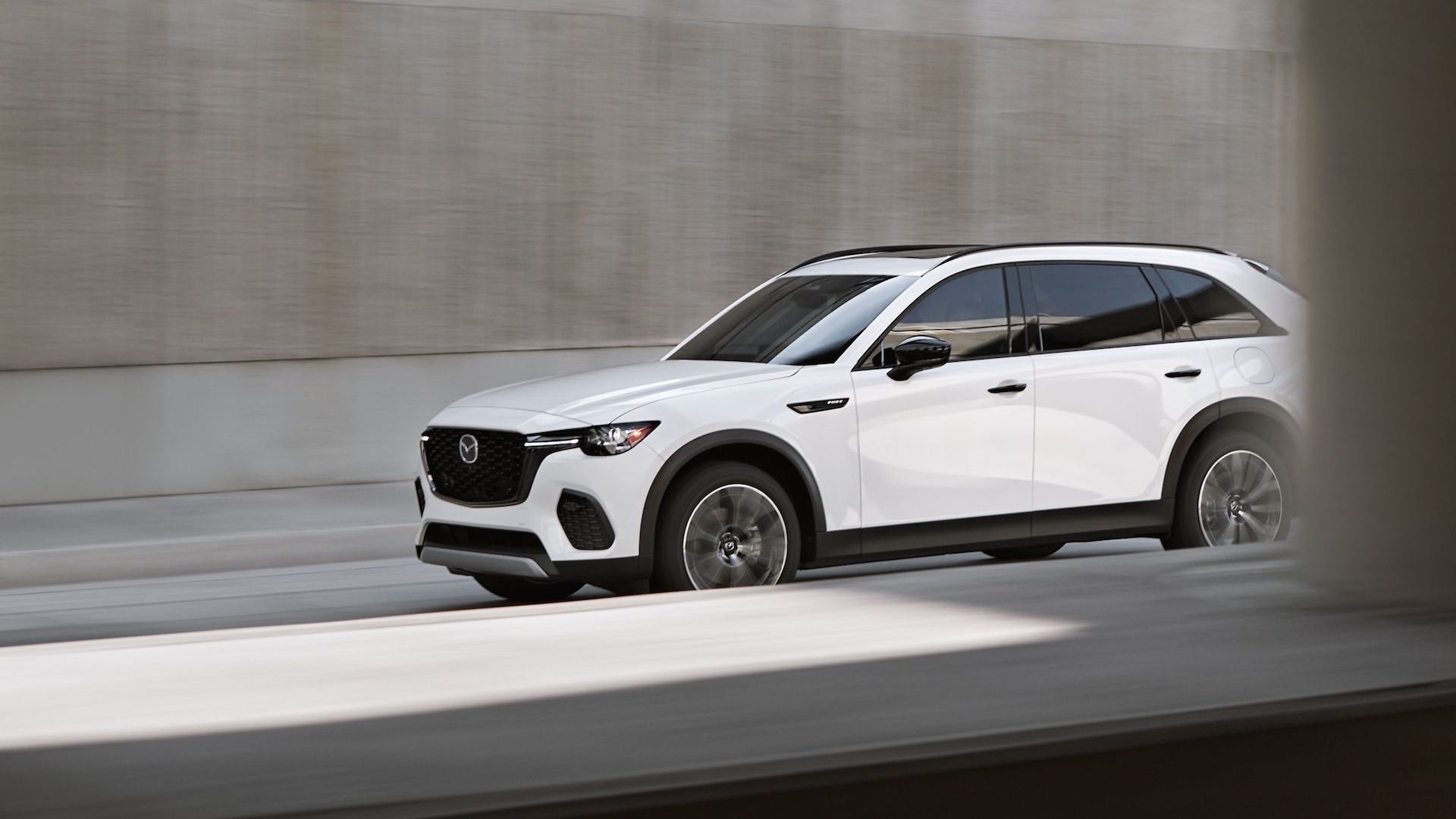
There’s a particular kind of automotive anticipation that doesn’t arrive all at once. It starts as a glance—an eyebrow raised at the silhouette, a pause when the headlights catch the road just right, a faint sense that something has been engineered with intention rather than mere compliance. That is the mood surrounding the Mazda CX-70, a new two-row performance SUV that refuses to behave like a typical “just get me there” crossover. The first impression is visual, yes. But the deeper fascination comes from how the CX-70 seems to balance opposites: poise and energy, restraint and swagger, comfort and controlled urgency.
And for many shoppers, a common observation emerges quickly: “Is it truly performance, or just a sporty costume?” The question is sensible. Modern SUVs often advertise confidence while delivering something closer to compromise. Yet with the CX-70, the answer is more nuanced—because “performance” here isn’t only about acceleration. It’s also about how the vehicle feels when you steer, how it responds to imperfect pavement, and how it turns everyday driving into a ritual of small satisfactions.
Design That Reads Like a Statement, Not a Template
The CX-70’s appearance does more than decorate. It communicates. Its stance is athletic without being theatrical, and its proportions suggest motion even when the vehicle is standing still. Mazda’s designers seem to treat the bodywork as a sequence of decisions: where the light should break, where the eye should travel, and where the vehicle should look grounded.
What makes the design particularly compelling is how it balances aerodynamic calm with expressive detail. The result is a front end that feels purposeful rather than aggressive, and a rear profile that carries a subtle sense of momentum. This is the kind of styling that tends to grow on people. At first it’s striking. Then it becomes familiar—almost comforting—because it feels coherent.
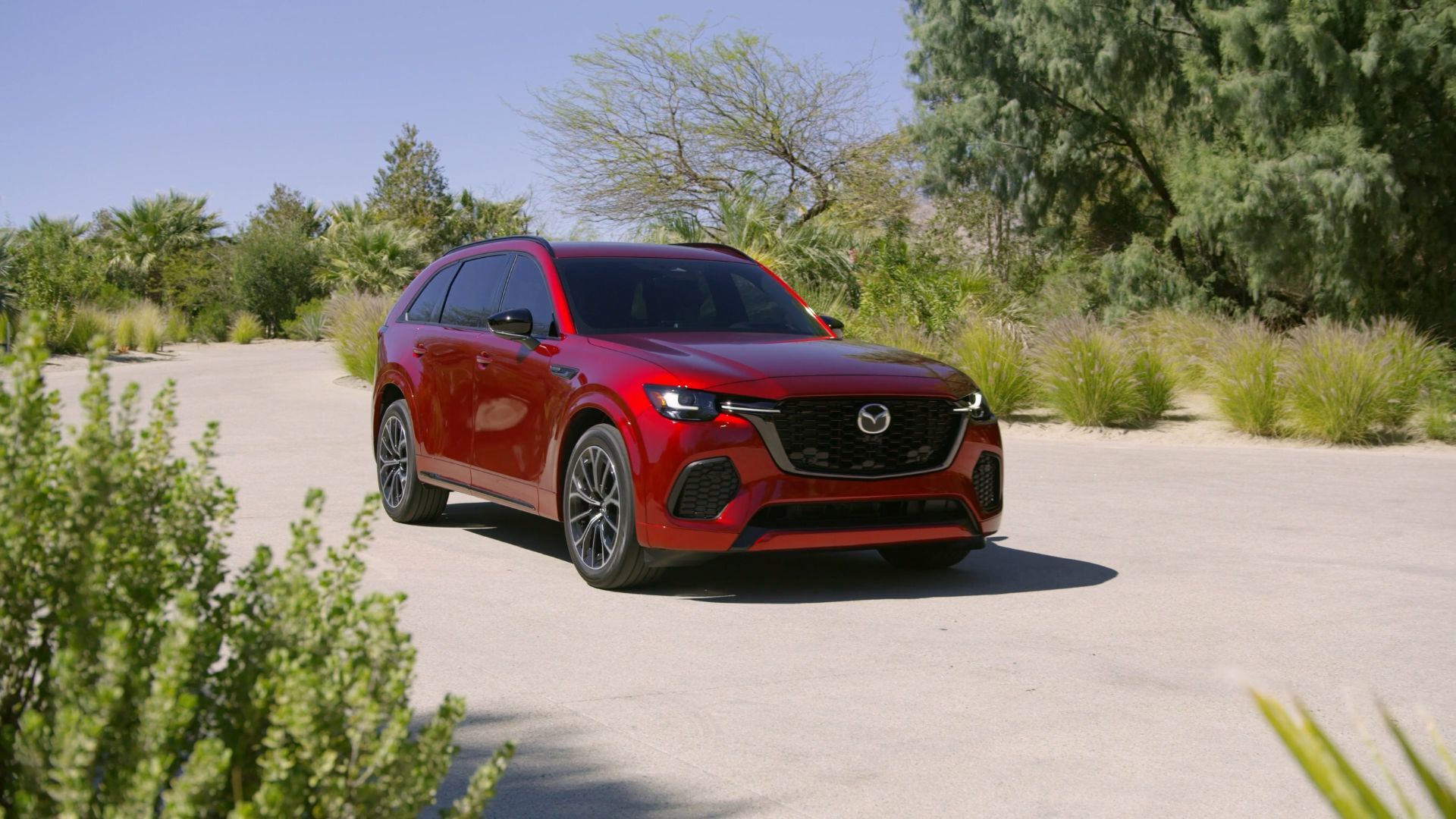
That “growth over time” is an important clue to why the CX-70 draws attention. Fascination is often the product of harmony—form and function quietly aligned.
A Two-Row Layout With Purposeful Space
Two-row SUVs can be tricky. Some feel like a compromise dressed as a solution—adequate for the front seats, awkward behind, and vague when it comes to cargo. The CX-70 addresses this concern with a layout that respects real life: commuting, road trips, errands, and the occasional need for flexible packing.
The interior’s architecture aims for clarity. Controls are arranged so you don’t have to hunt for them. Visibility is treated as a feature, not an afterthought. Even when you’re driving briskly, the cabin encourages you to stay composed. And that matters, because performance SUVs should not demand constant attention to remain manageable.
Space also shapes comfort. It’s the difference between “this works” and “I genuinely enjoy being here.” When the two-row configuration feels intentional, it starts to influence your driving mood—turning routine routes into short adventures.
Performance That Feels Tuned, Not Just Advertised
The most common skepticism around a new SUV is straightforward: “Does it actually deliver dynamic behavior?” With the CX-70, performance is less about raw bravado and more about calibration—how power is delivered, how the SUV maintains composure, and how it translates driver input into movement.
Instead of treating performance as a one-dimensional metric, Mazda gives it a multi-sensory quality. Acceleration should feel linear and confident. Throttle response should be predictable. Steering should communicate traction and road texture rather than masking it with artificial stiffness.
This is where the deeper fascination begins. Many vehicles can move quickly in a straight line. Fewer create the sensation of control—especially during transitions: merging, passing, entering corners, or lifting on uneven surfaces.
Performance, in this context, becomes a kind of trust. You start driving faster not because you’re trying to prove something, but because the SUV makes you feel capable.
Turbo Confidence and the Art of Responsive Power
Turbocharging can either feel like a blunt instrument or a refined tool. The CX-70’s promise leans toward the latter—power that arrives when it’s needed, without the dramatic lag that can unsettle a driver. The goal is to make everyday motion feel effortless: climbing grades, accelerating out of tight turns, or maintaining speed on the highway without straining the engine.
But there’s more to it than power delivery. A well-designed turbo system is also about thermal management, efficiency, and the ability to keep performance consistent as conditions change. That’s why “engine specs” don’t tell the whole story. The real test is how the vehicle behaves after several miles of spirited driving.
When turbo confidence feels smooth, it creates a psychological effect: your inputs feel more “connected.” You can sense how the vehicle is interpreting your intent.
Handling, Ride Quality, and the Balance of Attitude
The best performance SUVs don’t chase a single sensation. They know how to blend athleticism with comfort. The CX-70 aims for that equilibrium, where the suspension handles imperfections without erasing the road’s character. It should remain stable through corners while still offering a supple ride over broken pavement.
There’s an uncommon satisfaction in a vehicle that doesn’t punish you for being human. Not every driver hits a pothole at the perfect angle, not every road is freshly resurfaced, and not every day is perfectly calm. A tuned suspension absorbs the chaos, letting you continue steering with confidence rather than vigilance.
In other words: performance isn’t only about speed. It’s also about how gracefully the vehicle negotiates reality.
Technology That Enhances, Rather Than Intrudes
A modern SUV can either make driving simpler—or clutter it. Mazda’s approach typically leans toward clarity and usability. The CX-70’s technology ecosystem is designed to support navigation, connectivity, and driver information without turning every trip into a distraction festival.
When screens and interfaces are well-integrated, they disappear into the experience. You notice them when you need them, and you don’t feel them when you don’t. That’s a subtle design philosophy with a major payoff: attention returns to the road.

Fuel Economy, Practicality, and the Long View
Performance SUVs often become a balancing act between excitement and practicality. Buyers want spirited driving, but they also want to avoid constant fuel anxiety. The CX-70’s engineering direction suggests an attempt to be “fun” without being wasteful—an increasingly important expectation as drivers look beyond weekend thrills.
Practicality also includes everyday usability: storage arrangements, seat comfort, visibility, and the ergonomics of entry and exit. A two-row SUV wins when it feels friendly to daily routines. It shouldn’t become a chore to live with.
That’s why the fascination with the CX-70 isn’t limited to enthusiasts. Many drivers are discovering that premium performance can be livable.
The Deeper Reason the CX-70 Captivates
At a glance, the Mazda CX-70 looks like an SUV designed to impress. But the enduring interest comes from something more elusive: the sense that the vehicle was composed with discipline. It doesn’t feel like a collection of features. It feels like a unified experience.
People are fascinated because the CX-70 encourages them to drive differently. It makes routine routes feel more deliberate. It turns steering into communication. It makes the interior feel like a calm command center—even when the engine is ready to surge.
Sometimes, a new vehicle becomes a talking point. Other times, it becomes a habit. The CX-70 seems positioned for both, and that’s what makes it hard to ignore.
Conclusion: A Two-Row SUV Built for Modern Enthusiasm
The Mazda CX-70 arrives with a compelling thesis: performance doesn’t need to be loud to be real. It can be controlled, responsive, and sensibly integrated into everyday life. As a new two-row performance SUV, it challenges the expectation that practicality must dull the driving experience.
Whether the CX-70 becomes your next daily driver or your new favorite escape route, one thing is clear—this SUV is designed to earn attention, not merely borrow it. And once that connection clicks, the fascination stops being a first impression. It becomes something you look forward to, mile after mile.