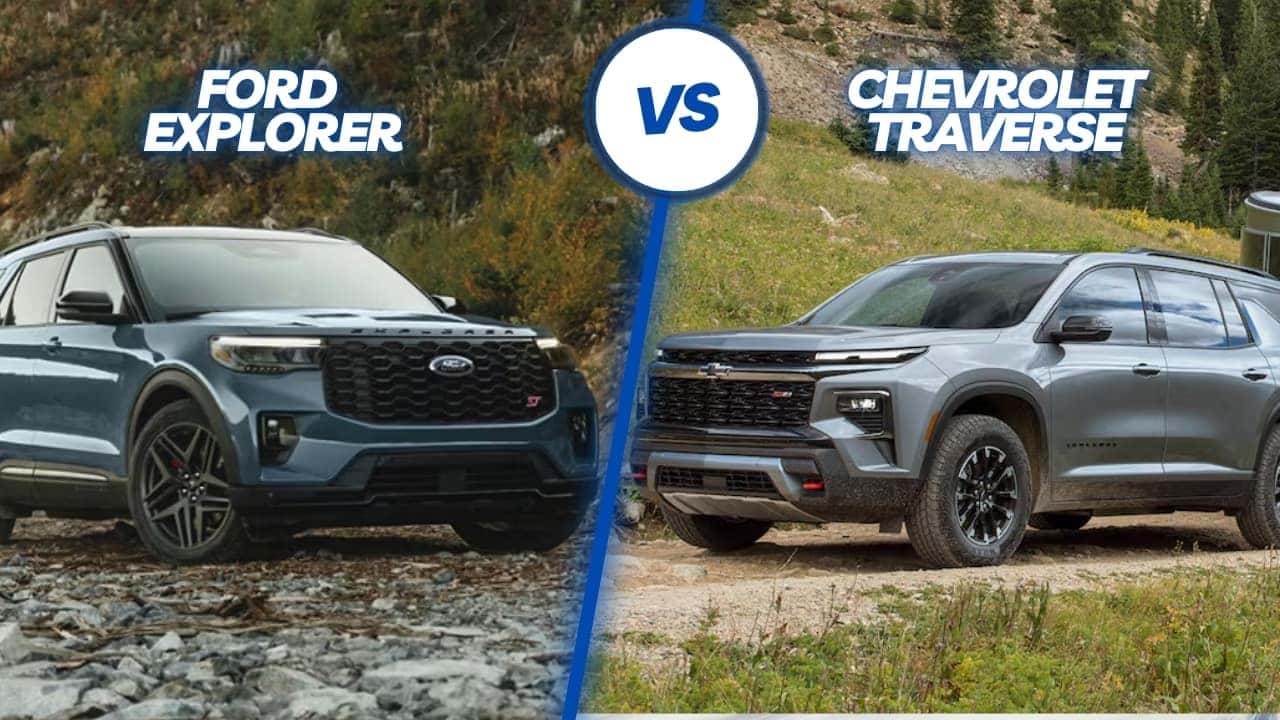
There’s a particular kind of curiosity that arrives with the word “three-row.” It’s not merely about having enough seats for the whole crew. It’s about the promise of room—room for weekend detours, for school schedules, for the quiet drama of family life packed into a single vehicle. In the American market, that curiosity often circles two names: the Ford Explorer and the Chevrolet Traverse. Both are built to play the role of family hauler, yet each approaches the job with a distinct personality. And that difference—subtle at first, then increasingly vivid—helps explain why drivers keep comparing them.
One common observation surfaces early: the Explorer and the Traverse look like they’re aiming at the same customer. Same general mission, same market segment, same need for practicality. But the deeper fascination begins when you notice what each vehicle chooses to prioritize. It’s not just horsepower and cargo space. It’s the way each SUV calibrates comfort, organizes everyday utility, and tries to satisfy the emotional logic behind buying a vehicle in the first place.
Setting the Stage: Two American Three-Row Philosophies
On paper, the Explorer and Traverse share a familiar framework: they are midsize SUVs designed for families, commuters, and anyone who wants flexibility without stepping into the stratosphere of luxury pricing. Yet “midsize” can still conceal substantial differences in how a vehicle feels from the driver’s seat.
The Ford Explorer often reads as more dynamic—its stance and driving demeanor suggest a SUV that wants to be slightly more than transportation. It tends to appeal to drivers who enjoy motion, who like steering response, and who view the commute as a prelude rather than an interruption. Chevrolet’s Traverse, by contrast, commonly feels like a well-orchestrated living space on wheels—focused on ease, predictability, and a smooth rhythm that suits long drives and busy households.
When shoppers compare them, they usually begin with the obvious similarities. Then the real question emerges: which kind of “family vehicle” fits your household’s tempo?

Design and Presence: The First Impression Matters
Before anyone examines trims, specifications, or towing figures, the body language of each SUV starts doing its work. The Explorer typically projects an alert, sculpted presence. Its design language often feels purposeful—like it’s built to look capable even when parked in a suburban driveway.
The Traverse leans into a more traditional family-SUV gravity. It’s designed to feel substantial and friendly, with a cabin layout that signals practicality. That kind of visual reassurance matters. For families, trust is built through repetition: how a vehicle looks at rest, how it handles daily errands, and how it invites passengers to settle in.
It’s a small thing, but people notice. A vehicle that appears “ready” can influence expectations about comfort, safety, and road manners.
Cabin Comfort: Where the Comparison Gets Real
Step inside and the conversation shifts from exterior styling to interior atmosphere. In three-row SUVs, the cabin is where the deal either solidifies or starts to drift away.
Ford Explorer buyers often look for a blend of supportive seating and a driver-oriented layout that makes navigation through daily life feel frictionless. The cabin can feel more “commanding,” especially for drivers who like a cockpit-like environment.
Chevrolet Traverse, meanwhile, tends to emphasize spaciousness and an easy-going arrangement. The goal is simple: create a layout where adults can settle comfortably, children can manage the chaos, and everyone can access their essentials without staging a small expedition.
Even if two vehicles have similar dimensions, the lived experience changes with seat geometry, headroom, and the way controls are placed. That’s why comparisons don’t end at dimensions. They end when passengers actually sit down.
Second-Row Space and Third-Row Access
A common observation during test drives is that second-row comfort can feel similar—until you try the third row. The third row is where the truth emerges, where cleverness and packaging collide.
The Explorer’s approach typically highlights thoughtful movement—an emphasis on how passengers enter and exit, and how the third row accommodates adults for shorter stints. Some drivers appreciate that the Explorer can feel like a legitimate multi-purpose vehicle, not just a “someday when needed” option.
The Traverse often emphasizes the ease of living in the back seats. Access to the third row and the overall comfort for rear passengers can feel designed for frequent use rather than occasional use. When families treat the third row as part of daily reality—sports practices, crowded weekends, carpool carpentry—this focus becomes more than a selling point.
There’s a deeper fascination here, too. It’s not only about comfort. It’s about dignity—how a vehicle helps people move through the day with fewer compromises.
Infotainment and Everyday Ergonomics
Modern SUVs are judged in the language of screens and interfaces, but the real test is whether technology reduces stress. The Explorer and Traverse both offer systems meant to keep drivers oriented and passengers entertained. Yet the day-to-day difference lies in responsiveness, clarity, and how intuitive the layout feels after the novelty wears off.
In practical terms, a good infotainment experience doesn’t demand attention. It simply supports it. That matters during navigation-heavy commutes, when kids are negotiating audio choices, or when multiple phones need to pair quickly.
Chevrolet’s cabin experience often feels tailored for smooth habit formation—fewer steps to accomplish the mundane. Ford’s system presentation can feel more driver-centered, sometimes encouraging a more engaged interaction. Neither approach is objectively “better.” Both are strategies for managing the same real-world pressure: too much to do, not enough time.
Powertrains, Driving Character, and Fuel-Realism
Under the hood, the Explorer and Traverse represent different flavors of American engineering priorities. Shoppers frequently notice that acceleration and refinement can feel distinct even when power ratings appear comparable across trims.
The Explorer is often perceived as more willing to adjust its character—feeling composed in everyday driving, yet ready for stronger maneuvers when the moment arrives. That impression becomes vivid during highway merges, passing opportunities, and the subtle dance of keeping momentum without feeling rushed.
The Traverse tends to aim for steady confidence—smoothness over theatrics. Its driving feel often supports long drives, frequent errands, and family-paced schedules. It’s not trying to be a sports car. It’s trying to make travel feel effortless.
Then comes the question many drivers don’t admit they’re thinking: which SUV feels better when the tank is not full and the route is long? Fuel-realism—the gap between brochure promises and actual driving—can influence long-term satisfaction more than enthusiasts expect.
Towing, Utility, and the “Life Happens” Checklist
Utility is where a three-row SUV earns its keep. Towing needs can be modest—maybe a small trailer for yard work—or frequent, like hauling gear for weekend routines.
Both the Explorer and Traverse are engineered to support towing and hauling tasks, but the “best” choice depends on your habits. Some families tow occasionally and prioritize ride comfort and cabin space. Others tow more regularly and care deeply about stability under load, brake feel, and predictability.
Consider also how cargo space behaves across real scenarios: strollers folded tight, sports equipment stacked, groceries layered without becoming a fragile Jenga tower. The best SUVs make daily loading feel like a choreographed routine rather than a negotiation.
Safety, Confidence, and the Quiet Psychology of Protection
For families, safety isn’t an accessory—it’s the baseline expectation. Both models typically offer modern driver-assistance features designed to reduce the likelihood of mistakes and improve awareness.
But there’s a psychological layer that rarely gets discussed. Drivers don’t just want safety systems; they want reassurance. The subtle calibration of sensors, alert timing, and lane-keeping behavior can affect how relaxed a driver feels. In heavy traffic, that matters more than raw feature lists.
When shoppers say, “It feels confident,” they’re often describing the summed effect of visibility, ergonomics, and how safety technology integrates into the driving rhythm.
Ownership Experience: The Long Game
Fascination turns into conviction when the vehicle remains agreeable beyond the test drive. Maintenance costs, service accessibility, warranty coverage, and day-to-day reliability all influence the long-term story.
Even if two SUVs perform similarly in the first year, the long game can diverge. Drivers remember how easy it was to handle repairs, how straightforward scheduling felt, and whether the vehicle continued to feel composed after seasons of use.
That’s why the Explorer vs Traverse debate often feels more personal over time. It stops being about comparisons and becomes about fit.
Which One Wins for Whom?
If your household values a more engaging driving demeanor, a driver-forward cabin feel, and a sense of purposeful motion, the Ford Explorer often resonates strongly. It can feel like a vehicle that encourages spirited practicality—an SUV that doesn’t merely move through the day, but participates in it.
If your household prioritizes smooth comfort, spacious family living, and an environment designed for frequent third-row use, the Chevrolet Traverse frequently stands out. It can feel like an organized, comfortable “home base” that makes everyday logistics simpler.
In the end, the decision isn’t just about specs. It’s about which philosophy matches your reality: the rhythm of your commutes, the frequency of third-row passengers, and the kind of calm you want when life gets busy.
Final Thoughts: The Real Reason the Comparison Endures
The Explorer and Traverse attract the same kind of shopper, but they serve that shopper in different emotional dialects. One tends to feel lively and driver-involved. The other tends to feel soothing and family-first. And that’s why the American three-row battle keeps returning—because families aren’t choosing an SUV. They’re choosing a daily companion for a thousand small moments.
Whether you lean toward the Explorer’s energetic presence or the Traverse’s easy-going comfort, the best choice is the one that reduces friction in your life. That is the hidden metric behind every test drive: not which vehicle looks better, but which one makes the next trip feel less complicated.