Ever looked at your car keys and wondered how much those little metal teeth really cost over time? Picture it: a brand-new EV rolling off the charging dock, or a familiar gas car humming at the pump. Now set a timer for five years. Not five years on a showroom poster—five years in the real world, where tariffs wobble, electricity prices fluctuate, repairs arrive uninvited, and miles quietly accumulate like interest.
Here’s the playful challenge: choose the vehicle you’d swear will be cheaper, then try to guess how the numbers will actually land after five years. Most people get the story wrong because they focus on purchase price and forget the long tail—fuel, maintenance, insurance nuances, and depreciation. Let’s untangle the comparison: EV vs Gas Car—specifically, a 5-year ownership cost comparison.
1) The Big Picture: What “Ownership Cost” Really Means
Ownership cost is the sum of everything you pay to keep the vehicle operational and roadworthy. It’s more than fuel and more than monthly payments. Think of it like the total lifecycle “drag” on your wallet: energy or gasoline, routine servicing, unexpected repairs, registration fees, insurance premiums, and depreciation. Depreciation is the stealth character in the plot—quiet, persistent, and rarely discussed with the drama it deserves.
To make this comparison meaningful, we need a consistent baseline: assume similar purchase price tiers, similar annual mileage, and similar vehicle size/class. From there, the math turns into a series of “small” line items that don’t look impressive individually—until they’re stacked like misfit puzzle pieces into a full five-year portrait.
2) Fuel vs Electricity: The Cost Per Mile Showdown
Fuel is usually the first category people mention, and for good reason. Gasoline costs fluctuate with oil markets and geopolitical weather. Electricity costs can be steadier in many regions, but rates vary based on time-of-use plans, charging habits, and whether you charge at home or rely on public stations.
Gas car energy cost is usually easy to approximate: miles traveled divided by your real-world MPG, then multiplied by the current price of gasoline. But “easy to approximate” doesn’t always mean “easy to control,” because driving patterns and traffic can push MPG downward quickly.
EV energy cost depends on efficiency (how many kWh per mile), plus your electricity rate (especially if you use off-peak charging). EVs also tend to recover energy during deceleration via regenerative braking, which can slightly improve real-world efficiency in stop-and-go commuting.
So which one wins? In many scenarios, EVs often deliver a lower cost per mile, particularly when charged at home on favorable rates. Yet the plot twist is that public fast charging can narrow or even erase that advantage. If your routine depends heavily on expensive charging, the EV’s savings can get slippery.
3) Charging Setup vs Pump Convenience
Charging isn’t just an expense; it’s an infrastructure decision. With an EV, you may need home charging equipment—either a Level 2 charger or at least the right outlet configuration. That’s a one-time cost, but it behaves like a lever: install once, then use daily.
If home charging is available and priced reasonably, the EV becomes a cost-optimized commuter. If home charging is limited—say, you park on the street or in a shared garage—you might rely on public chargers. That’s when your charging plan can morph into a budgeting puzzle: session-by-session fees, varying rates, membership requirements, and occasional “idle time” that adds invisible cost.
Gas cars, by contrast, are brutally straightforward. You drive to a station, pay at the pump, and move on. Convenience is a nontrivial value, even if it isn’t measured in dollars alone.
4) Maintenance: The Quiet Advantage (Often) and the Surprises
Maintenance is where EVs frequently shine, thanks to fewer moving parts. No oil changes, no spark plugs, fewer fluids, and less wear-and-tear on the drivetrain compared to a conventional internal combustion engine. Brake systems can also last longer because regenerative braking reduces friction brake usage.
But “fewer moving parts” doesn’t mean “no costs.” EVs have their own periodic needs: tire wear (often similar to gas cars depending on alignment and driving style), cabin air filters, brake inspections, coolant checks, and—eventually—battery-related service or warranty-driven visits. Batteries are engineered for long life, yet the possibility of replacement is part of the ownership calculus, especially outside warranty windows.
Gas cars, on the other hand, can accumulate maintenance expenses that seem minor in isolation but multiply over five years: oil changes, air filters, transmission fluid services (depending on the manufacturer), belt and hose wear, and potential emissions system repairs. Some repairs are routine. Others are expensive surprises.
When you model five-year costs, consider not only average maintenance but variability. EV maintenance tends to be more predictable. Gas maintenance can be more chaotic—like a weather system that doesn’t care about your plans.
5) Insurance and Registration: The Hidden Line Items
Insurance can differ significantly between EVs and gas vehicles. Factors include vehicle repair costs, availability of parts, battery replacement implications, and theft trends. EVs can carry higher premiums in some markets due to specialized components and repair complexity.
Registration and taxes also vary by location. Some regions offer incentives or lower fees for EVs, while others maintain parity or apply surcharges. A five-year comparison should treat these as variables, not assumptions, because government policy can reshape the financial story faster than your driving habits can.
In other words: even if fuel and maintenance tilt in favor of an EV, insurance can quietly counterbalance that benefit.
6) Depreciation: The Long Game Winner
Depreciation is often the largest component of ownership cost after the vehicle is driven off the lot. For gas cars, depreciation tends to follow established patterns: new cars lose value quickly, then the curve stabilizes. For EVs, depreciation can be more sensitive to technology cadence, battery performance perceptions, charging ecosystem maturation, and changes in incentives.
Battery degradation narratives also matter—whether based on actual testing or on public sentiment. Even if real battery health remains strong, market perceptions can influence resale prices. Another twist: EV prices can swing when new models arrive or when production volumes change.
To compare fairly, estimate resale value at the end of five years using realistic assumptions for your region and mileage. A vehicle that’s cheap to run but expensive to resell poorly can lose its “total savings” edge.
7) Reliability, Downtime, and the “Life Friction” Factor
Cost isn’t only money. Downtime has a price too—time spent booking appointments, waiting for parts, or coordinating transportation when repairs happen. EV repairs can involve specialized technicians and parts availability, which may affect turnaround time depending on location.
Gas cars frequently have a broad service ecosystem, often making repairs faster. That can reduce downtime even if the direct costs are higher. Reliability is not just about whether something breaks—it’s about how quickly it can be fixed.
When you tally five-year costs, consider the “life friction” value: how much disruption you tolerate before the financial model becomes emotionally expensive.
8) Scenario Modeling: Your Real Five-Year Story
Now for the practical part. Ownership outcomes vary based on miles driven, charging/energy rates, and driving behavior. A commuter doing 8,000 miles per year will see a different payoff than someone logging 18,000 miles annually.
Try this scenario framework:
Scenario A: Home-charging friendly, moderate mileage. EV tends to win on energy cost and predictable maintenance.
Scenario B: Public-fast-charging heavy, high mileage. The EV advantage shrinks; gas may remain competitive if fuel prices are average and efficiency stays strong.
Scenario C: Resale uncertainty matters most. If your area shows strong EV resale demand, the EV’s depreciation risk becomes less menacing.
Also include tire wear, which often becomes a budget line you can’t ignore. EV torque can be delightful—but it can also accelerate tire consumption if driving is spirited.
9) So, Which One Is Cheaper Over Five Years?
The answer is rarely a simple “EV always wins” or “gas always wins.” Instead, the winner is the vehicle that fits your energy environment and lifestyle. If you can charge affordably at home and keep mileage moderate, an EV often delivers a lower cost per mile, with fewer routine maintenance costs. If you rely on expensive public charging and face higher insurance premiums, the gas car can close the gap, especially if maintenance and repair access is convenient.
When depreciation strongly favors the EV in your market, EV cost dominance becomes more likely. When resale markets for EVs tighten, the calculus becomes less forgiving—like a race where one pit stop costs more than you expected.
10) The Challenge Revisited: Make Your Own 5-Year Bet
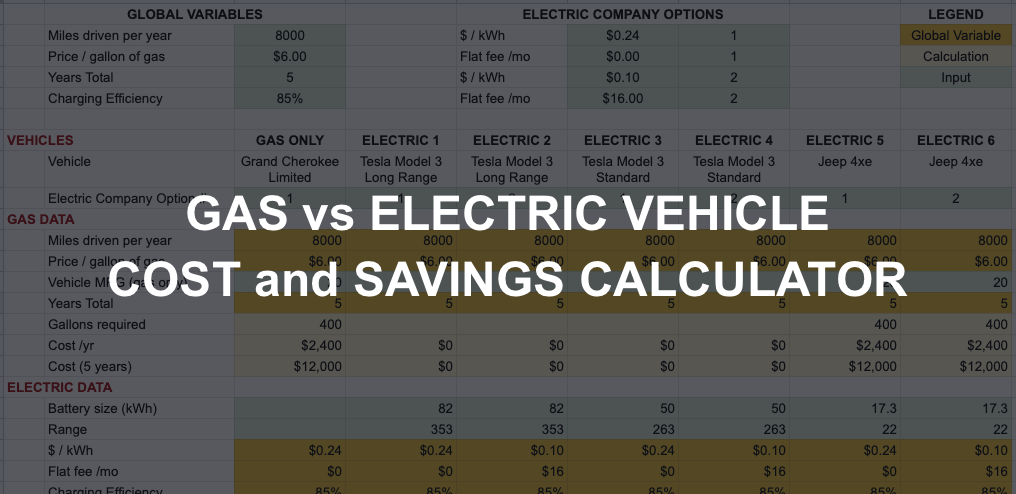
Take that original question—your playful challenge—and turn it into a spreadsheet. Estimate annual miles, pick realistic energy rates, include insurance differences, and model a resale value at year five. Then ask yourself one last thing: are you comparing apples-to-apples, or are you comparing apples-to-optimism?
Because the best five-year ownership cost comparison isn’t about generalities. It’s about your charging habits, your route patterns, and the local cost of energy and repairs. When those variables align, the “cheaper” vehicle becomes almost inevitable. When they don’t, the surprising winner is usually the one whose hidden costs you didn’t overlook.
In the end, EV vs gas isn’t just a fuel choice—it’s a five-year storyline. Choose the chapter you understand, model the expenses honestly, and let the numbers tell the truth. Then go drive, confidently, with your wallet’s plot armor on.