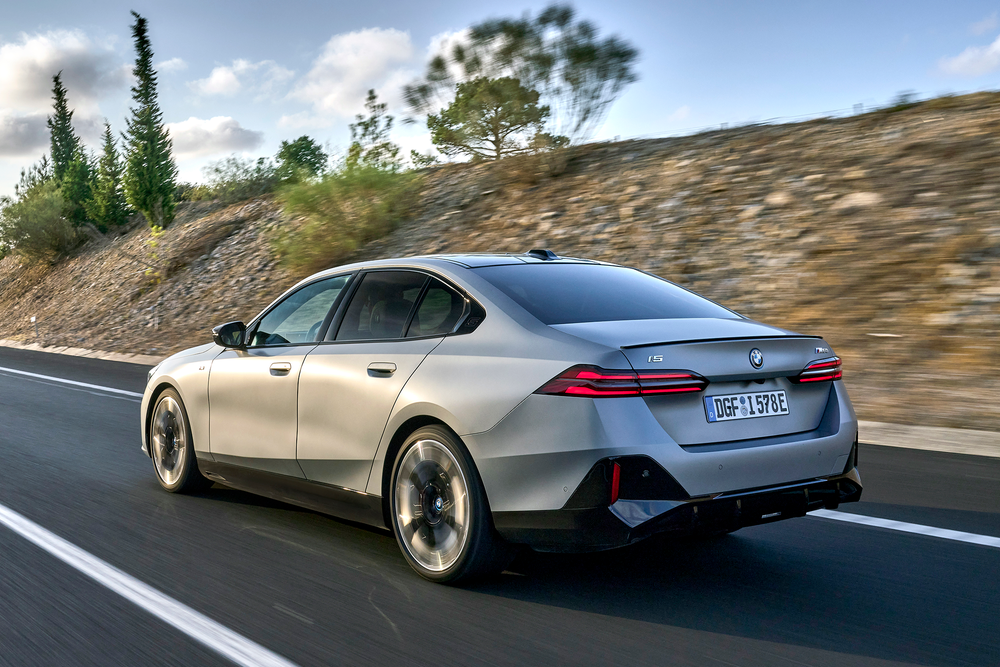
The first thing that stands out about the BMW i5 isn’t the badge or the brochure gloss. It’s the sensation of momentum—clean, immediate, and strangely effortless—arriving without the usual ritual of revs and gear changes. The electric 5 Series has been engineered to feel like a proper BMW at the wheel, yet it quietly rewrites the rules for what “relaxing at speed” can mean. When a sedan of this caliber goes electric, the experience becomes less about mechanical drama and more about calibration: torque delivery, steering nuance, ride composure, and the quiet confidence of a powertrain designed to run for the long haul.
In this review, the i5 is treated like a daily instrument rather than a lab specimen. Expect a blend of narrative impressions and practical breakdowns—how it behaves around town, what it feels like during highway travel, where efficiency is won or lost, and how the interior copes with both comfort-seeking and button-pushing drivers. Along the way, you’ll find a roadmap of what readers typically look for: driving feel, real-world usefulness, charging realities, tech highlights, and the subtle trade-offs that often decide whether an electric executive sedan becomes a lifelong preference or a fascinating detour.

Design and Presence: Familiar Lines, Electric Intention
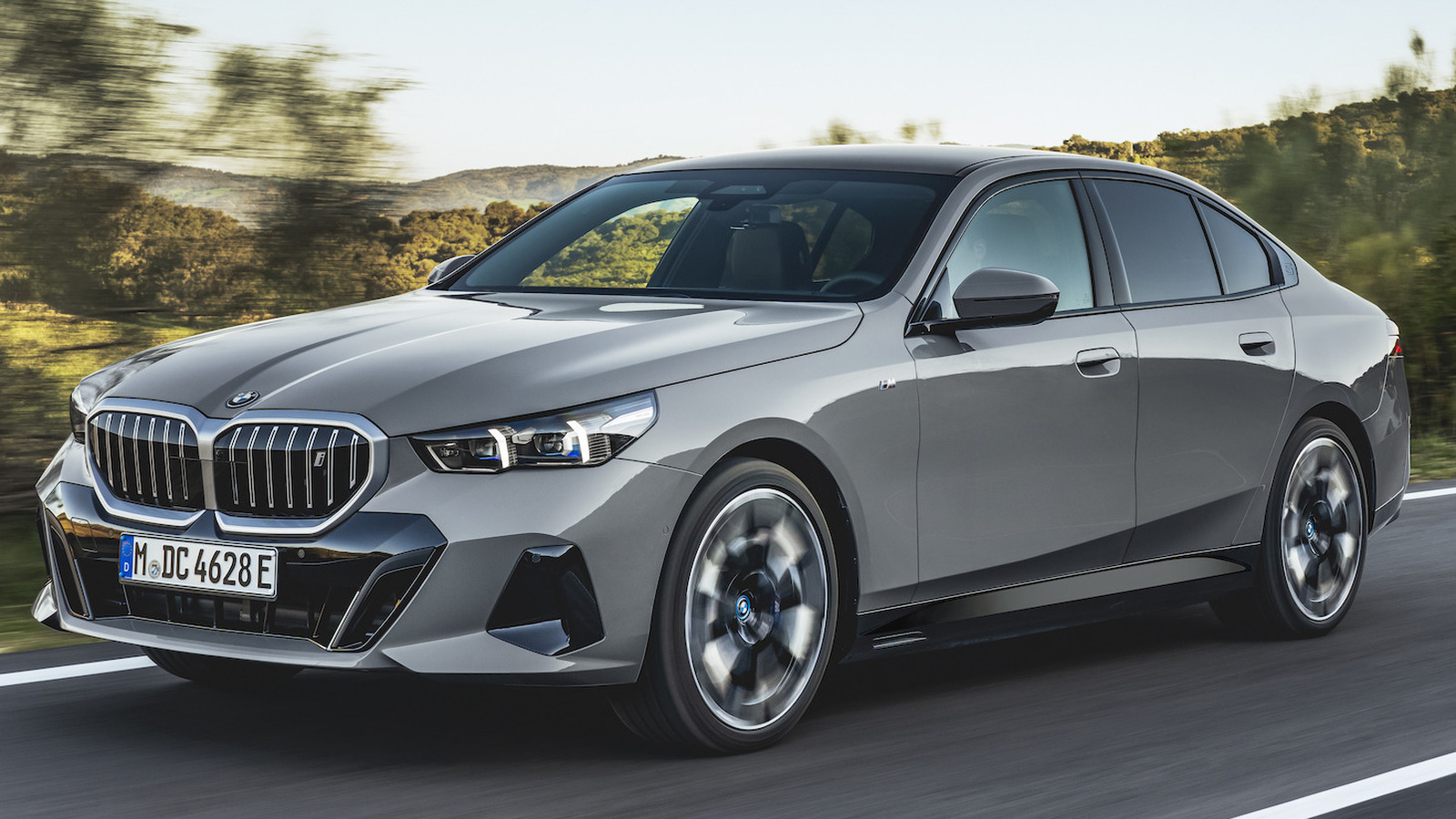
From a distance, the i5 wears the 5 Series silhouette with the kind of restraint that tends to age well. The surface tension of its bodywork—creases that catch light without shouting—makes it look purposeful rather than merely modern. Up close, the details are where the electric identity starts to leak through. Aerodynamic smoothing isn’t just a number on a report; it’s a visual language that hints at lower drag and refined efficiency. The grille treatment and lighting signatures aim for continuity, but the overall stance feels tuned for a different kind of motion.
Long-wheelbase sedans often suffer from visual stiffness—like they’re too composed to be dynamic. The i5 avoids that trap. Its proportions look poised, and its stance reads “quiet acceleration” rather than “peak performance.” That matters, because electric driving is more about the flow of everyday moments than the spectacle of a single sprint.
Powertrain and Performance: Torque Without the Jolt
Electric propulsion brings a specific brand of immediacy. With the i5, that immediacy is delivered in a way that rarely feels like a trick. Instead of lurching forward, it tends to glide into acceleration, almost as if the car is reading your intentions and responding a half-step early. Traction feels intelligent, and the power curve usually lands in the driver’s favor: quick off the line, then calm and steady through midrange.
Drivers who are used to internal combustion may initially expect a more theatrical response. The i5 instead offers a kind of torque literacy—sustained thrust that doesn’t require you to constantly rework your throttle habits. That’s an important distinction for commuters. Quickness is useful, but predictability is addictive.
Handling the car at moderate speeds reveals another layer: the steering doesn’t fight the torque. Body control stays composed, and the chassis behaves as if it understands weight transfer. It won’t turn into an uncompromising sports car on demand; rather, it aims for a “crisp-but-serene” balance that feels tailored to executive driving.
Ride Comfort and Chassis Tuning: The Executive Sedan Sweet Spot
Most buyers of a 5 Series expect the ride to be a sanctuary. The i5, despite being electrified, stays faithful to that demand. Road imperfections tend to be filtered rather than telegraphed. The cabin remains tranquil even when the pavement becomes argumentative—an achievement that relies on more than soft suspension alone. It’s also about how vibration and noise are managed, and how the chassis and tires collaborate like a well-rehearsed ensemble.
When corners demand attention, the suspension doesn’t go rigid out of habit. Instead, it communicates grip progressively. That progressive firmness is a subtle advantage: it helps the driver judge speed and line without feeling that the car is masking limits. The i5 doesn’t chase aggression; it chases coherence.
Interior Quality and Ergonomics: Tech That Doesn’t Feel Intrusive
Step inside and the i5 immediately feels like a modern BMW cabin—elevated materials, clean geometry, and a sense that every control is where your hand expects it. The dashboard layout leans into an organized minimalism. It’s not empty; it’s curated. Even when the technology takes center stage, the interior avoids the “gadget sprawl” that can distract drivers.
Ergonomics are crucial in a large sedan because the driver’s comfort becomes the car’s personality. The i5 aims to maintain a relaxed seating posture, with supportive contours that work for both short trips and long stretches. Legroom and headroom feel generous, and the cabin’s insulation helps reduce the fatigue that can accumulate during highway cruising.
Expect a mix of tactile and digital experiences. Short, familiar gestures—like adjusting climate or changing driving modes—should feel quick. Meanwhile, the tech layer tends to be designed for visibility and convenience, not for novelty.
Infotainment and Digital Experience: A Dashboard Built for Flow
Electric cars often become rolling computer labs, and the i5 approaches that expectation with a focus on usability. Menus and controls are arranged so you can access key functions without wading through endless sub-screens. The goal is to keep the interface out of your way while still delivering depth when you need it.
Navigation features and route planning are especially important for electric sedans. A well-tuned system reduces anxiety by making energy planning feel ordinary. If the interface can suggest charging stops with context—route, timing, and expected consumption—then the driver’s mental bandwidth stays available for the road.
For readers who enjoy tech specifics, the i5 experience is best evaluated by how quickly it gets out of your way. That’s where a strong infotainment suite reveals itself: responsiveness, clarity, and the absence of friction during real use.
Efficiency and Range: The Numbers Are Only Half the Story
Range claims can sound like invincibility on paper. In practice, efficiency is a duet between driving style and weather reality. The i5 tends to reward smooth acceleration and steady highway pacing. When you treat the throttle like a paintbrush rather than a hammer, consumption becomes more predictable, and the car feels more “long-distance ready.”
City driving often plays to electric strengths. Stop-and-go traffic allows regenerative systems to contribute meaningfully, and the absence of idling keeps the car efficient by default. However, aggressive acceleration and high-speed cruising will quickly reshape expectations. Wind, temperature, and tire pressure can also shift results.
Readers should also watch for how the car communicates energy use. A good EV doesn’t just display a percentage—it explains what’s happening. That interpretive clarity transforms range from a static metric into a dynamic tool.
Charging and Ownership Practicality: Planning That Feels Manageable
Charging is where electric enthusiasm becomes either confident routine or frustrating chore. The i5’s charging strategy should be evaluated in terms of convenience, charging curve behavior, and how well the car integrates energy planning with everyday schedules. If the navigation system can guide you to the right charger, provide sensible arrival planning, and anticipate needs, ownership starts to feel less like logistics and more like convenience.
For most owners, charging will be a blend of home charging and public sessions. At home, the i5 becomes a predictable appliance—plug in, wake up to a charged battery, and forget the anxiety. On the road, the key is speed and availability. Charging networks vary, and station performance can be inconsistent, but a reliable in-car routing experience helps offset those uncertainties.
Practical readers will also care about how the car’s systems protect battery health. Temperature management, thermal conditioning, and intelligent charge management all influence long-term satisfaction.
Safety, Driver Assistance, and Highway Confidence
For many families and business owners, safety features are not an optional layer—they’re a baseline expectation. The i5’s safety and driver assistance technology should be assessed by how smoothly it integrates into driving. A capable system is one you can trust without constantly monitoring it.
On highways, lane-keeping behavior, adaptive control, and braking logic should feel calm rather than intrusive. The best systems reduce workload, allowing the driver to remain alert without being constantly corrected. In the city, where unpredictable motion is common, the effectiveness of collision prevention and blind-spot awareness matters even more.
Safety performance isn’t just a set of sensors; it’s a behavioral philosophy. The i5 tends to emphasize stability, giving the driver a sense of control even when traffic becomes chaotic.
Real-World Usability: Storage, Visibility, and Everyday Fit
Electric sedans can sometimes compromise practicality, but the i5 generally aims to preserve the everyday competence expected of a 5 Series. Visibility is crucial in urban environments. Good sightlines reduce the cognitive load of parking, merging, and maneuvering in tight streets. The car’s dimensions may be substantial, but the driving position and camera support should help you manage those dimensions with confidence.
Storage space—front and rear—determines whether the i5 fits into real life, not just test drives. Daily commuting includes bags, groceries, charging cables, and the small, stubborn items that accumulate in cupholders and door pockets. The i5’s cabin layout is designed to keep those items organized, minimizing clutter that can distract you while driving.
What Sets the i5 Apart: The Electric 5 Series Philosophy
The defining trait of the BMW i5 is how it turns electrification into a lifestyle rather than a novelty. The acceleration is satisfying, but the real win is how the car behaves over time. Quiet cruising, smooth power delivery, composed comfort, and a cabin that supports both productivity and relaxation combine into an experience that feels like the evolution of the 5 Series rather than a rewrite for the sake of change.
Readers will likely find the i5 most compelling if they value refinement and predictable driving dynamics more than raw thrills. It’s a car that aims to remove friction from daily routines—commutes become calmer, highway travel becomes more effortless, and long-distance plans become more approachable with the right charging habits.
Conclusion: Electric Confidence, BMW Character
The BMW i5 doesn’t merely join the electric race. It brings a familiar executive demeanor to a new propulsion era. The sensation at the wheel is immediate yet composed, the ride quality favors comfort without surrendering control, and the cabin design is tuned to be lived in rather than just admired.
If you’re shopping for an electric sedan that feels genuinely integrated—into your routine, your routes, and your expectations—this is the type of car that earns its place gradually. Not with fireworks, but with a steady, reassuring rhythm. In the end, the i5 feels like the next logical step for drivers who want electrification with refinement, not compromise with curiosity.