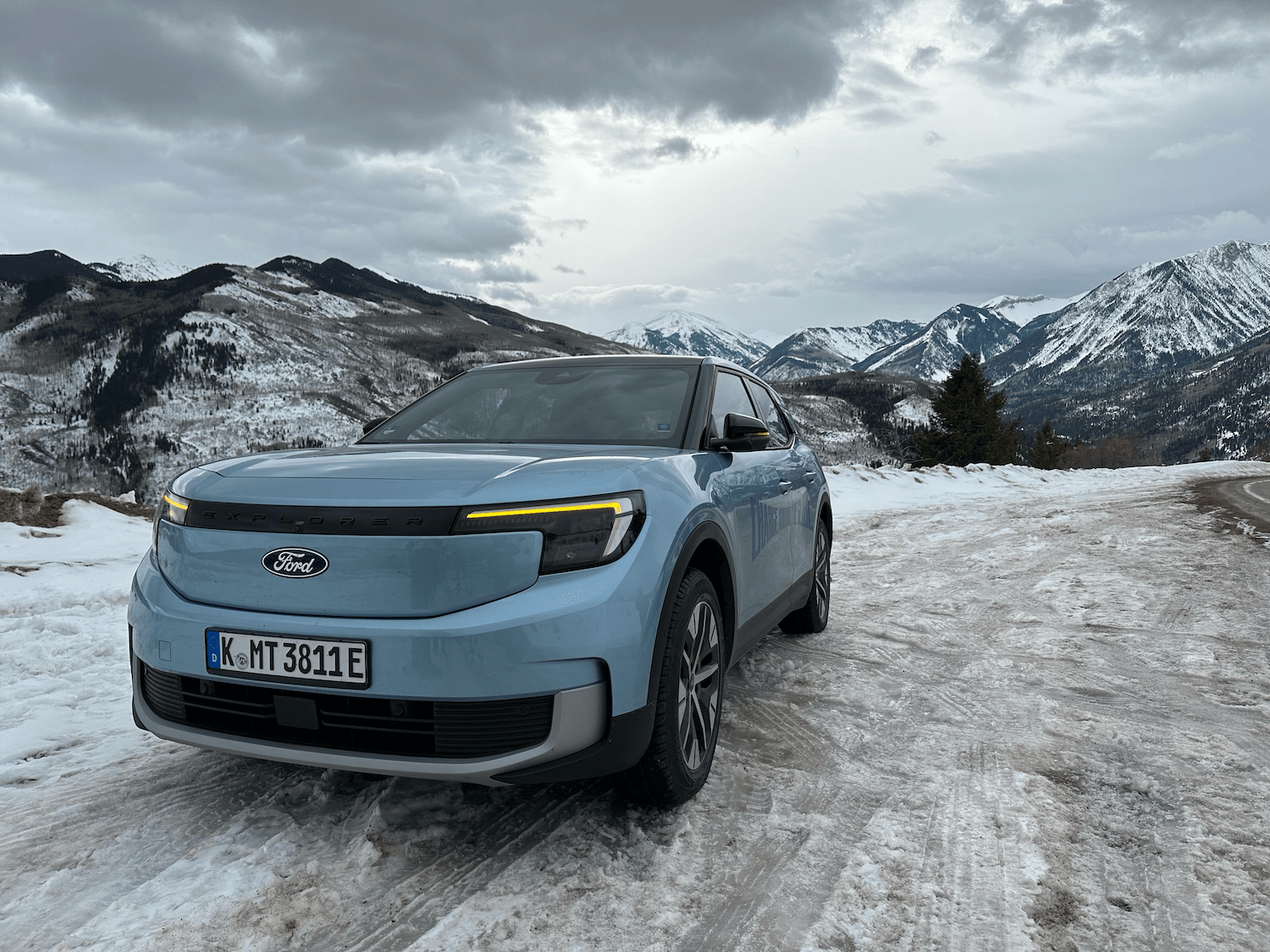
You can feel it before you see it: the way the horizon tilts when a familiar nameplate arrives with unfamiliar intent. The Ford Explorer has always carried a particular kind of confidence—big shoulders, long-range practicality, and a reputation for meeting life where it happens. Now imagine that same identity, re-edited for the electric era, with a distinct European engineering sensibility woven into the DNA. If you’re coming from Europe—or you’ve been watching the EV transition across the Atlantic with keen attention—this is a moment that invites a shift in perspective. Not merely “another EV launch,” but a recalibration of expectations: how power is delivered, how space is used, and how the road feels when the drivetrain stops sounding like the past.
So what happens when the Explorer’s next chapter is interpreted through a different set of priorities? The answer is less about replacing gasoline muscle with battery authority, and more about rethinking what “adventure-ready” means. In the US market, where road trips are long and charging behavior can be unpredictable, the details matter. And the details are exactly where curiosity becomes momentum.
A familiar icon, translated into electric fluency
The Explorer name doesn’t arrive empty-handed. Even when the hardware changes, the intention remains: offer roomy versatility, confident stance, and a driving experience that doesn’t ask for compromises you can’t live with. Electric propulsion reshapes the whole interaction—throttle response becomes immediate, torque arrives without the familiar delay of combustion, and the sensation of acceleration turns smoother, almost theatrical.
Coming from Europe, you might have developed a refined relationship with EVs: you’ve learned how regeneration feels in traffic, how charging networks form invisible infrastructure, and how daily commuting becomes calmer when the engine note vanishes. The US version of the Explorer EV will meet that mindset with its own rhythm—often shaped by different charger prevalence, highway lengths, and driving habits. Still, the core promise holds: deliver the Explorer identity, but rewrite the experience so it’s unmistakably electric.
Engineering perspective: European roots, American roads
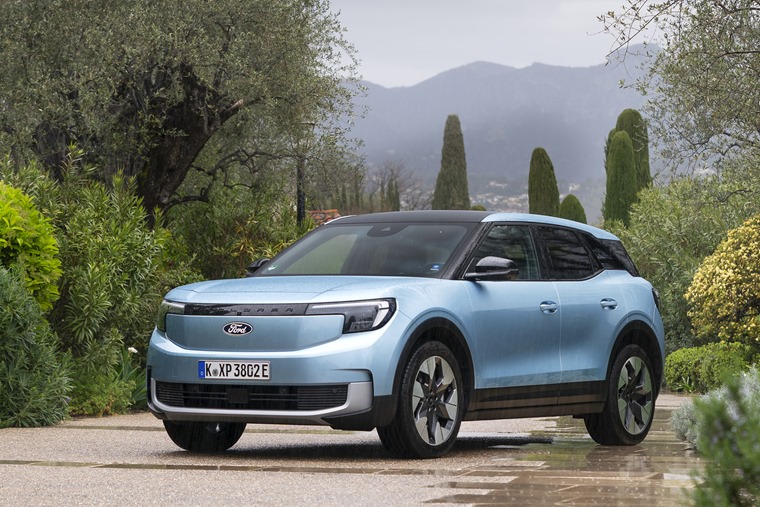
When a vehicle is “built in Europe,” it typically inherits a certain engineering discipline—attention to packaging efficiency, aerodynamic refinement, and a design culture that often favors pragmatic solutions over theatrical complexity. That doesn’t guarantee the same outcome on US asphalt, of course. Roads, regulations, and consumer expectations diverge. Yet the underlying philosophy tends to travel well.
In the US, the Explorer EV must balance accessibility with aspiration. It needs to feel like a mainstream vehicle without losing the technical aura that makes people lean in at curbside. This is where European influence can be persuasive: smaller friction points, more cohesive system behavior, and a design language that prioritizes coherence—everything connected, everything purposeful.
Picture it as a translation rather than a clone. Words remain, but sentence structure changes to fit the new audience. The result can be subtly different, and those differences are often what determine whether an EV feels intuitive or merely adequate.
Driving dynamics: the quiet becomes a new kind of power
Electric driving isn’t only about faster starts. It’s about how the car communicates. With an EV, the Explorer’s mass becomes easier to manage, because torque is delivered like a dial you can modulate rather than a surge you must time. That changes how you enter corners, how you glide through stop-and-go traffic, and how confident you feel when merging onto a busy highway.
The sensation can be disorienting at first—quietness creates an odd feeling of suspension, as if the vehicle is floating rather than pushing. But then something surprising happens: your attention shifts. Instead of listening for engine pitch, you begin to listen for tires, wind, and the world outside. The car becomes a calmer instrument, one that invites a different pace of perception.
If you’re coming from Europe, you may already associate EVs with this reframing. If you’re new to it, the Explorer EV offers a gentle initiation: not a lecture, just a new reality where speed and control feel more synchronized.
Space and usability: the Explorer promise, reinterpreted
“Utility” is often used loosely, as if it means only cargo capacity. But in practice, usability is a choreography: legroom where you need it, storage that makes sense, and a cabin that feels designed rather than assembled. With electrification, manufacturers must make room for batteries while protecting the interior layout drivers rely on—especially for families and road-trippers.
The Explorer EV’s job is to keep the Explorer’s everyday competence intact. Think about the way people actually move through their week: school drop-offs, weekend errands, spontaneous detours. Electric cars can sometimes feel too “techy” or too minimal. A good EV, especially one wearing the Explorer badge, must strike a different balance—accessible controls, intuitive interfaces, and storage solutions that don’t require a manual to discover.
In the US context, this usability matters even more. You may not always have time to plan every charge stop or route diversion, so the vehicle’s everyday convenience becomes a silent ally. The more seamless it feels locally, the more comfortable it becomes on longer journeys.
Charging reality: planning without obsessing
Charging is where anticipation meets friction. Europe has cultivated habits around home charging, workplace infrastructure, and widespread public options in many regions. In the US, charging can still feel uneven—some areas are well supported, others are in transition. The Explorer EV entering this landscape needs to answer a simple question: can owning it feel manageable?
Here, perspective is everything. The goal is not to micromanage every mile. The goal is to integrate charging into life like any other routine—less a ritual, more a background process. If the vehicle’s range, charging compatibility, and practical onboard guidance align well, the ownership experience can feel remarkably calm.
Curiosity grows when you imagine the possibilities: charging during everyday stops, leveraging faster charging for road trips, and using route suggestions to reduce guesswork. Even without precise numbers, the promise is clear: the Explorer EV should make planning feel like preparation, not penalty.
Technology and driver experience: more than a battery on wheels
Electric platforms often invite a different approach to systems integration—power management, software updates, and driver assistance features that can feel more cohesive because the vehicle architecture supports frequent refinement. The Explorer EV, positioned as a mainstream yet aspirational SUV, must deliver technology that feels pragmatic.
That means interfaces should be legible at a glance, controls should be consistent, and the car should adapt to how you drive rather than forcing you into a single “recommended” behavior. A well-executed EV experience can make the driver feel less like a passenger of technology and more like a director of the journey.
And then there’s the intangible factor: confidence. When the vehicle behaves predictably—when regen is consistent, when power delivery feels smooth, when the cabin remains composed—the driver’s trust deepens. That’s when curiosity stops being theoretical and becomes personal.
Why “coming from Europe” changes what you notice
Arriving with European experience doesn’t just mean you know about chargers or efficiency. It changes your expectations of how a car should feel in daily life. You may have already absorbed the logic of EV ownership: the way range is treated as flexible rather than rigid, the way driving style and weather influence outcomes, and the way regenerative braking recalibrates traffic flow.
So when the Explorer EV enters the US market, you’re not only evaluating specs. You’re evaluating philosophy. Does it respect your time? Does it behave logically in mixed driving conditions? Does it offer an experience that feels designed for real roads, real households, and real schedules?
The shift in perspective comes from this: you stop asking, “Is it electric?” and start asking, “Is it effortless?” That’s the standard that determines whether the Explorer EV becomes a curiosity at first glance—or a lasting part of your routines.
Anticipation, reassembled: the road ahead
Electric SUVs are no longer novelty vehicles. They’re becoming the mainstream expression of mobility—yet the best ones still manage to surprise. The Explorer EV carries a particular weight of expectation, which is both a risk and an opportunity. It has to honor what people already love about the Explorer, while proving that electrification can deliver something more than a change in powertrain.
For US drivers—especially those with Europe-shaped expectations—the excitement is in the translation. A European-engineered sensibility meeting American driving culture could result in an EV that feels unusually coherent: quiet confidence, usable space, and a charging experience that doesn’t steal the joy of movement.
In the end, the question isn’t whether the Explorer EV arrives. It’s how quickly it redefines the way you think about distance, control, and the simple pleasure of getting from one place to another—without the old soundtrack. The horizon is shifting. The Explorer is just one of the vehicles brave enough to lead the conversation.