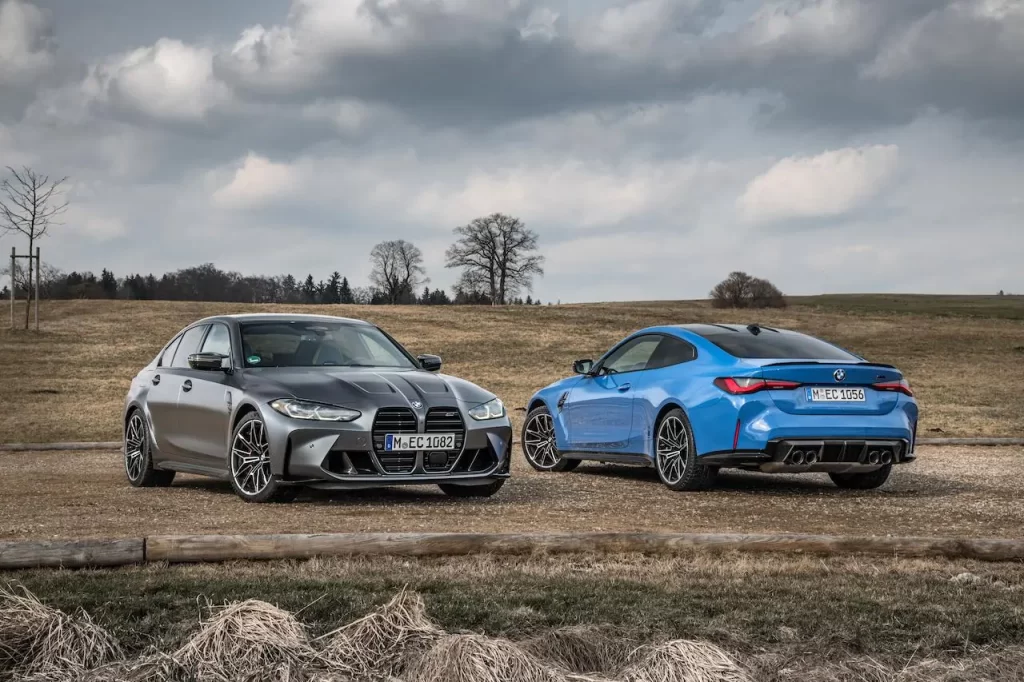
There’s a moment—usually halfway through a brisk on-ramp—when a driver realizes the car isn’t merely moving forward. It’s negotiating with physics. The BMW M3 is built for that negotiation, and yet it offers two distinctly different ways to play the game: a manual gearbox that turns every decision into a tactile ritual, and xDrive, a traction system that quietly reshapes the rules of engagement. Choose wrongly and the experience feels like a mismatch. Choose wisely and the car becomes a thought made metal.
This review isn’t about choosing the “better” M3 in some abstract sense. It’s about perspective. Because the more time you spend with either configuration, the more you’ll notice how the transmission strategy and drivetrain philosophy alter how you perceive speed, grip, and intention. And if the very idea of intention sounds philosophical, good. The M3 is the sort of machine that invites it.
The Setup: Two M3 Personalities, One Core Mission
At the heart of the BMW M3 is the same relentless objective: deliver M performance without sacrificing usability. But the manual vs xDrive debate changes everything downstream. The manual car asks you to be an active participant—your right hand and left foot become the choreography. The xDrive car, by contrast, feels like it’s listening. It anticipates slip, redistributes torque, and stabilizes acceleration with a level of confidence that can feel almost disarming at first.
Neither approach is wrong. They simply cultivate different emotional textures. One version emphasizes the drama of connection; the other favors the composure of control. The curious part is how quickly your brain adapts—and how hard it becomes to unlearn.

Manual M3: The Art of Directness
Driving the manual M3 is like reading a letter written in ink instead of typed on a screen. Everything is legible. The clutch has a clear personality, the shifter offers real feedback, and the engine’s response is not translated—it’s delivered. When you downshift, the gearbox doesn’t “help” you; it collaborates with you. Timing matters. Rhythm matters.
In city traffic, the manual transmission can feel like a constant conversation. You’ll catch yourself modulating clutch engagement with near-muscle memory, because the car rewards fineness. The immediate consequence is engagement. The long-term consequence is a kind of education: you learn the M3’s cadence, and the car begins to feel like an extension of your intent.
On open roads, the manual’s strongest argument appears during acceleration transitions. You choose the shift point, and the M3 transforms that choice into forward urgency. You can also be deliberate with traction—feather the throttle, manage wheelspin with throttle angle rather than system intervention, and feel the chassis communicate through the seat and steering.
The trade-off is obvious but worth stating plainly. The manual demands attention. It expects you to keep up. For drivers who enjoy that, it’s a feature. For those who prefer effortless pace, it can become a tax.
xDrive M3: Confidence That Doesn’t Announce Itself
xDrive changes the atmosphere. It doesn’t replace the spirit of the M3, but it adds a protective layer over the chaos that can arrive at the worst possible time—wet pavement, bumpy exits, imperfect traction, or simply an enthusiastic boot.
What stands out is how seamlessly xDrive integrates. You press the accelerator, and the car responds with a sense of inevitability. Torque delivery feels calibrated, as if the drivetrain is quietly asking, “Do you want speed now, or do you want speed with composure?” More often than not, it grants both.
Even in conditions where a rear-wheel-drive setup could encourage tail-happy storytelling, xDrive tends to keep the narrative clean. The front axle contributes grip without turning the steering into a different car. That balance—between added traction and preserved feel—is the real accomplishment.
However, curiosity deserves honesty. If you’re the kind of driver who cherishes the raw sensation of rear-wheel slippage as a form of communication, xDrive may dampen that drama. The system’s job is stability, after all. Yet the result is not numbness; it’s a different kind of intensity. You’ll find yourself pushing earlier, braking later, and exiting corners with more conviction because the car forgives the micro-mistakes that would otherwise compound.

Autobahn Energy: How Speed Feels Different
On the Autobahn, the M3 becomes less about short bursts and more about sustained momentum. This is where perspective shifts again. The manual car delivers a special kind of exhilaration at high speed: the sense that every gear, every shift, remains your choice. The engine keeps its cadence, and your hand keeps its purpose. It can feel like steering a locomotive by reading its breath.
The xDrive M3, on the other hand, tends to treat high-speed acceleration like a controlled event. Stability rises to the forefront. You can focus more on line and less on traction management. The car feels like it’s smoothing out the pathway to speed, reducing the number of variables that can sabotage your rhythm.
Either way, the M3’s character remains bold. But your brain starts to behave differently. With manual, you anticipate shifts and enjoy the pacing. With xDrive, you anticipate acceleration and trust the drivetrain to do the stabilizing work.
Cornering and Traction: Where Philosophy Becomes Physics
Cornering is where the manual and xDrive versions most clearly reveal their ideologies. The manual M3 encourages a more human approach to traction. You manage engine braking with precision, choose your downshift sequence, and modulate throttle to keep the car balanced. The chassis responds, but it responds to you—not to a safety net.
xDrive, in contrast, turns corner exits into a more repeatable performance. Torque can be distributed to maintain grip under load. The result is often a higher confidence level, especially when traction is compromised. You can demand more from the car sooner, and it usually meets you there.
In both versions, the steering communicates with clarity, and the suspension philosophy keeps the car composed. Yet the emotional difference is stark. The manual feels like you’re negotiating with the track. xDrive feels like you’re commanding it.
Daily Usability: The Quiet Variables
In real-world driving, questions emerge that horsepower can’t answer. How often will you deal with stop-and-go traffic? How frequently will weather become a factor? How comfortable are you with imperfect timing—your timing, not the car’s?
The manual M3 can be immensely satisfying in daily life, but it asks for stamina. Clutch work becomes a ritual. The xDrive car can feel almost effortless, particularly when you want to focus on scanning traffic, finding gaps, and enjoying the drive rather than performing it.
It’s also worth considering long-term ownership psychology. Some drivers bond with a manual because it keeps the driving experience active and intimate. Others bond with xDrive because it reduces friction between intention and outcome.
So Which One Fits You? A Curiosity Test
Instead of asking which M3 is objectively superior, ask what you want the car to teach you. Do you want to cultivate precision through effort? The manual M3 will insist on that relationship. Do you want to chase performance with fewer interruptions, confident that the drivetrain will manage the messy parts? xDrive will hand you that confidence.
There’s also a subtler test. When you imagine pushing hard, do you picture yourself actively coordinating shifts and throttle like a conductor? Or do you picture yourself threading the line and letting torque distribution elevate the outcome? Your imagination is a map.
Final Verdict: Two Roads to the Same Thrill
The BMW M3 is a serious performance machine, but it’s also an instrument for self-discovery. The manual version sharpens attention and rewards discipline. The xDrive version grants composure and expands the range of conditions where bold driving feels natural.
Choose the manual if you want the thrill of directness—the kind that arrives through your own decisions. Choose xDrive if you want traction-backed momentum, the kind that makes speed feel less like a gamble and more like a promise.
Either way, the M3 doesn’t just transport you. It changes the way you perceive driveability. And once that perspective shifts, you’ll start noticing everything: how the engine speaks, how the chassis answers, and how confidence can be engineered—or earned.