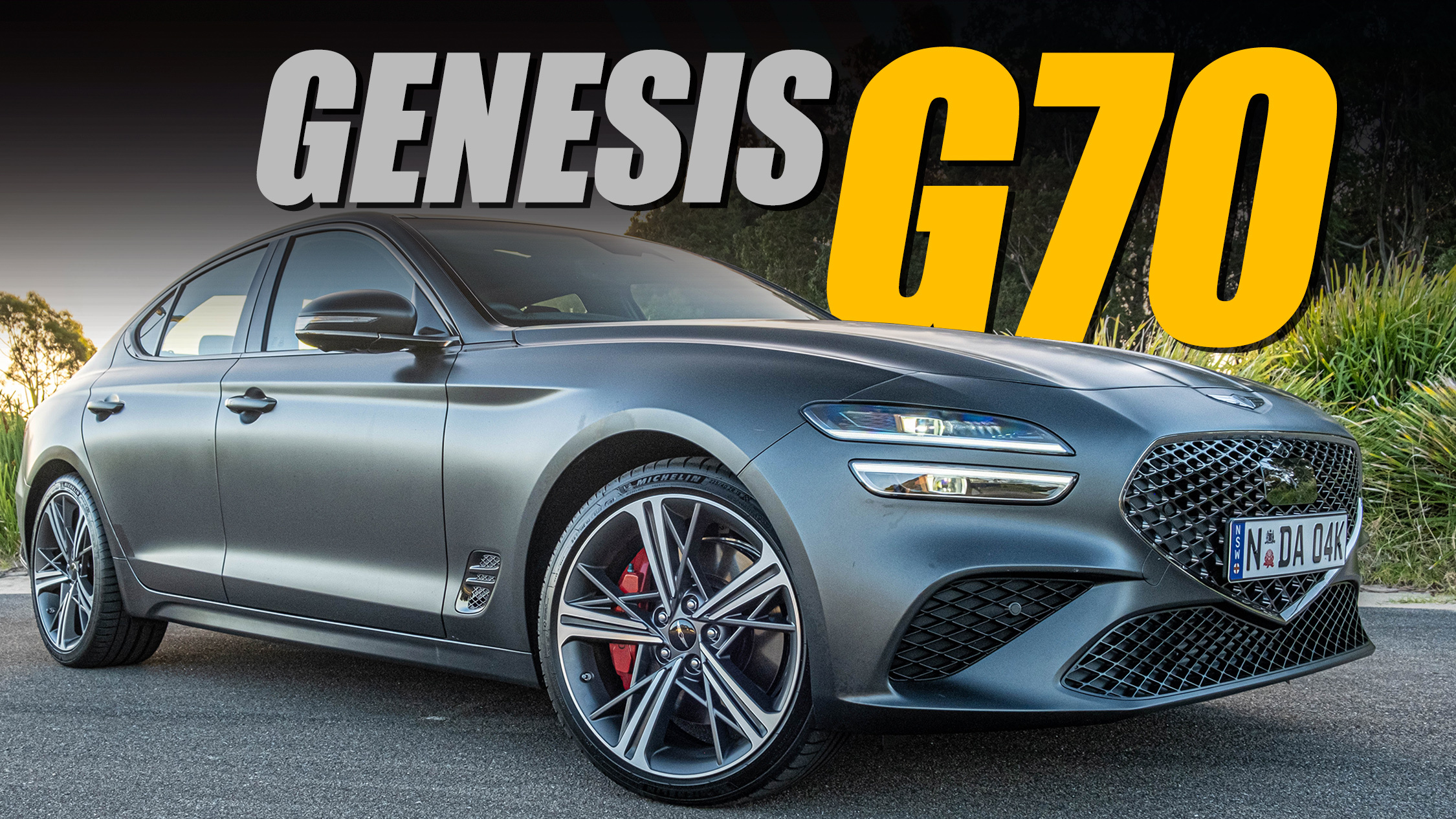
The question sounds almost inevitable the moment you step into the world of premium sport sedans: Is the Genesis G70 truly better than BMW? The comparison carries weight because BMW has spent decades engineering its identity around steering feel, dashboard theatre, and a certain predatory confidence on the road. Yet the Genesis G70 arrives with a different kind of persuasion—one built on disciplined design, generous equipment, and a driving experience that doesn’t merely imitate European flair, but selectively improves it.
This review is structured to help you decide with clarity. It’s not only about lap times or spec-sheet bragging rights. It’s about what daily life feels like in the driver’s seat, how the G70 handles your worst commutes, and whether its luxury actually lands where it matters: in materials, comfort, refinement, and trustworthiness.
First Impressions: Design That Doesn’t Beg To Be Taken Seriously
The G70’s stance is lower, leaner, and more deliberate than many mainstream competitors. Genesis doesn’t chase trends; it curates proportion. The front end reads as sculpted rather than styled—its surfaces have a certain tension, as if the car is always about to move, even while it’s standing still.
Spend time with the exterior and the “premium” argument becomes visual. Details like the lighting signature, the grille texture, and the body contouring don’t feel like decorative add-ons. They feel like an engineering decision disguised as art direction.
Inside, the design philosophy continues. The cockpit is oriented toward the driver with a calm, almost architectural order. Buttons are placed with restraint. Displays are legible without becoming distracting. There’s an intentional reduction of clutter—rare in a segment where visual noise often masquerades as performance.

Driving Dynamics: Where the “Better Than BMW” Argument Actually Starts
BMW’s reputation in this segment is built on the sensation of connection—steering that feels threaded directly to the road, and chassis tuning that rewards confidence without demanding it. The G70 doesn’t ignore those expectations. Instead, it calibrates them differently.
Depending on the configuration, the G70 can feel taut and responsive, with a sense of composure through corners. The suspension work tends to prioritize stability over drama. Translation: it doesn’t always try to impress you with theatrical body roll or exaggerated feedback. It simply stays planted, then invites you to move faster when you’re ready.
Throttle response and transmission behavior also matter because “sport sedan” is a daily experience, not a YouTube moment. The G70’s power delivery aims for usability—strong enough to feel eager, smooth enough to remain civilized at city speeds.
In straight-line situations, it holds its lane and keeps the wind and road noise from turning your ride into a loud negotiation. On winding roads, it rewards measured inputs. This is the kind of handling that makes you drive with a calmer mind, not a louder ego.
Engine Performance: Power With Purpose, Not Only Power With Numbers
Engine choices define character. In the G70’s case, the lineup is designed to cover a wide spectrum—from commuters who want effortless acceleration to drivers who crave more aggressive thrust.
What’s notable is how the car parcels out power. It doesn’t merely sprint when you demand it. It also behaves predictably when you’re cruising, merging, or climbing. That consistency is often the difference between “fast” and “feel-good fast.”
The soundscape deserves mention too. Luxury sports sedans can either be hushed like libraries or tuned like performance instruments. The G70 typically strikes a middle ground: satisfying without being intrusive. The result is a cabin that stays comfortable while still acknowledging the engine’s presence.
Interior Comfort and Ergonomics: Luxury That Lives in the Details
Luxury is not a logo. It’s how easily you settle into the seat. It’s how quickly the climate system finds the right temperature. It’s how well the cabin absorbs harsh pavement seams.
In the G70, the seating position feels natural and supportive. The steering wheel doesn’t just adjust—it aligns your posture. Controls are generally intuitive, with a layout that makes the driver feel competent rather than hurried.
Material quality matters, and Genesis often leverages soft-touch surfaces and refined trim to create an atmosphere that feels expensive in daylight and still luxurious after dark. The cabin architecture reduces visual fatigue. Short sentence, clear point: you stop thinking about the interface and start thinking about the drive.

Tech and Infotainment: Feature-Rich Without Feeling Like a Gadget Store
Today’s buyers expect advanced connectivity, and the G70 doesn’t arrive empty-handed. The infotainment experience centers around modern screens, responsive menus, and a suite of convenience features that simplify navigation, media, and vehicle settings.
The strongest test for any system is friction. A premium interface should not slow you down when the light turns green and you’re about to move. The G70’s digital tools aim to be quick and understandable, with enough depth for tech enthusiasts yet accessible for everyday users.
It also matters how well tech integrates into the physical cockpit. When a screen feels like an accessory stapled to the dashboard, the experience degrades. When it feels like a natural extension of the cabin, it elevates the whole ride. The G70 generally lands in the latter category.
Ride Quality and Noise Isolation: The Quiet Advantage That Adds up
Road comfort is where many “performance” cars quietly lose. The G70 works to maintain composure over imperfect pavement. That means less fidgety suspension movement and fewer vibrations traveling into the body.
Noise isolation is equally important for long drives. Highway cruising should feel effortless—like the car is doing the work while you simply enjoy the scenery. The G70 tends to keep the cabin calm enough that conversations remain smooth and music doesn’t get swallowed by wind roar.
This is where the BMW comparison becomes nuanced. BMW can be brilliant, but it can also feel sport-firm in a way that some drivers love and others find exhausting. The G70 often aims for a luxury rhythm: controlled, refined, and consistently comfortable.
Practicality and Visibility: A Sedan That Doesn’t Feel Like a Compromise
Even if you choose the G70 as a “driver’s car,” practicality still matters. Visibility, seat access, trunk usability, and real-world maneuverability affect your ownership experience more than you might expect.
The G70’s proportions help it feel easy to place in parking spaces. Cabin space is generally accommodating for daily errands. And when your life demands versatility, the brand’s approach to styling—sometimes even in wagon-like variants—suggests a willingness to broaden the definition of “sport sedan.”
Long sentence with intent: it’s not simply about hauling groceries; it’s about ensuring the car adapts to your schedule rather than forcing your schedule to adapt to the car.
Reliability, Warranty, and Ownership Value: The Underrated Battle
“Better than BMW?” often translates into a second question: better than BMW to own? Ownership value is more than price. It’s maintenance costs, warranty coverage, and how confidently you can plan your next year.
Genesis typically leans into customer reassurance with coverage designed to lower anxiety. Over time, that can matter more than the emotional thrill of a brand that commands attention at the dealership.
Then there’s resale perception. While BMW holds strong brand gravity in many markets, the G70 is building a reputation based on comfort, performance balance, and feature density. That combination can help keep the value conversation realistic rather than purely speculative.
How It Compares to BMW: The Trade-Offs, Not the Slogans
BMW remains exceptional in certain categories: steering precision, track-capable responsiveness, and a driver-focused feel that’s historically difficult to replicate. If you want a car that feels like it’s performing in your hands, BMW still has a powerful argument.
The G70’s counterargument is subtler and, for many buyers, more compelling. It tends to deliver a luxury ambiance with less abrasive edge. It often offers a richer standard equipment approach. It focuses on comfort, cabin quality, and everyday refinement—without abandoning performance entirely.
In other words, BMW may deliver more of the “enthusiast theatre,” while the G70 frequently delivers more of the “owner satisfaction.” The better choice depends on which kind of happiness you’re seeking: the thrill of precision or the pleasure of holistic ease.
Who Should Buy the Genesis G70?
The G70 is a strong match for drivers who want premium polish without the constant expectation of compromise. It fits commuters who occasionally crave spirited driving. It suits families who value quiet comfort as much as power. It also appeals to those who want a vehicle that feels upscale from the moment you sit down.
If your priorities include comfortable ride quality, a thoughtfully arranged cockpit, and performance that feels usable every day, the G70 makes a compelling case.
Final Verdict: Better Than BMW?
“Better” rarely means the same thing for everyone, and the G70 doesn’t try to win by imitation. It wins by coherence. The Genesis G70 feels intentionally composed—stylish without fuss, athletic without harshness, and luxurious in ways that reach beyond surface-level details.
For some drivers, BMW will remain the default because its driving feel is finely tuned and deeply ingrained. But for many others, the G70’s balance of comfort, refinement, technology usability, and ownership confidence can feel more satisfying than the traditional European formula.
The short version is this: the Genesis G70 deserves to be considered not as a challenger, but as a serious alternative—one that can plausibly earn the title of “better than BMW” depending on what you value most.