The 2025 Toyota Corolla Sedan carries itself with the quiet confidence of a familiar tune—yet the notes have been subtly rearranged. Owners and shoppers often begin with a simple observation: “It’s still a Corolla.” That statement sounds like a compliment and a caveat at the same time. But the 2025 model is less about reinvention and more about refinement—an approach that can feel understated until you notice how each change tightens the whole experience. The fascination with Corolla isn’t accidental. It’s the result of a philosophy: dependable transportation that doesn’t merely meet expectations, but quietly disciplines them.
So what’s new versus the 2024-era Corolla Sedan? The answer lives in the details—design cues, everyday ergonomics, and a technology posture that seems built for modern commutes rather than brochure fantasies. Even if the silhouette remains recognizable, the driving rhythm and onboard atmosphere have evolved. Let’s walk through the updates, then look beneath them at why so many people keep returning to this compact standard-bearer.
Design Refresh: Familiar Profile, New Vectors of Style
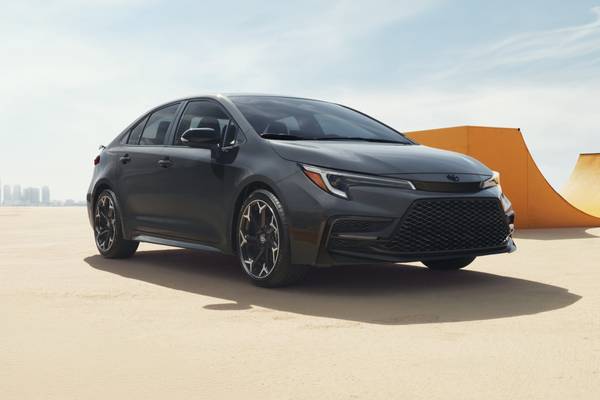
The first thing most people notice is the familiar profile—Corolla’s shape still feels like it belongs on every street in America. Yet the 2025 model introduces a fresher visual cadence. The front fascia presents a more deliberate geometry, giving the sedan a slightly sharper stance. Lighting design appears more purposeful, too, as if the car has learned how to “speak” at a distance.
From certain angles, the styling reads as conservative. Up close, it’s more intentional than it looks. Surfaces feel shaped for light-play, with contours that help the car look planted even when it’s just sitting still. That’s an important psychological trick in automotive design. A vehicle that feels stable visually tends to feel stable mechanically, and that perception can be surprisingly influential on a driver’s confidence.
Interior Atmosphere: Practical Comfort, Less Friction
Open the door and the changes become more than cosmetic. The cabin continues to emphasize usability, but the 2025 Corolla feels tuned for a smoother daily workflow. The layout aims to reduce “micro-friction,” that minor awkwardness that happens when you reach for something and your arm has to negotiate the geometry.
Materials and finishing choices lean into durability and visual clarity. Buttons and controls are presented with a readability that discourages hesitation. In a car, hesitation is expensive—in time, attention, and mental bandwidth. Corolla’s cabin aims to keep the driver’s mind where it should be: on the road.
Even the driving posture feels optimized for long errands as much as short trips. Seats are supportive without becoming overly theatrical. The goal is a steady, composed comfort that doesn’t exhaust you by the third stop of the day.
Infotainment and Connectivity: From Convenience to Command
One common observation about many compact sedans is that tech can feel like an afterthought—functional, but not particularly harmonious. The 2025 Corolla tries to avoid that pitfall. The infotainment setup is designed to feel more integrated into the center stack experience, with a user flow that typically makes sense within the first few interactions.
Connectivity features matter most when you’re moving—when navigation reroutes, music switches between devices, or a phone call arrives mid-drive. The deeper fascination here is behavioral: the driver begins to trust the interface because it behaves predictably. Predictability is an underrated luxury. It’s why certain cars feel “effortless” even when they’re not trying to impress.

Powertrain and Driving Feel: Quiet Confidence Under the Hood
While the Corolla’s identity remains grounded in everyday efficiency, the 2025 model refines the way power is delivered. The driving character tends to stay calm and civil, with acceleration that feels linear rather than jumpy. That matters in real-world traffic, where smoothness reduces driver fatigue.
A Corolla doesn’t need to be a performance legend to be fascinating. It needs to be coherent—an engine and transmission relationship that doesn’t surprise you at inconvenient times. The 2025 approach leans toward a consistent throttle response and an overall sense of mechanical alignment. When the car “predicts” your inputs correctly, it lowers cognitive load, and the mind can focus on spacing, timing, and safety.
Handling updates—whether subtle changes to tuning, steering calibration, or suspension behavior—aim to keep the sedan composed over daily road textures. The goal is not sportiness for sportiness’ sake. It’s poise. It’s the ability to glide through imperfections without announcing them to the cabin.
Ride Quality and NVH: The Art of Being Unbothered
Noise, vibration, and harshness (NVH) are where a “good” car can feel “great,” and a “great” car feels expensive. The 2025 Corolla targets that unglamorous but essential experience: being unbothered. Roads with patched pavement, highway seams, and grooved sections become less intrusive. Wind and tire noise are managed so the cabin stays conversational rather than combative.
This is another reason Corolla attracts devotees. When a car is quiet enough, you stop thinking about it. That silence becomes a kind of value. It makes commutes feel shorter and reduces the sense that you’re constantly enduring the trip.
Safety and Driver Assistance: More Confidence, Less Guesswork
Safety tech often gets treated like a checklist item, but it functions like an additional layer of attention. The 2025 Corolla’s driver-assistance offerings continue the trend toward helping the driver maintain situational awareness—especially during highway monotony or suburban stop-and-go.
Lane-related features, adaptive sensing, and collision avoidance logic aim to reduce the moments where humans hesitate. And hesitation is one of the quiet causes of everyday accidents. A good driver-assistance system doesn’t remove responsibility—it refines reaction time and helps close the gap between perception and action.
The deeper fascination is trust. When a system feels consistent, drivers rely on it. When it behaves unpredictably, drivers disable it mentally. Corolla’s design philosophy appears to prioritize that first kind of trust.
Efficiency, Practicality, and Ownership Psychology
Corolla’s reputation isn’t just about specs. It’s about ownership psychology. People buy Corollas because the car seems to promise stability over time: predictable maintenance, reasonable costs, and a resale trajectory that doesn’t evaporate after a model-year cycle.
The 2025 Corolla maintains that ethos while updating the day-to-day realities that shape modern ownership. Fuel economy remains a core attraction, but the more subtle win is how efficiently the car fits into life—grocery runs, commuting schedules, and the endless choreography of errands.
In a world where cars increasingly feel like computers with wheels, Corolla remains a practical companion. That continuity can be oddly comforting, like returning to a hometown you haven’t visited in years.
What Remains the Same—and Why That Matters
There’s an underappreciated elegance in what doesn’t change. The 2025 Corolla still aims to be an uncomplicated solution. It doesn’t demand attention. It earns it through consistent behavior.
When buyers say they wanted “less drama,” they’re describing more than reliability. They’re describing a relationship. Corolla is designed to be dependable in the background, so the driver can focus on everything else.
Final Thoughts: A Sedan That Refines Fascination
The 2025 Toyota Corolla Sedan doesn’t chase novelty for novelty’s sake. It reshapes the experience through refinement—design clarity, more coherent infotainment behavior, a composed ride, and safety tech that supports without distracting. The result is a vehicle that feels familiar yet improved, like a well-edited story where every paragraph now lands a fraction more cleanly.
That’s why Corolla keeps captivating people. It’s not merely a car—it’s a dependable rhythm for everyday life, updated in ways that reveal themselves slowly. Once you start noticing the improvements, it becomes easier to understand the devotion: fascination grows where comfort, consistency, and competence quietly converge.