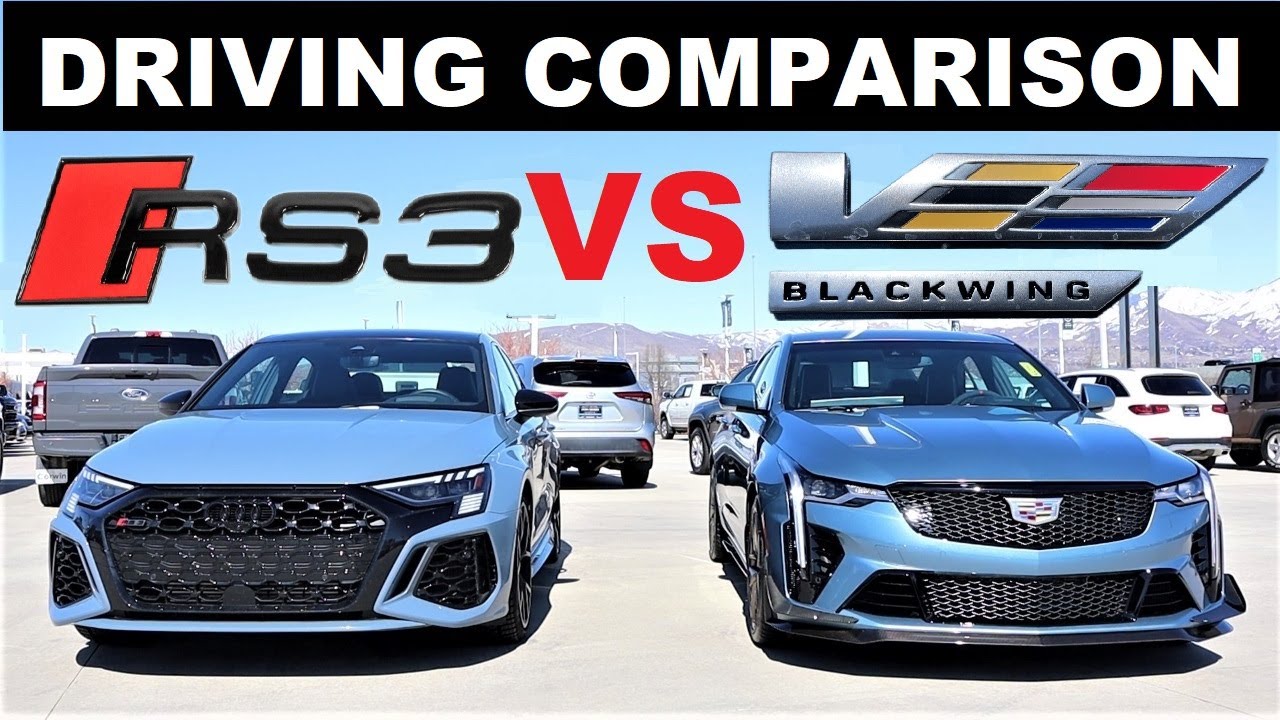
The driveway romance of a “super sedan” is usually reserved for the rarefied air of six-figure price tags. Yet the Cadillac CT4-V Blackwing and the Audi RS3 don’t play that game. They stride into the conversation like well-tailored outliers—vehicles that promise genuine track capability, sharp steering, and a soundtrack that makes even mundane commutes feel briefly ceremonial. This is the story of two affordable track stars, each with its own philosophy: the CT4-V Blackwing brings muscle-car immediacy to a balanced chassis, while the RS3 delivers compact precision with a deliberate, engineering-minded bite.
What follows isn’t just a checklist. It’s an exploration of how these cars feel when the tarmac turns unfamiliar, how they behave when momentum matters, and how you’d live with them on days when “performance” isn’t the only agenda. Expect a mix of practical comparisons, driving impressions in plain language, and guidance on choosing the right temperament for your roads.
Two Philosophies, One Goal: Make a Sedan Feel Like a Weapon
Super sedans carry a unique burden: they must be disciplined enough for daily life, but feral enough to justify their existence. The Cadillac CT4-V Blackwing leans toward forceful character. It’s the kind of car that doesn’t merely accelerate—it insists on speed. Its presence is confident, almost confrontational, but underneath that swagger is an intent to be precise when you ask for it.

The Audi RS3 approaches the task differently. It feels like a well-balanced instrument—less “muscle,” more mechanical clarity. The RS3 doesn’t ask permission; it simply translates inputs into motion with a slightly clinical coherence. On a track, that can feel like advantage. On a highway, it can feel like composure.

So yes: both cars want the same applause. But they earn it through different rhythms. Understanding that rhythm is the key to choosing one, not just the faster of the two.
Engine Temperament: The Soundtrack of Choice
The engine is where personalities become undeniable. The CT4-V Blackwing thrives on big-throttle urgency. It builds speed with a sense of urgency that feels almost analog—like the car is responding before your brain finishes the thought. The power delivery tends to feel eager and direct, encouraging decisive driving rather than timid adjustments.
The RS3, by contrast, tends to feel more like a turbocharged scalpel. When you press the accelerator, it responds with rapid, controlled thrust. The character is more refined, yet still thrilling. Instead of “surging,” it can feel like it’s pulling you along a defined line of speed.
Choose based on what you want to hear when you open the throttle. Do you prefer a raw, emphatic burst—or a tightly managed, repeatable rush?
Chassis Dynamics: How Each Car Holds the Line Under Pressure
On track days, the chassis becomes the real narrator. The Cadillac CT4-V Blackwing is built around composure under stress. It’s eager to rotate but not careless about it. When you trail brake or load the front end, the car tends to communicate grip clearly. The steering feels purposeful rather than vague, and that matters when you’re trying to stitch together multiple corners in sequence.
The Audi RS3 emphasizes precision and stability. It often feels planted, with a sense of predictable behavior when traction becomes scarce. That predictable behavior can lower cognitive load. It’s easier to drive quickly because the car won’t surprise you with oddness at the limits.
In practical terms: if you’re the kind of driver who likes to sense the car through the wheel, the Cadillac can feel rewarding. If you prefer a more surgically accurate feel, the RS3 can feel like an extension of your intentions.
Transmission and Response: Fast Shifts vs Fast Intent
Both cars are tuned for performance immediacy, but the experience can feel different. The CT4-V Blackwing often rewards intent—when you commit, the car reacts. There’s a sense of theatricality in its acceleration events. It can feel like it’s eager to show you what it can do.
The RS3’s transmission behavior can feel more methodical, with shifts that align closely to driver input. The result is a sensation of momentum that remains tidy. Even when you push hard, the car tends to behave like it knows exactly where the next gear needs to live.
In short: the Cadillac can feel more visceral. The Audi can feel more controlled. Both can be quick—your preference is about which kind of “quick” you enjoy.
Braking Feel: The Quiet Confidence Before the Turn
Braking is where confidence is either earned or lost. The CT4-V Blackwing’s brake behavior tends to feel assertive and supportive. When you press the pedal, it responds with authority, letting you brake later without needing constant recalibration. That’s valuable on track, where the distance between you and the apex is a math problem that doesn’t forgive hesitation.
The RS3 typically delivers a more precise and consistent pedal feel. That steadiness can help you develop repeatable lap times—especially if you’re learning. Precise braking means you can focus on line choice rather than compensating for brake variability.
Track drivers often talk about “confidence,” but the real meaning is simple: your car must let you trust the pedal at speed.
Handling and Steering: Communicating With Your Senses
Steering feel is a strange thing. Two cars can have the same measured performance, yet one can feel sharper due to how it transmits texture. The Cadillac often feels communicative in a muscular way. The feedback can be direct, with a sense of effort that helps you understand when the front tires are nearing their limit.
The Audi can feel more refined, with steering that encourages small, confident corrections. It’s easy to place the car where you want it. That can be especially helpful during rain or colder pavement, where grip changes rapidly and the wrong input can create chaos.
Whichever you choose, the goal is the same: steering should reduce uncertainty, not increase it.
Daily Usability: Performance That Doesn’t Disappear on Monday
Affordable track stars are still, ultimately, sedans. That means they must handle the logistics of real life: parking, visibility, cabin comfort, and the mundane choreography of errands. The CT4-V Blackwing generally offers a cockpit designed to keep you engaged—its stance and presence can make the commute feel like prelude to something bigger.
The RS3 often feels more “complete” in daily manners. The cabin experience can feel calm even when the car is ready to pounce. That’s not a small detail. A performance car you can live with is the one you’ll actually drive hard more often.
Look at usability as an equation: performance capability plus comfort plus convenience equals how frequently you’ll enjoy your car in full.
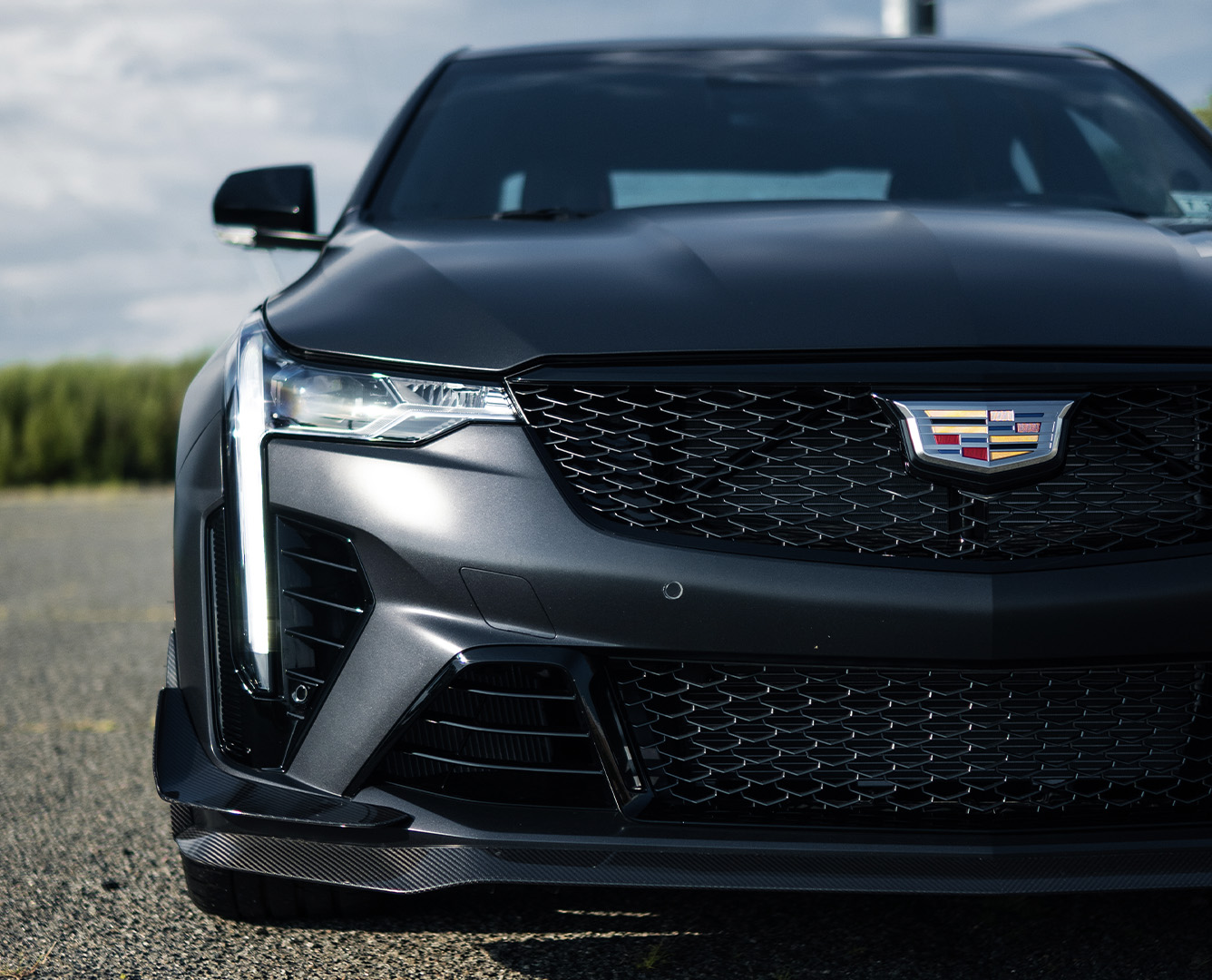
Value and Ownership: What “Affordable” Really Means
“Affordable” should never be a slogan; it should be a lived reality. Consider how maintenance costs, tire wear, brake components, and consumables behave when you drive aggressively. Track-capable cars can be demanding, especially on alignment and tires. But the upside is that these platforms are built to take abuse without feeling fragile.
Also consider longevity of experience. The CT4-V Blackwing is a statement piece: it can feel special even when you’re not pushing it. The RS3 tends to deliver a consistent, refined enjoyment that can remain satisfying over time. Both can be financially rational, but they deliver value through different channels—emotion for the Cadillac, engineering coherence for the Audi.
Which One Is the Better Track Star? A Practical Decision Framework
If you want a car that feels dramatic, responds with muscle-like urgency, and rewards aggressive driving styles, the CT4-V Blackwing is the one to chase. It’s for drivers who enjoy a little theater with their lap times—drivers who want the car to feel alive, not just fast.
If you want precision, composure, and a car that helps you build repeatable speed, the RS3 is compelling. It’s for drivers who prefer controlled inputs and measurable predictability. In many track situations, predictability becomes speed.
The best way to decide is to match the car to your driving identity. Are you drawn to tactile confidence and emphatic acceleration? Or are you drawn to crisp placement and methodical traction?
Closing Thoughts: Two Legends of the Underdog Class
The Cadillac CT4-V Blackwing and Audi RS3 are not trying to be expensive. They’re trying to be effective. In the arena of affordable track stars, both deliver thrilling performance while retaining enough everyday civility to keep them relevant after the adrenaline fades.
Ultimately, the “better” choice depends on your preferred flavor of speed. The CT4-V Blackwing brings a muscular, emotionally charged approach to performance. The RS3 brings engineering precision and disciplined momentum. Either way, you’re choosing a sedan that doesn’t just promise track capability—it earns it, one turn at a time.