The Audi R8 is the kind of supercar that doesn’t simply arrive—it lands. Like a comet with a license plate, it tears across the landscape with a low, urgent signature and a grin that seems welded onto its front fascia. And now, with the V10 era stepping into the sunset, the question isn’t just whether the R8 is impressive. It’s whether anything can replace the peculiar sensation of being chased by your own adrenaline.
Because the V10 R8 doesn’t feel manufactured. It feels composed. Every downshift has a rhythmic bite, every burst of throttle reads like punctuation, and every mile carries the faint aftertaste of molten metal. This is a supercar review for a car that—while still spectacular—signals the retirement of a sound, a character, and a certain kind of automotive poetry.
A Supercar in Disguise: The R8’s Character Unveils Itself
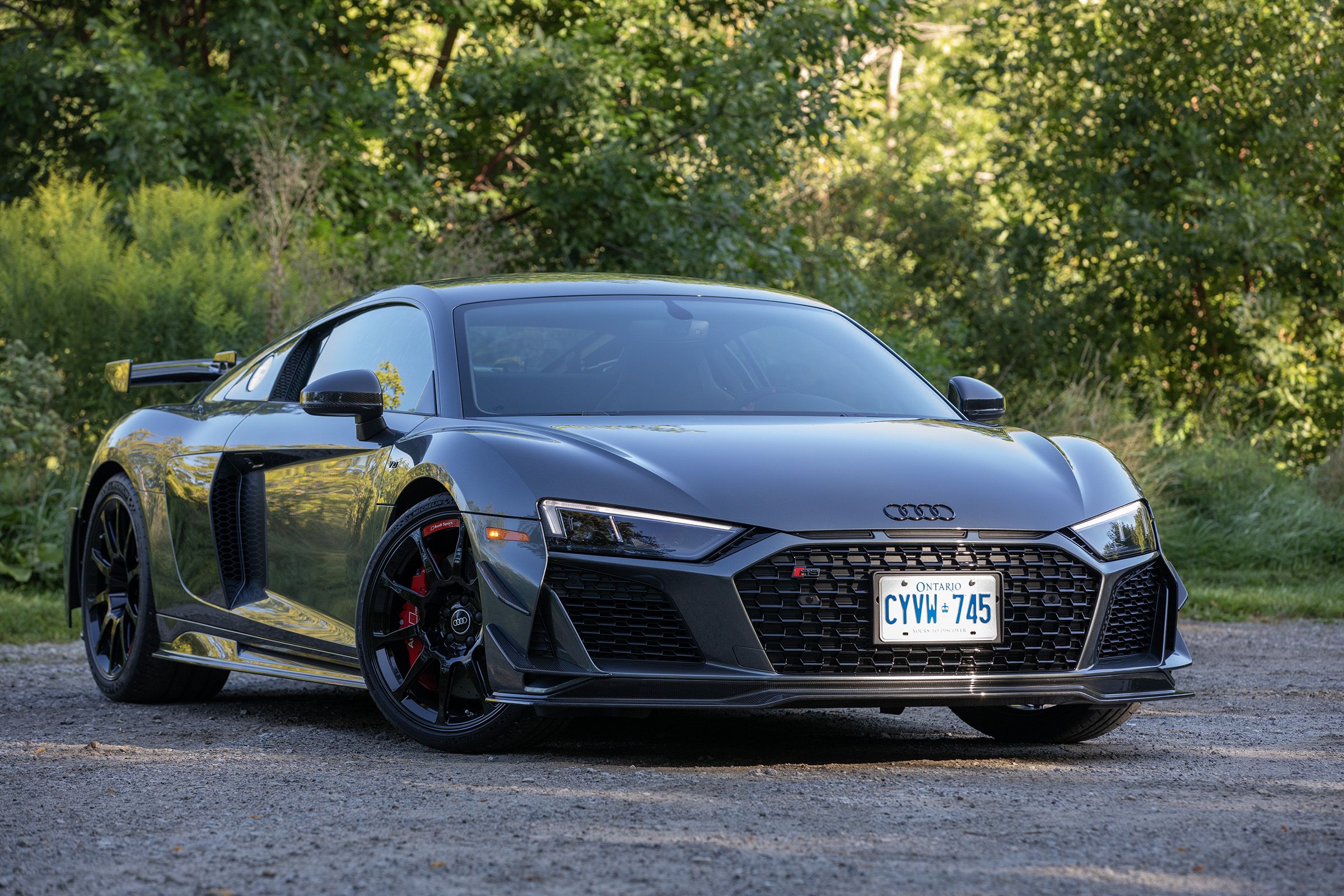
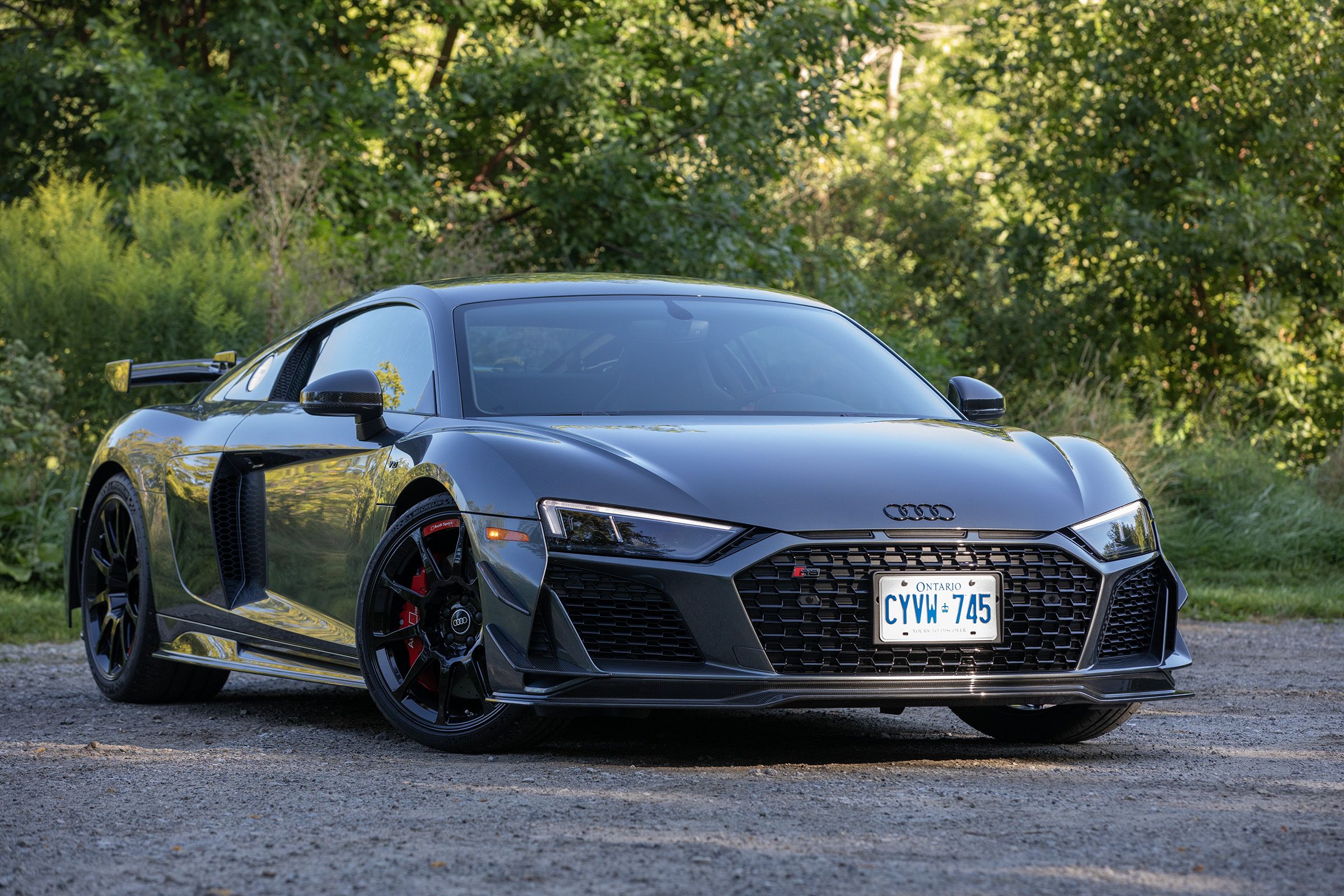
At first glance, the R8 can look sculpted rather than built, as if light itself had a hand in shaping its contours. The stance is planted. The proportions are intentional. Yet the true intrigue is subtler: it communicates through silence before it ever speaks. In the driveway, it’s statuesque. In motion, it’s predatory.
Think of the R8 as a guarded librarian that suddenly starts telling thrilling stories. The design isn’t screaming. It’s selectively vocal. The front end frames the road like a lens, tightening your focus on what matters: apexes, traction, and the choreography of speed.
The V10 Symphony: Where Sound Becomes Emotion
The heart of this retirement story is the V10. Not merely because it’s powerful, but because it’s expressive. The engine note is a living thing—an audible signature that climbs from metallic growl to high-speed revelry. You don’t just hear it; you feel it in your sternum.
In the midrange, the V10 pulls with a confident urgency. It’s not the kind of rush that feels like a switch flipped. It feels like a fuse being drawn across powder. Then, as revs climb, the soundtrack sharpens into a bright, eager roar—like a choir warming up before a final performance.
In a world drifting toward electrification, this combustion drama becomes even more precious. The R8 V10 is a reminder that engineering can be theatrical without becoming frivolous.
Acceleration and Control: Power That Doesn’t Rush Past You
Supercars often boast numbers. The R8 argues for something stranger: precise timing. It accelerates with conviction, yet it doesn’t behave like an untrained bull. Grip appears as if summoned, and the chassis keeps your inputs legible—your steering corrections, your throttle modulation, your braking confidence.
There’s a distinction between raw speed and composure under speed. The R8 leans into the second. Even when the momentum stacks up, the car feels tethered, as though it’s politely asking you to keep up rather than forcing you to survive it.
Short shifts feel crisp. Strong pulls feel inevitable. And when you lift and reapply power, the response resembles a well-aimed slingshot—elastic, sudden, and undeniably satisfying.
Road Feel: The Chassis as an Interpreter
Drive an R8 with attention and it turns into a translator. It takes the chaotic grammar of the road surface—ripples, seams, uneven grip—and renders it into something readable. The steering doesn’t just change direction; it communicates intention. The suspension filters without smoothing away the truth.
There’s also an admirable seriousness to the way the car corners. The R8 doesn’t treat bends like obstacles. It treats them like invitations. Weight transfer is managed with purpose, and balance feels engineered rather than guessed.
It’s a cockpit-forward experience, one where your body learns the car’s rhythms quickly. Short bursts become addictive. A slow approach to a corner turns into a fast approach you swear you planned all along.
Inside the Cockpit: Modern Tech, Old-Soul Satisfaction
Step into the cabin and the future is present—screens, menus, digital interfaces. Yet the sensation remains tangible. Materials feel deliberate. Controls are arranged like instruments in a studio, each button and dial positioned to reduce distraction.
The driving position is low and purposeful. Visibility is competitive rather than generous, which is part of the charm: the R8 makes you a participant, not a spectator. Your posture aligns with the machine’s mood, and suddenly the car feels like it’s sharing your intent.
The infotainment may be sophisticated, but the real narrative is the way the cockpit heightens anticipation. Even before moving, it makes you look forward—like a curtain pulled back halfway, promising something dramatic.
Braking and Confidence: Stopping Like You Mean It
A supercar without strong braking is just a thrilling rumor. The R8 earns its reputation with stopping power that’s firm, progressive, and reassuring under repeated pressure. Pedal feel is communicative—less “mystery meat” hydraulics, more direct conversation.
When you brake into a corner, the car stays composed instead of flinching. That composure matters. It transforms your driving from cautious to precise. You begin to trust your lines. You begin to trust your timing.
What “Retires” Really Means: A Farewell to a Style of Engineering
The phrase V10 supercar retires can sound like paperwork—an announcement, a change in production strategy. But emotionally, it reads like an endnote to a chapter that has shaped enthusiasts’ memories.
Combustion engines are being redefined by regulations, markets, and the march of electrification. Yet the R8 V10 isn’t merely an engine; it’s a personality. Its retirement is a metaphorical door closing on an era where sound, revs, and mechanical immediacy were central rather than optional.
The R8’s appeal has never been only about performance. It’s about the sensation of being close to the machinery—close enough to hear it breathe.
Unique Appeal: A Supercar That Feels Personal
Plenty of cars are fast. Fewer feel tailored to the driver’s mind. The R8 does. It turns each drive into a conversation: you ask, it answers, and the response arrives with clarity.
It’s playful without being chaotic. Aggressive without being crude. Stylish without being ornamental. The R8 offers a kind of charisma that doesn’t rely on spectacle alone. It relies on coherence—design, dynamics, and the V10’s audible drama moving in lockstep.
In the grand theatre of supercars, it’s both lead actor and stage manager. It guides the scene so your instincts can take center stage.
Final Thoughts: The Last Note Still Echoes
The Audi R8’s retirement of the V10 isn’t just a product update. It’s a cultural shift in how we experience speed. The V10 era has a way of making ordinary roads feel like racetrack rehearsals. That’s not nostalgia—it’s chemistry between machine and moment.
When the engine roars and the car surges forward, the R8 doesn’t ask for admiration. It compels attention. And even as the V10 chapter ends, the memory of that sound—bright, urgent, unmistakably mechanical—lingers like a refrain you can’t quite stop humming.
The R8 V10 may be retiring, but its legend continues. Not as an artifact, but as a benchmark for what a supercar can feel like when engineering decides to become art.