The first impression of the VinFast VF8 is not just visual—it feels logistical, like a door unlocking in a foreign landscape. Here comes a Vietnamese electric vehicle with the kind of confidence usually reserved for long-established automakers, stepping into the US market with a mission that is both ambitious and quietly practical. The VF8 isn’t merely an EV; it’s a statement about manufacturing momentum, brand audacity, and the willingness to learn in public. Yet, as with any newcomer’s grand entrance, the story contains both bright momentum and a few uneasy pauses.
In this review, the VF8’s character unfolds across multiple layers: design and cabin ergonomics, power and efficiency, driving dynamics, technology and infotainment, charging realities, ownership considerations, and how it competes in a crowded EV ecosystem. What readers can expect is not a simplistic scorecard. Instead, the VF8 is treated like a living system—one that reveals its strengths at highway pace, its quirks in everyday tasks, and its priorities when the conversation turns to long-term ownership.
Design Philosophy: A Bold, International Presence
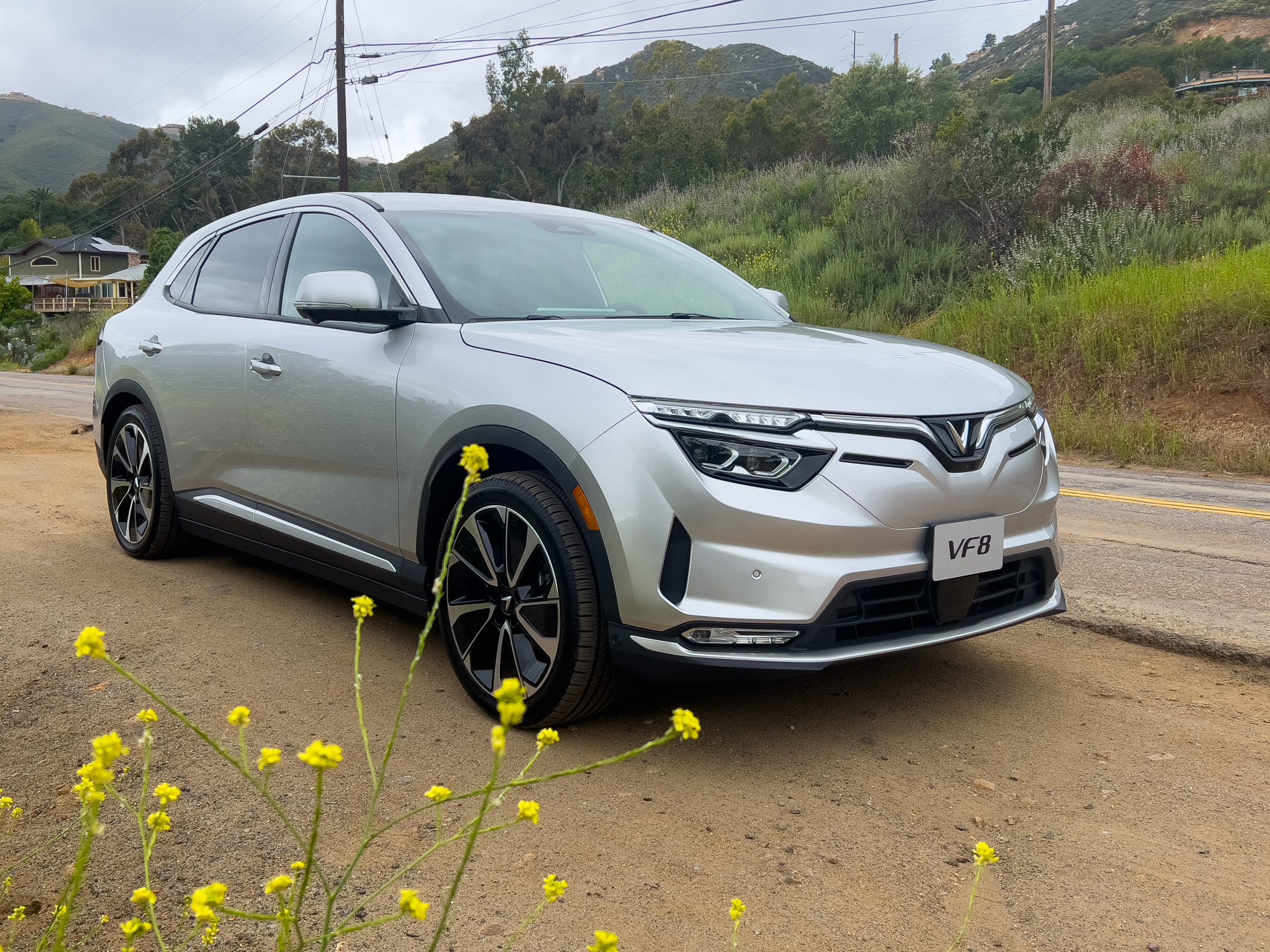
The VF8’s exterior doesn’t whisper. It projects. The front fascia carries a sculpted intensity, while the lighting signature gives the vehicle a distinctive silhouette, even among mainstream crossover noise. From certain angles, the VF8 looks almost theatrical, like it was engineered to be recognized quickly in parking lots and daylight traffic alike.
But aesthetics in EVs are more than surface gloss. An aerodynamic posture matters, and the VF8’s proportions—SUV stance, purposeful wheel arches, and a generally cohesive body line—work toward reducing wasted drag. This is the kind of design that aims to be “seen” without being “wasted.”
In the US, where the crossover class is effectively a default setting for many families and commuters, the VF8’s body language plays an important role. It looks like it belongs here, even if it carries the unmistakable energy of a brand still writing its own mythology.
Cabin and Ergonomics: Practical Comfort With a Subtle Edge
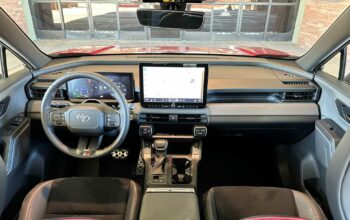
Inside, the VF8 emphasizes comfort and straightforward usability. The driver’s environment feels oriented toward quick interpretation—controls that don’t demand a ritual to understand. That matters because a vehicle’s daily value is measured in small moments: adjusting climate settings, navigating parking mode, and learning where key touchpoints live.
The seats balance support with a softness that doesn’t feel overly plush. It’s the kind of tuning that suits long drives without inviting fatigue. Materials and fit are also crucial. The VF8 gives the impression of being put together with a focus on visual order, though—like many newer platforms—some details read as more utilitarian than luxurious.
Visibility is another quiet determinant of satisfaction. The VF8’s stance supports a commanding view of the road, and its interior layout helps reduce the “lost in the dashboard” sensation that some EVs can create. In stop-and-go traffic, that confidence becomes a form of comfort.
Powertrain and Performance: Responsive, Yet Not Reckless
The VF8’s electric drivetrain delivers instant torque, as EVs do, but the sensation is not merely about acceleration bragging rights. It’s about how the power arrives—how traction is managed, how smoothly the car transitions between throttle inputs, and how predictable the vehicle feels under varying loads.
The VF8’s performance character tends toward assertiveness without turning into an every-day problem. That’s valuable for drivers who want quick merging capability but still prefer a calm, composed demeanor in daily driving. On winding roads, the vehicle’s weight and mass influence the ride and steering feel; it’s not a sports car. Still, there’s a sense of mechanical coherence in how it responds.
Regenerative braking also contributes to the overall personality. When tuned well, regeneration becomes a driving habit you barely notice—one that can reduce brake wear and enhance efficiency. In the VF8, regen behavior encourages a smoother, more anticipatory driving style.
Range and Efficiency: The Real-World Arithmetic
Range is where expectations and reality frequently collide. The VF8’s efficiency depends on speed, temperature, tire choice, and how aggressively you use the accelerator. On steady highway runs, efficiency can look appealing. In urban environments, the EV’s ability to harvest energy during deceleration gives it a natural advantage.
However, the most honest conversation about range always includes nuance. Battery performance shifts with climate. Cold weather can sap usable capacity, and high speeds can turn aerodynamic advantages into a distant memory. This is not unique to VinFast; it’s the EV law of physics.
What matters is whether the VF8 invites confidence in planning. Drivers need a mental model for charging stops, not a fantasy number extracted from ideal conditions. When that model clicks, the VF8 feels less like a gamble and more like a sensible daily companion.
Ride Quality and Handling: SUV Comfort Meets Electric Weight
As an electric SUV, the VF8 carries the inherent heft of battery integration. That weight influences ride texture. The good news is that the VF8 tends to deliver a controlled ride, absorbing routine imperfections without turning every seam in the asphalt into a harsh event.
Steering feel is a balancing act in EVs. Too light and it can feel detached; too heavy and it can become exhausting in tight maneuvering. The VF8 aims for a comfortable middle ground, though drivers who crave sharper feedback may find the feel more understated than some competitors offer.
On uneven roads, the suspension communicates road surface changes with clarity rather than confusion. Cornering behavior feels composed, especially when the driver avoids abrupt inputs that would ask more from tires than the chassis wants to provide.
Technology and Infotainment: Interface First, Complexity Second
EV adoption is powered by technology—and technology is only valuable if it behaves predictably. The VF8’s infotainment experience is built around a modern interface, designed to make navigation, media, and vehicle settings reachable without a prolonged stare at the screen.
Smartphone integration matters in the US, where many drivers treat vehicle connectivity like an extension of daily life. The VF8’s usability in this area tends to be oriented toward quick pairing and familiar workflows.
Driver assistance features, meanwhile, are where expectation management becomes essential. Advanced systems can reduce fatigue, but they do not replace attention. The VF8’s suite aims to support the driver during highway driving and routine commuting. When used with sensible awareness, it can feel like a helpful co-pilot rather than a distracting gimmick.
Charging Experience: Availability, Speed, and Confidence
Charging is less about theoretical capability and more about where and when charging is available. The VF8’s compatibility with common charging networks helps the car remain practical for a wide range of drivers. Still, charging speed is a moving target—dependent on station capability, battery state, and environmental factors.
At home, the story often becomes simpler. Overnight charging can turn the VF8 into a daily-use machine with minimal ritual. In apartments or workplaces with limited access, charging strategy requires more planning. Drivers may need to learn the rhythm of their local networks—where to reliably stop, how long it typically takes, and which stations work best in different weather.
What makes the VF8 feel “ready for the US” is the overall charging pragmatism: not every trip will be frictionless, but the vehicle’s ecosystem supports the fundamental EV requirement—keeping you on the road without constant anxiety.
Ownership and Value: A New Brand, a Serious Gamble
Brand perception can make or break a buyer’s confidence, especially for a newcomer. VinFast’s entry into the US is not a subtle arrival. It’s bold, and boldness brings scrutiny.
Value is not only about purchase price; it includes warranty coverage, service accessibility, parts availability, and the ease of resolving issues. A vehicle can be technically impressive and still become tiresome if ownership logistics are complicated. For prospective VF8 buyers, the ownership experience will hinge on how the brand scales support across regions.
Still, the VF8’s proposition has a compelling edge: it brings a competitive EV crossover format, a modern feature set, and a clear intent to build credibility through consistency. For drivers willing to embrace early-adopter energy, the VF8 can feel like a smart bet.
How the VF8 Fits Into the US EV Landscape
The US EV market is crowded, and crossover buyers have options spanning different price tiers, charging strategies, and design philosophies. The VF8 competes on its SUV practicality, modern tech orientation, and its ambition to be recognized immediately.
What differentiates it most is not a single headline specification. It’s the overall sense that the VF8 is engineered to be understandable quickly—visually, ergonomically, and technologically. That onboarding speed matters. An EV that takes too long to “click” can turn excitement into irritation. The VF8 attempts to avoid that trap.
In a segment where drivers often choose based on range anxiety, charging reliability, and brand confidence, the VF8’s success will depend on whether it delivers the same level of stability over time that it offers at launch.
Pros, Cons, and the Verdict
Pros: Striking exterior presence, comfortable SUV-oriented cabin ergonomics, responsive electric drive character, supportive driver-assistance intent, and an ownership path that can work well with home charging.
Cons: Efficiency and charging outcomes can vary with real-world conditions, and some drivers may find the handling feedback more understated than performance-focused rivals. As with any emerging brand, long-term ownership confidence depends heavily on service and support infrastructure.
Ultimately, the VinFast VF8 is an EV that feels like it’s arriving with momentum and a willingness to refine. It doesn’t pretend the journey is already finished. Instead, it offers a coherent, modern vehicle experience for drivers who want a new option without abandoning everyday practicality. For US buyers considering a Vietnamese EV, the question becomes less “Is it impressive?” and more “Does it fit my lifestyle, my charging reality, and my appetite for being early?”
Final Thoughts
The VF8’s most compelling trait may be its audacity to participate. It brings an international flavor to a market that rewards familiarity, and it does so with a crossover format that’s ready for daily life. The transition to an electric SUV can be intimidating for some drivers; the VF8 works to lower that barrier through intuitive usability and an experience designed for momentum rather than mystery.
In the end, the VF8 is not just a vehicle—it’s a cultural handshake between Vietnam’s EV ambitions and America’s appetite for technological change. If it earns trust through consistent ownership experiences, the VF8 could become more than a headline. It could become a genuine alternative.