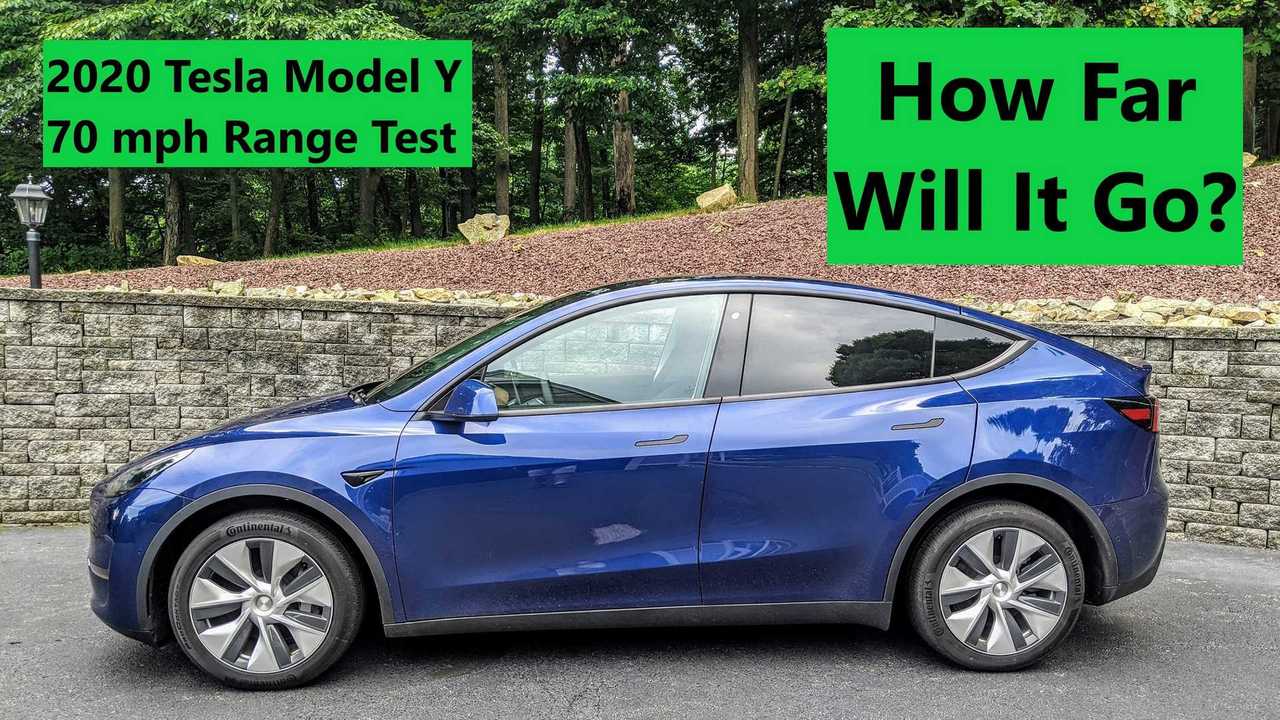
The highway has a way of telling the truth. Not the glossy, brochure kind of truth, but the kind etched into wind resistance, battery chemistry, and the quiet arithmetic of speed. Set a Tesla Model Y Long-Range to a steady 70 mph, then let the road do what roads do: stretch into horizons, compress distance, and test resolve. In this long-range highway range test, the journey becomes less a mere drive and more a kind of measurement ritual—one where numbers feel strangely alive.
Think of the Model Y at 70 mph as a metronome with torque. Every mile is a beat; every minute is a decision about efficiency. The long-range promise is not only about how far the vehicle can go when conditions are kind. It is about how gracefully the promise survives when the atmosphere tightens, when drag increases, and when the powertrain must stay composed under sustained demand.
Why 70 mph Matters: The Speed That Demands Respect
Seventy miles per hour is a deceptively specific target. It is not the leisurely cruise that invites optimism, and it isn’t the sprinter’s pace that turns range into a vanishing act. At 70 mph, aerodynamic drag climbs with a relentless logic: the faster you go, the more the air demands tribute. That air becomes a kind of invisible terrain, harder than it looks.
In practical terms, this speed is where drivers start feeling the difference between “efficient cruising” and “serious highway work.” It is also where the vehicle’s thermal management and power delivery show their character. The Model Y Long-Range doesn’t merely move forward—it negotiates with physics, keeping the relationship steady even as resistance rises.
Baseline Expectations: What Long-Range Really Means on the Open Road
Long-Range is often discussed like a headline number. Yet highway range is more like a symphony than a single note. Consumption changes with elevation, traffic flow, and even the mood of the sky. A long-range vehicle must therefore be more than powerful; it must be tactfully controlled.
The Model Y Long-Range, with its aerodynamic design and energy-efficient architecture, aims to make 70 mph feel less like an endurance event and more like a calm glide. The test at this speed becomes a lens: it reveals whether the vehicle’s efficiency advantage is resilient, or whether it fades once the drivetrain is forced to keep up a higher, steady workload.
Just as an experienced traveler adjusts pace to conserve energy for later, this test evaluates how intelligently the car allocates its power reserves across a sustained stretch of time.
Aerodynamics and Energy: Where the Highway Writes the Rules
At highway speeds, aerodynamics shifts from “important” to “dominant.” The Model Y’s silhouette, its airflow management, and the way it reduces turbulence all contribute to how much energy is needed to move the vehicle through the air. While tires and rolling resistance still matter, wind drag often becomes the main accountant, balancing the budget line by line.
In a 70 mph test, the car’s efficiency is essentially its ability to keep that budget from hemorrhaging. Each additional mile per hour nudges the consumption profile upward like pushing a lever that gets heavier with every notch. The Model Y must counterbalance that lever through design discipline and smart control.
The resulting experience can feel paradoxical: the vehicle is moving fast, yet the energy usage can remain remarkably composed, as if it has learned to breathe through the resistance.
Powertrain Behavior: Electric Torque Without the Reckless Appetite
One of the unique appeals of the Tesla approach is the smoothness of torque delivery. Electric propulsion offers strong pull without the spiky behavior that can come from less refined power management. In a range test, that matters because consistent power delivery helps avoid the “efficiency whiplash” that can happen when acceleration style is inconsistent.
At a steady 70 mph, the car’s systems can settle into a stable operating pattern. The battery can deliver power with a predictable rhythm, and the drive units can maintain their thermal comfort. In that steadiness, the vehicle becomes a controlled instrument rather than an impulsive accelerator.
It’s a subtle kind of confidence. Not loud confidence—more like a quiet certainty, where each propulsion request is answered with efficiency rather than urgency.
Battery Management and Thermal Control: The Unseen Guardians
Efficiency at highway speed is not only about aerodynamics and speed. It is also about the battery’s willingness to behave. Batteries dislike extremes—overheating, excessive cooling, and inefficient operating windows. Tesla’s thermal management system acts like a vigilant stagehand, ensuring the power source stays in a workable range.
During a long-distance test, the battery must remain stable while continuously supplying current. The vehicle’s ability to keep thermal conditions consistent can protect range from sudden drops. That stability is particularly valuable at 70 mph, where the vehicle might not have the frequent opportunities to coast and recover energy.
When the thermal system performs well, the range feels less like a countdown and more like a gradual, orderly dissipation—like fog thinning instead of fire racing toward the end.
Energy Consumption Patterns: The “Smooth Fade” of Real Driving
A range test often reveals a psychological truth: range anxiety is frequently fueled by the expectation of an abrupt cliff. In reality, energy depletion tends to be smoother, more incremental, governed by stable consumption and occasional efficiency variation.
At a constant 70 mph, the Model Y’s consumption pattern is typically steadier than in stop-and-go scenarios. That steadiness makes the test especially valuable. It allows the highway to do its work without traffic drama distorting the results. The numbers—whether measured through consumption rate trends or remaining range behavior—often trace a consistent curve.
This is where the metaphor becomes clear: the highway becomes a long corridor, and the battery is a lantern. In an efficient setup, the lantern dims slowly and predictably, letting the driver plan forward rather than speculate wildly.
Cabin Comfort and Practicality: Efficiency With a Human Face
Long-range usability depends not just on raw distance, but on comfort under sustained travel. Climate control, seat heating or cooling, and overall vehicle comfort can influence consumption. The difference between a range test that ignores cabin needs and one that resembles real driving is the difference between a laboratory and a lived experience.
The Model Y Long-Range has a reputation for making highway travel feel composed. That composure includes the way the cabin supports long stretches—reducing fatigue, keeping the driver engaged, and minimizing the “constant attention” that some efficiency-first vehicles demand.
When comfort and energy efficiency align, the car feels like a partner rather than a spreadsheet.
Charging Strategy: Turning Distance Into Planning, Not Panic
The allure of long-range vehicles often reveals itself most during charging stops. A practical range test at 70 mph doesn’t only answer “how far?” It also informs “how to orchestrate the day.” Charging frequency, charger availability, and time overhead all influence the real-world outcome of long trips.
Here, the appeal of the Model Y’s long-range character becomes strategic. Even if you cannot stretch every mile to the last possible decimal, a higher highway range reduces the number of interruptions. Fewer stops can mean fewer variables: less waiting, fewer detours, more continuity.
In metaphorical terms, charging stops transform from looming emergencies into scheduled pauses—rest breaks with an electronic pulse.
Unique Appeal: A Highway Cruiser With an Efficient Heart
The Tesla Model Y Long-Range holds a particular kind of charm: it turns the act of covering distance into something closer to calm propulsion than strenuous transportation. At 70 mph, it demonstrates a balance between speed and restraint. It does not treat efficiency like a compromise; it treats efficiency like a philosophy.
That philosophy shows up in the interplay of aerodynamics, power delivery smoothness, thermal discipline, and the predictable consumption behavior of steady cruising. The result is an experience that feels almost cinematic—like watching the landscape flow by while the vehicle’s energy use stays measured, almost deliberate.
For drivers, that uniqueness matters. It changes the tone of a road trip. It makes the highway feel less like a test and more like a path.
Conclusion: The Highway Verdict at 70 mph
A Tesla Model Y Long-Range highway range test at 70 mph is ultimately a question of trust: can a promise survive the realities of sustained speed, atmospheric drag, and continuous demand? The answer lies in the vehicle’s ability to keep its systems composed and its energy consumption steady. The highway doesn’t negotiate. It evaluates. And in this test, the Model Y’s appeal sharpens into something tangible—distance that feels approachable, planning that feels confident, and efficiency that holds its nerve.
In the end, the 70 mph number is more than a setting. It is a threshold where most vehicles either rise to the occasion or reveal their limits. The Model Y Long-Range, driven steadily and methodically, earns its reputation not with fantasy, but with measured momentum.