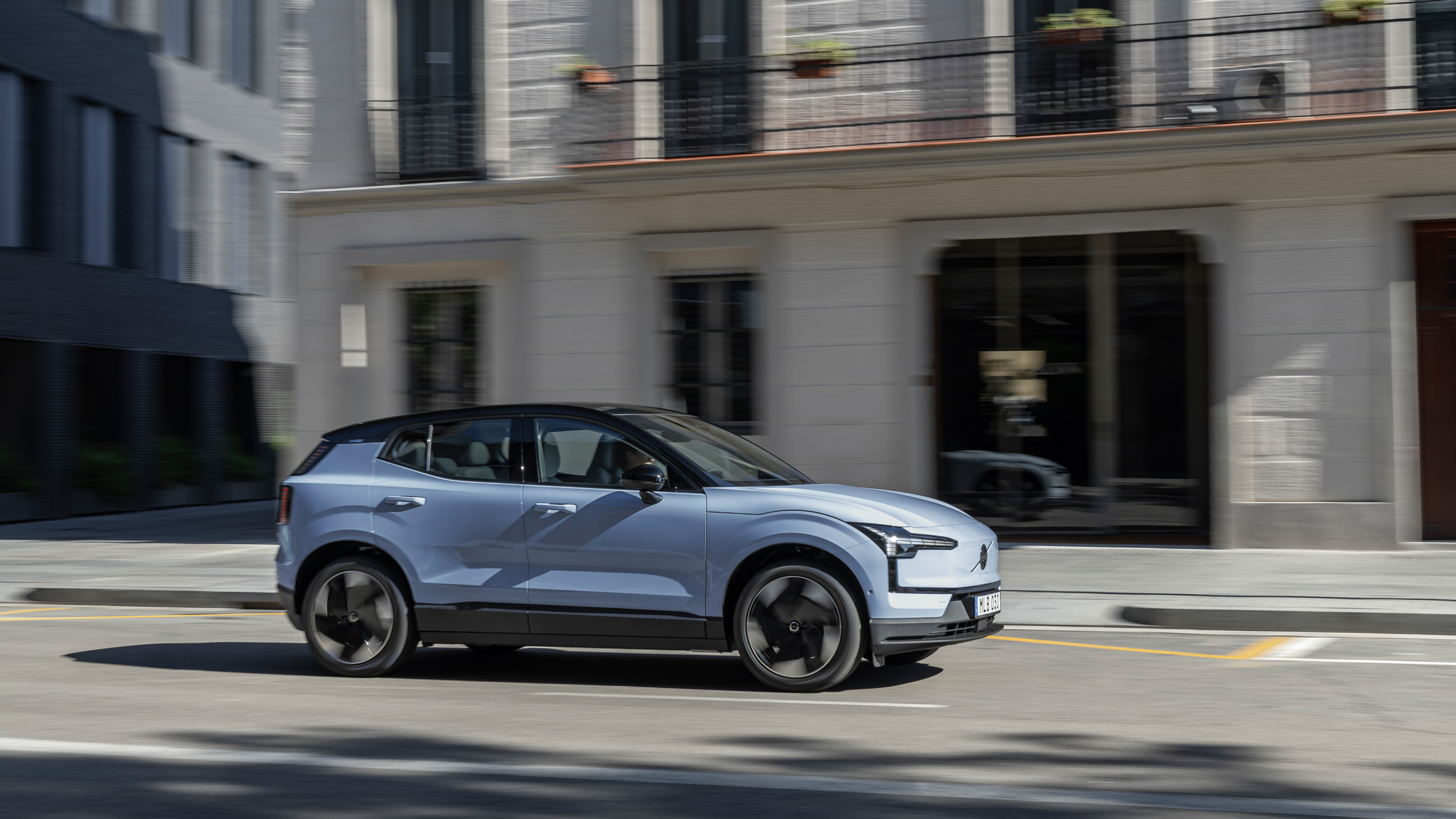
Volvo has always traded in the reassuring logic of safety and the quiet confidence of design. So when a compact electric like the EX30 arrives on the scene, it doesn’t just promise efficiency—it promises a different kind of arrival. But here’s the playful question lurking beneath the glossy photos and the tidy spec sheets: if a small, affordable EV is meant to be easy to love, why does it sometimes feel like it may be delayed into the real world?
The Volvo EX30’s story has a familiar modern rhythm—anticipation, headlines, prototype glimpses, and then the nagging uncertainty of timing. A delay, even a short one, can be more than a calendar hiccup. It can reshape budgets, alter shopping plans, and cool the enthusiasm that builds when an automaker says, “Soon.” And yet, delays can also be a form of discipline—an attempt to iron out the creases before the vehicle lands where it’s supposed to: in driveways, not in presentations.
So the challenge isn’t just “When?” The real challenge is: what does the wait do to the EX30’s momentum, and what does it mean for buyers trying to make a confident decision in a market that moves like a sprint?

Why the EX30’s “small” identity matters
The Volvo EX30 is designed to be compact in the literal sense—small footprint, city-friendly proportions—but also compact in the psychological sense. Many shoppers want an EV that doesn’t demand a life reconfiguration. They want something that fits their parking realities, their commute habits, and their willingness to experiment with new tech.
That’s why affordability becomes a fulcrum. At a lower price point, an EV stops being a rare indulgence and starts looking like an everyday tool. But affordability also creates a stricter expectation window. Buyers at this tier often treat delays like a tax on trust. They’ve already penciled in a purchase, calculated a financing plan, and converted skepticism into intent.
In other words, when an EX30 delay appears, the ripple effects are immediate. A delayed launch can push a buyer toward a substitute vehicle, not because the substitute is better, but because momentum matters. Waiting can feel like wandering.
Prototype excitement versus production reality
Prototypes are seductive. They make the future look tangible. A first-ride impression can feel like proof that the concept has matured into something drivable, coherent, and real. But prototypes also come with the gentle ambiguity of “nearly.” The engineering details that feel invisible in marketing can become visible the moment production schedules tighten.
Between a prototype and a production car lies a maze: supply chain choreography, software validation, manufacturing readiness, and regulatory compliance. Each step can be straightforward. Each step can also be stubborn. And when the vehicle is meant to hit a price target, the margin for delay narrows. The schedule isn’t just an engineering matter—it becomes a financial instrument.
Here’s the potential challenge: if the EX30’s development takes longer than planned, the public narrative can pivot from anticipation to skepticism. It’s a subtle shift. Enthusiasm is buoyant; skepticism is gravitational. One changes how people interpret silence. The other changes how people interpret every news update.
What a delay might be protecting: quality, software, and certainty
Not every delay is a failure. Some delays are protective measures, designed to prevent a chaotic launch. EVs are not merely vehicles with batteries; they are software platforms with wheels. That makes testing a non-negotiable ritual.
Modern infotainment, driver-assistance features, charging behavior, and energy-management logic all have to behave consistently—at launch, not after the customer gets involved. If the EX30 has a chance of delivering Volvo’s polished calm, software stability matters as much as range figures.
There’s also the hardware choreography: battery supply reliability, charging compatibility validation, and thermal management performance. Compact platforms can be especially sensitive to packaging constraints. The space that makes the EX30 “small” also forces every component to share the same real estate. That can turn minor changes into cascading adjustments.
So when the EX30 seems to drift in timing, it may actually be a quiet trade-off: less rushing, more verification. The challenge is that the benefit isn’t always visible in the public eye. Buyers see dates. Engineers see failure modes.
The affordability equation—and what delay does to it
Affordability is not just a number on a sticker. It’s the entire economics of ownership: incentives, insurance ranges, charging infrastructure accessibility, and resale expectations. A delay can distort those variables.
If a buyer plans to replace a car in the next few months, an EX30 delay might force them to keep an older vehicle longer. Maintenance costs stack up like overdue interest. Depreciation continues, even when you don’t drive. The “savings” of buying affordably can dissolve under the weight of time.
Then there’s the incentive calendar. EV incentives can change faster than people expect. Utilities can update rebates, and policy decisions can shift. A delay can move a purchase into a different regulatory climate, with different benefits.
And yet, if Volvo uses the extra time to ensure the EX30 lands with sharper consistency—pricing stability, feature availability, and fewer launch issues—the delay could be redeemed. The tricky part is that redemption is future-tense, while frustration is present-tense.
Buyer psychology: confidence is fragile
Some shoppers are patient. Others are not. The EX30’s compact affordability means it targets a broad audience, including first-time EV adopters and financially careful households. For those buyers, confidence is not a luxury. It’s a requirement.
In this segment, a delay can trigger alternative behavior. People start browsing other brands, comparing charging experiences, and seeking vehicles with clearer delivery windows. This is where the playful question becomes pointed: if the EX30 is meant to make EV ownership feel approachable, why does the timeline sometimes feel elusive?
Car shopping is already a high-friction task. Conflicting reports and evolving schedules can feel like a moving target. And even if the EX30 eventually arrives exactly as hoped, the emotional damage of uncertainty can linger.
What to watch next: signals that a delay is “benign”
If the EX30’s arrival feels delayed, the key is to interpret the shape of the delay. Some signs are reassuring: continued prototyping progress, stable feature announcements, clear communication about the scope of change, and evidence that the car is moving through validation rather than drifting in limbo.
Look for concrete updates that describe readiness: software milestones, manufacturing readiness announcements, and consistent availability of key configurations. When the messaging narrows toward specificity, it often means engineering has transitioned from exploration to confirmation.
Also consider the market context. If competitors are tightening their own release schedules or shifting production priorities, that can influence delivery windows across the industry. A delay can be partly about manufacturing realities, not just internal indecision.
So—small and affordable, or delayed and complicated?
The EX30 aims to deliver a compact EV experience that feels friendly, modern, and distinctly Volvo. That promise is compelling. But the potential delay introduces a practical question every buyer must face: does the wait threaten the plan, or does the wait refine the product?
The answer likely lies in how the delay is handled. If Volvo uses the extra time to strengthen software stability, improve manufacturing consistency, and ensure customers get the experience that was previewed, the delay could be a strategic correction. If the timeline uncertainty drags on without clarity, it could erode the very momentum that makes an affordable EV irresistible.
Either way, the EX30 remains an intriguing proposition—a small vehicle with big cultural implications. For drivers who want an EV that fits real life, the wait may feel like an interruption. For the car itself, that same wait could be the quiet work that turns anticipation into fulfillment.
When the EX30 finally arrives, the question will shift from “Was it delayed?” to “Was it worth the pause?” And if Volvo threads that needle successfully, the compact electric might not just live up to the hype—it may outlast it.