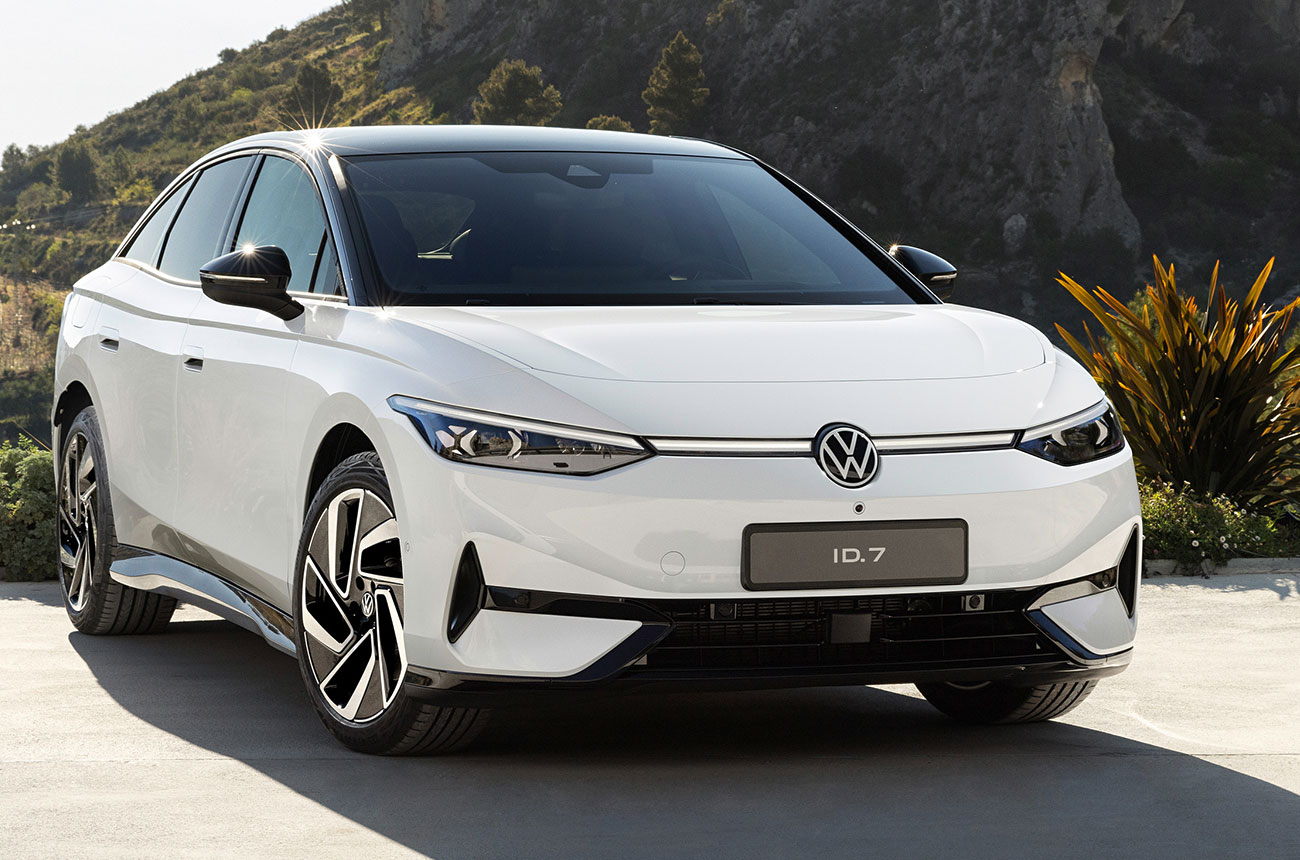
The question is no longer whether the electric sedan era will arrive in the United States—it’s which models will define it. Volkswagen, long associated with durable practicality and quietly confident design, has now set its sights on a new kind of mainstream: a sleek, high-efficiency electric sedan with the kind of aerodynamic discipline that doesn’t just look good, it works. The Volkswagen ID.7 has been positioned as a statement piece for the EV world, but the bigger conversation is whether it will truly land on US soil, how it would be configured for American tastes, and what content—meaning the experiences, numbers, and decision points—drivers can expect if it becomes part of their daily reality.
Imagine a car that treats air like a first-class component. Imagine a cabin designed around calm usability rather than gimmicks. Now imagine the US market deciding whether that philosophy deserves a place in driveways from California to the Carolinas. That’s the tension running through every headline, every spec rumor, and every “will it be offered here?” question.
What the Volkswagen ID.7 represents: a new tone in the EV sedan segment
The ID.7 isn’t simply another electric vehicle with a fresh badge. It’s framed as a long-range, streamlined sedan built to minimize energy loss—an approach that feels especially relevant for US highways, where steady speeds can define the difference between “works for a week” and “works for a season.” The exterior language leans into smooth continuity: fewer sharp interruptions, more integrated surfaces, and a profile that looks like it’s gliding even when standing still.
For readers, this matters because content coverage around the ID.7 tends to revolve around real-world coherence. People want to know if it behaves like its design promises. They also want to know whether it brings a distinctly Volkswagen kind of usability—something between “feature-packed” and “refreshingly uncomplicated.”

US availability: the practical question behind the hype
Whether the Volkswagen ID.7 arrives in the US is a matter of more than shipping plans. The American market has its own ecosystem of expectations: charging behavior, infotainment preferences, safety regulations, and even the way buyers compare trims. A European-oriented EV can be brilliant, but it must still be domestically legible—meaning it needs local compliance, predictable dealer support, and a charging story that doesn’t require guesswork.
Content readers can expect around US availability typically falls into several categories:
1) Timing and confirmation: “When will it be offered?” coverage will track official announcements, production cues, and dealership rollout signals.
2) Trim and pricing narratives: Articles often map how equipment levels translate into US dollars and what compromises might appear (or disappear) in different configurations.
3) Regional policy fit: Buyers increasingly expect vehicles to align with incentives, tax-credit frameworks, and state-level charging infrastructure. That means content may explore eligibility and ownership costs rather than only technical specs.
Short sentences often underline this reality: the US doesn’t only buy cars—it buys certainty. Long sentences tend to explain how the ID.7 would fit into that certainty, with details that stretch from software readiness to service availability.
Range, efficiency, and highway reality: where the ID.7 would be judged
Efficiency is where the ID.7’s identity becomes measurable. A streamlined sedan can only earn its reputation if it maintains composure at speed. US drivers care about highway range and consistent energy usage, not just optimistic laboratory numbers. If the ID.7 is brought to the US, expect a wave of content focused on:
Real-world range estimations: Articles may discuss how driving style, tire selection, and climate affect usable miles.
Energy consumption breakdowns: Coverage often translates efficiency into “how many kWh per mile” logic, because it’s easier to trust than vague marketing.
Cold-weather behavior: Since the Midwest and Northeast demand winter survivability, readers will likely see analysis of heating loads and battery thermal management.
For long-distance commuters, the appeal of a sedan isn’t just range—it’s rhythm. The ID.7’s design suggests it was built to keep that rhythm stable: fewer aerodynamic interruptions, smoother stability, and a driving posture that encourages relaxed steering inputs.
Charging experience in the US: speed, compatibility, and convenience
Even the best range becomes irrelevant if charging feels awkward. US readers typically want a straightforward answer: how fast can it charge, how reliably will it connect, and what’s the charging curve like over time? Content around the ID.7 for US buyers would likely cover multiple dimensions of charging usability.
DC fast-charging capability: Expect discussion of peak charging power and how it tapers as the battery fills.
Connector ecosystem: US compatibility isn’t optional. Buyers care about whether the vehicle works cleanly with common networks and whether app-based access becomes friction or convenience.
Charging curve expectations: Longer-form pieces usually include “what happens after the initial surge” because that predicts trip planning more than a single headline number.
Here, the narrative tone matters. Short lines communicate confidence. Long paragraphs translate complexity into something a driver can use while planning a weekend drive.
Design and interior atmosphere: Volkswagen’s usability, reimagined
A sedan’s interior is a daily negotiation: visibility, ergonomics, storage, and comfort over long stretches. The ID.7’s broader design philosophy suggests a cabin built for a low-friction routine. In content coverage, readers can expect emphasis on:
Visibility and stance: How the dashboard layout affects sightlines in traffic and in parking lots.
Seat comfort and acoustic behavior: Electric cars often excel in silence, but the real question is whether the cabin stays composed at speed.
Storage practicality: Cupholders, trunk access, and rear-seat room aren’t glamorous, but they determine whether the car becomes “the one” or just “the interesting option.”
Expect photos that highlight the cabin’s layout and a growing list of user-focused commentary: how it feels at 6 p.m. after a full workday, how it handles groceries, and whether it makes long-distance stretches less exhausting.
Technology and driver assistance: what will matter to American buyers
Modern EV sedans live at the intersection of software and motion. US buyers increasingly evaluate driver assistance features as part of safety and convenience, but they also want clarity about how systems behave in varied conditions. If the ID.7 is positioned for the US market, content will likely explore:
Infotainment flow: Whether navigation and media integration feel fast and intuitive, not laggy or overly menu-driven.
Driver assistance maturity: Coverage may address how adaptive cruise behaves, how lane centering feels, and how the system communicates limits.
OTA updates and longevity: More readers now care about software freshness—what improves over time and what might stall.
These topics tend to generate both excitement and skepticism. That’s because technology is powerful when it’s seamless—and annoying when it’s opaque.
Trim strategy and value proposition: the question of “should I care?”
Value in the US market is an algebra problem: price, incentives, range, charging convenience, and resale confidence. The ID.7 would likely need to be explained not just as an appliance, but as a long-term proposition. Content readers can expect to see:
Trim-by-trim breakdowns: Which features are standard, which are optional, and what trade-offs exist between different configurations.
Ownership cost discussions: Charging costs, insurance considerations, and service expectations.
Competitor comparisons: The ID.7 will inevitably be measured against other electric sedans and crossovers with similar pricing logic.
Sometimes long sentences help: they connect the dots between hardware, software, and everyday expense. Sometimes short sentences cut through: “This trim is the sweet spot,” or “This feature is missing where you’d expect it.”
Safety, warranty, and dealer ecosystem: the confidence layer
Even when the car is compelling, buyers ask a different question: will ownership be calm? Safety ratings, warranty coverage, and service networks all contribute to that feeling. Content for US readers would likely include:
Safety evaluation summaries: Crash test coverage and how it translates to real-world driver protection.
Warranty terms: Battery coverage, drivetrain assurances, and the fine print around components.
Dealer readiness: How service scheduling works, whether parts availability is predictable, and how technicians are supported.
This is where narratives shift from speculation to reassurance. If the ID.7 becomes a US product, the best articles won’t only celebrate design—they’ll document the ownership experience as it evolves.
What US buyers should watch next: decision-ready checkpoints
If the Volkswagen ID.7 is heading toward the US, the most useful content will act like a checklist. Rather than drowning readers in speculation, it will prioritize the checkpoints that decide whether a vehicle belongs in a shopping list:
Official pricing and trim structure: Without it, comparisons feel incomplete.
Charging specs and real-world reporting: Numbers should be paired with trip-based context.
Availability of test drives: For a sedan, the steering feel and cabin comfort can be deal-makers.
Software feature confirmations: Confirmation beats assumption, especially for user-facing tech.
In other words, the next chapter of ID.7 coverage should move from imagination to verification. When the facts arrive, drivers will respond quickly.
Conclusion: a US-bound sedan built for glide, not noise
The Volkswagen ID.7 has the look of an electric sedan that wants to be taken seriously. It suggests a future where efficiency is elegant, range is practical, and design isn’t merely decorative—it’s functional. Whether it becomes a true US presence depends on rollout decisions, configuration choices, and the charging and ownership experience that follow.
For readers, the best content will not only describe what the ID.7 is, but what it would feel like to live with it: how it handles daily commutes, how it performs on long drives, how it charges without drama, and how confidently it integrates into the US EV ecosystem. If Volkswagen manages that translation from global concept to local reality, the ID.7 could become the kind of sedan drivers recommend quietly—then keep.