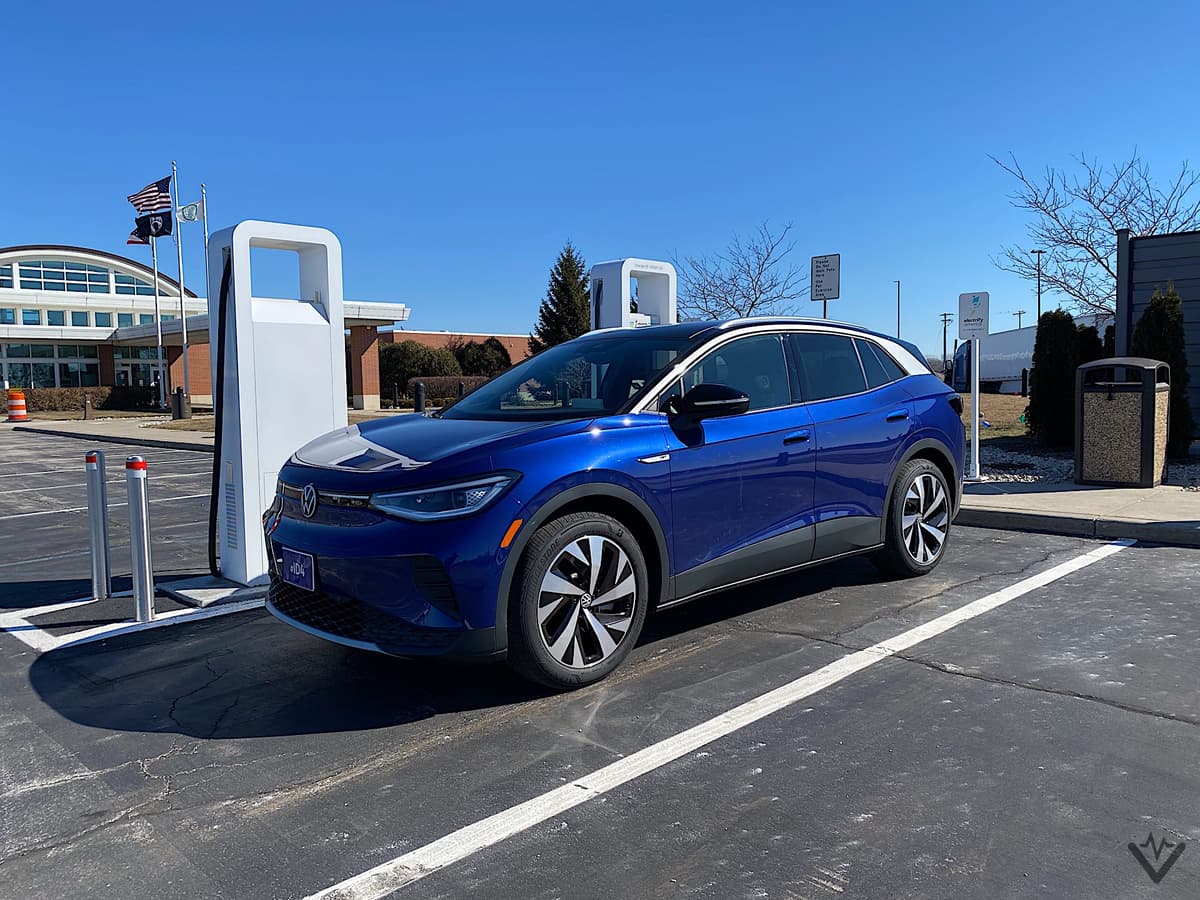
Picture this: you’ve packed the essentials—snacks, a playlist you swear you’ll “only” listen to on the drive, and a road map of charging stops that looks suspiciously like a treasure map. Then you glance at your dashboard and ask a playful question: Will my Volkswagen ID.4 be a smooth co-pilot… or a dramatic cliffhanger with a too-precise charge target? The modern EV promise is electrifying, but the road trip reality is always a little more… tactile. Coffee needs to be purchased. Routes need rerouting. Sometimes the charger is occupied, sometimes it’s temperamental, and sometimes your arrival time is just slightly too optimistic.
This is a DC fast-charging experience story—told from the perspective of someone who wants to keep momentum, not just maximize percentages. The goal is simple: understand how an ID.4 handles the frantic ballet of charging on the fly, and what practical habits make the difference between “we’re cruising” and “why is this taking so long?”
Road Trip Setup: Planning Without Overplanning
Start with intention, but don’t build a rigid itinerary that can’t survive reality. For a Volkswagen ID.4 road trip, the sweet spot is to plan a rough charging cadence: enough stops to avoid stress, but not so many that you feel chained to the grid. You’re aiming for a rhythm—arrive, charge, depart—rather than an occasional emergency pit stop.
Choose charging locations that are more than just “near.” Look for sites with multiple stalls and good accessibility. Stations with amenities can be more than convenience; they’re time buffers. A fast charge is still energy-intensive, and the best experience usually involves a quick reset—stretching legs, grabbing hydration, and letting the battery settle into a charging-friendly window.
Consider the potential challenge up front: fast charging isn’t constant. It often begins strong and then tapers as the battery fills. That means your stop strategy should be time-based rather than purely percentage-based. A target like “enough to reach the next charger comfortably” is frequently better than “fill to the max every time.”
First Arrival: The Charger Handshake Moment
Pulling into a DC fast charging bay can feel like approaching a mechanical door that may or may not open. On the ID.4, the experience begins with authentication—plug in, confirm compatibility, and wait for the vehicle and charger to agree on the rules of engagement. This is where the mood can swing. One minute you’re excited; the next you’re staring at the screen, half-impatient, half-prayerful.
The key is to stay methodical. Make sure your charging session is actually active. Check whether the station shows your vehicle as charging, and confirm the ID.4 interface reflects the session status. If something looks delayed, the first response should be calm troubleshooting: reconnect, reauthenticate, or select the correct connector if multiple outputs are present.

Here’s the playful challenge disguised as a practical tip: Don’t assume the charger’s been charging while you were pulling in. Give it a moment to “wake up,” and then verify. Tiny delays compound on road trips. A two-minute uncertainty can become ten minutes of lost momentum—especially if you’re traveling with a strict arrival plan.
Charging Curve Reality: Why “Fast” Isn’t “Forever”
DC fast charging is impressive, but it behaves like a sprinter, not a marathoner. Early in the session, the battery accepts energy aggressively. As the pack fills, the charging rate usually tapers to protect battery health and maintain thermal balance. This is not a failure—it’s physics with a safety conscience.
On the ID.4, an effective strategy is to charge in segments. Think of it as leapfrogging. You want enough charge to continue confidently to your next stop, while minimizing the time spent in the slower, later phase of the curve. If you’re wondering why the last 20% can feel like watching paint dry, this is why.
Timing your stop can be the difference between “quick top-up” and “long linger.” If your schedule allows, consider leaving a charger when the rate begins to soften rather than when you hit a visually satisfying number on the screen.
Route Rhythm: Turning Charging Into a Break, Not a Detour
The best road trips are built from micro-pauses. Fast charging is one of them—when treated correctly. A DC session can become a productive interlude: a restroom break, a snack reset, a stretch, and a quick scan for the next leg’s weather and traffic.
Don’t underestimate how often you’ll need to make tiny course corrections. Detours happen. Roadworks appear. A detour might add 30 minutes, which can shift your next arrival time and affect whether you arrive at a “peak charging appetite” moment or a “slow phase” moment. Flexibility is a superpower.
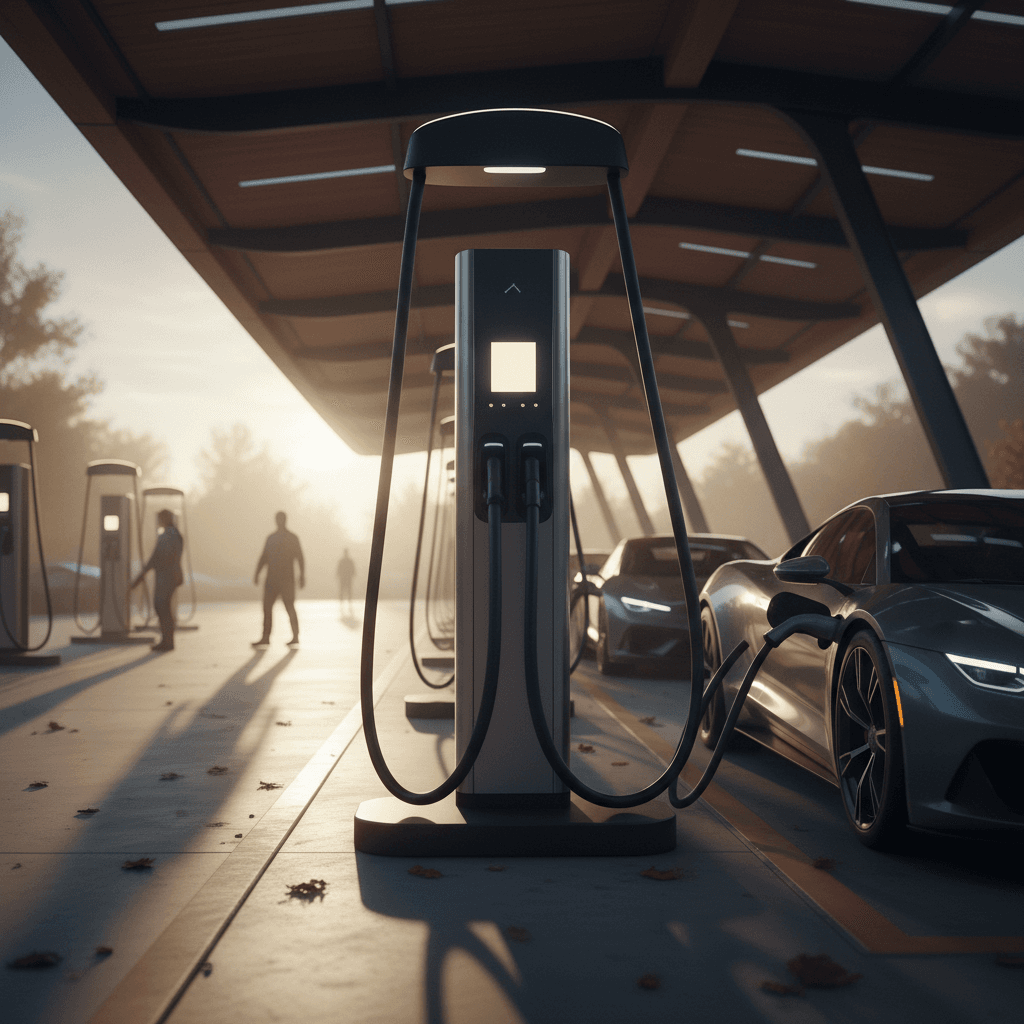
And now the sneaky question: What will you do if the charger is occupied? That’s the real road-trip challenge. A good plan includes a fallback station nearby—ideally one with multiple stalls or different providers. When you have a contingency, the trip stays smooth even when the world is not.
Temperature and Timing: The Quiet Variables
EV charging performance is sensitive to temperature, and the ID.4 is no exception. Battery conditioning helps, but real-life conditions vary. If you arrive at a fast charger after climbing hills or driving through intense heat, the battery may need time to stabilize. Likewise, cold weather can change the charging behavior dramatically.
In practical terms, arrive with momentum—but not with panic. If your route includes a long highway segment followed by immediate charging, that’s often favorable because the battery is warmed somewhat. If your drive is short or the vehicle has been sitting in cold conditions, you may notice slower initial charging until the pack warms.
Use the ID.4’s navigation and preconditioning features when available, aligning them with the charging stop. This can help the battery reach a more charge-friendly temperature before you plug in.
Connector Confidence: Avoiding the “Where Do I Plug In?” Trap
Charging logistics are a surprisingly large part of the experience. Ensure you know which connector your station is offering and whether it matches your ID.4’s charging port setup. Stations sometimes label connectors clearly, but signage can be confusing in busy locations.
Before you arrive, glance at the station details: connector type, maximum power per connector, and whether multiple vehicles share output. Shared power is common. If two cars are charging simultaneously, your rate may differ from what you expected.
This is one of those moments where preparation quietly prevents frustration. A calm check now saves a tense conversation later.
Charging Session Management: The Art of “Enough”
It’s tempting to obsess over charging percentages. Resist the urge. A road trip benefits from a logic that respects time. Decide what “enough” means based on distance, expected driving conditions, and your next charging options.
Think in ranges rather than exact numbers. For instance: aim to reach the next charger comfortably, then add a buffer if traffic might slow you down. Your buffer becomes a cushion against detours, fast-food lines, and the inevitable moment when someone asks, “Are we there yet?”
The ID.4 experience can feel especially satisfying when your charging stops are purposeful—brief, predictable, and not overloaded with second-guessing.
On the Road After Charging: Momentum Matters
Once you unplug, you’re not just leaving a charger—you’re leaving a timetable. The driving portion returns quickly to its own variables: speed, elevation changes, wind resistance, and climate control usage. EV range is influenced by these factors, and it’s helpful to drive with awareness rather than expectation.
Use the refreshed energy to maintain momentum. Smooth acceleration and steady speed often support efficiency. Turn climate settings into a reasonable compromise. You’re not in a lab; you’re on a road trip.
When the next charger approaches, the cycle repeats: arrive, authenticate, confirm session rate, and manage your stop duration with the charging curve in mind.
What Makes the Volkswagen ID.4 DC Fast Charging Experience Shine?
The strongest moments come from consistency. When the charger is functioning well, the session is authenticated quickly, the battery is in a favorable condition, and you choose an efficient stop duration, the ID.4 feels like it’s participating in your plan—not undermining it.
Even better, the experience can be surprisingly human. Charging isn’t only about speed; it’s about the brief pause where you reset your energy and move forward. You’re not trapped in the vehicle waiting for a number. You’re taking a short break while the battery refills.
And when things don’t go perfectly—an occupied station, a slower-than-expected curve, a connectivity hiccup—you’ll discover that road-trip competence is built from small decisions: having backups, verifying the session, and not overcommitting to late-session charging.
Outro: The Real Answer to the Playful Question
So, will your Volkswagen ID.4 be a smooth co-pilot or a dramatic cliffhanger? The answer is: it becomes whatever you design your strategy to support. With intelligent stop planning, charger verification, and an acceptance that DC fast charging follows a curve—not a promise—you’ll turn charging time into manageable rhythm.
Next time you pull into a fast charging bay and wonder whether everything will click, treat it like an opportunity to practice your road-trip craft. Bring patience. Bring a fallback plan. And keep the journey at the center of the story. The road trip doesn’t end when you plug in—it starts again when you drive away.