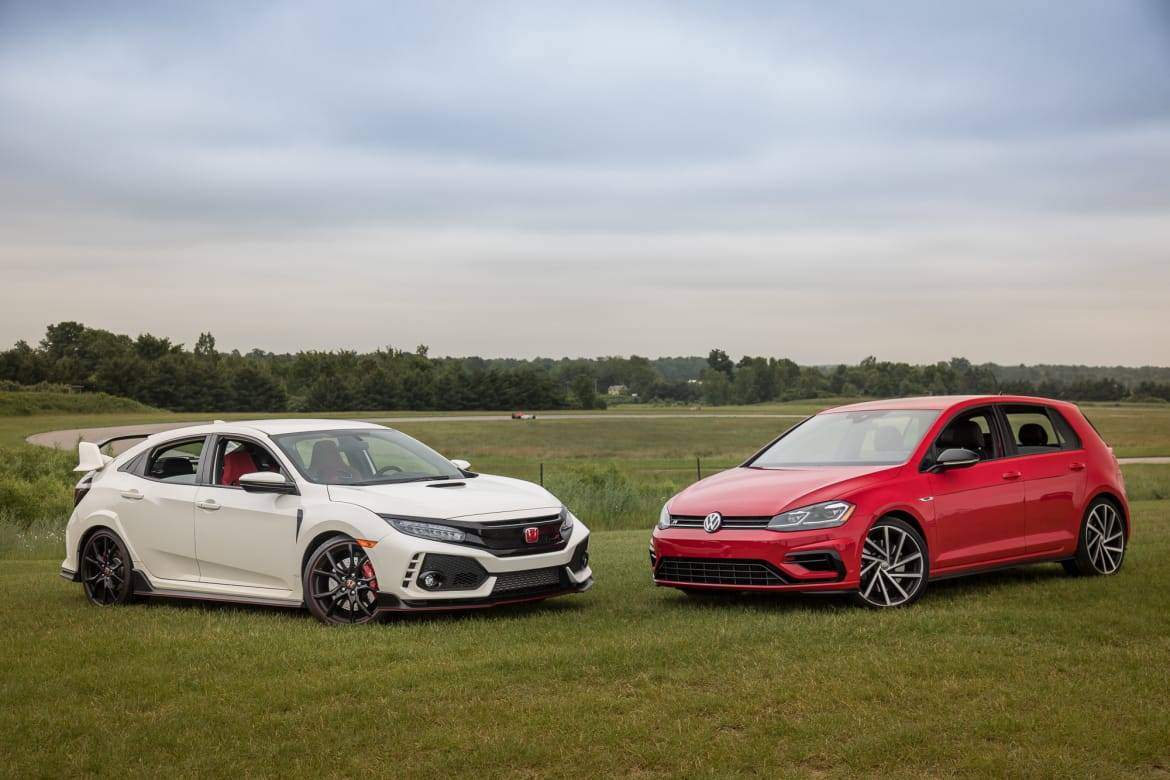
The question arrives like a riddle disguised as a shopping decision: What happens when traction is the narrator and horsepower is merely the chorus? In the blue-hour glow of a curving on-ramp, the Volkswagen Golf R and the Honda Civic Type R look ready to wage a clean, straight-line argument. But the moment the road begins to ask more demanding questions—wet pavement, uneven surfaces, and the insistent tug of mid-corner torque—the real difference reveals itself. Not just in speed. In philosophy.
Here, the philosophy is split between two drivetrains: the Golf R’s all-wheel-drive (AWD) composure and the Civic Type R’s front-wheel-drive (FWD) fire. It’s more than a spec-sheet bullet point. It’s an alternate worldview. And once you feel how each car believes the same physics should be interpreted, you may never look at “traction” the same way again.
Let’s trace that worldview—carefully, curiously, and with a willingness to be surprised.
The drivetrain as a character: AWD calm vs FWD drama
Drivetrains aren’t just mechanical arrangements. They behave like personalities. The Golf R, with its AWD system, tends to operate with a deliberate calm. Power is distributed with a kind of measured opportunism, helping the car keep its footing when grip becomes inconsistent. The car doesn’t ask the front tires to do everything at once; it shares the responsibility. That changes the sensation behind the wheel.
The Civic Type R, built on FWD, is more theatrical. Front-wheel drive concentrates the work in the front contact patches, which can translate to a more immediate, sometimes more volatile response. There’s a certain honesty to it: you can feel the tires negotiating the border between adhesion and slip. Short bursts of acceleration feel sharp and connected. Longer pushes, especially on imperfect traction, can turn that connection into a question mark.
So the shift in perspective starts here: AWD doesn’t merely add grip; it reshapes how the car manages momentum. FWD doesn’t merely lose grip; it reshapes how the car communicates feedback.
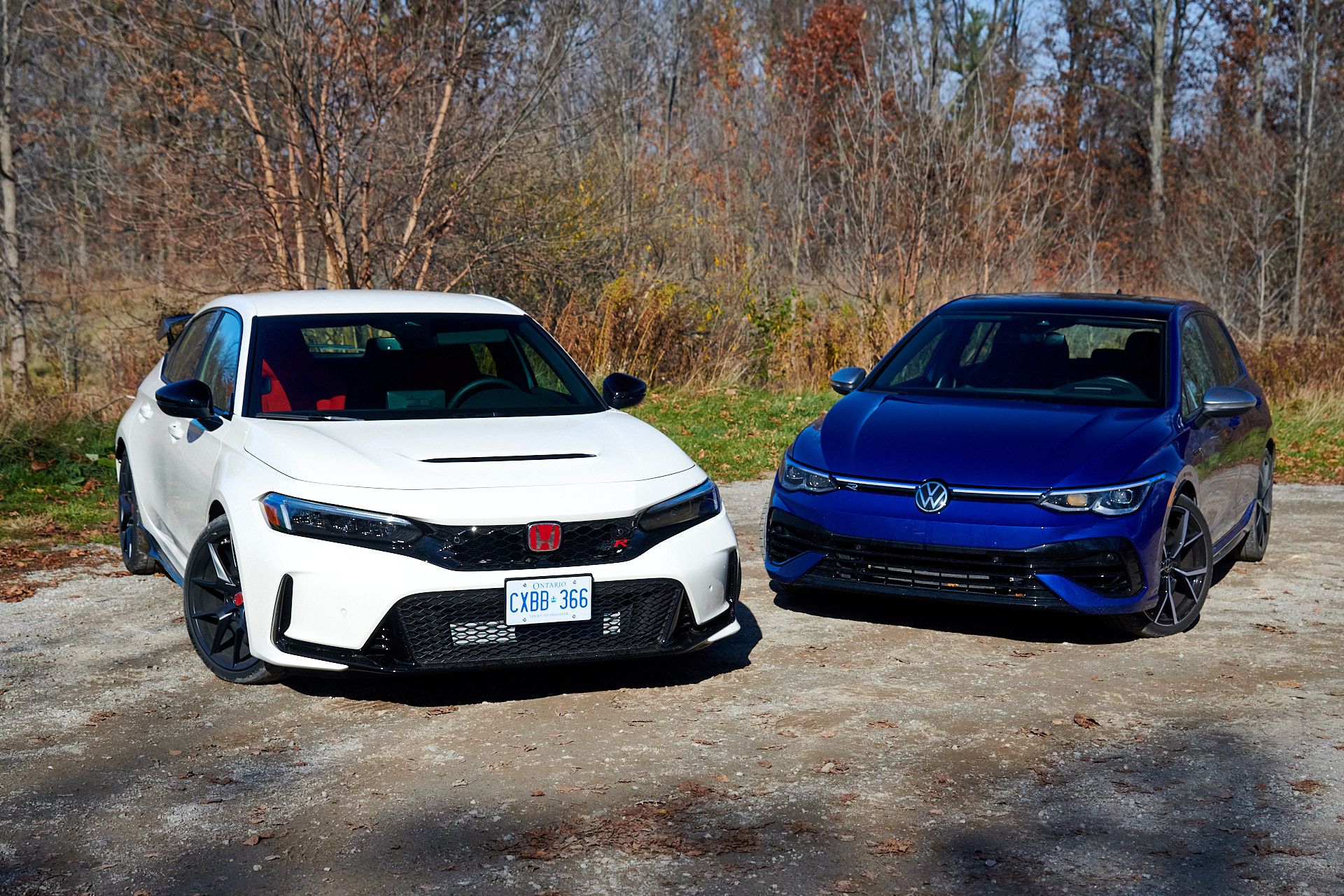
On paper, both cars promise quickness, but the drivetrain determines whether that quickness is delivered like a gavel or a drumroll. AWD can bring torque to the ground more evenly, especially when the starting conditions are less than ideal. Roll-out grip often matters more than many people expect. A fraction of lost traction can widen into a meaningful gap as acceleration continues.
FWD launches, meanwhile, can become a choreography of balance and throttle discipline. The front tires must handle both acceleration and steering intent at the same time. If the driver adds too much throttle too early, the tires may attempt to correct themselves through slip—energy wasted as heat rather than forward motion. Skilled drivers can work around this with technique, but the platform’s nature still sets the tone.
This is where curiosity should take over: Do you want the car to be forgiving, or do you want the car to demand your attention? AWD tends to be more accommodating. FWD tends to be more interactive—sometimes in a way that feels like the car is challenging the driver to keep the performance honest.
In the corners, the difference becomes less about pure straight-line acceleration and more about how each car maintains composure. AWD systems can influence how power is applied when the steering angle and lateral load are both present. That means the Golf R can often keep a more consistent traction envelope during aggressive transitions. The car’s line through the turn feels less like a negotiation and more like a decision executed smoothly.
With FWD, the Civic Type R leans into a distinct balancing act. Under corner exit, torque tends to load the front tires further, which can make steering feel heavier or more constrained if traction is limited. Yet that same front focus can be exploited: with the right approach—apex discipline, throttle modulation, and weight management—the car can rotate with purpose and deliver a satisfying surge as it claws forward.
There’s an uncommon sensation here: AWD often protects the car from the consequence of enthusiasm. FWD often turns enthusiasm into a measurable event. If the driver enjoys reading the road like sheet music, the Civic’s character may feel invigorating. If the driver prefers the car to translate intent into motion with fewer interruptions, the Golf R’s AWD gravitas is persuasive.
Every car owner eventually meets rain, frost, tar snakes, and those patches of road that seem glued together with uncertainty. In those conditions, the drivetrain’s engineering philosophy becomes undeniably practical.
AWD systems can compensate for low-grip regions by redistributing torque to where traction is most available. That can reduce the likelihood of sudden loss of drive. The result is confidence that feels less like bravado and more like reliability—an invisible hand keeping the car aligned with the driver’s intentions.
FWD doesn’t crumble under wet conditions, but it may make the driver more aware of traction boundaries. The Civic Type R may require a gentler touch, especially at higher speeds and in tighter corners. The payoff is that once the driver learns how the tires react, the car can still feel sharp and communicative—less numb, more alive.
Perspective shift: in wet weather, the AWD car often protects time. The FWD car often teaches it.
Feel is not a luxury; it’s the interface between mechanical intent and human perception. AWD can provide smoother torque delivery because the system can mitigate wheelspin more comprehensively. That often leads to a sense of stability—an ability to accelerate while remaining composed.
FWD, however, can amplify the sensation of torque transfer. When traction holds, the front end can feel intensely responsive, like the car is answering immediately. But if traction slips, the feedback is more noticeable. Some drivers interpret that as drama; others interpret it as clarity. Both readings are valid, but they lead to different ownership satisfaction.
If your driving life is mostly commuting, traffic lights, and unpredictable pavement, AWD’s steadier behavior may seem like a quiet upgrade. If your driving life includes spirited back roads and you want the car to mirror your inputs with fidelity, the Civic Type R’s FWD nature can be enthralling.
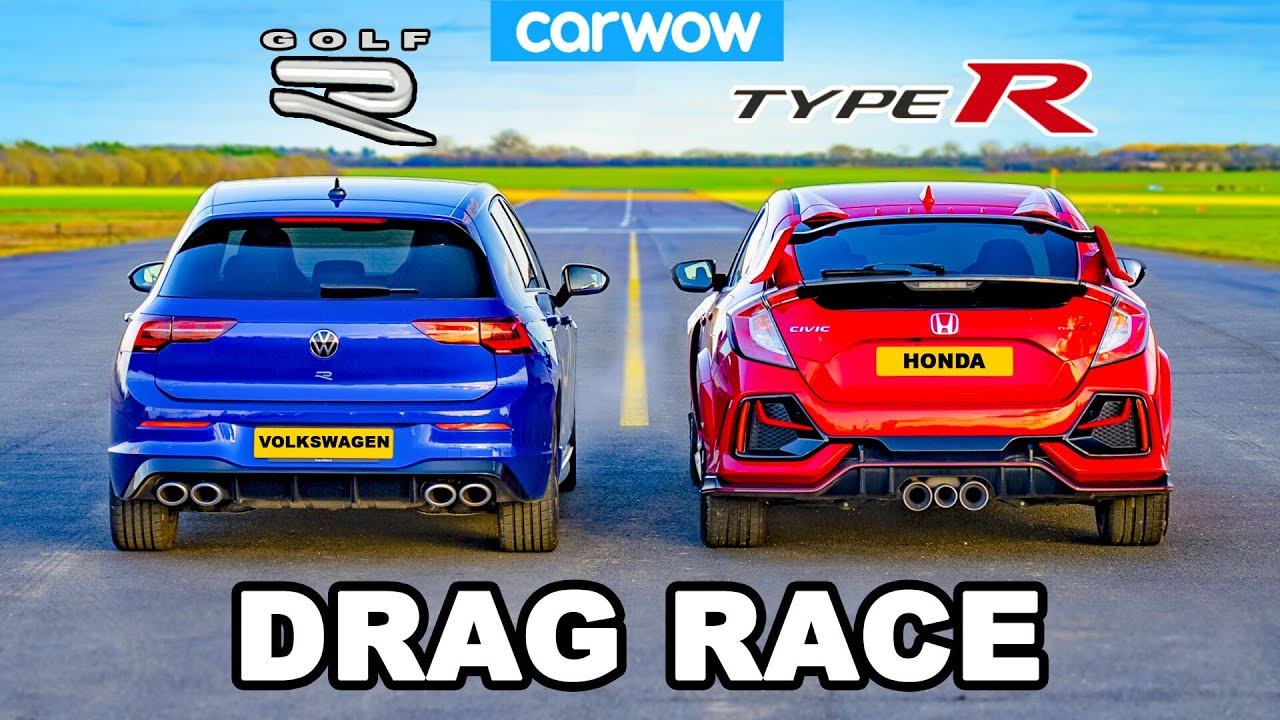
Even with comparable performance ambitions, different drivetrains handle weight transfer differently. When a car accelerates, weight shifts rearward. For FWD cars, that can slightly reduce normal force on the front tires—reducing their grip potential just when acceleration is trying to maximize torque use.
AWD cars can counterbalance that through distribution strategies, helping maintain traction where it matters most. It’s not simply about adding grip; it’s about optimizing the tire’s ability to convert torque into motion.
This is where curiosity becomes almost philosophical: performance isn’t just power—it’s power relative to the surface’s willingness to cooperate. AWD may cooperate more often. FWD may cooperate vividly, when conditions align.
Confidence has a cost—sometimes financial, sometimes mechanical. AWD systems add complexity, and complexity invites a broader maintenance horizon over time. That said, many owners value AWD precisely because it reduces stress: less wheelspin at low speeds, better composure in adverse weather, and more predictable behavior when grip is ambiguous.
FWD systems typically offer simpler packaging and can feel more straightforward in everyday use. The Civic Type R can be thrilling without asking the driver to constantly manage distribution strategies. Still, it may call for more attention in slippery environments, particularly during hard launches or spirited corner exits.
Consider your typical day. Consider your local weather. Then consider your driving personality—patient, aggressive, playful, or pragmatic.
If the goal is repeatable performance with less dependence on surface conditions, the Golf R’s AWD advantage often feels like an engineered safety net. It tends to translate intent into acceleration with fewer compromises, and it encourages confidence in a wider range of scenarios.
If the goal is tactile engagement—an experience where the car’s behavior teaches you and rewards skill—the Civic Type R’s FWD intensity can be magnetic. It makes traction a lived phenomenon rather than a managed variable. The performance feels earned, and that can be addictive.
There isn’t a universal victor because the question you’re really asking is not about lap times or quarter-mile drama. The real question is about what you want the car to do to you: protect your rhythm, or sharpen your awareness.
Final thought: a new way to read the road
Volkswagen Golf R vs Honda Civic Type R is more than a rivalry. It’s a lens. AWD changes how the road’s imperfections are absorbed into motion. FWD changes how those imperfections become part of the conversation between driver and machine.
Either way, the shift in perspective is the same: traction isn’t a number on a brochure. It’s a relationship. And when you understand that relationship—through AWD composure or FWD candor—you stop chasing comparisons and start choosing the experience that fits your instincts.
Drive both, feel the differences in torque delivery and corner coherence, and let the road decide what kind of thrill you actually want.