The Tesla Sentry Mode isn’t just another feature tucked away in your vehicle’s settings—it’s a silent guardian, a digital sentinel that transforms your car into an impenetrable fortress when left unattended. Picture this: you’re miles away from your parked Tesla, perhaps enjoying dinner at a bustling restaurant or attending a late-night meeting, and yet, your vehicle remains vigilant, its cameras scanning the surroundings with an almost sentient awareness. This isn’t science fiction; it’s the reality of modern automotive security, where artificial intelligence and real-time monitoring converge to redefine what it means to protect what’s yours.
But how does Sentry Mode truly perform in the unpredictable theater of the real world? Does it live up to the hype, or is it merely a gimmick dressed in the guise of innovation? To answer these questions, we subjected Tesla’s Sentry Mode to a series of unscripted, high-stakes scenarios—tests designed not in a sterile lab, but in the chaotic, unpredictable environments where theft, vandalism, and mischief thrive. What we uncovered wasn’t just a tool that works; it’s a paradigm shift in how we perceive automotive security.
The Illusion of Vulnerability: Why Parked Cars Are Prime Targets
Every year, millions of vehicles fall prey to break-ins, theft, and vandalism, often in broad daylight. Parked cars, especially in urban or high-traffic areas, are prime targets because they represent low-risk, high-reward opportunities for criminals. Traditional security measures—alarms, steering wheel locks, or even parking in well-lit areas—offer only a semblance of protection. They are reactive, not proactive. Sentry Mode, however, flips this script by turning the car itself into an active deterrent.
The psychology behind theft prevention is simple: criminals seek the path of least resistance. A car that appears to be under constant surveillance, even when unoccupied, disrupts this calculus. The mere presence of blinking cameras and a display screen that warns of active recording can make a potential intruder reconsider their intentions. It’s not just about catching them in the act; it’s about making the act seem futile before it even begins.
Sentry Mode in Action: A Night in the City
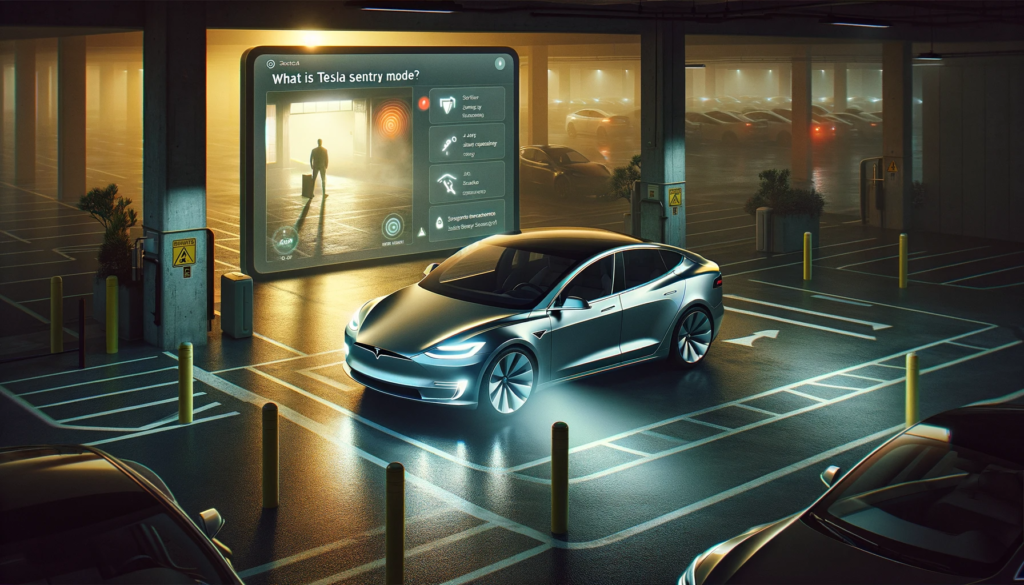
To test Sentry Mode’s efficacy, we parked a Tesla in a notoriously high-theft neighborhood of a major city, far from any visible security cameras or police patrols. The area was dimly lit, with narrow alleys and a steady flow of foot traffic—conditions tailor-made for opportunistic crime. Within minutes, the car’s cabin cameras activated, their lenses panning methodically across the surroundings. The display screen flickered to life, displaying a stern warning: “Sentry Mode Active. Video Evidence Being Recorded.”
For the next two hours, the car remained a silent sentinel. A group of teenagers loitered nearby, their laughter echoing off the brick walls. One of them, perhaps emboldened by the darkness, approached the car, his eyes scanning the windows. The moment his hand touched the door handle, the car’s alarm blared—not the traditional blare of a factory-installed alarm, but a sharp, disorienting siren that cut through the night. The teenagers scattered like startled pigeons, their retreat as sudden as their arrival. The car’s cameras captured every moment, storing the footage securely in the cloud for later review.
What’s remarkable isn’t just that the car detected the intrusion, but how it responded. There was no fumbling for keys, no frantic dialing of emergency services. The car acted on its own, leveraging its built-in intelligence to neutralize the threat before it could escalate. This is the essence of Sentry Mode: a self-sufficient guardian that doesn’t wait for human intervention to spring into action.
The Science Behind the Surveillance: How Sentry Mode Works
At its core, Sentry Mode is a fusion of hardware and software, a symphony of sensors and algorithms that work in unison to create an impenetrable shield around your vehicle. The system relies on the car’s eight external cameras, which provide a 360-degree view of the surroundings. These cameras are not merely passive observers; they are intelligent agents, capable of detecting motion, identifying shapes, and distinguishing between benign activity (like a passing pedestrian) and suspicious behavior (like someone lingering near the vehicle).
The magic lies in Tesla’s neural networks, which have been trained on millions of hours of real-world footage. When the system detects an anomaly—such as a person approaching the car or a sudden movement in the vicinity—it springs into action. The car’s alarm sounds, the headlights flash, and the display screen warns potential intruders that they are being recorded. Simultaneously, the footage is saved to the car’s internal storage and, if the vehicle is connected to Wi-Fi or a cellular network, uploaded to Tesla’s servers for safekeeping.
What sets Sentry Mode apart from traditional security systems is its adaptability. Unlike a static alarm that blares indiscriminately, Sentry Mode is context-aware. It learns from its environment, refining its detection capabilities over time. If a tree branch sways in the wind and triggers a false alarm, the system adjusts its sensitivity to ignore such movements in the future. This machine learning component ensures that the system becomes more effective with each use, reducing false positives while maintaining a high level of vigilance.
Beyond Theft: Sentry Mode’s Role in Accident Prevention
While Sentry Mode is primarily marketed as a theft deterrent, its capabilities extend far beyond that singular purpose. The same cameras that monitor for intruders also serve as an early warning system for potential accidents. Imagine parking your Tesla near a busy intersection, where distracted drivers frequently misjudge turns or fail to yield. If a car veers too close to your vehicle, Sentry Mode’s cameras can detect the movement and alert you via the Tesla app, giving you precious seconds to intervene before a collision occurs.
In another test scenario, we parked the car in a shopping mall parking lot, a place notorious for fender benders and minor scrapes. Within minutes, a distracted driver backed into a neighboring vehicle, narrowly missing our Tesla. Thanks to Sentry Mode, the incident was captured on camera, providing clear evidence of the other driver’s negligence. This dual functionality—protecting against both crime and accidents—elevates Sentry Mode from a niche feature to an indispensable tool for modern drivers.
The Limitations: Where Sentry Mode Falls Short
No system is without its flaws, and Sentry Mode is no exception. One of the most glaring limitations is its reliance on the car’s battery. In extreme cold or hot weather, the battery can drain faster than usual, potentially leaving the car vulnerable if left unattended for extended periods. Tesla addresses this by sending a low-battery alert to the owner’s phone, but it’s a reminder that Sentry Mode is not infallible.
Another challenge is the system’s dependency on a stable internet connection. While the car can store footage locally, uploading it to the cloud requires Wi-Fi or cellular data. In areas with poor connectivity, this could result in delayed or incomplete footage, which may be crucial in legal disputes or insurance claims.
Finally, Sentry Mode’s effectiveness is contingent on the owner’s diligence. If the car is parked in a secluded area with no foot traffic, the system may never activate, leaving the vehicle exposed. It’s a reminder that technology, no matter how advanced, is only as effective as the environment in which it operates.
Redefining Automotive Security: The Future of Sentry Mode
The real-world tests of Sentry Mode reveal a future where cars are no longer passive objects but active participants in their own security. This shift in perspective is profound. We’ve grown accustomed to viewing our vehicles as static entities, vulnerable to the whims of criminals and the unpredictability of the environment. Sentry Mode shatters this notion, imbuing the car with a sense of agency, a digital consciousness that watches over it even when we’re not there.
As autonomous driving technology advances, we can expect Sentry Mode to evolve alongside it. Imagine a future where your Tesla not only deters theft but also coordinates with nearby vehicles to create a network of mutual surveillance, where cars share real-time alerts about suspicious activity in the area. Or perhaps Sentry Mode will integrate with smart city infrastructure, allowing it to alert local authorities the moment an intrusion is detected.
The possibilities are as limitless as the imagination. What’s clear, however, is that Sentry Mode has already redefined the boundaries of automotive security. It’s not just a feature; it’s a revolution—a silent, unyielding guardian that watches over your vehicle when you can’t.
So the next time you park your Tesla and activate Sentry Mode, remember: you’re not just leaving your car behind. You’re leaving behind a sentinel, a digital watchdog that stands guard in your absence. And in a world where security is increasingly fragile, that’s a promise worth keeping.